

Fish, mackerel, salted
Whole food · Finfish and Shellfish Products

Photo: Wikipedia
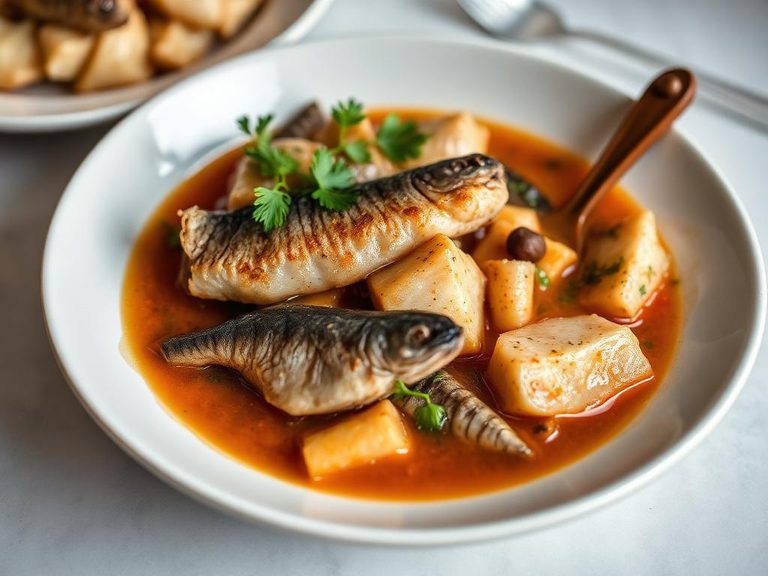
Salted mackerel is a potent, oil-rich fish preserved through salting, delivering a deeply savory, umami-packed flavor and a firm, flaky texture. It is a nutritional powerhouse, packing a substantial 25.1g of healthy fats and 18.5g of protein per 100g, making it a calorie-dense, zero-carb staple. Its intense, briny taste is a hallmark of coastal cuisines worldwide, often mellowed by cooking or soaking.
Calorie split: 25% protein · 0% carbs · 75% fat
↓ Full nutrition💚 Why it's loved
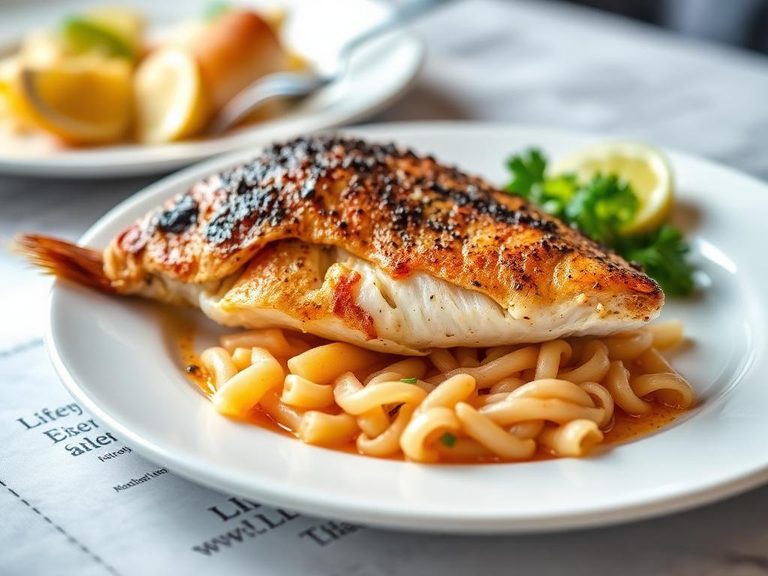
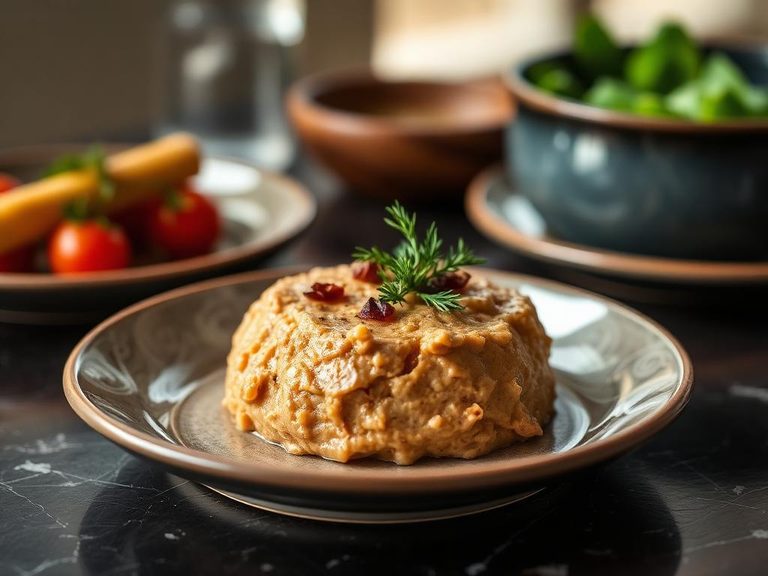
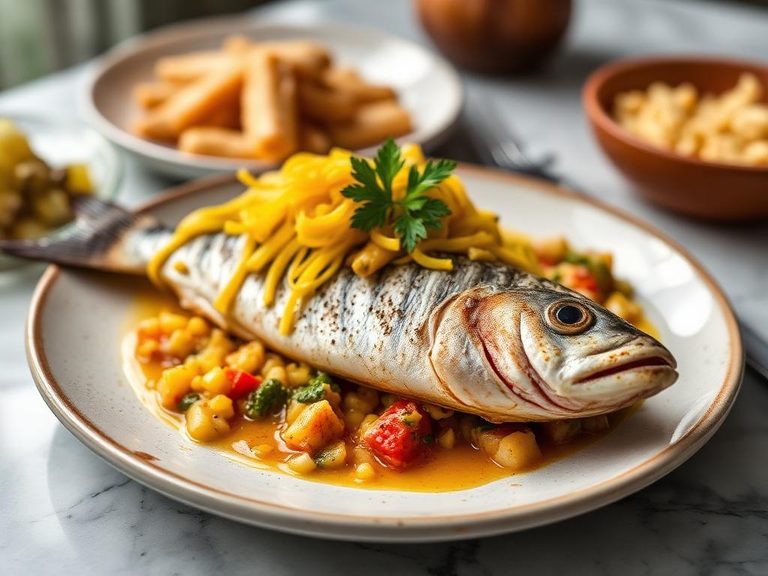
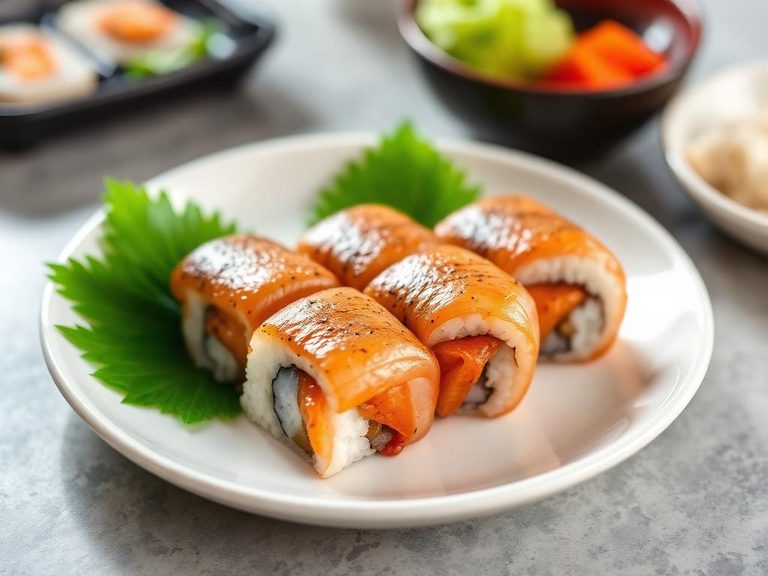
People love it for its robust, satisfying flavor that transforms simple meals into hearty feasts, and its cultural significance in traditional coastal and island cuisines. Its versatility allows it to be grilled, baked, or flaked into salads, stews, and pastries, making it a beloved pantry staple.
⚠️ Watch-outs & how to enjoy it better
The high sodium content (from salting) can be a concern for those monitoring blood pressure or fluid retention, and its strong, oily flavor isn't for everyone. To counteract, soak the fish in cold water or milk for several hours before cooking to reduce saltiness, and pair it with potassium-rich vegetables like potatoes or leafy greens to help balance sodium levels. Portion control is key; a 100g serving is substantial.
Key benefits
- Excellent source of omega-3 fatty acids for heart and brain health.
- High-quality protein for muscle maintenance and satiety.
- Rich in vitamin D, B12, and selenium.
- Long shelf life without refrigeration when properly stored.
- Provides essential minerals like iodine and phosphorus.
🍽️ Popular dishes

🌍 Where it's eaten
💡 Did you know?
Salted mackerel was a crucial provision for sailors on long voyages, as its high fat content provided essential calories and its preservation method prevented spoilage for months at sea.
Full nutrition (USDA data · scales with serving)
| Water | 43.0 g |
| Energy | 305 kcal |
| Energy | 1276 kj |
| Protein | 18.5 g |
| Total lipid (fat) | 25.1 g |
| Ash | 13.4 g |
| Carbohydrate, by difference | 0.00 g |
| Fiber, total dietary | 0.00 g |
| Total Sugars | 0.00 g |
| Calcium, Ca | 66.0 mg |
| Iron, Fe | 1.4 mg |
| Magnesium, Mg | 60.0 mg |
| Phosphorus, P | 254 mg |
| Potassium, K | 520 mg |
| Sodium, Na | 4450 mg |
| Zinc, Zn | 1.1 mg |
| Copper, Cu | 0.10 mg |
| Selenium, Se | 73.4 ug |
| Vitamin C, total ascorbic acid | 0.00 mg |
| Thiamin | 0.02 mg |
| Riboflavin | 0.19 mg |
| Niacin | 3.3 mg |
| Vitamin B-6 | 0.41 mg |
| Folate, total | 15.0 ug |
| Folic acid | 0.00 ug |
| Folate, food | 15.0 ug |
| Folate, DFE | 15.0 ug |
| Choline, total | 102 mg |
| Vitamin B-12 | 12.0 ug |
| Vitamin B-12, added | 0.00 ug |
| Vitamin A, RAE | 47.0 ug |
| Retinol | 47.0 ug |
| Carotene, beta | 0.00 ug |
| Carotene, alpha | 0.00 ug |
| Cryptoxanthin, beta | 0.00 ug |
| Vitamin A, IU | 157 iu |
| Lycopene | 0.00 ug |
| Lutein + zeaxanthin | 0.00 ug |
| Vitamin E (alpha-tocopherol) | 2.4 mg |
| Vitamin E, added | 0.00 mg |
| Vitamin D (D2 + D3), International Units | 1006 iu |
| Vitamin D (D2 + D3) | 25.2 ug |
| Vitamin D3 (cholecalciferol) | 25.2 ug |
| Vitamin K (phylloquinone) | 7.8 ug |
| Alcohol, ethyl | 0.00 g |
| Caffeine | 0.00 mg |
| Theobromine | 0.00 mg |
Fat & fatty acid profile (per 100g)
| Fatty acids, total saturated | 7.1 g |
| SFA 4:0 | 0.00 g |
| SFA 6:0 | 0.00 g |
| SFA 8:0 | 0.00 g |
| SFA 10:0 | 0.00 g |
| SFA 12:0 | 0.03 g |
| SFA 14:0 | 1.1 g |
| SFA 16:0 | 4.4 g |
| SFA 18:0 | 1.4 g |
| Fatty acids, total monounsaturated | 8.3 g |
| MUFA 16:1 | 1.5 g |
| MUFA 18:1 | 4.2 g |
| MUFA 20:1 | 1.0 g |
| MUFA 22:1 | 1.5 g |
| Fatty acids, total polyunsaturated | 6.2 g |
| PUFA 18:2 | 0.37 g |
| PUFA 18:3 | 0.16 g |
| PUFA 18:4 | 0.40 g |
| PUFA 20:4 | 0.26 g |
| PUFA 20:5 n-3 (EPA) | 1.6 g |
| PUFA 22:5 n-3 (DPA) | 0.39 g |
| PUFA 22:6 n-3 (DHA) | 3.0 g |
| Cholesterol | 95.0 mg |
Amino acid profile (per 100g)
Estimated from Fish, fish sticks, frozen, prepared — USDA does not publish this profile for Fish.
| Tryptophan | 0.12 g |
| Threonine | 0.37 g |
| Isoleucine | 0.43 g |
| Leucine | 0.85 g |
| Lysine | 0.80 g |
| Methionine | 0.30 g |
| Phenylalanine | 0.47 g |
| Tyrosine | 0.29 g |
| Valine | 0.50 g |
| Arginine | 0.59 g |
| Histidine | 0.23 g |
| Alanine | 0.55 g |
| Aspartic acid | 0.82 g |
| Glutamic acid | 2.3 g |
| Glycine | 0.47 g |
| Proline | 0.78 g |
| Serine | 0.49 g |
| Hydroxyproline | 0.00 g |
FAQ
How do I reduce the saltiness of salted mackerel?
Soak the fish in cold water for 4-8 hours, changing the water several times. Alternatively, soak it in milk for a few hours to mellow the salt and add a subtle creaminess.
Is salted mackerel high in calories?
Yes, at 305 kcal per 100g, it is calorie-dense due to its high fat content. However, the fats are primarily healthy omega-3s, making it a nutritious choice when consumed in moderation.
Can I eat salted mackerel raw?
It is not typically eaten raw. Salted mackerel is almost always cooked—grilled, baked, fried, or stewed—to enhance its flavor and ensure food safety.
Nutrient density (calculated · NRF9.3)
Nutrient Rich Foods index: beneficial nutrients (protein, fiber, vitamins, minerals) minus saturated fat, added sugar & sodium, per 100 kcal.
NRF9.3 index — Fulgoni, Keast & Drewnowski, 2009. Computed from USDA nutrients.
Weight-loss friendliness (composite index)
Energy density 3.05 kcal/g · 24% calories from protein · 0.0 g fiber · 0.0 g sugar per 100 g.
Composite of energy density (Rolls et al., 1999), protein & fiber satiety, minus sugar. A calculated heuristic — ranks satiety-per-calorie, not a clinical measure.
Dietary load (calculated from USDA values)
Potential renal acid load. Positive = acid-forming, negative = alkaline-forming.
Sodium-to-potassium ratio: 8.56 (lower is better — aim for ≤ 1)
Sodium:potassium per WHO potassium guidance. Computed from USDA nutrients.