

Fat, beef tallow
Whole food · Fats and Oils

Photo: Wikipedia
Beef tallow is rendered fat from cattle, prized for its clean, savory flavor and solid, buttery texture at room temperature. It's a pure fat source, providing 900 kcal per 100g, and was historically a staple for cooking, frying, and candle-making. Its high smoke point makes it exceptionally stable for high-heat applications.
Calorie split: 0% protein · 0% carbs · 100% fat
↓ Full nutrition💚 Why it's loved
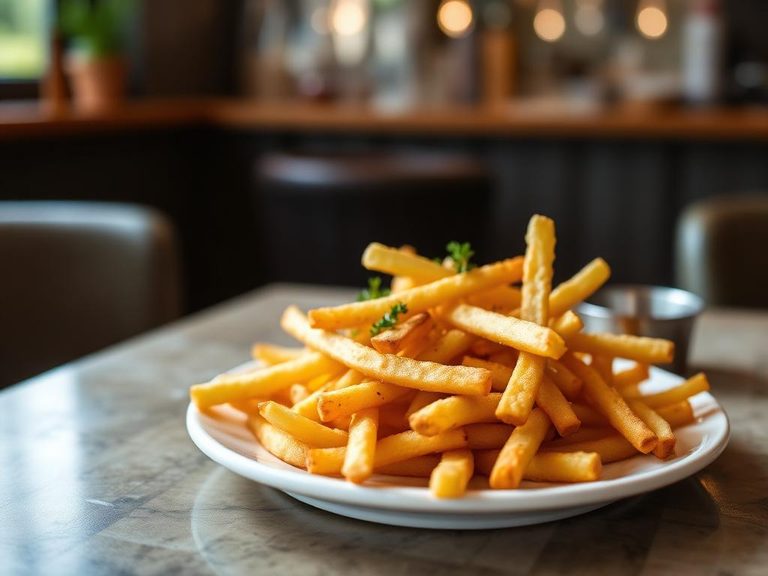
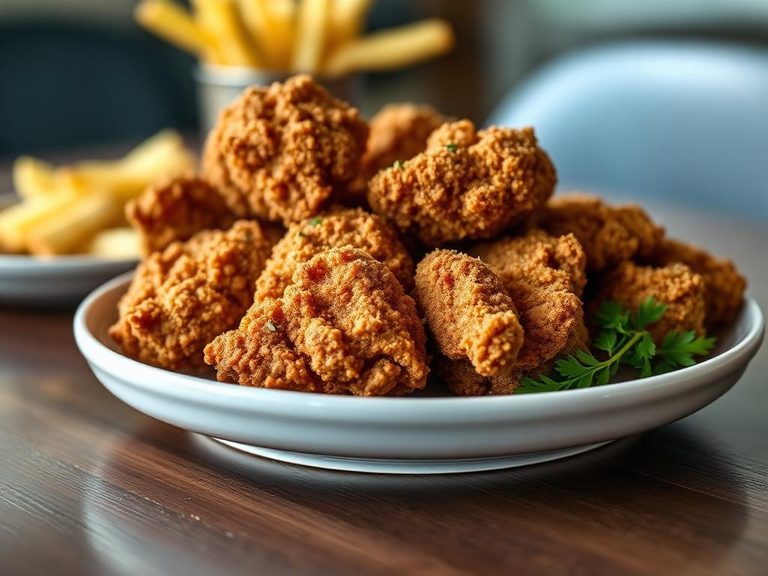
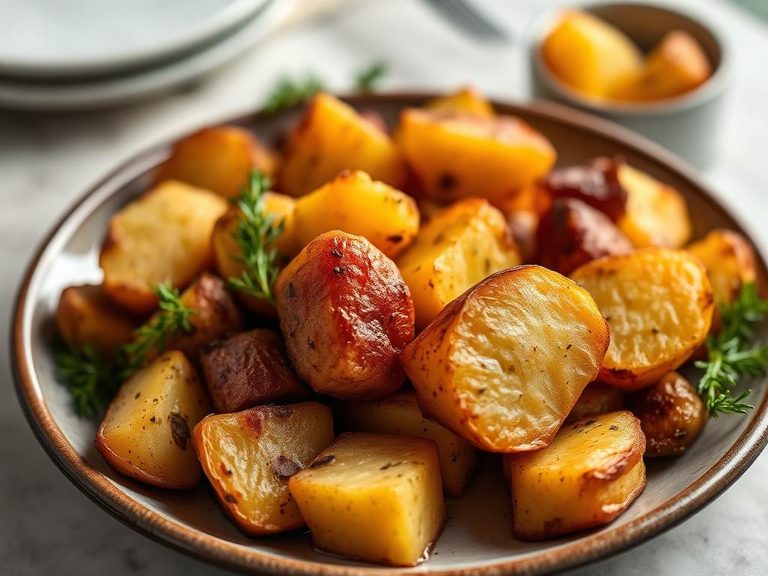
People love tallow for the unparalleled savory depth and crisp texture it imparts to fried potatoes, pastries, and savory dishes. It's also revered in traditional and nose-to-tail cooking for its versatility and historical significance.
⚠️ Watch-outs & how to enjoy it better
As a pure saturated fat, it should be consumed in moderation, especially by those managing cholesterol levels. To balance, use it occasionally and pair dishes with fiber-rich vegetables or salads to aid digestion and nutrient absorption.
Key benefits
- High smoke point (around 250°C/480°F) ideal for deep-frying
- Rich in saturated and monounsaturated fats, providing stable energy
- Long shelf life when stored properly
- Enhances flavor and crispiness in fried foods
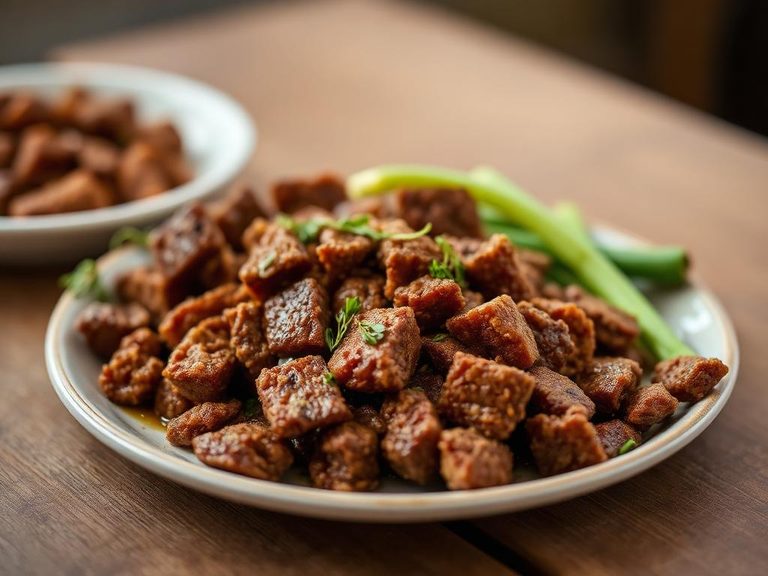
🍽️ Popular dishes
🌍 Where it's eaten
💡 Did you know?
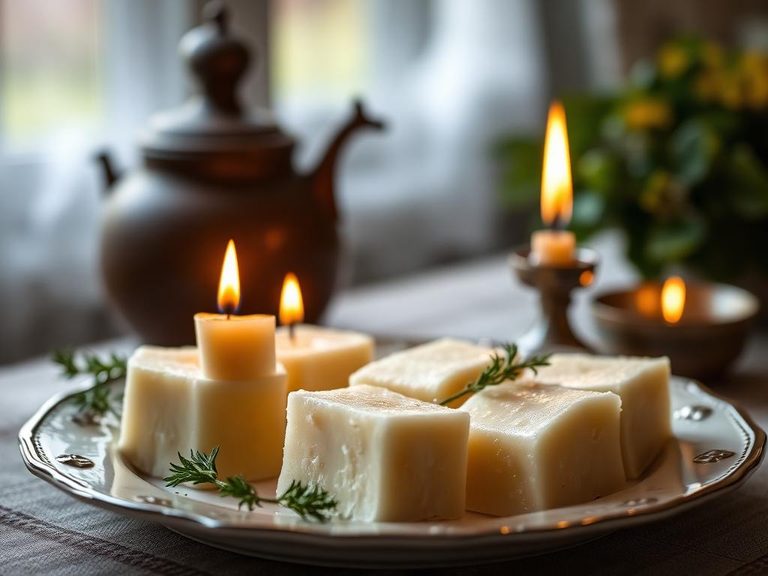
In the 18th and 19th centuries, beef tallow was the primary ingredient for making high-quality, long-burning candles before the advent of paraffin wax.
Full nutrition (USDA data · scales with serving)
| Water | 0.00 g |
| Energy | 902 kcal |
| Energy | 3774 kj |
| Protein | 0.00 g |
| Total lipid (fat) | 100 g |
| Ash | 0.00 g |
| Carbohydrate, by difference | 0.00 g |
| Fiber, total dietary | 0.00 g |
| Total Sugars | 0.00 g |
| Calcium, Ca | 0.00 mg |
| Iron, Fe | 0.00 mg |
| Magnesium, Mg | 0.00 mg |
| Phosphorus, P | 0.00 mg |
| Potassium, K | 0.00 mg |
| Sodium, Na | 0.00 mg |
| Zinc, Zn | 0.00 mg |
| Copper, Cu | 0.00 mg |
| Selenium, Se | 0.20 ug |
| Vitamin C, total ascorbic acid | 0.00 mg |
| Thiamin | 0.00 mg |
| Riboflavin | 0.00 mg |
| Niacin | 0.00 mg |
| Pantothenic acid | 0.00 mg |
| Vitamin B-6 | 0.00 mg |
| Folate, total | 0.00 ug |
| Folic acid | 0.00 ug |
| Folate, food | 0.00 ug |
| Folate, DFE | 0.00 ug |
| Choline, total | 79.8 mg |
| Vitamin B-12 | 0.00 ug |
| Vitamin B-12, added | 0.00 ug |
| Vitamin A, RAE | 0.00 ug |
| Retinol | 0.00 ug |
| Carotene, beta | 0.00 ug |
| Carotene, alpha | 0.00 ug |
| Cryptoxanthin, beta | 0.00 ug |
| Vitamin A, IU | 0.00 iu |
| Lycopene | 0.00 ug |
| Lutein + zeaxanthin | 0.00 ug |
| Vitamin E (alpha-tocopherol) | 2.7 mg |
| Vitamin E, added | 0.00 mg |
| Vitamin D (D2 + D3), International Units | 28.0 iu |
| Vitamin D (D2 + D3) | 0.70 ug |
| Vitamin D3 (cholecalciferol) | 0.70 ug |
| Vitamin K (phylloquinone) | 0.00 ug |
| Alcohol, ethyl | 0.00 g |
| Caffeine | 0.00 mg |
| Theobromine | 0.00 mg |
Fat & fatty acid profile (per 100g)
| Fatty acids, total saturated | 49.8 g |
| SFA 4:0 | 0.00 g |
| SFA 6:0 | 0.00 g |
| SFA 8:0 | 0.00 g |
| SFA 10:0 | 0.00 g |
| SFA 12:0 | 0.90 g |
| SFA 14:0 | 3.7 g |
| SFA 16:0 | 24.9 g |
| SFA 18:0 | 18.9 g |
| Fatty acids, total monounsaturated | 41.8 g |
| MUFA 16:1 | 4.2 g |
| MUFA 18:1 | 36.0 g |
| MUFA 20:1 | 0.30 g |
| MUFA 22:1 | 0.00 g |
| Fatty acids, total polyunsaturated | 4.0 g |
| PUFA 18:2 | 3.1 g |
| PUFA 18:3 | 0.60 g |
| PUFA 18:4 | 0.00 g |
| PUFA 20:4 | 0.00 g |
| PUFA 20:5 n-3 (EPA) | 0.00 g |
| PUFA 22:5 n-3 (DPA) | 0.00 g |
| PUFA 22:6 n-3 (DHA) | 0.00 g |
| Cholesterol | 109 mg |
| Phytosterols | 0.00 mg |
Amino acid profile (per 100g)
| Tryptophan | 0.00 g |
| Threonine | 0.00 g |
| Isoleucine | 0.00 g |
| Leucine | 0.00 g |
| Lysine | 0.00 g |
| Methionine | 0.00 g |
| Cystine | 0.00 g |
| Phenylalanine | 0.00 g |
| Tyrosine | 0.00 g |
| Valine | 0.00 g |
| Arginine | 0.00 g |
| Histidine | 0.00 g |
| Alanine | 0.00 g |
| Aspartic acid | 0.00 g |
| Glutamic acid | 0.00 g |
| Glycine | 0.00 g |
| Proline | 0.00 g |
| Serine | 0.00 g |
FAQ
What is the difference between beef tallow and lard?
Beef tallow is rendered from beef fat, while lard is rendered from pork fat. Tallow has a higher melting point and a more neutral, savory flavor, making it better for high-heat frying and certain pastries.
Is beef tallow the same as suet?
Not exactly. Suet is the raw, hard fat found around the kidneys and loins of cattle or sheep. Tallow is the rendered, purified product made by melting and straining suet or other beef fat.
How should I store beef tallow?
For short-term use, store it in an airtight container in a cool, dark place like a pantry. For long-term storage (up to a year), keep it refrigerated or frozen to prevent rancidity.
Nutrient density (calculated · NRF9.3)
Nutrient Rich Foods index: beneficial nutrients (protein, fiber, vitamins, minerals) minus saturated fat, added sugar & sodium, per 100 kcal.
NRF9.3 index — Fulgoni, Keast & Drewnowski, 2009. Computed from USDA nutrients.
Weight-loss friendliness (composite index)
Energy density 9.02 kcal/g · 0% calories from protein · 0.0 g fiber · 0.0 g sugar per 100 g.
Composite of energy density (Rolls et al., 1999), protein & fiber satiety, minus sugar. A calculated heuristic — ranks satiety-per-calorie, not a clinical measure.
Dietary load (calculated from USDA values)
Potential renal acid load. Positive = acid-forming, negative = alkaline-forming.
Sodium:potassium per WHO potassium guidance. Computed from USDA nutrients.