Tallow Candles
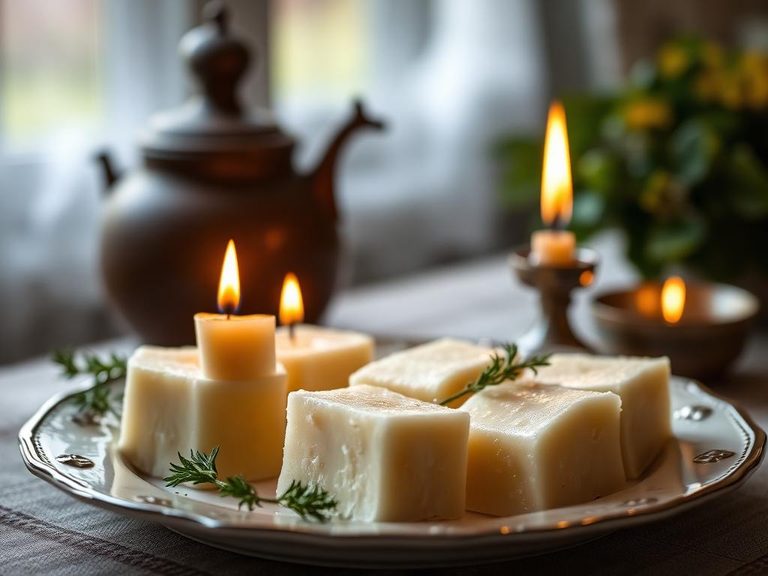
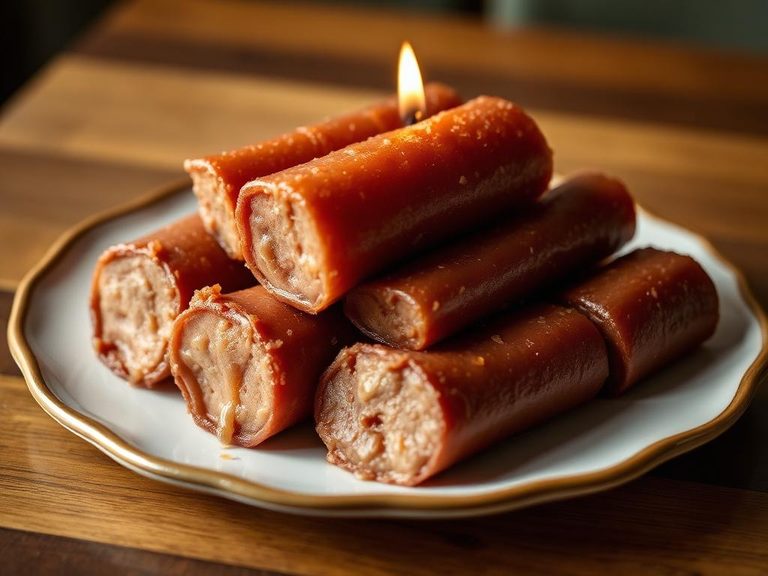
Tallow Candles, in a historical culinary context, refers to a simple, rendered animal fat candle used for lighting, not as a food dish. They were a primary source of light in homes before the widespread availability of kerosene or electricity, made by rendering down beef or mutton fat (tallow) and dipping or pouring it around a wick.
🍽️ Nutrition at a glance
As a non-food item, Tallow Candles are not consumed and have no nutritional value for humans. They are composed almost entirely of saturated and monounsaturated fats, providing calories if ingested, but they are not a source of essential nutrients.
Nutrition breakdown
| Calories | 530 kcal |
| Protein | 0 g |
| Carbs | 0 g |
| Fat | 60 g |
| Fiber | 0 g |
| Sugar | 0 g |
| Sodium | 0 mg |
| Vitamin K | trace |
| Saturated Fat | 38 g |
| Monounsaturated Fat | 18 g |
| Polyunsaturated Fat | 2 g |
Per 1 candle (approx. 60 g) · estimated, varies by recipe
💡 What's interesting
Historically, tallow candles were a common household item, but their quality varied greatly; cheaper ones could produce a smoky, foul-smelling flame. The process of rendering tallow was a common kitchen task, often using suet from around the kidneys of sheep or cattle.