

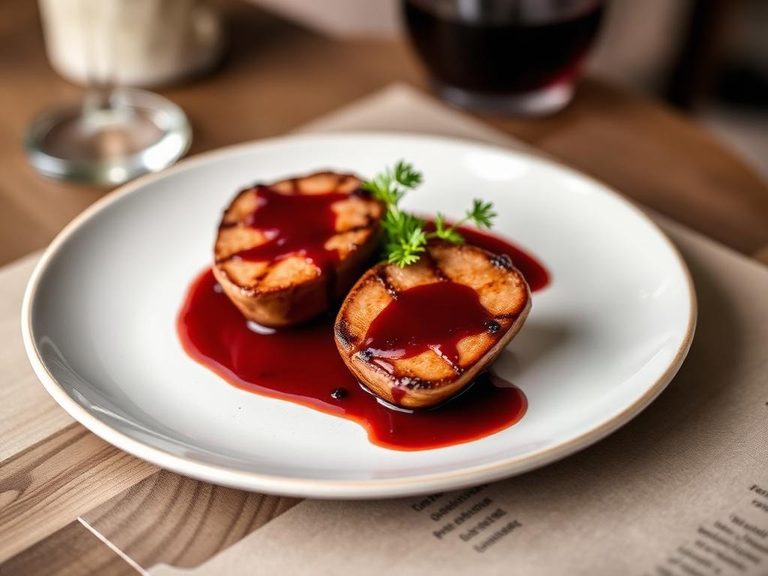
Emu, fan fillet, cooked, broiled
Whole food · Poultry Products

Photo: Wikipedia
Emu fan fillet is a lean, deep-red cut of meat from Australia's largest native bird, prized for its rich, beef-like flavor and firm, fine-grained texture when broiled. Nutritionally, it is a powerhouse of protein with virtually no fat or carbohydrates, making it exceptionally lean. This cut offers a unique, slightly gamey taste that is milder than ostrich, appealing to those seeking a high-protein, low-fat red meat alternative.
Calorie split: 86% protein · 0% carbs · 14% fat
↓ Full nutrition💚 Why it's loved
People love emu fan fillet for its robust, beef-like flavor that is surprisingly tender when cooked properly, offering a gourmet experience without the heaviness of traditional red meats. Its versatility in grilling, broiling, and stir-frying makes it a favorite among health-conscious chefs and adventurous eaters.
⚠️ Watch-outs & how to enjoy it better
The main downside is its very low fat content, which can make it dry and tough if overcooked, requiring careful temperature control and often marinating or basting. Those with a sensitivity to gamey flavors may find it off-putting, and it is not suitable for individuals with a known allergy to poultry or bird products.
Key benefits
- Extremely high in protein (31.27g per 100g) for muscle repair and satiety.
- Virtually fat-free (2.3g per 100g) and contains zero carbohydrates or sugar.
- Rich in iron, zinc, and B vitamins, supporting energy and immune function.
- A sustainable, low-impact red meat source with a smaller environmental footprint.
🍽️ Popular dishes
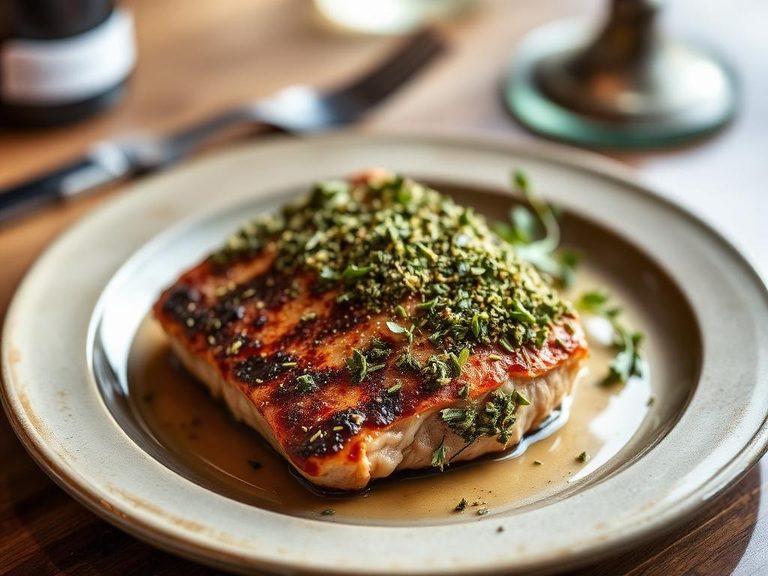
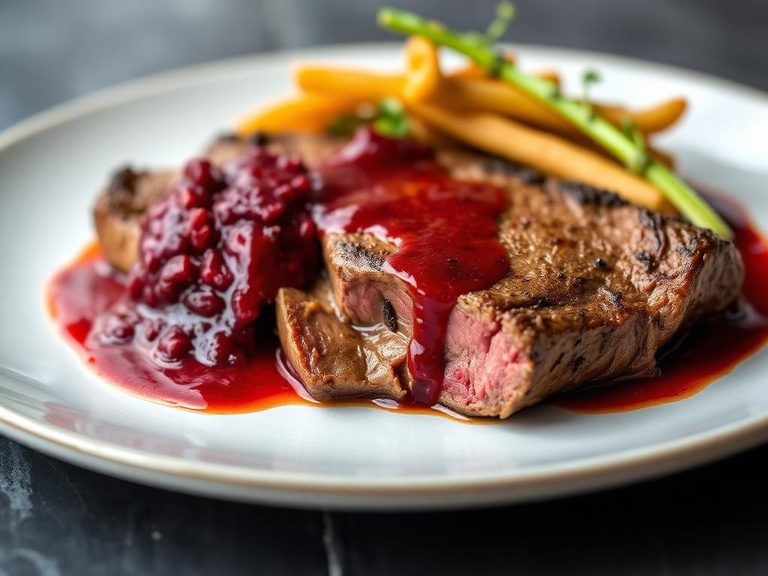
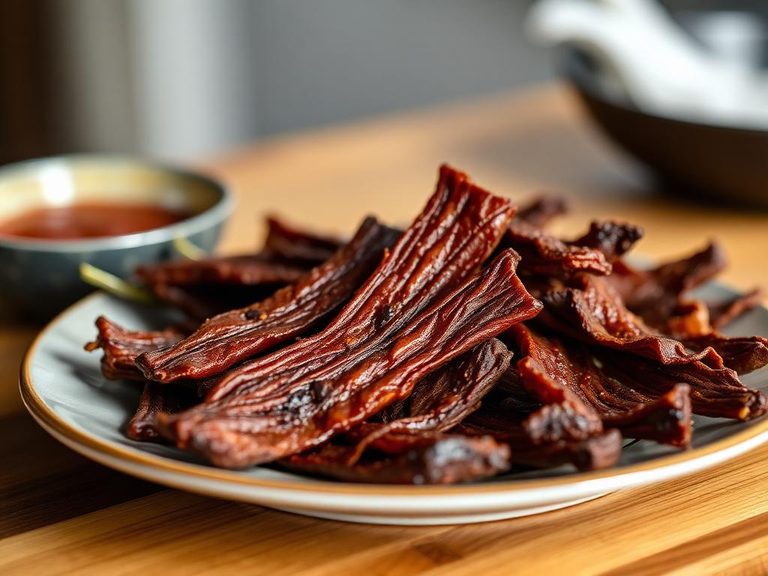
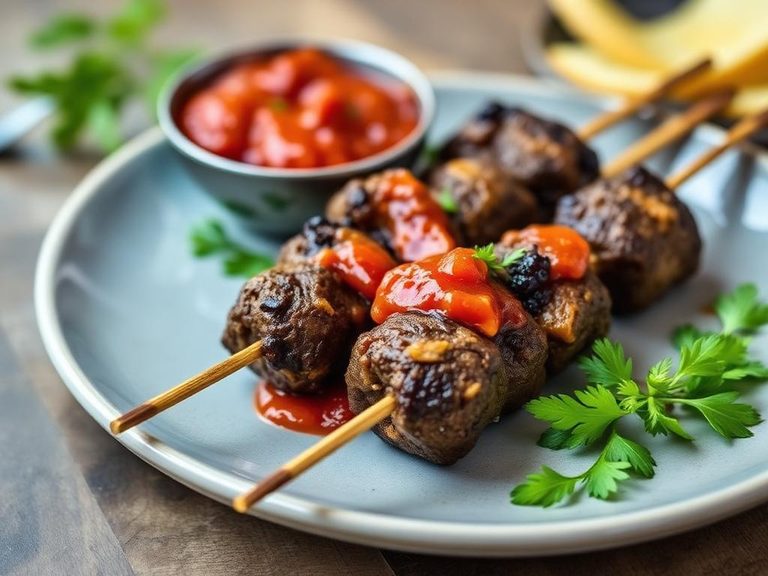
🌍 Where it's eaten
💡 Did you know?
Emu meat is so lean that it is often compared to skinless chicken breast in fat content, yet it has the color and flavor profile of a premium beef steak.
Full nutrition (USDA data · scales with serving)
| Water | 66.4 g |
| Energy | 154 kcal |
| Energy | 645 kj |
| Protein | 31.3 g |
| Total lipid (fat) | 2.3 g |
| Ash | 1.3 g |
| Carbohydrate, by difference | 0.00 g |
| Fiber, total dietary | 0.00 g |
| Total Sugars | 0.00 g |
| Calcium, Ca | 6.0 mg |
| Iron, Fe | 4.6 mg |
| Magnesium, Mg | 30.0 mg |
| Phosphorus, P | 272 mg |
| Potassium, K | 397 mg |
| Sodium, Na | 53.0 mg |
| Zinc, Zn | 3.2 mg |
| Copper, Cu | 0.23 mg |
| Manganese, Mn | 0.03 mg |
| Selenium, Se | 46.1 ug |
| Vitamin C, total ascorbic acid | 0.00 mg |
| Thiamin | 0.35 mg |
| Riboflavin | 0.60 mg |
| Niacin | 9.8 mg |
| Pantothenic acid | 3.4 mg |
| Vitamin B-6 | 0.92 mg |
| Folate, total | 9.0 ug |
| Folic acid | 0.00 ug |
| Folate, food | 9.0 ug |
| Folate, DFE | 9.0 ug |
| Vitamin B-12 | 9.4 ug |
| Vitamin A, RAE | 0.00 ug |
| Retinol | 0.00 ug |
| Carotene, beta | 0.00 ug |
| Carotene, alpha | 0.00 ug |
| Cryptoxanthin, beta | 0.00 ug |
| Vitamin A, IU | 0.00 iu |
| Lycopene | 0.00 ug |
| Lutein + zeaxanthin | 0.00 ug |
| Vitamin E (alpha-tocopherol) | 0.23 mg |
| Alcohol, ethyl | 0.00 g |
| Caffeine | 0.00 mg |
| Theobromine | 0.00 mg |
Fat & fatty acid profile (per 100g)
| Fatty acids, total saturated | 0.58 g |
| SFA 8:0 | 0.00 g |
| SFA 10:0 | 0.00 g |
| SFA 12:0 | 0.00 g |
| SFA 14:0 | 0.01 g |
| SFA 15:0 | 0.00 g |
| SFA 16:0 | 0.37 g |
| SFA 17:0 | 0.00 g |
| SFA 18:0 | 0.20 g |
| SFA 20:0 | 0.00 g |
| SFA 22:0 | 0.00 g |
| Fatty acids, total monounsaturated | 0.92 g |
| MUFA 14:1 | 0.00 g |
| MUFA 15:1 | 0.00 g |
| MUFA 16:1 | 0.07 g |
| MUFA 17:1 | 0.00 g |
| MUFA 18:1 | 0.83 g |
| MUFA 20:1 | 0.01 g |
| Fatty acids, total polyunsaturated | 0.32 g |
| PUFA 18:2 | 0.24 g |
| PUFA 18:3 | 0.01 g |
| PUFA 18:3 n-6 c,c,c | 0.00 g |
| PUFA 20:2 n-6 c,c | 0.00 g |
| PUFA 20:3 | 0.00 g |
| PUFA 20:4 | 0.06 g |
| Cholesterol | 82.0 mg |
Amino acid profile (per 100g)
| Tryptophan | 0.21 g |
| Threonine | 0.90 g |
| Isoleucine | 1.0 g |
| Leucine | 1.7 g |
| Lysine | 1.8 g |
| Methionine | 0.59 g |
| Cystine | 0.23 g |
| Phenylalanine | 0.89 g |
| Tyrosine | 0.67 g |
| Valine | 1.0 g |
| Arginine | 1.4 g |
| Histidine | 0.69 g |
| Alanine | 1.2 g |
| Aspartic acid | 2.7 g |
| Glutamic acid | 3.1 g |
| Glycine | 0.98 g |
| Proline | 1.3 g |
| Serine | 0.74 g |
| Hydroxyproline | 0.20 g |
FAQ
Is emu meat safe to eat rare?
Yes, like beef, emu can be served medium-rare or rare if cooked to a safe internal temperature (145°F/63°C for whole cuts), but it should be fully cooked if ground or if you are immunocompromised.
How does emu meat taste compared to beef?
Emu has a rich, slightly gamey flavor similar to lean beef but with a finer grain and a hint of earthiness, making it less fatty and more intense.
Can I substitute emu for beef in recipes?
Yes, but because emu is much leaner, you may need to add a small amount of oil or fat during cooking to prevent dryness, and cooking times may be shorter.
Nutrient density (calculated · NRF9.3)
Nutrient Rich Foods index: beneficial nutrients (protein, fiber, vitamins, minerals) minus saturated fat, added sugar & sodium, per 100 kcal.
NRF9.3 index — Fulgoni, Keast & Drewnowski, 2009. Computed from USDA nutrients.
Weight-loss friendliness (composite index)
Energy density 1.54 kcal/g · 81% calories from protein · 0.0 g fiber · 0.0 g sugar per 100 g.
Composite of energy density (Rolls et al., 1999), protein & fiber satiety, minus sugar. A calculated heuristic — ranks satiety-per-calorie, not a clinical measure.
Dietary load (calculated from USDA values)
Potential renal acid load. Positive = acid-forming, negative = alkaline-forming.
Sodium-to-potassium ratio: 0.13 (lower is better — aim for ≤ 1)
Sodium:potassium per WHO potassium guidance. Computed from USDA nutrients.