

Cranberry juice cocktail, bottled, low calorie, with calcium, saccharin and corn sweetener
Whole food · Beverages

Photo: Wikipedia
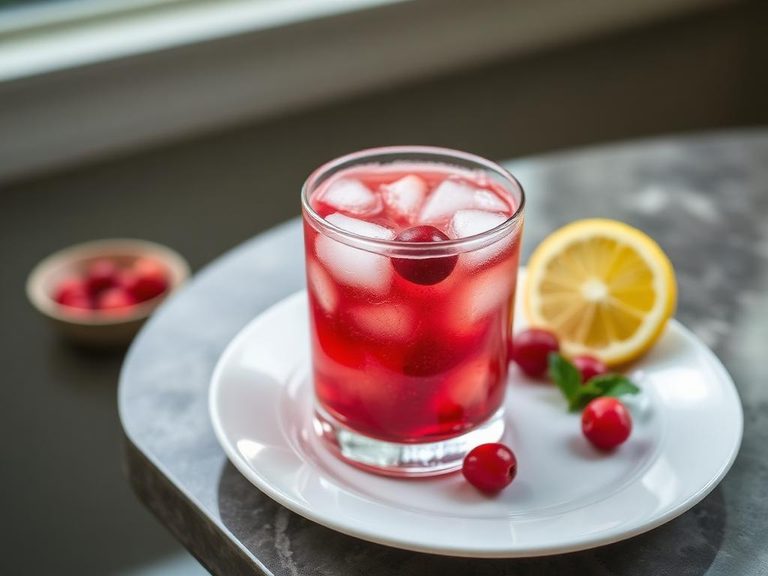
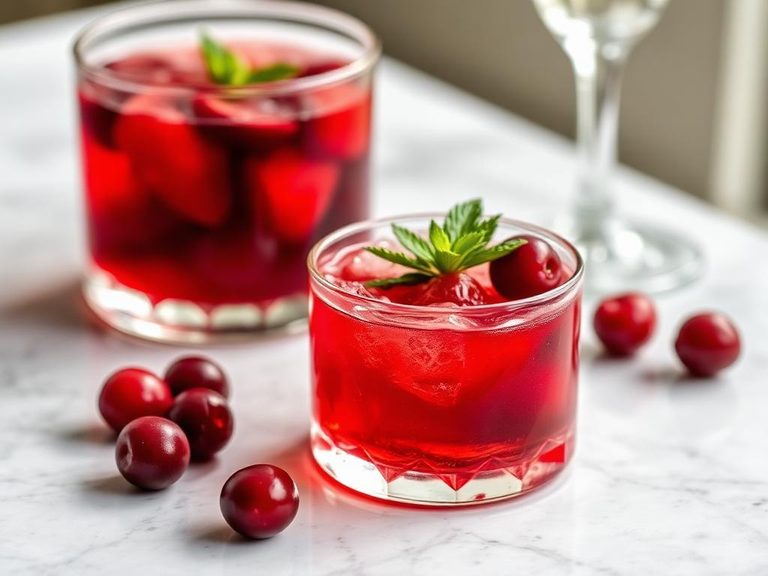
This is a light, tart, and refreshing beverage made from cranberry juice diluted with water and sweetened with low-calorie alternatives like saccharin and corn sweetener. It has a thin, juice-like consistency and a vibrant ruby-red color, offering a sharp, tangy flavor with a sweet finish. Nutritionally, it's a very low-calorie drink that provides a small amount of added calcium.
Calorie split: 0% protein · 99% carbs · 0% fat
↓ Full nutrition💚 Why it's loved
People love it for its classic, sharp cranberry tang that's perfectly balanced by sweetness, making it a refreshing standalone drink or a versatile cocktail mixer. Its light profile and cultural association with holidays and health-conscious living make it a popular choice.
⚠️ Watch-outs & how to enjoy it better
The use of artificial sweeteners like saccharin may leave a bitter aftertaste for some and is a consideration for those avoiding such additives. The natural acidity can be harsh on sensitive teeth or stomachs. To mitigate, consider drinking it with a meal, using a straw to minimize tooth contact, or diluting it further with water.
Key benefits
- Extremely low in calories (19 kcal per 100g)
- Contains added calcium for bone health support
- Provides a quick source of carbohydrates for energy
- A flavorful, low-sugar alternative to full-sugar juices
- May contribute to daily fluid intake
🍽️ Popular dishes
🌍 Where it's eaten
💡 Did you know?
The 'cocktail' in its name historically referred to a mixed drink, but for juice, it legally means the product is diluted with water and contains less than the percentage of pure juice found in a '100% juice' product.
Full nutrition (USDA data · scales with serving)
| Water | 95.2 g |
| Energy | 19.0 kcal |
| Energy | 77.0 kj |
| Protein | 0.02 g |
| Total lipid (fat) | 0.01 g |
| Ash | 0.18 g |
| Carbohydrate, by difference | 4.6 g |
| Fiber, total dietary | 0.00 g |
| Total Sugars | 4.6 g |
| Calcium, Ca | 9.0 mg |
| Iron, Fe | 0.04 mg |
| Magnesium, Mg | 2.0 mg |
| Phosphorus, P | 1.0 mg |
| Potassium, K | 25.0 mg |
| Sodium, Na | 3.0 mg |
| Zinc, Zn | 0.02 mg |
| Copper, Cu | 0.01 mg |
| Manganese, Mn | 0.01 mg |
| Selenium, Se | 0.00 ug |
| Fluoride, F | 70.1 ug |
| Vitamin C, total ascorbic acid | 32.2 mg |
| Thiamin | 0.00 mg |
| Riboflavin | 0.00 mg |
| Niacin | 0.00 mg |
| Pantothenic acid | 0.00 mg |
| Vitamin B-6 | 0.00 mg |
| Folate, total | 0.00 ug |
| Folic acid | 0.00 ug |
| Folate, food | 0.00 ug |
| Folate, DFE | 0.00 ug |
| Choline, total | 0.40 mg |
| Vitamin B-12 | 0.00 ug |
| Vitamin B-12, added | 0.00 ug |
| Vitamin A, RAE | 0.00 ug |
| Retinol | 0.00 ug |
| Carotene, beta | 1.0 ug |
| Carotene, alpha | 0.00 ug |
| Cryptoxanthin, beta | 0.00 ug |
| Vitamin A, IU | 2.0 iu |
| Lycopene | 0.00 ug |
| Lutein + zeaxanthin | 3.0 ug |
| Vitamin E (alpha-tocopherol) | 0.05 mg |
| Vitamin E, added | 0.00 mg |
| Vitamin D (D2 + D3), International Units | 0.00 iu |
| Vitamin D (D2 + D3) | 0.00 ug |
| Vitamin K (phylloquinone) | 0.20 ug |
| Alcohol, ethyl | 0.00 g |
| Caffeine | 0.00 mg |
| Theobromine | 0.00 mg |
Fat & fatty acid profile (per 100g)
| Fatty acids, total saturated | 0.00 g |
| SFA 4:0 | 0.00 g |
| SFA 6:0 | 0.00 g |
| SFA 8:0 | 0.00 g |
| SFA 10:0 | 0.00 g |
| SFA 12:0 | 0.00 g |
| SFA 14:0 | 0.00 g |
| SFA 16:0 | 0.00 g |
| SFA 18:0 | 0.00 g |
| Fatty acids, total monounsaturated | 0.00 g |
| MUFA 16:1 | 0.00 g |
| MUFA 18:1 | 0.00 g |
| MUFA 20:1 | 0.00 g |
| MUFA 22:1 | 0.00 g |
| Fatty acids, total polyunsaturated | 0.00 g |
| PUFA 18:2 | 0.00 g |
| PUFA 18:3 | 0.00 g |
| PUFA 18:4 | 0.00 g |
| PUFA 20:4 | 0.00 g |
| PUFA 20:5 n-3 (EPA) | 0.00 g |
| PUFA 22:5 n-3 (DPA) | 0.00 g |
| PUFA 22:6 n-3 (DHA) | 0.00 g |
| Fatty acids, total trans | 0.00 g |
| Cholesterol | 0.00 mg |
Amino acid profile (per 100g)
| Tryptophan | 0.00 g |
| Threonine | 0.00 g |
| Isoleucine | 0.00 g |
| Leucine | 0.00 g |
| Lysine | 0.00 g |
| Methionine | 0.00 g |
| Cystine | 0.00 g |
| Phenylalanine | 0.00 g |
| Tyrosine | 0.00 g |
| Valine | 0.00 g |
| Arginine | 0.00 g |
| Histidine | 0.00 g |
| Alanine | 0.00 g |
| Aspartic acid | 0.00 g |
| Glutamic acid | 0.00 g |
| Glycine | 0.00 g |
| Proline | 0.00 g |
| Serine | 0.00 g |
FAQ
How does this differ from 100% cranberry juice?
This 'cocktail' is a blend of cranberry juice, water, sweeteners, and often added calcium. 100% cranberry juice is undiluted and typically much more tart and higher in natural sugars and calories.
Is the calcium naturally occurring?
No, the calcium is added during processing as a nutritional supplement, similar to calcium-fortified orange juice.
Can I use this in baking?
Yes, it can be used in glazes, frostings, or to add tart flavor to cakes and muffins, but be mindful of its added sweetness and thin consistency compared to pure juice.
Nutrient density (calculated · NRF9.3)
Nutrient Rich Foods index: beneficial nutrients (protein, fiber, vitamins, minerals) minus saturated fat, added sugar & sodium, per 100 kcal.
NRF9.3 index — Fulgoni, Keast & Drewnowski, 2009. Computed from USDA nutrients.
Weight-loss friendliness (composite index)
Energy density 0.19 kcal/g · 0% calories from protein · 0.0 g fiber · 4.6 g sugar per 100 g.
Composite of energy density (Rolls et al., 1999), protein & fiber satiety, minus sugar. A calculated heuristic — ranks satiety-per-calorie, not a clinical measure.
Dietary load (calculated from USDA values)
Potential renal acid load. Positive = acid-forming, negative = alkaline-forming.
Sodium-to-potassium ratio: 0.12 (lower is better — aim for ≤ 1)
Sodium:potassium per WHO potassium guidance. Computed from USDA nutrients.