

Crackers, rye, wafers, plain
Whole food · Baked Products
These are crisp, dry, and slightly tangy wafers made from rye flour, offering a satisfying snap with a deep, earthy flavor. Nutritionally, they are a powerhouse of fiber, with nearly 23g per 100g, and are virtually fat-free, making them a light yet filling snack. Their low sugar content and substantial carbohydrate profile provide steady energy without a sweet rush.
Calorie split: 10% protein · 87% carbs · 2% fat
↓ Full nutrition💚 Why it's loved
People love them for their robust, nutty flavor and the satisfying crunch that holds up well to toppings. They are a staple in many European cultures, often enjoyed simply with cheese or as a hearty accompaniment to soups and salads.
⚠️ Watch-outs & how to enjoy it better
The dense, dry texture can be challenging for some, and the high fiber content may cause digestive discomfort if consumed in large quantities without adequate water. To counteract this, start with a small portion and pair them with a hydrating food like cucumber or a protein-rich dip like hummus. Also, be mindful of sodium content in some brands; choose low-sodium varieties and balance with potassium-rich foods like bananas.
Key benefits
- Exceptionally high in dietary fiber (22.9g per 100g), supporting digestive health.
- Very low in fat (0.9g) and sugar (1.01g), making it a lean snack option.
- Good source of plant-based protein (9.6g per 100g) for a cracker.
- Provides complex carbohydrates for sustained energy release.
- Often contains essential minerals like iron and magnesium from whole rye.
🍽️ Popular dishes
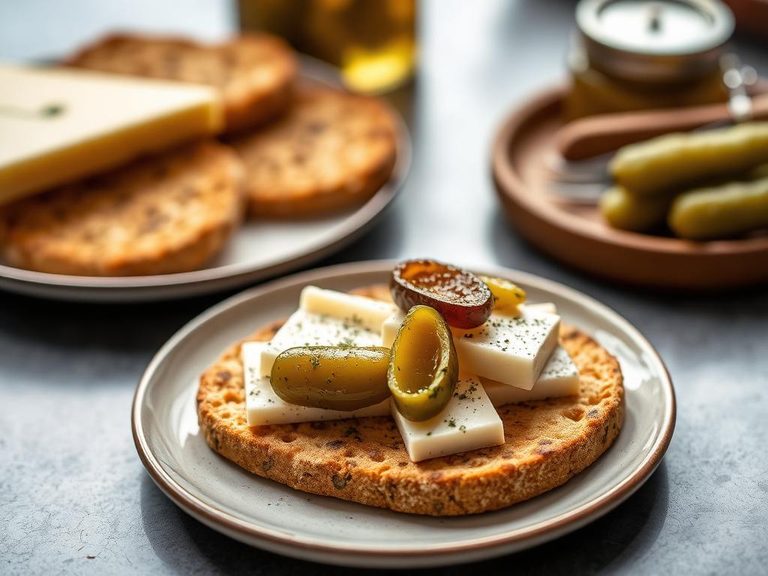
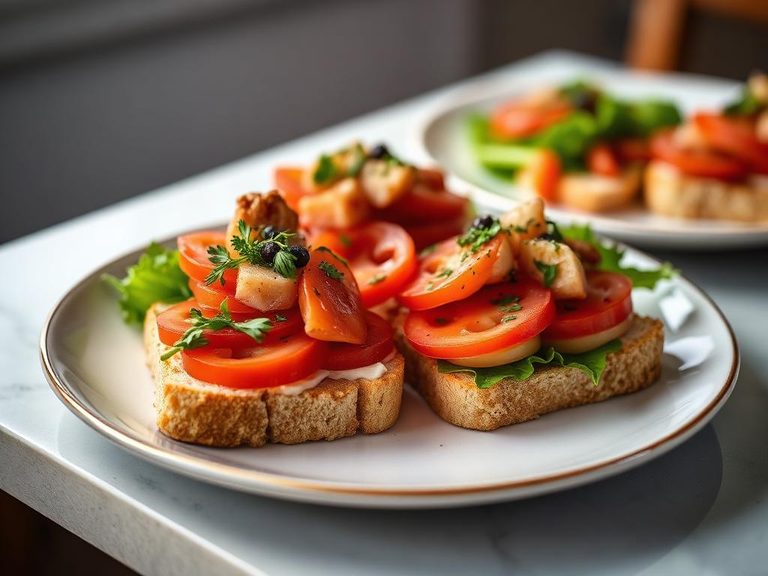
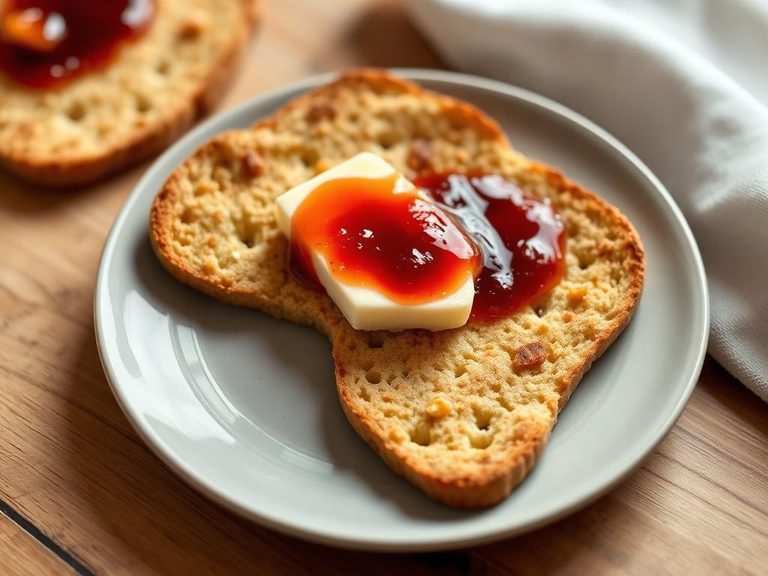
🌍 Where it's eaten
💡 Did you know?
Rye crispbread has been a staple in Scandinavia for centuries, and in Sweden, it's so integral to the diet that it's often served at breakfast, lunch, and dinner.
Full nutrition (USDA data · scales with serving)
| Water | 5.0 g |
| Energy | 334 kcal |
| Energy | 1397 kj |
| Protein | 9.6 g |
| Total lipid (fat) | 0.90 g |
| Ash | 4.1 g |
| Carbohydrate, by difference | 80.4 g |
| Fiber, total dietary | 22.9 g |
| Total Sugars | 1.0 g |
| Calcium, Ca | 40.0 mg |
| Iron, Fe | 5.9 mg |
| Magnesium, Mg | 121 mg |
| Phosphorus, P | 334 mg |
| Potassium, K | 495 mg |
| Sodium, Na | 557 mg |
| Zinc, Zn | 2.8 mg |
| Copper, Cu | 0.46 mg |
| Manganese, Mn | 5.4 mg |
| Selenium, Se | 23.8 ug |
| Vitamin C, total ascorbic acid | 0.10 mg |
| Thiamin | 0.43 mg |
| Riboflavin | 0.29 mg |
| Niacin | 1.6 mg |
| Pantothenic acid | 0.57 mg |
| Vitamin B-6 | 0.27 mg |
| Folate, total | 45.0 ug |
| Folic acid | 0.00 ug |
| Folate, food | 45.0 ug |
| Folate, DFE | 45.0 ug |
| Choline, total | 20.0 mg |
| Vitamin B-12 | 0.00 ug |
| Vitamin B-12, added | 0.00 ug |
| Vitamin A, RAE | 0.00 ug |
| Retinol | 0.00 ug |
| Carotene, beta | 2.0 ug |
| Carotene, alpha | 1.0 ug |
| Cryptoxanthin, beta | 0.00 ug |
| Vitamin A, IU | 5.0 iu |
| Lycopene | 0.00 ug |
| Lutein + zeaxanthin | 245 ug |
| Vitamin E (alpha-tocopherol) | 0.80 mg |
| Vitamin E, added | 0.00 mg |
| Vitamin D (D2 + D3), International Units | 0.00 iu |
| Vitamin D (D2 + D3) | 0.00 ug |
| Vitamin K (phylloquinone) | 5.7 ug |
| Alcohol, ethyl | 0.00 g |
| Caffeine | 0.00 mg |
| Theobromine | 0.00 mg |
Fat & fatty acid profile (per 100g)
| Fatty acids, total saturated | 0.11 g |
| SFA 4:0 | 0.00 g |
| SFA 6:0 | 0.00 g |
| SFA 8:0 | 0.00 g |
| SFA 10:0 | 0.00 g |
| SFA 12:0 | 0.00 g |
| SFA 14:0 | 0.00 g |
| SFA 16:0 | 0.10 g |
| SFA 18:0 | 0.01 g |
| Fatty acids, total monounsaturated | 0.15 g |
| MUFA 16:1 | 0.00 g |
| MUFA 18:1 | 0.14 g |
| MUFA 20:1 | 0.00 g |
| MUFA 22:1 | 0.00 g |
| Fatty acids, total polyunsaturated | 0.40 g |
| PUFA 18:2 | 0.35 g |
| PUFA 18:3 | 0.05 g |
| PUFA 18:4 | 0.00 g |
| PUFA 20:4 | 0.00 g |
| PUFA 20:5 n-3 (EPA) | 0.00 g |
| PUFA 22:5 n-3 (DPA) | 0.00 g |
| PUFA 22:6 n-3 (DHA) | 0.00 g |
| Cholesterol | 0.00 mg |
Amino acid profile (per 100g)
Estimated from Crackers, cheese, sandwich-type with cheese filling — USDA does not publish this profile for Crackers.
| Tryptophan | 0.11 g |
| Threonine | 0.33 g |
| Isoleucine | 0.36 g |
| Leucine | 0.64 g |
| Lysine | 0.39 g |
| Methionine | 0.15 g |
| Cystine | 0.15 g |
| Phenylalanine | 0.35 g |
| Tyrosine | 0.25 g |
| Valine | 0.38 g |
| Arginine | 0.29 g |
| Histidine | 0.17 g |
| Alanine | 0.30 g |
| Aspartic acid | 0.52 g |
| Glutamic acid | 2.2 g |
| Glycine | 0.24 g |
| Proline | 0.77 g |
| Serine | 0.40 g |
FAQ
Are rye wafers gluten-free?
No, rye contains gluten, so these wafers are not suitable for people with celiac disease or gluten sensitivity.
How should I store rye wafers to keep them crisp?
Store them in an airtight container in a cool, dry place. If they soften, you can crisp them up by placing them in a low oven (around 150°C/300°F) for a few minutes.
Can rye wafers be part of a weight-loss diet?
Yes, their high fiber and protein content can help you feel full longer, but be mindful of portion sizes as they are calorie-dense (334 kcal per 100g).
Nutrient density (calculated · NRF9.3)
Nutrient Rich Foods index: beneficial nutrients (protein, fiber, vitamins, minerals) minus saturated fat, added sugar & sodium, per 100 kcal.
NRF9.3 index — Fulgoni, Keast & Drewnowski, 2009. Computed from USDA nutrients.
Weight-loss friendliness (composite index)
Energy density 3.34 kcal/g · 11% calories from protein · 22.9 g fiber · 1.0 g sugar per 100 g.
Composite of energy density (Rolls et al., 1999), protein & fiber satiety, minus sugar. A calculated heuristic — ranks satiety-per-calorie, not a clinical measure.
Dietary load (calculated from USDA values)
Potential renal acid load. Positive = acid-forming, negative = alkaline-forming.
Sodium-to-potassium ratio: 1.13 (lower is better — aim for ≤ 1)
Sodium:potassium per WHO potassium guidance. Computed from USDA nutrients.