

Chicken, stewing, meat only, cooked, stewed
Whole food · Poultry Products

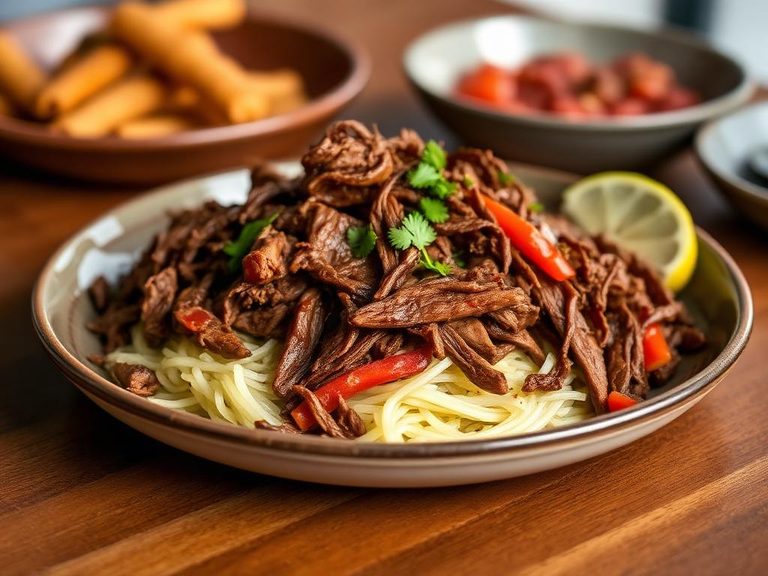
Photo: Wikipedia
Stewed chicken meat is tender, succulent, and deeply savory, having been slow-cooked in liquid until it practically melts apart. This cooking method yields a lean protein source with virtually no carbohydrates, making it a staple for high-protein, low-carb diets. Its flavor is mild yet rich, often absorbing the aromatics of the broth it's cooked in.
Calorie split: 53% protein · 0% carbs · 47% fat
↓ Full nutrition💚 Why it's loved
People love stewed chicken for its comforting, home-cooked flavor and incredible versatility—it serves as a blank canvas for countless herbs, spices, and global cuisines. Its fall-apart tenderness makes it a beloved, hearty component of soups, stews, and one-pot meals.
⚠️ Watch-outs & how to enjoy it better
The main caution is for individuals managing sodium intake, as stews often use salty broths or seasonings. To counteract this, use low-sodium stock, flavor with herbs and acid (like lemon juice or vinegar) instead of salt, and rinse the meat if it's been pre-brined. Also, ensure it's cooked thoroughly to avoid foodborne illness.
Key benefits
- Excellent source of lean protein for muscle maintenance
- Naturally zero-carbohydrate and sugar-free
- Tender texture is easy to chew and digest
- Provides essential B vitamins like niacin and B6
- Low in saturated fat compared to many other meats
🍽️ Popular dishes
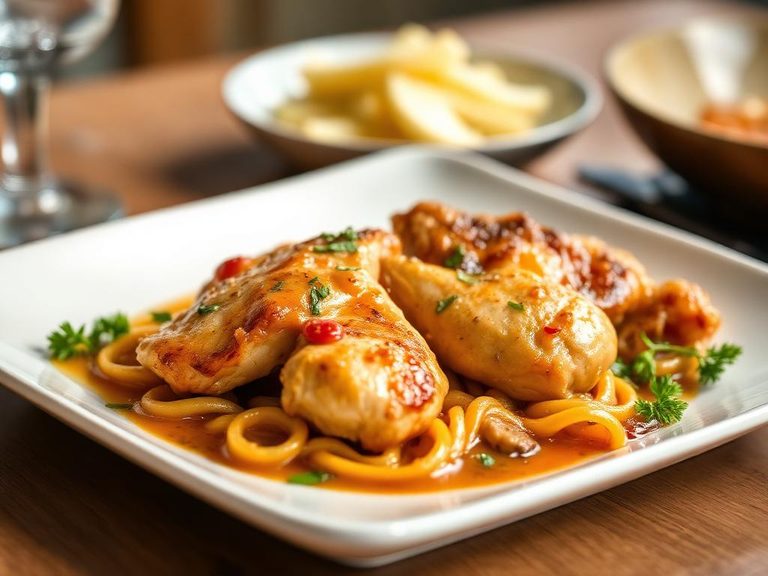
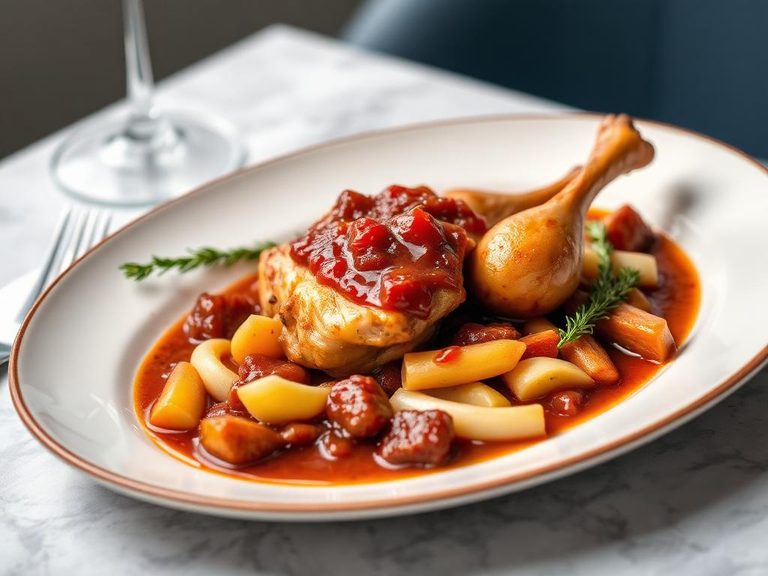
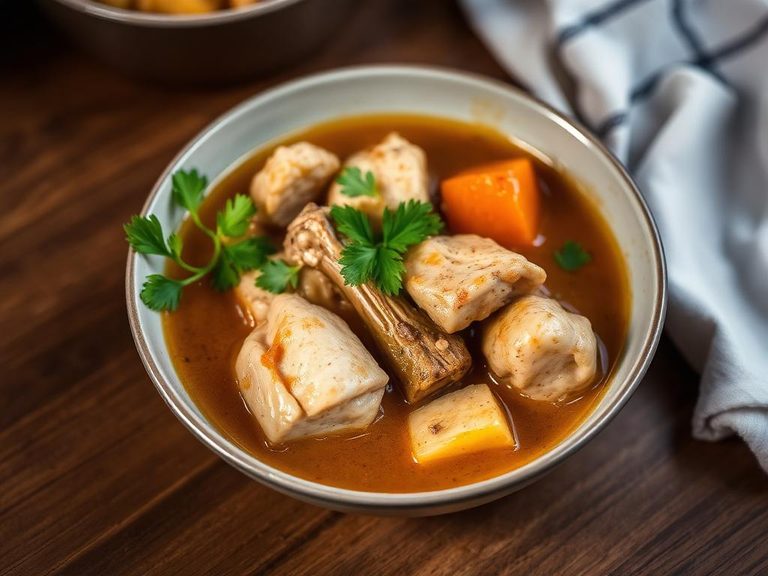
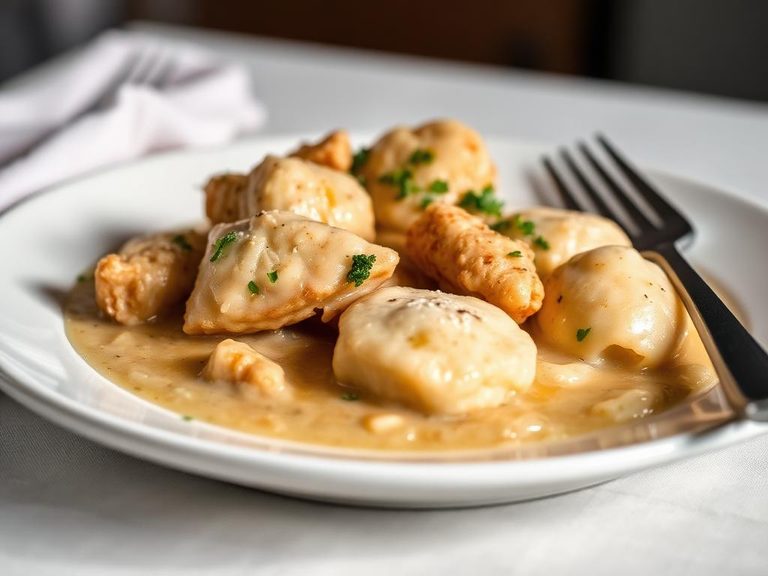

🌍 Where it's eaten
💡 Did you know?
The term 'stewing' comes from the Old French word 'estuier,' meaning 'to keep close' or 'to confine,' perfectly describing the process of cooking meat in a confined pot of liquid.
Full nutrition (USDA data · scales with serving)
| Water | 56.4 g |
| Energy | 237 kcal |
| Energy | 992 kj |
| Protein | 30.4 g |
| Total lipid (fat) | 11.9 g |
| Ash | 1.4 g |
| Carbohydrate, by difference | 0.00 g |
| Fiber, total dietary | 0.00 g |
| Total Sugars | 0.00 g |
| Calcium, Ca | 13.0 mg |
| Iron, Fe | 1.4 mg |
| Magnesium, Mg | 22.0 mg |
| Phosphorus, P | 204 mg |
| Potassium, K | 202 mg |
| Sodium, Na | 78.0 mg |
| Zinc, Zn | 2.1 mg |
| Copper, Cu | 0.12 mg |
| Manganese, Mn | 0.02 mg |
| Selenium, Se | 25.2 ug |
| Vitamin C, total ascorbic acid | 0.00 mg |
| Thiamin | 0.11 mg |
| Riboflavin | 0.28 mg |
| Niacin | 6.4 mg |
| Pantothenic acid | 0.86 mg |
| Vitamin B-6 | 0.31 mg |
| Folate, total | 6.0 ug |
| Folic acid | 0.00 ug |
| Folate, food | 6.0 ug |
| Folate, DFE | 6.0 ug |
| Vitamin B-12 | 0.26 ug |
| Vitamin A, RAE | 34.0 ug |
| Retinol | 34.0 ug |
| Carotene, beta | 0.00 ug |
| Carotene, alpha | 0.00 ug |
| Cryptoxanthin, beta | 0.00 ug |
| Vitamin A, IU | 112 iu |
| Lycopene | 0.00 ug |
| Lutein + zeaxanthin | 0.00 ug |
| Vitamin E (alpha-tocopherol) | 0.30 mg |
| Vitamin K (phylloquinone) | 3.1 ug |
| Vitamin K (Dihydrophylloquinone) | 0.00 ug |
| Alcohol, ethyl | 0.00 g |
| Caffeine | 0.00 mg |
| Theobromine | 0.00 mg |
Fat & fatty acid profile (per 100g)
| Fatty acids, total saturated | 3.1 g |
| SFA 4:0 | 0.00 g |
| SFA 6:0 | 0.00 g |
| SFA 8:0 | 0.00 g |
| SFA 10:0 | 0.00 g |
| SFA 12:0 | 0.03 g |
| SFA 14:0 | 0.08 g |
| SFA 16:0 | 2.1 g |
| SFA 18:0 | 0.76 g |
| Fatty acids, total monounsaturated | 4.0 g |
| MUFA 16:1 | 0.56 g |
| MUFA 18:1 | 3.4 g |
| MUFA 20:1 | 0.05 g |
| MUFA 22:1 | 0.00 g |
| Fatty acids, total polyunsaturated | 2.8 g |
| PUFA 18:2 | 2.1 g |
| PUFA 18:3 | 0.10 g |
| PUFA 18:4 | 0.00 g |
| PUFA 20:4 | 0.29 g |
| PUFA 20:5 n-3 (EPA) | 0.02 g |
| PUFA 22:5 n-3 (DPA) | 0.05 g |
| PUFA 22:6 n-3 (DHA) | 0.09 g |
| Cholesterol | 83.0 mg |
Amino acid profile (per 100g)
| Tryptophan | 0.36 g |
| Threonine | 1.3 g |
| Isoleucine | 1.6 g |
| Leucine | 2.3 g |
| Lysine | 2.6 g |
| Methionine | 0.84 g |
| Cystine | 0.39 g |
| Phenylalanine | 1.2 g |
| Tyrosine | 1.0 g |
| Valine | 1.5 g |
| Arginine | 1.8 g |
| Histidine | 0.94 g |
| Alanine | 1.7 g |
| Aspartic acid | 2.7 g |
| Glutamic acid | 4.6 g |
| Glycine | 1.5 g |
| Proline | 1.3 g |
| Serine | 1.0 g |
FAQ
Is stewed chicken healthier than fried chicken?
Yes, generally. Stewing uses moist heat and requires little to no added fat, resulting in a lower-calorie, lower-fat dish compared to deep-frying, which adds significant calories and unhealthy fats.
Can I use chicken breast or thigh for stewing?
Both work well. Thigh meat (dark meat) is often preferred because it has more fat and connective tissue, which breaks down during slow cooking to stay moist and tender. Breast meat (white meat) is leaner but can dry out if overcooked.
How do I prevent stewed chicken from becoming tough?
The key is low and slow cooking. Keep the liquid at a gentle simmer, not a rapid boil, which can toughen the protein. Cooking until the internal temperature reaches 165°F (74°C) and the meat is easily shreddable is ideal.
Nutrient density (calculated · NRF9.3)
Nutrient Rich Foods index: beneficial nutrients (protein, fiber, vitamins, minerals) minus saturated fat, added sugar & sodium, per 100 kcal.
NRF9.3 index — Fulgoni, Keast & Drewnowski, 2009. Computed from USDA nutrients.
Weight-loss friendliness (composite index)
Energy density 2.37 kcal/g · 51% calories from protein · 0.0 g fiber · 0.0 g sugar per 100 g.
Composite of energy density (Rolls et al., 1999), protein & fiber satiety, minus sugar. A calculated heuristic — ranks satiety-per-calorie, not a clinical measure.
Dietary load (calculated from USDA values)
Potential renal acid load. Positive = acid-forming, negative = alkaline-forming.
Sodium-to-potassium ratio: 0.39 (lower is better — aim for ≤ 1)
Sodium:potassium per WHO potassium guidance. Computed from USDA nutrients.