

Chicken, broilers or fryers, light meat, meat and skin, raw
Whole food · Poultry Products
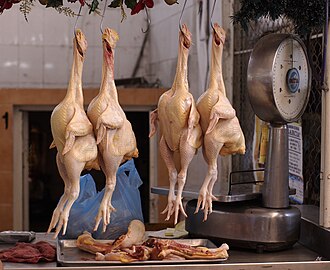
Photo: Wikipedia
This is the lean, tender breast meat from young chickens, prized for its mild flavor and fine-grained texture. It's a powerhouse of high-quality protein, offering over 20 grams per 100g with virtually no carbohydrates. The inclusion of skin adds a layer of rich fat and flavor, making it more succulent than skinless cuts.
Calorie split: 45% protein · 0% carbs · 55% fat
↓ Full nutrition💚 Why it's loved
People love it for its incredible versatility and mild canvas, which readily absorbs marinades, spices, and cooking techniques from grilling to braising. It's a global kitchen staple, forming the protein base of countless comforting and celebratory dishes across cultures.
⚠️ Watch-outs & how to enjoy it better
The skin significantly increases the saturated fat and calorie content, which may be a concern for those managing heart health or calorie intake. To enjoy it mindfully, consider removing the skin before or after cooking to reduce fat, or balance the meal with large portions of non-starchy vegetables and fiber.
Key benefits
- Excellent source of complete, high-quality protein for muscle maintenance and growth.
- Very low in carbohydrates, making it suitable for low-carb and ketogenic diets.
- Provides essential B vitamins like niacin (B3) and B6 for energy metabolism.
- Contains minerals such as selenium and phosphorus for immune and bone health.
- The skin adds dietary fat and calories, which can aid in satiety.
🍽️ Popular dishes
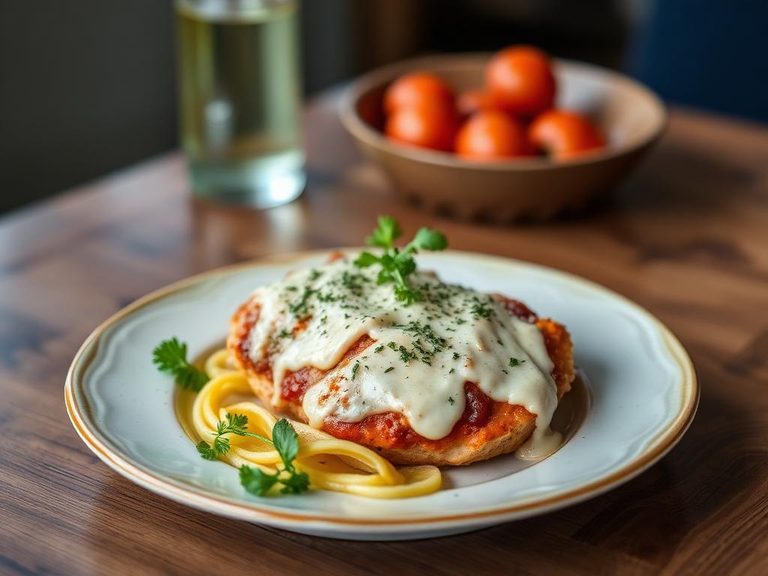

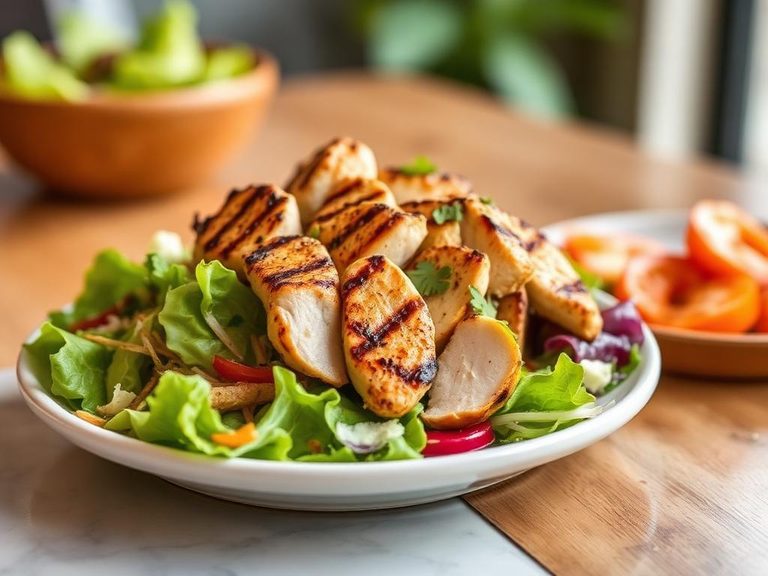
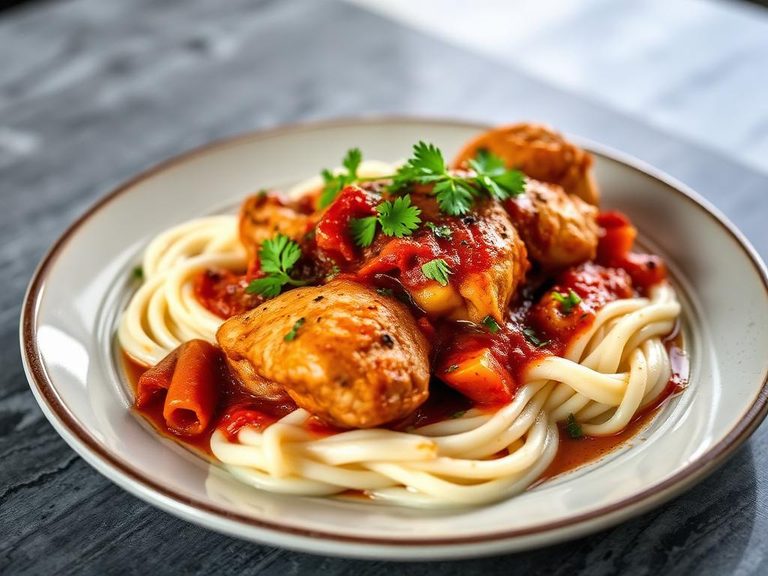
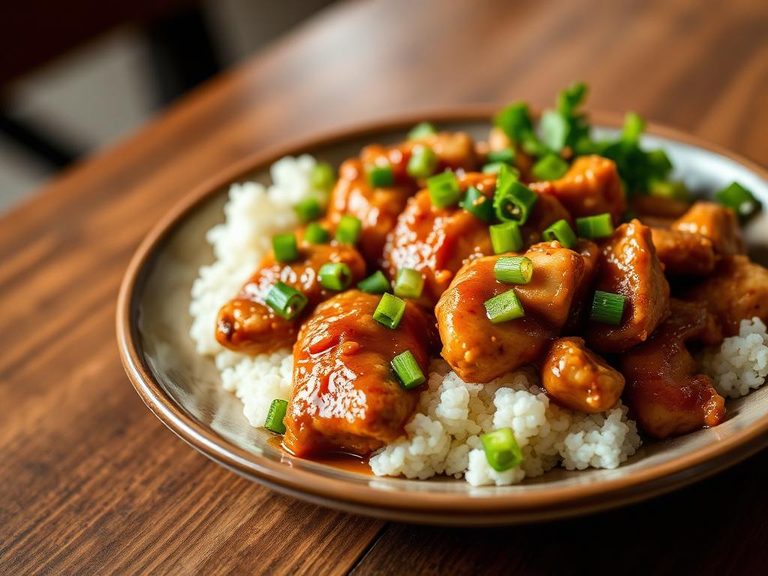
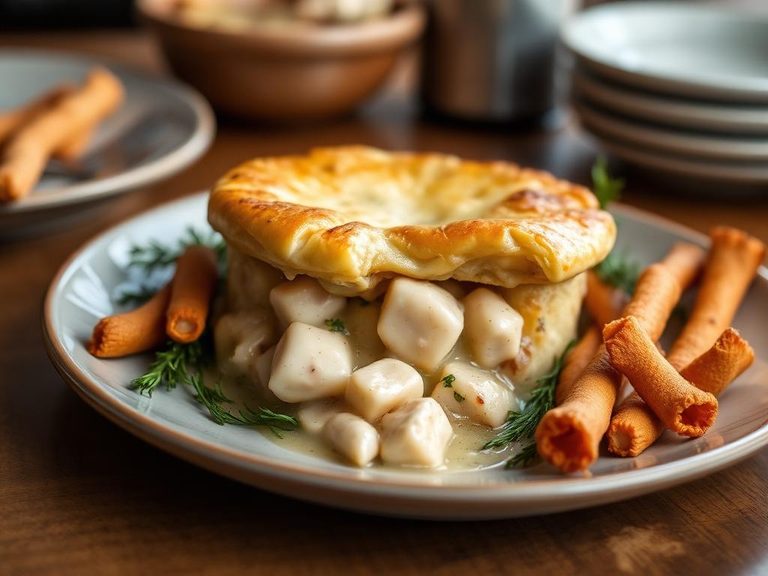
🌍 Where it's eaten
💡 Did you know?
The 'white meat' of chicken breast contains less myoglobin (an oxygen-storing protein) than 'dark meat' legs and thighs, which is why it stays pale when cooked and has a milder, less iron-rich flavor.
Full nutrition (USDA data · scales with serving)
| Water | 68.6 g |
| Energy | 186 kcal |
| Energy | 778 kj |
| Protein | 20.3 g |
| Total lipid (fat) | 11.1 g |
| Ash | 0.86 g |
| Carbohydrate, by difference | 0.00 g |
| Fiber, total dietary | 0.00 g |
| Total Sugars | 0.00 g |
| Calcium, Ca | 11.0 mg |
| Iron, Fe | 0.79 mg |
| Magnesium, Mg | 23.0 mg |
| Phosphorus, P | 163 mg |
| Potassium, K | 204 mg |
| Sodium, Na | 65.0 mg |
| Zinc, Zn | 0.93 mg |
| Copper, Cu | 0.04 mg |
| Manganese, Mn | 0.02 mg |
| Selenium, Se | 16.4 ug |
| Vitamin C, total ascorbic acid | 0.00 mg |
| Thiamin | 0.06 mg |
| Riboflavin | 0.09 mg |
| Niacin | 8.9 mg |
| Pantothenic acid | 0.79 mg |
| Vitamin B-6 | 0.48 mg |
| Folate, total | 4.0 ug |
| Folic acid | 0.00 ug |
| Folate, food | 4.0 ug |
| Folate, DFE | 4.0 ug |
| Vitamin B-12 | 0.34 ug |
| Vitamin A, RAE | 29.0 ug |
| Retinol | 29.0 ug |
| Carotene, beta | 0.00 ug |
| Carotene, alpha | 0.00 ug |
| Cryptoxanthin, beta | 0.00 ug |
| Vitamin A, IU | 97.0 iu |
| Lycopene | 0.00 ug |
| Lutein + zeaxanthin | 0.00 ug |
| Vitamin E (alpha-tocopherol) | 0.27 mg |
| Vitamin K (phylloquinone) | 2.4 ug |
| Alcohol, ethyl | 0.00 g |
| Caffeine | 0.00 mg |
| Theobromine | 0.00 mg |
Fat & fatty acid profile (per 100g)
| Fatty acids, total saturated | 3.2 g |
| SFA 4:0 | 0.00 g |
| SFA 6:0 | 0.00 g |
| SFA 8:0 | 0.00 g |
| SFA 10:0 | 0.00 g |
| SFA 12:0 | 0.01 g |
| SFA 14:0 | 0.09 g |
| SFA 16:0 | 2.3 g |
| SFA 18:0 | 0.63 g |
| Fatty acids, total monounsaturated | 4.5 g |
| MUFA 16:1 | 0.60 g |
| MUFA 18:1 | 3.7 g |
| MUFA 20:1 | 0.12 g |
| MUFA 22:1 | 0.00 g |
| Fatty acids, total polyunsaturated | 2.3 g |
| PUFA 18:2 | 2.1 g |
| PUFA 18:3 | 0.10 g |
| PUFA 18:4 | 0.00 g |
| PUFA 20:4 | 0.06 g |
| PUFA 20:5 n-3 (EPA) | 0.01 g |
| PUFA 22:5 n-3 (DPA) | 0.01 g |
| PUFA 22:6 n-3 (DHA) | 0.02 g |
| Cholesterol | 67.0 mg |
Amino acid profile (per 100g)
| Tryptophan | 0.23 g |
| Threonine | 0.84 g |
| Isoleucine | 1.0 g |
| Leucine | 1.5 g |
| Lysine | 1.7 g |
| Methionine | 0.54 g |
| Cystine | 0.27 g |
| Phenylalanine | 0.79 g |
| Tyrosine | 0.66 g |
| Valine | 0.98 g |
| Arginine | 1.3 g |
| Histidine | 0.60 g |
| Alanine | 1.2 g |
| Aspartic acid | 1.8 g |
| Glutamic acid | 3.0 g |
| Glycine | 1.3 g |
| Proline | 0.97 g |
| Serine | 0.71 g |
FAQ
What's the difference between 'broilers' and 'fryers'?
The terms are largely interchangeable in modern farming, both referring to young chickens raised specifically for meat production, typically slaughtered between 6-8 weeks old. Historically, 'broilers' were for roasting and 'fryers' for frying, but today it denotes the same tender, young bird.
How does the nutrition change if I remove the skin?
Removing the skin dramatically reduces the fat and calorie content. For the same 100g portion, skinless chicken breast has about 110 kcal and 2.6g fat, compared to 186 kcal and 11g fat with skin. The protein content remains very similar.
Is this a good cut for meal prepping?
Yes, it's excellent for meal prep due to its mild flavor and quick cooking time. To prevent dryness, avoid overcooking; use a meat thermometer to pull it at 165°F (74°C). It reheats well in sauces, soups, or salads.
Nutrient density (calculated · NRF9.3)
Nutrient Rich Foods index: beneficial nutrients (protein, fiber, vitamins, minerals) minus saturated fat, added sugar & sodium, per 100 kcal.
NRF9.3 index — Fulgoni, Keast & Drewnowski, 2009. Computed from USDA nutrients.
Weight-loss friendliness (composite index)
Energy density 1.86 kcal/g · 44% calories from protein · 0.0 g fiber · 0.0 g sugar per 100 g.
Composite of energy density (Rolls et al., 1999), protein & fiber satiety, minus sugar. A calculated heuristic — ranks satiety-per-calorie, not a clinical measure.
Dietary load (calculated from USDA values)
Potential renal acid load. Positive = acid-forming, negative = alkaline-forming.
Sodium-to-potassium ratio: 0.32 (lower is better — aim for ≤ 1)
Sodium:potassium per WHO potassium guidance. Computed from USDA nutrients.