

Chicken breast, roll, oven-roasted
Whole food · Sausages and Luncheon Meats

Photo: Wikipedia
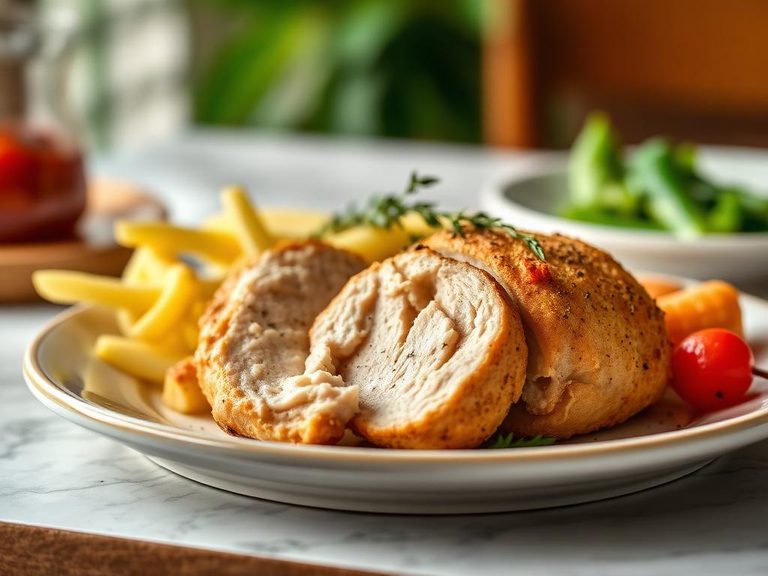
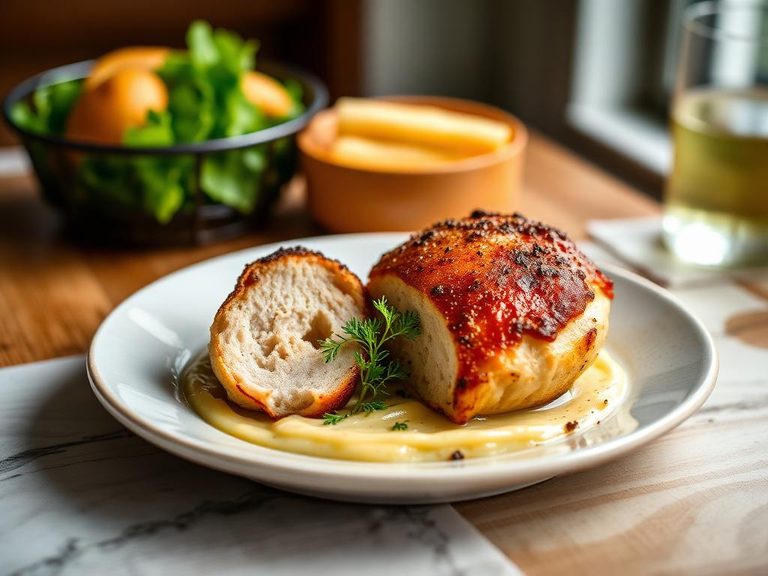
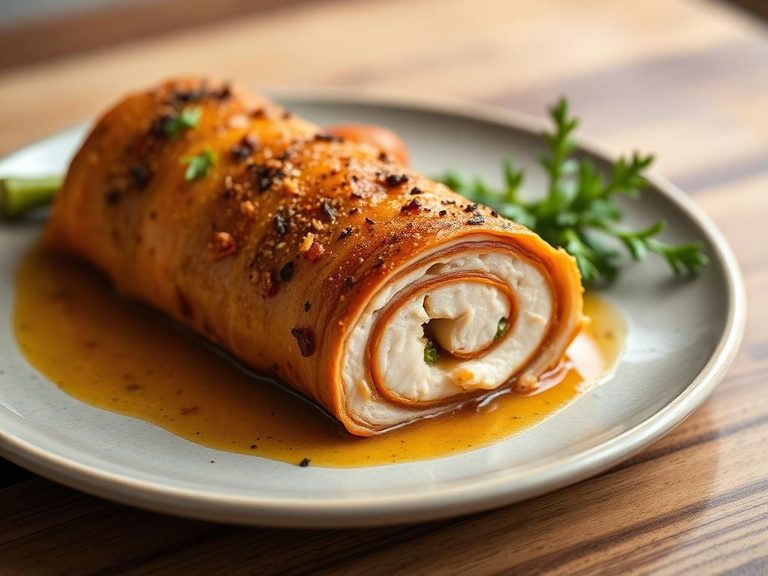
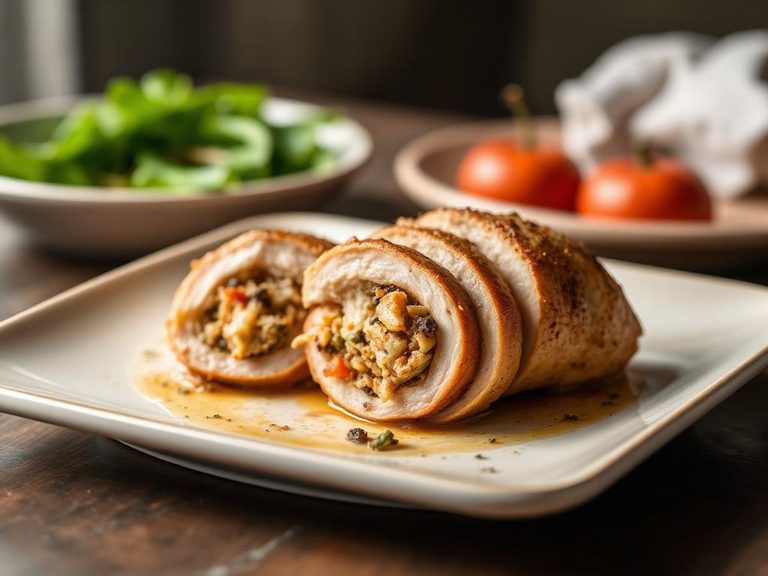
A lean, protein-packed cut of chicken breast, typically rolled or tied to retain moisture, then roasted to a golden finish. The texture is firm yet juicy when cooked properly, with a mild, savory flavor that absorbs marinades and spices beautifully. At just 134 kcal per 100g, it's a high-protein, low-carb staple ideal for muscle-building and weight management diets.
Calorie split: 43% protein · 5% carbs · 51% fat
↓ Full nutrition💚 Why it's loved
People love it for its mild, adaptable flavor that acts as a blank canvas for bold seasonings, marinades, and sauces. It's a go-to for health-conscious cooks and athletes because it delivers high protein with minimal fat and calories.
⚠️ Watch-outs & how to enjoy it better
The lean nature of chicken breast means it can easily become dry and tough if overcooked, leading to a bland, unappetizing texture. To counteract this, use a meat thermometer to ensure it reaches 165°F (74°C) without overcooking, brine it beforehand, or use cooking methods like roasting with a pan sauce or slow cooking to retain moisture.
Key benefits
- High-quality complete protein for muscle repair and satiety
- Very low in carbohydrates and sugar, suitable for keto and low-carb diets
- Low in fat compared to other poultry cuts, making it a lean protein source
- Versatile base for a wide range of global cuisines and meal prep
- Rich in B vitamins, particularly niacin (B3), supporting energy metabolism
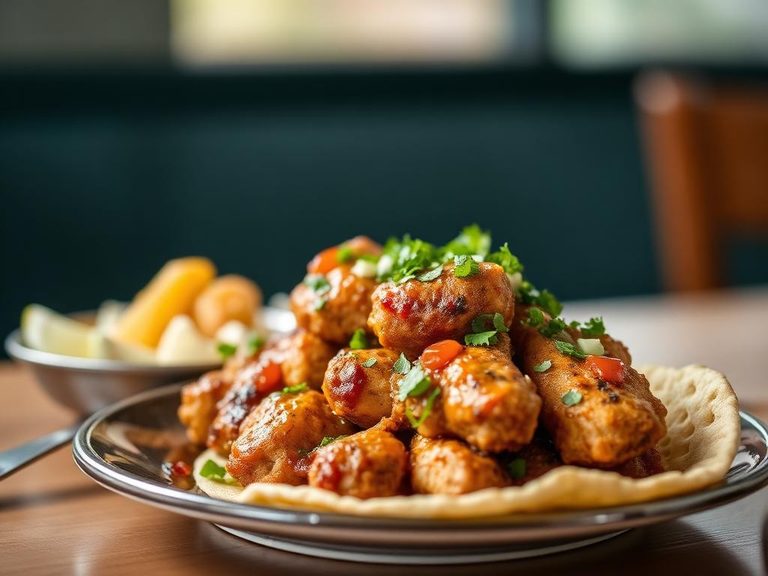
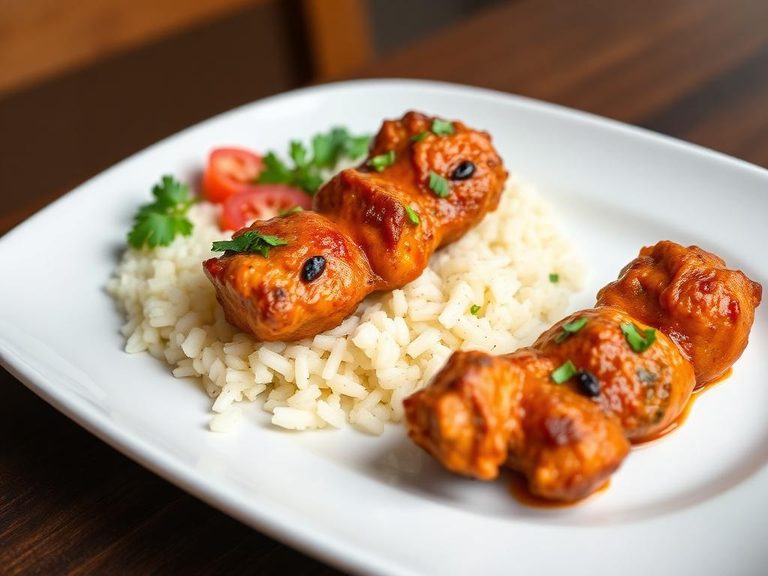
🍽️ Popular dishes
🌍 Where it's eaten
💡 Did you know?
Chicken breast is one of the most popular cuts of meat in the United States, with Americans consuming over 100 million pounds of chicken breast per week.
Full nutrition (USDA data · scales with serving)
| Water | 73.0 g |
| Energy | 134 kcal |
| Energy | 562 kj |
| Protein | 14.6 g |
| Total lipid (fat) | 7.7 g |
| Ash | 3.0 g |
| Carbohydrate, by difference | 1.8 g |
| Fiber, total dietary | 0.00 g |
| Total Sugars | 0.43 g |
| Calcium, Ca | 6.0 mg |
| Iron, Fe | 0.32 mg |
| Magnesium, Mg | 17.0 mg |
| Phosphorus, P | 121 mg |
| Potassium, K | 324 mg |
| Sodium, Na | 883 mg |
| Zinc, Zn | 0.65 mg |
| Copper, Cu | 0.07 mg |
| Manganese, Mn | 0.02 mg |
| Selenium, Se | 11.7 ug |
| Vitamin C, total ascorbic acid | 0.00 mg |
| Thiamin | 0.04 mg |
| Riboflavin | 0.06 mg |
| Niacin | 6.5 mg |
| Pantothenic acid | 0.56 mg |
| Vitamin B-6 | 0.30 mg |
| Folate, total | 3.0 ug |
| Folic acid | 0.00 ug |
| Folate, food | 3.0 ug |
| Folate, DFE | 3.0 ug |
| Vitamin B-12 | 0.24 ug |
| Vitamin A, RAE | 0.00 ug |
| Retinol | 0.00 ug |
| Carotene, beta | 0.00 ug |
| Carotene, alpha | 0.00 ug |
| Cryptoxanthin, beta | 0.00 ug |
| Vitamin A, IU | 0.00 iu |
| Lycopene | 0.00 ug |
| Lutein + zeaxanthin | 0.00 ug |
| Vitamin E (alpha-tocopherol) | 0.07 mg |
| Tocopherol, gamma | 0.02 mg |
| Vitamin K (phylloquinone) | 0.50 ug |
| Alcohol, ethyl | 0.00 g |
| Caffeine | 0.00 mg |
| Theobromine | 0.00 mg |
Fat & fatty acid profile (per 100g)
| Fatty acids, total saturated | 2.5 g |
| SFA 4:0 | 0.00 g |
| SFA 6:0 | 0.00 g |
| SFA 8:0 | 0.00 g |
| SFA 10:0 | 0.00 g |
| SFA 12:0 | 0.01 g |
| SFA 14:0 | 0.07 g |
| SFA 16:0 | 1.9 g |
| SFA 18:0 | 0.46 g |
| Fatty acids, total monounsaturated | 2.8 g |
| MUFA 16:1 | 0.40 g |
| MUFA 18:1 | 2.3 g |
| MUFA 20:1 | 0.09 g |
| MUFA 22:1 | 0.00 g |
| Fatty acids, total polyunsaturated | 1.5 g |
| PUFA 18:2 | 1.3 g |
| PUFA 18:3 | 0.06 g |
| PUFA 18:4 | 0.00 g |
| PUFA 20:4 | 0.04 g |
| PUFA 20:5 n-3 (EPA) | 0.01 g |
| PUFA 22:5 n-3 (DPA) | 0.01 g |
| PUFA 22:6 n-3 (DHA) | 0.01 g |
| Cholesterol | 39.0 mg |
| Phytosterols | 0.00 mg |
Amino acid profile (per 100g)
| Tryptophan | 0.16 g |
| Threonine | 0.60 g |
| Isoleucine | 0.71 g |
| Leucine | 1.0 g |
| Lysine | 1.2 g |
| Methionine | 0.38 g |
| Cystine | 0.20 g |
| Phenylalanine | 0.56 g |
| Tyrosine | 0.46 g |
| Valine | 0.70 g |
| Arginine | 0.93 g |
| Histidine | 0.42 g |
| Alanine | 0.87 g |
| Aspartic acid | 1.3 g |
| Glutamic acid | 2.1 g |
| Glycine | 1.0 g |
| Proline | 0.75 g |
| Serine | 0.52 g |
FAQ
How do I keep chicken breast from drying out?
Brine the chicken in salt water for 30 minutes before cooking, or marinate it in an acidic mixture like lemon juice or yogurt. Cook to an internal temperature of 165°F (74°C) and let it rest for 5-10 minutes before slicing to allow juices to redistribute.
Is chicken breast a good source of protein?
Yes, chicken breast is an excellent source of complete protein, providing about 31 grams of protein per 100 grams of cooked meat, making it ideal for muscle building and recovery.
Can I eat chicken breast if I'm on a low-carb diet?
Absolutely. Chicken breast is very low in carbohydrates (less than 2 grams per 100g) and contains no fiber, making it a perfect protein source for low-carb, keto, and Atkins diets.
Nutrient density (calculated · NRF9.3)
Nutrient Rich Foods index: beneficial nutrients (protein, fiber, vitamins, minerals) minus saturated fat, added sugar & sodium, per 100 kcal.
NRF9.3 index — Fulgoni, Keast & Drewnowski, 2009. Computed from USDA nutrients.
Weight-loss friendliness (composite index)
Energy density 1.34 kcal/g · 44% calories from protein · 0.0 g fiber · 0.4 g sugar per 100 g.
Composite of energy density (Rolls et al., 1999), protein & fiber satiety, minus sugar. A calculated heuristic — ranks satiety-per-calorie, not a clinical measure.
Dietary load (calculated from USDA values)
Potential renal acid load. Positive = acid-forming, negative = alkaline-forming.
Sodium-to-potassium ratio: 2.73 (lower is better — aim for ≤ 1)
Sodium:potassium per WHO potassium guidance. Computed from USDA nutrients.