

Cheese spread, cream cheese base
Whole food · Dairy and Egg Products

Photo: Wikipedia
This is a smooth, spreadable dairy product made by blending cream cheese with other ingredients like milk, whey, or stabilizers for a softer, more scoopable texture. It offers a rich, tangy, and mildly salty flavor with a velvety mouthfeel that coats the palate. Nutritionally, it's a high-fat, calorie-dense food with minimal protein and virtually no fiber.
Calorie split: 9% protein · 5% carbs · 86% fat
↓ Full nutrition💚 Why it's loved
People adore its ultra-smooth, spreadable consistency that melts effortlessly onto bread, bagels, and crackers. Its mild tanginess acts as a perfect canvas, absorbing and enhancing the flavors of herbs, spices, or sweet mix-ins.
⚠️ Watch-outs & how to enjoy it better
Its high saturated fat and calorie content can be a concern for heart health and weight management if consumed excessively. It is also a common dairy allergen. To enjoy it mindfully, practice strict portion control (e.g., using a measuring spoon) and pair it with high-fiber foods like whole-grain toast or raw vegetables to slow digestion and enhance fullness.
Key benefits
- Excellent source of calcium for bone health.
- Provides conjugated linoleic acid (CLA), a naturally occurring fatty acid.
- High fat content promotes satiety and meal satisfaction.
- A versatile base for both savory and sweet culinary applications.
- Contains vitamin A, important for vision and immune function.
🍽️ Popular dishes

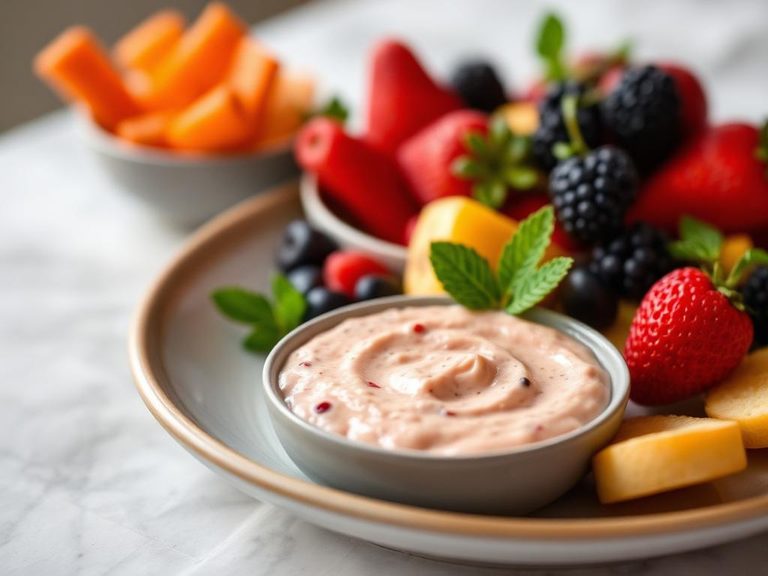


🌍 Where it's eaten
💡 Did you know?
Modern cream cheese was developed in 1872 by an American dairyman, William Lawrence, who was attempting to replicate the French cheese Neufchâtel and accidentally created a richer, higher-fat product.
Full nutrition (USDA data · scales with serving)
| Water | 58.5 g |
| Energy | 295 kcal |
| Energy | 1234 kj |
| Protein | 7.1 g |
| Total lipid (fat) | 28.6 g |
| Ash | 2.3 g |
| Carbohydrate, by difference | 3.5 g |
| Fiber, total dietary | 0.00 g |
| Total Sugars | 3.5 g |
| Calcium, Ca | 71.0 mg |
| Iron, Fe | 1.1 mg |
| Magnesium, Mg | 6.0 mg |
| Phosphorus, P | 91.0 mg |
| Potassium, K | 112 mg |
| Sodium, Na | 436 mg |
| Zinc, Zn | 0.51 mg |
| Copper, Cu | 0.01 mg |
| Selenium, Se | 2.7 ug |
| Vitamin C, total ascorbic acid | 0.00 mg |
| Thiamin | 0.02 mg |
| Riboflavin | 0.19 mg |
| Niacin | 0.95 mg |
| Vitamin B-6 | 0.04 mg |
| Folate, total | 12.0 ug |
| Folic acid | 0.00 ug |
| Folate, food | 12.0 ug |
| Folate, DFE | 12.0 ug |
| Choline, total | 27.2 mg |
| Vitamin B-12 | 0.40 ug |
| Vitamin B-12, added | 0.00 ug |
| Vitamin A, RAE | 302 ug |
| Retinol | 300 ug |
| Carotene, beta | 19.0 ug |
| Carotene, alpha | 0.00 ug |
| Cryptoxanthin, beta | 0.00 ug |
| Vitamin A, IU | 1031 iu |
| Lycopene | 0.00 ug |
| Lutein + zeaxanthin | 0.00 ug |
| Vitamin E (alpha-tocopherol) | 0.77 mg |
| Vitamin E, added | 0.00 mg |
| Vitamin D (D2 + D3), International Units | 21.0 iu |
| Vitamin D (D2 + D3) | 0.50 ug |
| Vitamin D3 (cholecalciferol) | 0.50 ug |
| Vitamin K (phylloquinone) | 2.4 ug |
| Alcohol, ethyl | 0.00 g |
| Caffeine | 0.00 mg |
| Theobromine | 0.00 mg |
Fat & fatty acid profile (per 100g)
| Fatty acids, total saturated | 18.0 g |
| SFA 4:0 | 0.82 g |
| SFA 6:0 | 0.24 g |
| SFA 8:0 | 0.28 g |
| SFA 10:0 | 0.55 g |
| SFA 12:0 | 0.38 g |
| SFA 14:0 | 3.0 g |
| SFA 16:0 | 8.6 g |
| SFA 18:0 | 3.3 g |
| Fatty acids, total monounsaturated | 8.1 g |
| MUFA 16:1 | 0.80 g |
| MUFA 18:1 | 6.9 g |
| MUFA 20:1 | 0.00 g |
| MUFA 22:1 | 0.00 g |
| Fatty acids, total polyunsaturated | 1.0 g |
| PUFA 18:2 | 0.63 g |
| PUFA 18:3 | 0.40 g |
| PUFA 18:4 | 0.00 g |
| PUFA 20:4 | 0.00 g |
| PUFA 20:5 n-3 (EPA) | 0.00 g |
| PUFA 22:5 n-3 (DPA) | 0.00 g |
| PUFA 22:6 n-3 (DHA) | 0.00 g |
| Cholesterol | 90.0 mg |
Amino acid profile (per 100g)
Estimated from Cheese spread, pasteurized process, American — USDA does not publish this profile for Cheese spread.
| Tryptophan | 0.24 g |
| Threonine | 0.63 g |
| Isoleucine | 0.83 g |
| Leucine | 1.8 g |
| Lysine | 1.5 g |
| Methionine | 0.54 g |
| Cystine | 0.10 g |
| Phenylalanine | 0.93 g |
| Tyrosine | 0.89 g |
| Valine | 1.4 g |
| Arginine | 0.55 g |
| Histidine | 0.51 g |
| Alanine | 0.60 g |
| Aspartic acid | 1.1 g |
| Glutamic acid | 3.5 g |
| Glycine | 0.31 g |
| Proline | 2.3 g |
| Serine | 1.0 g |
FAQ
How is cream cheese spread different from regular cream cheese?
Cream cheese spread is typically softer, more spreadable straight from the fridge, and often contains added ingredients like stabilizers (e.g., guar gum), milk, or whey to achieve a smoother, less crumbly texture than block-style cream cheese.
Is cream cheese spread high in sodium?
Yes, it can be. A 100g serving often contains 300-500mg of sodium, contributing significantly to daily limits. Always check the nutrition label, as sodium content varies by brand and flavor.
Can I freeze cream cheese spread?
Freezing is not recommended. The high water content causes ice crystals to form, which breaks the emulsion. Upon thawing, the texture becomes grainy, watery, and separated, making it unsuitable for spreading.
Nutrient density (calculated · NRF9.3)
Nutrient Rich Foods index: beneficial nutrients (protein, fiber, vitamins, minerals) minus saturated fat, added sugar & sodium, per 100 kcal.
NRF9.3 index — Fulgoni, Keast & Drewnowski, 2009. Computed from USDA nutrients.
Weight-loss friendliness (composite index)
Energy density 2.95 kcal/g · 10% calories from protein · 0.0 g fiber · 3.5 g sugar per 100 g.
Composite of energy density (Rolls et al., 1999), protein & fiber satiety, minus sugar. A calculated heuristic — ranks satiety-per-calorie, not a clinical measure.
Dietary load (calculated from USDA values)
Potential renal acid load. Positive = acid-forming, negative = alkaline-forming.
Sodium-to-potassium ratio: 3.89 (lower is better — aim for ≤ 1)
Sodium:potassium per WHO potassium guidance. Computed from USDA nutrients.