

Cheese, brick
Whole food · Dairy and Egg Products

Photo: Wikipedia
Brick cheese is a semi-soft, washed-rind cheese from Wisconsin with a distinctive orange rind and a mild, buttery, slightly tangy flavor. Its supple, pliable texture makes it perfect for melting, while its high fat content (nearly 30g per 100g) contributes to a rich, creamy mouthfeel. With over 23g of protein per 100g, it is a dense source of dairy protein.
Calorie split: 25% protein · 3% carbs · 72% fat
↓ Full nutrition💚 Why it's loved
People love brick cheese for its exceptional melting quality and mild, buttery flavor that doesn't overpower other ingredients. It's a staple in Midwestern American cuisine, especially in pizza and hot sandwiches, where its creamy texture and subtle tang add a comforting, nostalgic quality.
⚠️ Watch-outs & how to enjoy it better
Brick cheese is high in saturated fat and sodium, which can be a concern for those monitoring heart health or blood pressure. To counteract, pair it with fiber-rich vegetables like broccoli or spinach, use it sparingly as a flavor enhancer rather than a main ingredient, and opt for low-sodium versions when available.
Key benefits
- High in protein for muscle maintenance and satiety
- Rich source of calcium for bone health
- Contains vitamin A for eye and immune function
- Provides conjugated linoleic acid (CLA) from dairy fat
- Good source of phosphorus for energy metabolism
🍽️ Popular dishes




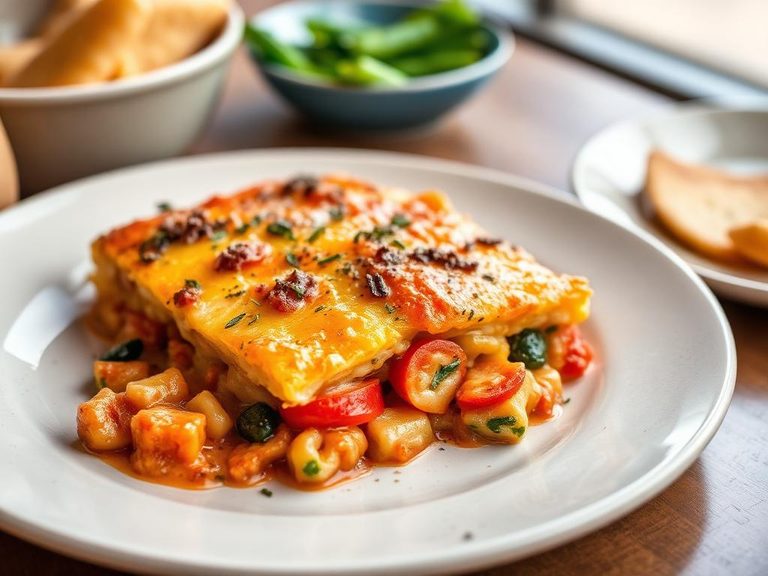
🌍 Where it's eaten
💡 Did you know?
Brick cheese gets its name not from the shape of its block, but from the traditional method of pressing the curds into brick-shaped molds during production.
Full nutrition (USDA data · scales with serving)
| Water | 41.1 g |
| Energy | 371 kcal |
| Energy | 1552 kj |
| Protein | 23.2 g |
| Total lipid (fat) | 29.7 g |
| Ash | 3.2 g |
| Carbohydrate, by difference | 2.8 g |
| Fiber, total dietary | 0.00 g |
| Total Sugars | 0.51 g |
| Calcium, Ca | 674 mg |
| Iron, Fe | 0.43 mg |
| Magnesium, Mg | 24.0 mg |
| Phosphorus, P | 451 mg |
| Potassium, K | 136 mg |
| Sodium, Na | 560 mg |
| Zinc, Zn | 2.6 mg |
| Copper, Cu | 0.02 mg |
| Manganese, Mn | 0.01 mg |
| Selenium, Se | 14.5 ug |
| Vitamin C, total ascorbic acid | 0.00 mg |
| Thiamin | 0.01 mg |
| Riboflavin | 0.35 mg |
| Niacin | 0.12 mg |
| Pantothenic acid | 0.29 mg |
| Vitamin B-6 | 0.07 mg |
| Folate, total | 20.0 ug |
| Folic acid | 0.00 ug |
| Folate, food | 20.0 ug |
| Folate, DFE | 20.0 ug |
| Choline, total | 15.4 mg |
| Vitamin B-12 | 1.3 ug |
| Vitamin B-12, added | 0.00 ug |
| Vitamin A, RAE | 292 ug |
| Retinol | 286 ug |
| Carotene, beta | 76.0 ug |
| Carotene, alpha | 0.00 ug |
| Cryptoxanthin, beta | 0.00 ug |
| Vitamin A, IU | 1080 iu |
| Lycopene | 0.00 ug |
| Lutein + zeaxanthin | 0.00 ug |
| Vitamin E (alpha-tocopherol) | 0.26 mg |
| Vitamin E, added | 0.00 mg |
| Vitamin D (D2 + D3), International Units | 22.0 iu |
| Vitamin D (D2 + D3) | 0.50 ug |
| Vitamin D3 (cholecalciferol) | 0.50 ug |
| Vitamin K (phylloquinone) | 2.5 ug |
| Alcohol, ethyl | 0.00 g |
| Caffeine | 0.00 mg |
| Theobromine | 0.00 mg |
Fat & fatty acid profile (per 100g)
| Fatty acids, total saturated | 18.8 g |
| SFA 4:0 | 0.91 g |
| SFA 6:0 | 0.37 g |
| SFA 8:0 | 0.30 g |
| SFA 10:0 | 0.58 g |
| SFA 12:0 | 0.48 g |
| SFA 14:0 | 3.2 g |
| SFA 16:0 | 8.7 g |
| SFA 18:0 | 3.5 g |
| Fatty acids, total monounsaturated | 8.6 g |
| MUFA 16:1 | 0.82 g |
| MUFA 18:1 | 7.4 g |
| MUFA 20:1 | 0.00 g |
| MUFA 22:1 | 0.00 g |
| Fatty acids, total polyunsaturated | 0.78 g |
| PUFA 18:2 | 0.49 g |
| PUFA 18:3 | 0.29 g |
| PUFA 18:4 | 0.00 g |
| PUFA 20:4 | 0.00 g |
| PUFA 20:5 n-3 (EPA) | 0.00 g |
| PUFA 22:5 n-3 (DPA) | 0.00 g |
| PUFA 22:6 n-3 (DHA) | 0.00 g |
| Cholesterol | 94.0 mg |
Amino acid profile (per 100g)
| Tryptophan | 0.32 g |
| Threonine | 0.88 g |
| Isoleucine | 1.1 g |
| Leucine | 2.2 g |
| Lysine | 2.1 g |
| Methionine | 0.56 g |
| Cystine | 0.13 g |
| Phenylalanine | 1.2 g |
| Tyrosine | 1.1 g |
| Valine | 1.5 g |
| Arginine | 0.87 g |
| Histidine | 0.82 g |
| Alanine | 0.67 g |
| Aspartic acid | 1.6 g |
| Glutamic acid | 5.5 g |
| Glycine | 0.44 g |
| Proline | 2.6 g |
| Serine | 1.3 g |
FAQ
What is the difference between brick cheese and other melting cheeses like mozzarella?
Brick cheese has a higher fat content and a more buttery, slightly tangy flavor compared to mozzarella's milder, stretchier profile. It melts smoothly but doesn't stretch as much, making it ideal for creamy dishes rather than pizza toppings.
Is brick cheese a good option for lactose-intolerant individuals?
Brick cheese is a semi-soft cheese with some lactose remaining, but its aging process reduces lactose levels. It may be tolerated by some lactose-sensitive individuals, but those with severe intolerance should consult a healthcare provider.
How should brick cheese be stored to maintain freshness?
Store brick cheese wrapped in wax paper or cheese paper in the refrigerator's vegetable drawer to maintain humidity. It can last 2-3 weeks when properly stored, and should be brought to room temperature before serving for optimal flavor.
Nutrient density (calculated · NRF9.3)
Nutrient Rich Foods index: beneficial nutrients (protein, fiber, vitamins, minerals) minus saturated fat, added sugar & sodium, per 100 kcal.
NRF9.3 index — Fulgoni, Keast & Drewnowski, 2009. Computed from USDA nutrients.
Weight-loss friendliness (composite index)
Energy density 3.71 kcal/g · 25% calories from protein · 0.0 g fiber · 0.5 g sugar per 100 g.
Composite of energy density (Rolls et al., 1999), protein & fiber satiety, minus sugar. A calculated heuristic — ranks satiety-per-calorie, not a clinical measure.
Dietary load (calculated from USDA values)
Potential renal acid load. Positive = acid-forming, negative = alkaline-forming.
Sodium-to-potassium ratio: 4.12 (lower is better — aim for ≤ 1)
Sodium:potassium per WHO potassium guidance. Computed from USDA nutrients.