

Chayote, fruit, cooked, boiled, drained, with salt
Whole food · Vegetables and Vegetable Products

Photo: Wikipedia
Chayote, when boiled and lightly salted, becomes a tender, mildly crisp vegetable with a flavor often compared to a cross between a summer squash and a cucumber. Its pale green flesh is subtle and slightly sweet, absorbing seasonings beautifully while retaining a pleasant, non-mushy bite. Nutritionally, it's a low-calorie powerhouse, offering nearly 3 grams of fiber per serving for minimal energy cost.
Calorie split: 10% protein · 73% carbs · 17% fat
↓ Full nutrition💚 Why it's loved
People love chayote for its incredible versatility and neutral canvas, which readily takes on the flavors of garlic, herbs, or spices from any cuisine. It's a beloved staple in many cultures, valued for its ability to add bulk and nutrition to soups, stir-fries, and salads without overpowering other ingredients.
⚠️ Watch-outs & how to enjoy it better
Its mild, sometimes watery flavor can be perceived as bland if not seasoned well. The high water content can make it soggy if overcooked. To counteract this, sauté or roast it at high heat to promote caramelization, or pair it with bold flavors like chili, lime, or toasted spices. Some individuals may experience digestive gas from its fiber and raffinose content; starting with smaller portions and ensuring thorough cooking can help.
Key benefits
- Very low in calories, ideal for volume eating
- Good source of dietary fiber for digestive health
- Contains vitamin C, an antioxidant
- Provides folate, important for cell function
- Naturally low in fat and cholesterol-free
🍽️ Popular dishes

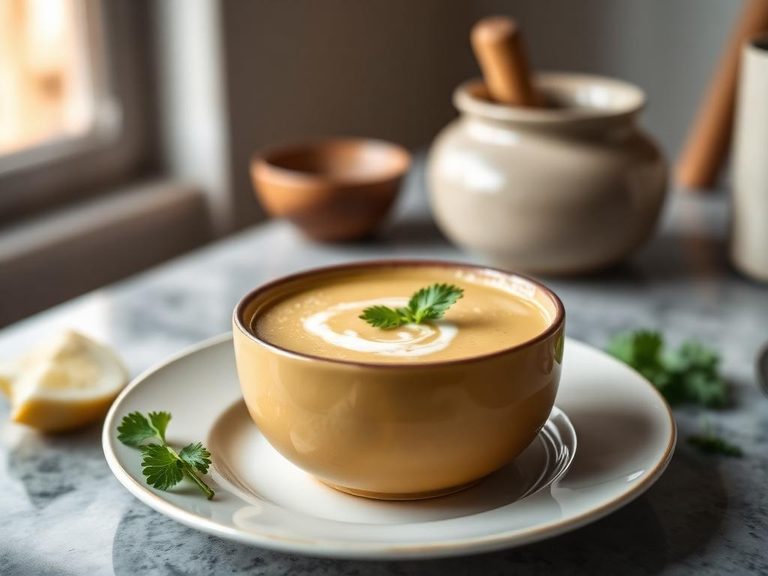
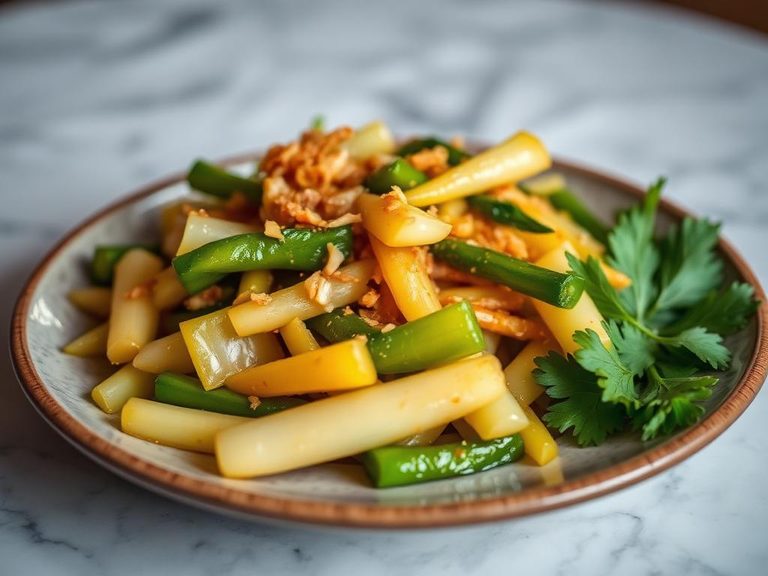
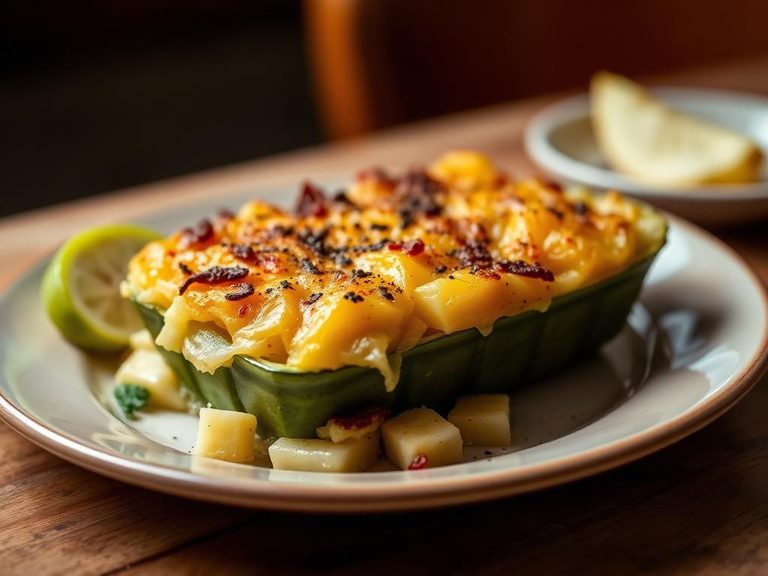
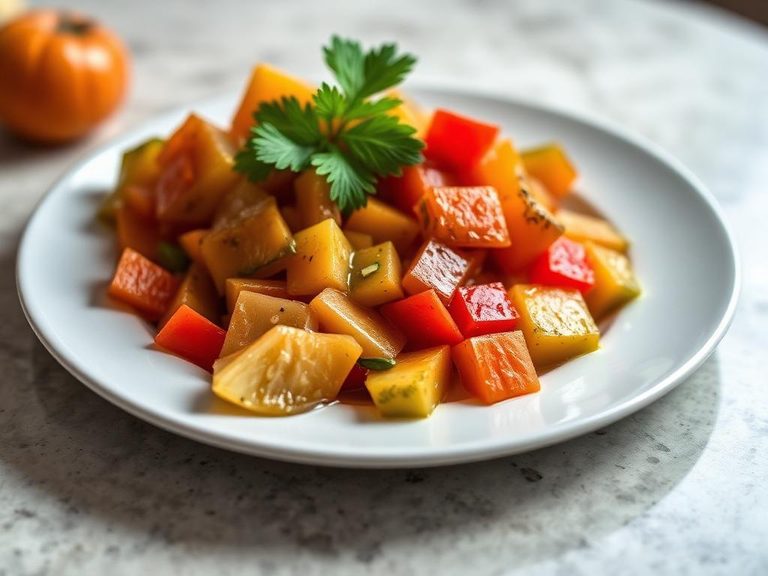
🌍 Where it's eaten
💡 Did you know?
The entire chayote plant is edible, including the leaves, roots, and even the large seed inside the fruit, which has a nutty flavor when roasted.
Full nutrition (USDA data · scales with serving)
| Water | 93.4 g |
| Energy | 22.0 kcal |
| Energy | 90.0 kj |
| Protein | 0.62 g |
| Total lipid (fat) | 0.48 g |
| Ash | 0.97 g |
| Carbohydrate, by difference | 4.5 g |
| Fiber, total dietary | 2.8 g |
| Total Sugars | 1.9 g |
| Calcium, Ca | 13.0 mg |
| Iron, Fe | 0.22 mg |
| Magnesium, Mg | 12.0 mg |
| Phosphorus, P | 29.0 mg |
| Potassium, K | 173 mg |
| Sodium, Na | 237 mg |
| Zinc, Zn | 0.31 mg |
| Copper, Cu | 0.11 mg |
| Manganese, Mn | 0.17 mg |
| Selenium, Se | 0.30 ug |
| Vitamin C, total ascorbic acid | 8.0 mg |
| Thiamin | 0.03 mg |
| Riboflavin | 0.04 mg |
| Niacin | 0.42 mg |
| Pantothenic acid | 0.41 mg |
| Vitamin B-6 | 0.12 mg |
| Folate, total | 18.0 ug |
| Folic acid | 0.00 ug |
| Folate, food | 18.0 ug |
| Folate, DFE | 18.0 ug |
| Choline, total | 10.5 mg |
| Vitamin B-12 | 0.00 ug |
| Vitamin B-12, added | 0.00 ug |
| Vitamin A, RAE | 0.00 ug |
| Retinol | 0.00 ug |
| Carotene, beta | 0.00 ug |
| Carotene, alpha | 0.00 ug |
| Cryptoxanthin, beta | 0.00 ug |
| Vitamin A, IU | 0.00 iu |
| Lycopene | 0.00 ug |
| Lutein + zeaxanthin | 0.00 ug |
| Vitamin E (alpha-tocopherol) | 0.14 mg |
| Vitamin E, added | 0.00 mg |
| Vitamin D (D2 + D3), International Units | 0.00 iu |
| Vitamin D (D2 + D3) | 0.00 ug |
| Vitamin K (phylloquinone) | 4.7 ug |
| Alcohol, ethyl | 0.00 g |
| Caffeine | 0.00 mg |
| Theobromine | 0.00 mg |
Fat & fatty acid profile (per 100g)
| Fatty acids, total saturated | 0.03 g |
| SFA 4:0 | 0.00 g |
| SFA 6:0 | 0.00 g |
| SFA 8:0 | 0.00 g |
| SFA 10:0 | 0.00 g |
| SFA 12:0 | 0.00 g |
| SFA 14:0 | 0.00 g |
| SFA 16:0 | 0.03 g |
| SFA 18:0 | 0.00 g |
| Fatty acids, total monounsaturated | 0.01 g |
| MUFA 16:1 | 0.00 g |
| MUFA 18:1 | 0.01 g |
| MUFA 20:1 | 0.00 g |
| MUFA 22:1 | 0.00 g |
| Fatty acids, total polyunsaturated | 0.07 g |
| PUFA 18:2 | 0.02 g |
| PUFA 18:3 | 0.04 g |
| PUFA 18:4 | 0.00 g |
| PUFA 20:4 | 0.00 g |
| PUFA 20:5 n-3 (EPA) | 0.00 g |
| PUFA 22:5 n-3 (DPA) | 0.00 g |
| PUFA 22:6 n-3 (DHA) | 0.00 g |
| Fatty acids, total trans | 0.00 g |
| Cholesterol | 0.00 mg |
Amino acid profile (per 100g)
| Tryptophan | 0.01 g |
| Threonine | 0.03 g |
| Isoleucine | 0.03 g |
| Leucine | 0.06 g |
| Lysine | 0.03 g |
| Methionine | 0.00 g |
| Phenylalanine | 0.04 g |
| Tyrosine | 0.02 g |
| Valine | 0.05 g |
| Arginine | 0.03 g |
| Histidine | 0.01 g |
| Alanine | 0.04 g |
| Aspartic acid | 0.07 g |
| Glutamic acid | 0.09 g |
| Glycine | 0.03 g |
| Proline | 0.03 g |
| Serine | 0.04 g |
FAQ
Do I need to peel chayote before cooking?
The skin is edible and often left on when the fruit is young and tender, as it softens during cooking. For larger, more mature chayote with a tougher skin, peeling is recommended for a better texture.
Why does my chayote turn brown after cutting?
Chayote contains enzymes that cause oxidation (browning) when exposed to air. To prevent this, toss cut pieces in a little lemon juice or vinegar, or submerge them in water until ready to cook.
Is chayote a fruit or a vegetable?
Botanically, it is a fruit (a type of gourd), but it is used and prepared as a vegetable in culinary contexts.
Nutrient density (calculated · NRF9.3)
Nutrient Rich Foods index: beneficial nutrients (protein, fiber, vitamins, minerals) minus saturated fat, added sugar & sodium, per 100 kcal.
NRF9.3 index — Fulgoni, Keast & Drewnowski, 2009. Computed from USDA nutrients.
Weight-loss friendliness (composite index)
Energy density 0.22 kcal/g · 11% calories from protein · 2.8 g fiber · 1.9 g sugar per 100 g.
Composite of energy density (Rolls et al., 1999), protein & fiber satiety, minus sugar. A calculated heuristic — ranks satiety-per-calorie, not a clinical measure.
Dietary load (calculated from USDA values)
Potential renal acid load. Positive = acid-forming, negative = alkaline-forming.
Sodium-to-potassium ratio: 1.37 (lower is better — aim for ≤ 1)
Sodium:potassium per WHO potassium guidance. Computed from USDA nutrients.