

Cereals ready-to-eat, wheat germ, toasted, plain
Whole food · Breakfast Cereals

Photo: Wikipedia
Toasted wheat germ is the nutrient-dense, nutty-flavored embryo of the wheat kernel, often sold as a crunchy, golden-brown flake or granule. Its texture is distinctly gritty and chewy, offering a robust, earthy flavor that intensifies when toasted. Nutritionally, it's a powerhouse, delivering an impressive 29.1g of protein and 15.1g of fiber per 100g.
Calorie split: 28% protein · 48% carbs · 23% fat
↓ Full nutrition💚 Why it's loved
People love it for its intense, toasty, almost nutty flavor that adds a satisfying crunch and nutritional boost to breakfast bowls and baked goods. It's a beloved staple in health-conscious and traditional home kitchens for its versatility and nutrient density.
⚠️ Watch-outs & how to enjoy it better
Its gritty texture can be off-putting to some, and its high fiber content may cause digestive discomfort if introduced too quickly. Those monitoring blood sugar should be mindful, as it is a concentrated carbohydrate source; pairing it with protein (like yogurt) or healthy fat (like nuts) can help moderate glycemic response. It contains gluten, making it unsuitable for those with celiac disease or gluten sensitivity.
Key benefits
- Excellent source of plant-based protein for muscle maintenance.
- High in dietary fiber, promoting digestive health and satiity.
- Rich in B vitamins, particularly thiamine (B1) and folate.
- Contains essential minerals like magnesium, zinc, and manganese.
- Provides antioxidants like vitamin E and selenium.
🍽️ Popular dishes
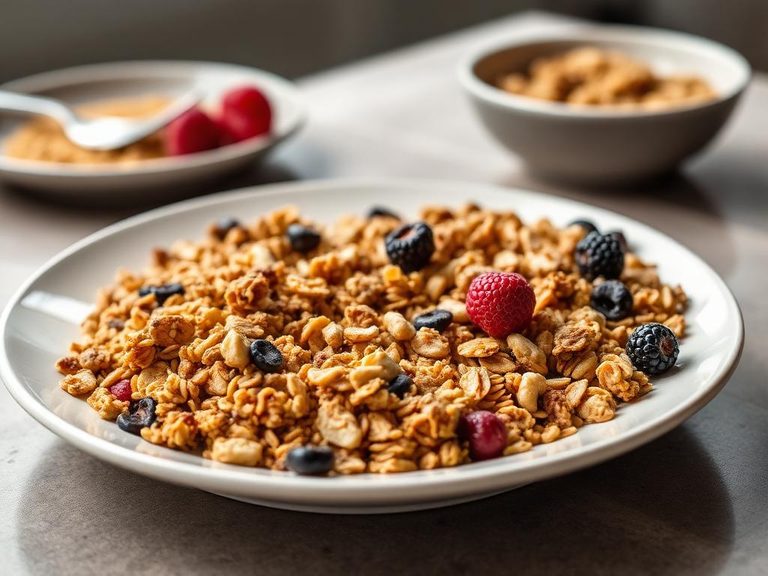

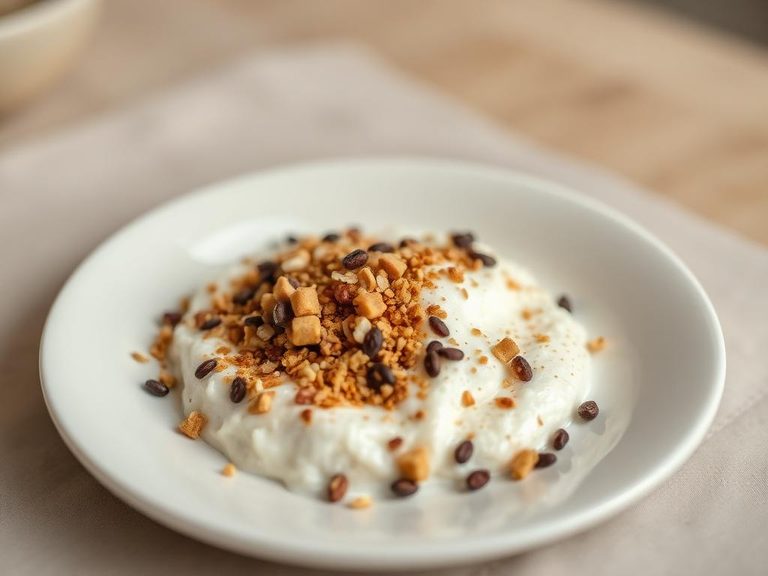
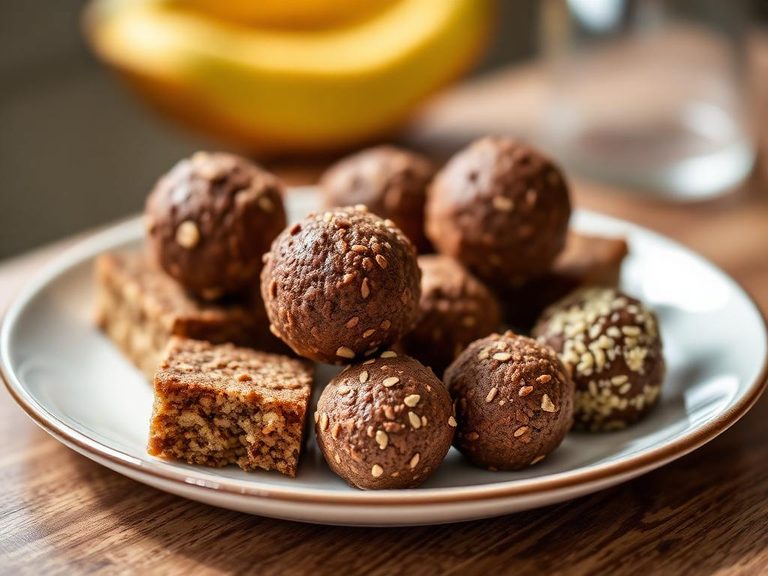

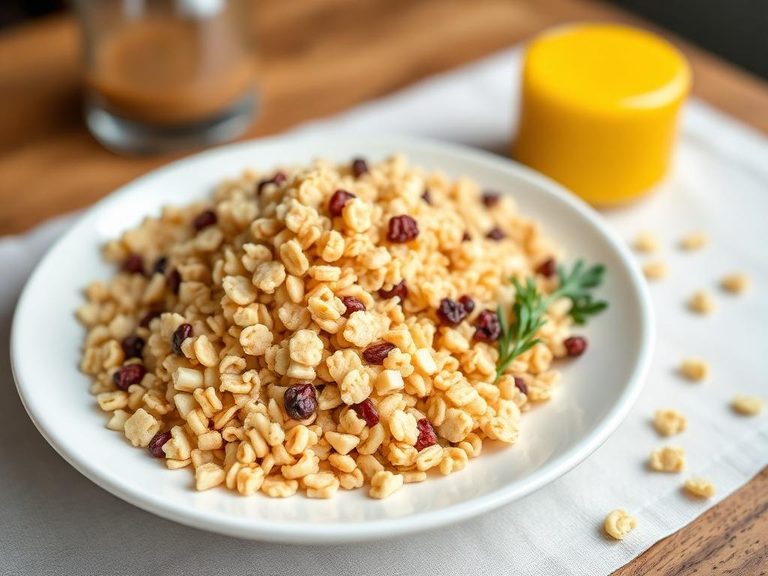
🌍 Where it's eaten
💡 Did you know?
Wheat germ is the only part of the wheat kernel that can sprout into a new plant, which is why it's packed with the nutrients needed for life.
Full nutrition (USDA data · scales with serving)
| Water | 5.6 g |
| Energy | 382 kcal |
| Energy | 1598 kj |
| Protein | 29.1 g |
| Total lipid (fat) | 10.7 g |
| Ash | 5.0 g |
| Carbohydrate, by difference | 49.6 g |
| Fiber, total dietary | 15.1 g |
| Total Sugars | 7.8 g |
| Sucrose | 7.8 g |
| Calcium, Ca | 45.0 mg |
| Iron, Fe | 9.1 mg |
| Magnesium, Mg | 320 mg |
| Phosphorus, P | 1146 mg |
| Potassium, K | 947 mg |
| Sodium, Na | 4.0 mg |
| Zinc, Zn | 16.7 mg |
| Copper, Cu | 0.62 mg |
| Manganese, Mn | 20.0 mg |
| Selenium, Se | 65.0 ug |
| Vitamin C, total ascorbic acid | 6.0 mg |
| Thiamin | 1.7 mg |
| Riboflavin | 0.82 mg |
| Niacin | 5.6 mg |
| Pantothenic acid | 1.4 mg |
| Vitamin B-6 | 0.98 mg |
| Folate, total | 352 ug |
| Folic acid | 0.00 ug |
| Folate, food | 352 ug |
| Folate, DFE | 352 ug |
| Choline, total | 179 mg |
| Vitamin B-12 | 0.00 ug |
| Vitamin B-12, added | 0.00 ug |
| Vitamin A, RAE | 5.0 ug |
| Retinol | 0.00 ug |
| Carotene, beta | 62.0 ug |
| Carotene, alpha | 0.00 ug |
| Cryptoxanthin, beta | 0.00 ug |
| Vitamin A, IU | 103 iu |
| Lycopene | 0.00 ug |
| Lutein + zeaxanthin | 790 ug |
| Vitamin E (alpha-tocopherol) | 16.0 mg |
| Vitamin E, added | 0.00 mg |
| Vitamin D (D2 + D3), International Units | 0.00 iu |
| Vitamin D (D2 + D3) | 0.00 ug |
| Vitamin K (phylloquinone) | 4.0 ug |
| Alcohol, ethyl | 0.00 g |
| Caffeine | 0.00 mg |
| Theobromine | 0.00 mg |
Fat & fatty acid profile (per 100g)
| Fatty acids, total saturated | 1.8 g |
| SFA 4:0 | 0.00 g |
| SFA 6:0 | 0.00 g |
| SFA 8:0 | 0.00 g |
| SFA 10:0 | 0.00 g |
| SFA 12:0 | 0.00 g |
| SFA 14:0 | 0.01 g |
| SFA 16:0 | 1.8 g |
| SFA 18:0 | 0.06 g |
| Fatty acids, total monounsaturated | 1.5 g |
| MUFA 16:1 | 0.04 g |
| MUFA 18:1 | 1.5 g |
| MUFA 20:1 | 0.00 g |
| MUFA 22:1 | 0.00 g |
| Fatty acids, total polyunsaturated | 6.6 g |
| PUFA 18:2 | 5.8 g |
| PUFA 18:3 | 0.80 g |
| PUFA 18:4 | 0.00 g |
| PUFA 20:4 | 0.00 g |
| PUFA 20:5 n-3 (EPA) | 0.00 g |
| PUFA 22:5 n-3 (DPA) | 0.00 g |
| PUFA 22:6 n-3 (DHA) | 0.00 g |
| Cholesterol | 0.00 mg |
Amino acid profile (per 100g)
| Tryptophan | 0.40 g |
| Threonine | 1.2 g |
| Isoleucine | 1.1 g |
| Leucine | 2.0 g |
| Lysine | 1.8 g |
| Methionine | 0.57 g |
| Cystine | 0.58 g |
| Phenylalanine | 1.2 g |
| Tyrosine | 0.89 g |
| Valine | 1.5 g |
| Arginine | 2.3 g |
| Histidine | 0.81 g |
| Alanine | 1.9 g |
| Aspartic acid | 2.6 g |
| Glutamic acid | 5.0 g |
| Glycine | 1.8 g |
| Proline | 1.5 g |
| Serine | 1.4 g |
FAQ
What is the difference between raw and toasted wheat germ?
Toasted wheat germ has a deeper, nuttier flavor and a crunchier texture, and the toasting process helps preserve it by inactivating enzymes that can cause it to go rancid. Raw germ is softer and milder but must be refrigerated or frozen.
How should I store wheat germ to keep it fresh?
Due to its high oil content, wheat germ can go rancid. Always store it in an airtight container in the refrigerator or freezer to maintain freshness and prevent off-flavors.
Can I use wheat germ in gluten-free cooking?
No. Wheat germ is derived from wheat and contains gluten. It is not suitable for anyone with celiac disease or gluten intolerance. Look for certified gluten-free alternatives like oat germ or ground flaxseed for a similar nutritional boost.
Nutrient density (calculated · NRF9.3)
Nutrient Rich Foods index: beneficial nutrients (protein, fiber, vitamins, minerals) minus saturated fat, added sugar & sodium, per 100 kcal.
NRF9.3 index — Fulgoni, Keast & Drewnowski, 2009. Computed from USDA nutrients.
Weight-loss friendliness (composite index)
Energy density 3.82 kcal/g · 30% calories from protein · 15.1 g fiber · 7.8 g sugar per 100 g.
Composite of energy density (Rolls et al., 1999), protein & fiber satiety, minus sugar. A calculated heuristic — ranks satiety-per-calorie, not a clinical measure.
Dietary load (calculated from USDA values)
Potential renal acid load. Positive = acid-forming, negative = alkaline-forming.
Sodium-to-potassium ratio: 0.00 (lower is better — aim for ≤ 1)
Sodium:potassium per WHO potassium guidance. Computed from USDA nutrients.