

Bread, whole-wheat, prepared from recipe, toasted
Whole food · Baked Products

Photo: Wikipedia
A hearty, nutty slice of whole-wheat bread, toasted to a satisfying crunch with a warm, wheaty aroma. Its dense, chewy crumb and toasty exterior provide a robust base for toppings, while the toasting process concentrates its flavors and adds a pleasant crispness. With 9.2g of protein and 6.7g of fiber per 100g, it offers substantial satiety and sustained energy compared to white bread.
Calorie split: 12% protein · 72% carbs · 17% fat
↓ Full nutrition💚 Why it's loved
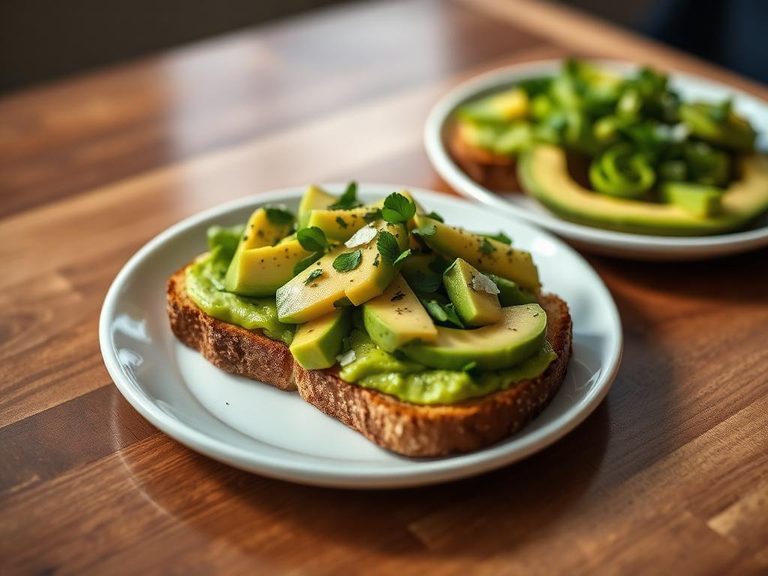
People love it for its deep, earthy flavor and satisfying crunch that elevates simple meals like avocado toast or a classic sandwich. It's a versatile staple in many cultures, often associated with wholesome, homemade comfort food.
⚠️ Watch-outs & how to enjoy it better
Its dense texture can be too heavy for some, and the toasting process may slightly reduce moisture content. Those watching blood sugar levels should be mindful of portion sizes, as the carbs can still cause a spike if eaten alone. To counteract, pair it with protein (like eggs or nut butter) or healthy fats (avocado, cheese) to slow digestion and stabilize blood sugar.
Key benefits
- High in dietary fiber for digestive health and satiety
- Good source of plant-based protein (9.2g per 100g)
- Rich in B vitamins and minerals like magnesium and selenium
- Provides complex carbohydrates for steady energy release
- Toasting can enhance flavor and texture without adding calories
🍽️ Popular dishes




🌍 Where it's eaten
💡 Did you know?
Toasting bread actually makes it slightly lower in calories by reducing its moisture content, which concentrates the nutrients per gram.
Full nutrition (USDA data · scales with serving)
| Water | 26.0 g |
| Energy | 305 kcal |
| Energy | 1276 kj |
| Protein | 9.2 g |
| Total lipid (fat) | 5.9 g |
| Ash | 2.2 g |
| Carbohydrate, by difference | 56.4 g |
| Fiber, total dietary | 6.7 g |
| Total Sugars | 4.2 g |
| Calcium, Ca | 36.0 mg |
| Iron, Fe | 3.4 mg |
| Magnesium, Mg | 89.0 mg |
| Phosphorus, P | 205 mg |
| Potassium, K | 345 mg |
| Sodium, Na | 381 mg |
| Zinc, Zn | 1.6 mg |
| Copper, Cu | 0.28 mg |
| Manganese, Mn | 2.1 mg |
| Selenium, Se | 42.5 ug |
| Vitamin C, total ascorbic acid | 0.00 mg |
| Thiamin | 0.27 mg |
| Riboflavin | 0.23 mg |
| Niacin | 3.9 mg |
| Pantothenic acid | 0.34 mg |
| Vitamin B-6 | 0.20 mg |
| Folate, total | 67.0 ug |
| Folic acid | 31.0 ug |
| Folate, food | 36.0 ug |
| Folate, DFE | 89.0 ug |
| Choline, total | 29.2 mg |
| Vitamin B-12 | 0.00 ug |
| Vitamin B-12, added | 0.00 ug |
| Vitamin A, RAE | 0.00 ug |
| Retinol | 0.00 ug |
| Carotene, beta | 2.0 ug |
| Carotene, alpha | 0.00 ug |
| Cryptoxanthin, beta | 0.00 ug |
| Vitamin A, IU | 4.0 iu |
| Lycopene | 0.00 ug |
| Lutein + zeaxanthin | 97.0 ug |
| Vitamin E (alpha-tocopherol) | 0.84 mg |
| Vitamin E, added | 0.00 mg |
| Vitamin D (D2 + D3), International Units | 0.00 iu |
| Vitamin D (D2 + D3) | 0.00 ug |
| Vitamin K (phylloquinone) | 10.4 ug |
| Alcohol, ethyl | 0.00 g |
| Caffeine | 0.00 mg |
| Theobromine | 0.00 mg |
Fat & fatty acid profile (per 100g)
| Fatty acids, total saturated | 0.87 g |
| SFA 4:0 | 0.00 g |
| SFA 6:0 | 0.00 g |
| SFA 8:0 | 0.01 g |
| SFA 10:0 | 0.00 g |
| SFA 12:0 | 0.00 g |
| SFA 14:0 | 0.01 g |
| SFA 16:0 | 0.66 g |
| SFA 18:0 | 0.19 g |
| Fatty acids, total monounsaturated | 1.3 g |
| MUFA 16:1 | 0.03 g |
| MUFA 18:1 | 1.2 g |
| MUFA 20:1 | 0.01 g |
| MUFA 22:1 | 0.00 g |
| Fatty acids, total polyunsaturated | 3.2 g |
| PUFA 18:2 | 2.9 g |
| PUFA 18:3 | 0.35 g |
| PUFA 18:4 | 0.00 g |
| PUFA 20:4 | 0.00 g |
| PUFA 20:5 n-3 (EPA) | 0.00 g |
| PUFA 22:5 n-3 (DPA) | 0.00 g |
| PUFA 22:6 n-3 (DHA) | 0.00 g |
| Cholesterol | 0.00 mg |
Amino acid profile (per 100g)
| Tryptophan | 0.13 g |
| Threonine | 0.27 g |
| Isoleucine | 0.34 g |
| Leucine | 0.63 g |
| Lysine | 0.27 g |
| Methionine | 0.15 g |
| Cystine | 0.20 g |
| Phenylalanine | 0.44 g |
| Tyrosine | 0.28 g |
| Valine | 0.41 g |
| Arginine | 0.42 g |
| Histidine | 0.21 g |
| Alanine | 0.33 g |
| Aspartic acid | 0.48 g |
| Glutamic acid | 2.9 g |
| Glycine | 0.36 g |
| Proline | 0.95 g |
| Serine | 0.44 g |
FAQ
Is toasted whole-wheat bread healthier than untoasted?
Toasting doesn't significantly change the nutritional profile, but it can reduce moisture and slightly concentrate nutrients. The main benefit is often in texture and flavor, which may encourage healthier topping choices.
How does the fiber content compare to white bread?
Whole-wheat bread typically has about 2-3 times more fiber than white bread, thanks to the intact bran and germ. This fiber supports digestion and helps you feel full longer.
Can I use this bread for making breadcrumbs?
Yes, toasted whole-wheat bread makes excellent, flavorful breadcrumbs. Simply pulse the toasted slices in a food processor until fine, and use them for coating or binding in recipes.
Nutrient density (calculated · NRF9.3)
Nutrient Rich Foods index: beneficial nutrients (protein, fiber, vitamins, minerals) minus saturated fat, added sugar & sodium, per 100 kcal.
NRF9.3 index — Fulgoni, Keast & Drewnowski, 2009. Computed from USDA nutrients.
Weight-loss friendliness (composite index)
Energy density 3.05 kcal/g · 12% calories from protein · 6.7 g fiber · 4.2 g sugar per 100 g.
Composite of energy density (Rolls et al., 1999), protein & fiber satiety, minus sugar. A calculated heuristic — ranks satiety-per-calorie, not a clinical measure.
Dietary load (calculated from USDA values)
Potential renal acid load. Positive = acid-forming, negative = alkaline-forming.
Sodium-to-potassium ratio: 1.10 (lower is better — aim for ≤ 1)
Sodium:potassium per WHO potassium guidance. Computed from USDA nutrients.