

Bread, reduced-calorie, oat bran, toasted
Whole food · Baked Products

Photo: Wikipedia
This is a light, toasted slice of bread specifically formulated to be lower in calories, with a hearty, slightly chewy texture and nutty flavor from its primary ingredient: oat bran. Its standout nutritional feature is an exceptionally high fiber content, which provides significant digestive benefits and a feeling of fullness.
Calorie split: 14% protein · 73% carbs · 13% fat
↓ Full nutrition💚 Why it's loved
People love it for its satisfying, robust texture and the subtle, toasty oat flavor that pairs well with both sweet and savory toppings. It's a go-to for a fiber-rich breakfast or a light, filling sandwich that doesn't feel heavy.
⚠️ Watch-outs & how to enjoy it better
Its dense, high-fiber nature can be less palatable to those accustomed to soft, white bread and may cause digestive discomfort if introduced too quickly. To counteract this, start with smaller portions, ensure adequate water intake, and pair it with a protein (like eggs or cheese) or healthy fat (like avocado) to balance the meal and slow digestion.
Key benefits
- Excellent source of dietary fiber (14.3g per 100g)
- Supports digestive health and satiety
- Low in fat (3.8g per 100g)
- Good source of plant-based protein (9.5g per 100g)
- Typically lower in calories than standard bread
🍽️ Popular dishes
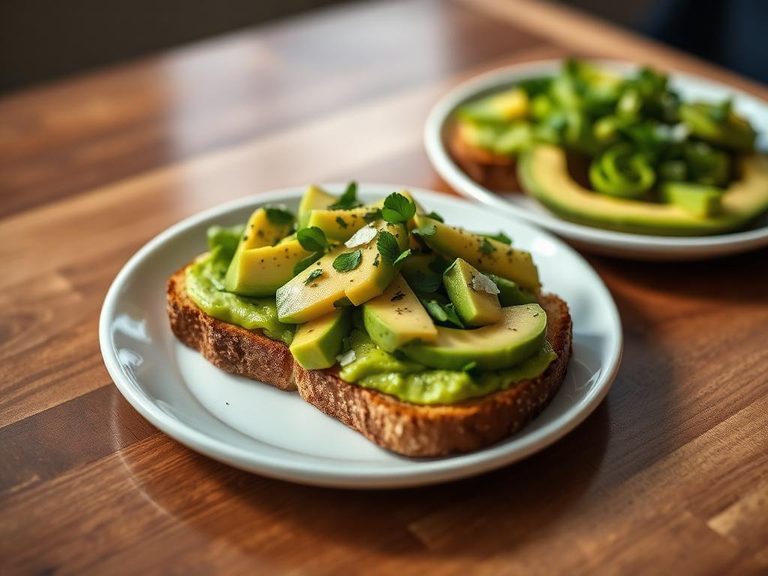
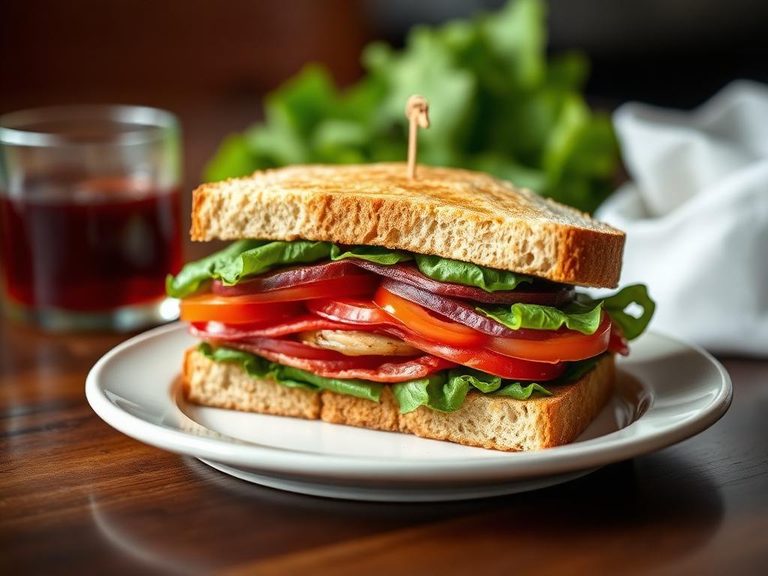


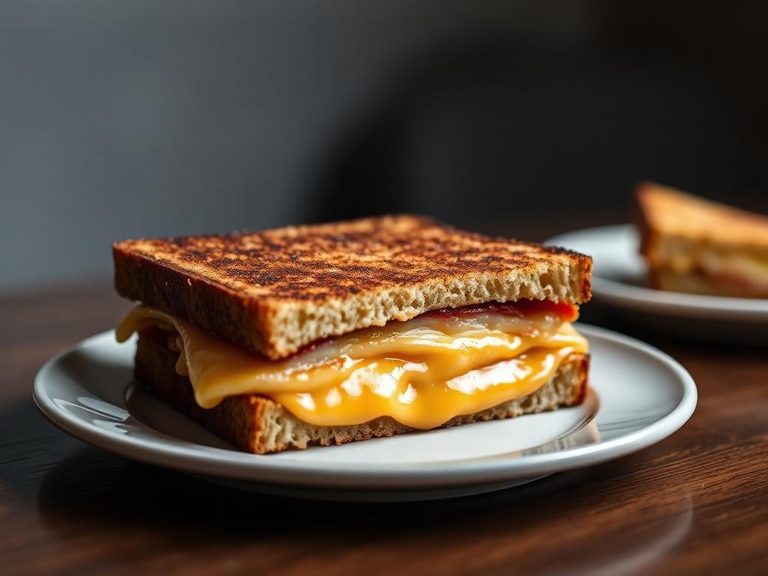
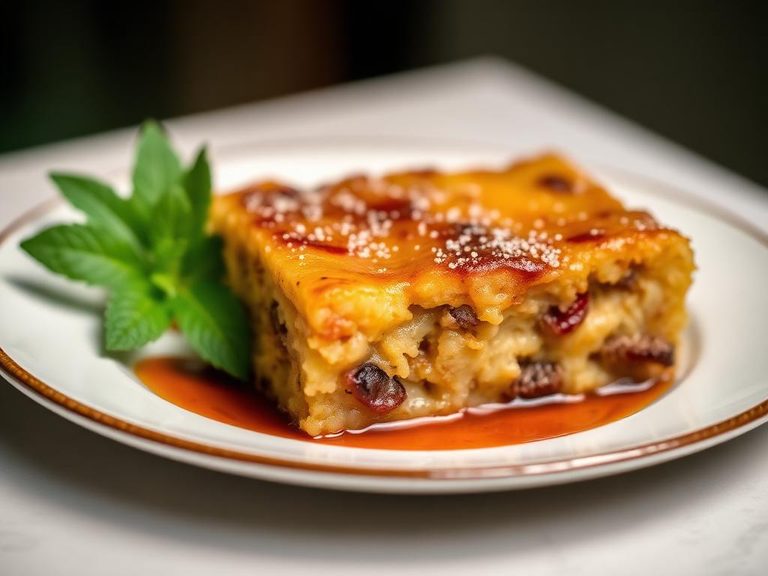
🌍 Where it's eaten
💡 Did you know?
Oat bran, the key ingredient, is the outer layer of the oat groat and is so rich in soluble fiber (beta-glucan) that it's often used as a standalone supplement to help manage cholesterol levels.
Full nutrition (USDA data · scales with serving)
| Water | 35.7 g |
| Energy | 239 kcal |
| Energy | 1000 kj |
| Protein | 9.5 g |
| Total lipid (fat) | 3.8 g |
| Ash | 1.8 g |
| Carbohydrate, by difference | 49.2 g |
| Fiber, total dietary | 14.3 g |
| Total Sugars | 4.2 g |
| Calcium, Ca | 68.0 mg |
| Iron, Fe | 3.8 mg |
| Magnesium, Mg | 55.0 mg |
| Phosphorus, P | 144 mg |
| Potassium, K | 122 mg |
| Sodium, Na | 547 mg |
| Zinc, Zn | 1.2 mg |
| Copper, Cu | 0.15 mg |
| Manganese, Mn | 1.0 mg |
| Selenium, Se | 24.5 ug |
| Vitamin C, total ascorbic acid | 0.00 mg |
| Thiamin | 0.34 mg |
| Riboflavin | 0.22 mg |
| Niacin | 4.0 mg |
| Pantothenic acid | 0.17 mg |
| Vitamin B-6 | 0.09 mg |
| Folate, total | 82.0 ug |
| Folic acid | 48.0 ug |
| Folate, food | 34.0 ug |
| Folate, DFE | 115 ug |
| Choline, total | 16.1 mg |
| Vitamin B-12 | 0.00 ug |
| Vitamin B-12, added | 0.00 ug |
| Vitamin A, RAE | 0.00 ug |
| Retinol | 0.00 ug |
| Carotene, beta | 2.0 ug |
| Carotene, alpha | 0.00 ug |
| Cryptoxanthin, beta | 0.00 ug |
| Vitamin A, IU | 1.0 iu |
| Lycopene | 0.00 ug |
| Lutein + zeaxanthin | 48.0 ug |
| Vitamin E (alpha-tocopherol) | 0.33 mg |
| Vitamin E, added | 0.00 mg |
| Vitamin D (D2 + D3), International Units | 0.00 iu |
| Vitamin D (D2 + D3) | 0.00 ug |
| Vitamin K (phylloquinone) | 2.0 ug |
| Alcohol, ethyl | 0.00 g |
| Caffeine | 0.00 mg |
| Theobromine | 0.00 mg |
Fat & fatty acid profile (per 100g)
| Fatty acids, total saturated | 0.53 g |
| SFA 4:0 | 0.00 g |
| SFA 6:0 | 0.00 g |
| SFA 8:0 | 0.00 g |
| SFA 10:0 | 0.00 g |
| SFA 12:0 | 0.00 g |
| SFA 14:0 | 0.00 g |
| SFA 16:0 | 0.44 g |
| SFA 18:0 | 0.08 g |
| Fatty acids, total monounsaturated | 0.81 g |
| MUFA 16:1 | 0.02 g |
| MUFA 18:1 | 0.79 g |
| MUFA 20:1 | 0.00 g |
| MUFA 22:1 | 0.00 g |
| Fatty acids, total polyunsaturated | 2.0 g |
| PUFA 18:2 | 1.9 g |
| PUFA 18:3 | 0.12 g |
| PUFA 18:4 | 0.00 g |
| PUFA 20:4 | 0.00 g |
| PUFA 20:5 n-3 (EPA) | 0.00 g |
| PUFA 22:5 n-3 (DPA) | 0.00 g |
| PUFA 22:6 n-3 (DHA) | 0.00 g |
| Cholesterol | 0.00 mg |
Amino acid profile (per 100g)
| Tryptophan | 0.12 g |
| Threonine | 0.31 g |
| Isoleucine | 0.38 g |
| Leucine | 0.67 g |
| Lysine | 0.35 g |
| Methionine | 0.17 g |
| Cystine | 0.16 g |
| Phenylalanine | 0.20 g |
| Tyrosine | 0.46 g |
| Valine | 0.43 g |
| Arginine | 0.46 g |
| Histidine | 0.22 g |
| Alanine | 0.37 g |
| Aspartic acid | 0.63 g |
| Glutamic acid | 2.6 g |
| Glycine | 0.38 g |
| Proline | 0.85 g |
| Serine | 0.47 g |
FAQ
How is reduced-calorie oat bran bread different from regular whole wheat bread?
It typically has fewer calories per slice due to a higher proportion of oat bran and other fibrous ingredients, which add bulk and nutrients without as much energy-dense carbohydrate. The flavor is nuttier and the texture more chewy.
Is this bread good for weight management?
Yes, its very high fiber content promotes a feeling of fullness (satiety), which can help with portion control. The protein content also contributes to this effect.
Why is it so high in fiber?
The primary ingredient, oat bran, is one of the most fiber-dense parts of a grain. A single 100g serving provides over half the recommended daily intake of fiber for many adults.
Nutrient density (calculated · NRF9.3)
Nutrient Rich Foods index: beneficial nutrients (protein, fiber, vitamins, minerals) minus saturated fat, added sugar & sodium, per 100 kcal.
NRF9.3 index — Fulgoni, Keast & Drewnowski, 2009. Computed from USDA nutrients.
Weight-loss friendliness (composite index)
Energy density 2.39 kcal/g · 16% calories from protein · 14.3 g fiber · 4.2 g sugar per 100 g.
Composite of energy density (Rolls et al., 1999), protein & fiber satiety, minus sugar. A calculated heuristic — ranks satiety-per-calorie, not a clinical measure.
Dietary load (calculated from USDA values)
Potential renal acid load. Positive = acid-forming, negative = alkaline-forming.
Sodium-to-potassium ratio: 4.48 (lower is better — aim for ≤ 1)
Sodium:potassium per WHO potassium guidance. Computed from USDA nutrients.