

Beverages, water, tap, drinking
Whole food · Beverages
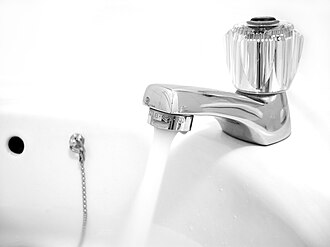
Photo: Wikipedia
Tap water is the clear, odorless liquid delivered to homes via municipal pipes, essential for hydration and life itself. Its taste is neutral, though it can vary subtly by region due to mineral content and treatment methods. Nutritionally, it provides zero calories, protein, carbs, or fat, but is a critical source of hydration and may contain trace minerals like calcium and magnesium.
💚 Why it's loved
People love tap water for its universal accessibility, neutral taste that quenches thirst without added sugars or flavors, and its role as the foundational ingredient in countless beverages and cuisines worldwide.
⚠️ Watch-outs & how to enjoy it better
Some dislike the potential for a chlorine taste or odor from disinfection, or concerns about contaminants like lead from old pipes. To counteract chlorine, let water sit in an open pitcher for a few hours or use an activated carbon filter. For lead concerns, use a certified filter and run the tap for 30 seconds before drinking.
Key benefits
- Essential for all bodily functions and hydration
- Zero calories, making it ideal for weight management
- Often contains fluoride, which supports dental health
- More affordable and environmentally friendly than bottled water
- Can be a source of essential minerals like calcium and magnesium
🍽️ Popular dishes

🌍 Where it's eaten
💡 Did you know?
The pipes delivering tap water in some older cities can be over 100 years old, meaning the water you drink may have traveled through infrastructure built in a different era.
Full nutrition (USDA data · scales with serving)
| Water | 99.9 g |
| Energy | 0.00 kcal |
| Energy | 0.00 kj |
| Protein | 0.00 g |
| Total lipid (fat) | 0.00 g |
| Ash | 0.10 g |
| Carbohydrate, by difference | 0.00 g |
| Fiber, total dietary | 0.00 g |
| Total Sugars | 0.00 g |
| Calcium, Ca | 3.0 mg |
| Iron, Fe | 0.00 mg |
| Magnesium, Mg | 1.0 mg |
| Phosphorus, P | 0.00 mg |
| Potassium, K | 0.00 mg |
| Sodium, Na | 4.0 mg |
| Zinc, Zn | 0.01 mg |
| Copper, Cu | 0.01 mg |
| Manganese, Mn | 0.00 mg |
| Selenium, Se | 0.00 ug |
| Fluoride, F | 71.2 ug |
| Vitamin C, total ascorbic acid | 0.00 mg |
| Thiamin | 0.00 mg |
| Riboflavin | 0.00 mg |
| Niacin | 0.00 mg |
| Pantothenic acid | 0.00 mg |
| Vitamin B-6 | 0.00 mg |
| Folate, total | 0.00 ug |
| Folic acid | 0.00 ug |
| Folate, food | 0.00 ug |
| Folate, DFE | 0.00 ug |
| Choline, total | 0.00 mg |
| Vitamin B-12 | 0.00 ug |
| Vitamin B-12, added | 0.00 ug |
| Vitamin A, RAE | 0.00 ug |
| Retinol | 0.00 ug |
| Carotene, beta | 0.00 ug |
| Carotene, alpha | 0.00 ug |
| Cryptoxanthin, beta | 0.00 ug |
| Vitamin A, IU | 0.00 iu |
| Lycopene | 0.00 ug |
| Lutein + zeaxanthin | 0.00 ug |
| Vitamin E (alpha-tocopherol) | 0.00 mg |
| Vitamin E, added | 0.00 mg |
| Vitamin D (D2 + D3), International Units | 0.00 iu |
| Vitamin D (D2 + D3) | 0.00 ug |
| Vitamin K (phylloquinone) | 0.00 ug |
| Alcohol, ethyl | 0.00 g |
| Caffeine | 0.00 mg |
| Theobromine | 0.00 mg |
Fat & fatty acid profile (per 100g)
| Fatty acids, total saturated | 0.00 g |
| SFA 4:0 | 0.00 g |
| SFA 6:0 | 0.00 g |
| SFA 8:0 | 0.00 g |
| SFA 10:0 | 0.00 g |
| SFA 12:0 | 0.00 g |
| SFA 14:0 | 0.00 g |
| SFA 16:0 | 0.00 g |
| SFA 18:0 | 0.00 g |
| Fatty acids, total monounsaturated | 0.00 g |
| MUFA 16:1 | 0.00 g |
| MUFA 18:1 | 0.00 g |
| MUFA 20:1 | 0.00 g |
| MUFA 22:1 | 0.00 g |
| Fatty acids, total polyunsaturated | 0.00 g |
| PUFA 18:2 | 0.00 g |
| PUFA 18:3 | 0.00 g |
| PUFA 18:4 | 0.00 g |
| PUFA 20:4 | 0.00 g |
| PUFA 20:5 n-3 (EPA) | 0.00 g |
| PUFA 22:5 n-3 (DPA) | 0.00 g |
| PUFA 22:6 n-3 (DHA) | 0.00 g |
| Fatty acids, total trans | 0.00 g |
| Cholesterol | 0.00 mg |
Amino acid profile (per 100g)
Estimated from Beverages, carbonated, tonic water — USDA does not publish this profile for Beverages.
| Tryptophan | 0.00 g |
| Threonine | 0.00 g |
| Isoleucine | 0.00 g |
| Leucine | 0.00 g |
| Lysine | 0.00 g |
| Methionine | 0.00 g |
| Cystine | 0.00 g |
| Phenylalanine | 0.00 g |
| Tyrosine | 0.00 g |
| Valine | 0.00 g |
| Arginine | 0.00 g |
| Histidine | 0.00 g |
| Alanine | 0.00 g |
| Aspartic acid | 0.00 g |
| Glutamic acid | 0.00 g |
| Glycine | 0.00 g |
| Proline | 0.00 g |
| Serine | 0.00 g |
FAQ
Is tap water safe to drink?
In most developed countries, tap water is strictly regulated and safe to drink. You can check your local water quality report for specific details on treatment and mineral content.
Why does my tap water taste different from bottled water?
Tap water often contains minerals like calcium and magnesium from the local geology, and may have a slight chlorine taste from disinfection. Bottled water is often purified to remove these, resulting in a more neutral taste.
How can I improve the taste of my tap water at home?
You can use an activated carbon filter (like a pitcher filter or faucet mount), let water sit uncovered in the refrigerator for a few hours to dissipate chlorine, or add a slice of lemon or cucumber for natural flavor.
Dietary load (calculated from USDA values)
Potential renal acid load. Positive = acid-forming, negative = alkaline-forming.
Sodium:potassium per WHO potassium guidance. Computed from USDA nutrients.