

Beverages, fruit-flavored drink, powder, with high vitamin C with other added vitamins, low calorie
Whole food · Beverages
This is a powdered, fruit-flavored drink mix designed to dissolve quickly in water, creating a brightly colored, sweet, and tangy beverage. It is essentially a vehicle for delivering a high dose of Vitamin C and other added vitamins in a low-calorie, sugar-free format. The texture is smooth and fully soluble, leaving no grit, and the taste is intensely fruity, often mimicking orange, lemon-lime, or tropical blends.
Calorie split: 0% protein · 99% carbs · 0% fat
↓ Full nutrition💚 Why it's loved
People love it for its nostalgic, vibrant flavor that transforms plain water into a fun, refreshing drink, especially for children and those who struggle to drink enough water. Its versatility is a major draw—it can be mixed to any desired strength, used as a base for smoothies or mocktails, and is a staple in many households for a quick, flavorful hydration option.
⚠️ Watch-outs & how to enjoy it better
The primary downside is its high carbohydrate content (91g per 100g powder), which, despite being sugar-free, can contribute to blood-sugar spikes if consumed in large quantities, especially for individuals with insulin sensitivity. It often contains artificial sweeteners (like aspartame or sucralose) and food dyes, which some people prefer to avoid. To counteract this, practice strict portion control (stick to the recommended scoop), and consider pairing it with a source of protein or healthy fat (like a handful of nuts) to slow digestion and mitigate any potential glycemic impact.
Key benefits
- Provides a high concentration of Vitamin C per serving, supporting immune function.
- Very low in calories (227 kcal per 100g powder, but typical servings are much smaller), aiding in weight management.
- Contains zero sugar, making it a suitable alternative to sugary sodas or juices for those monitoring sugar intake.
- Convenient and portable; a single packet or scoop can be mixed with water anywhere.
- Often fortified with additional vitamins like A, E, and B-complex for a broader nutritional boost.
🍽️ Popular dishes

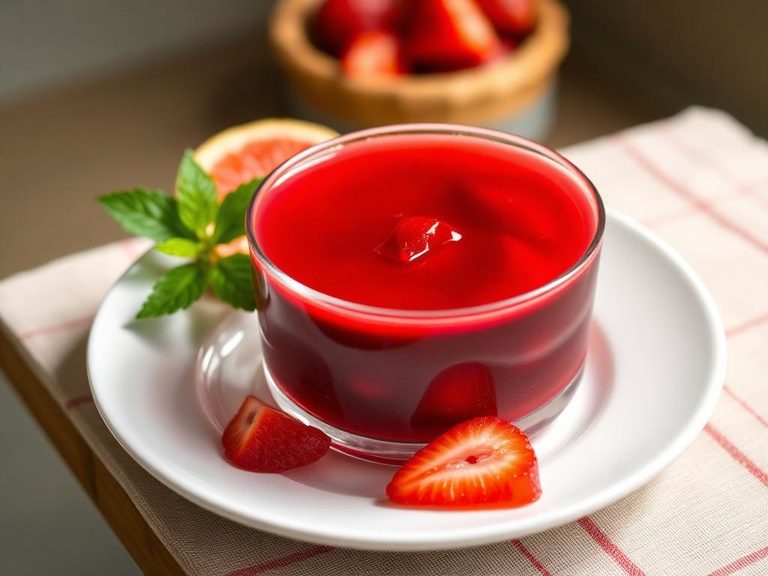
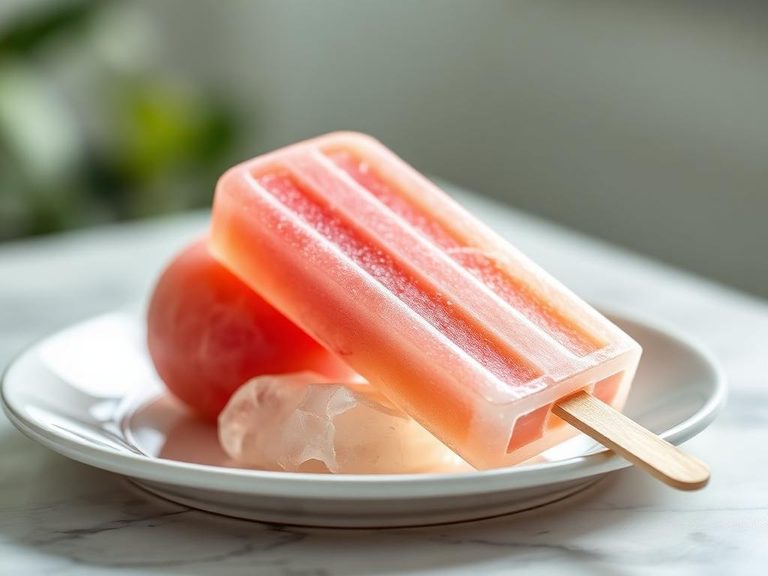
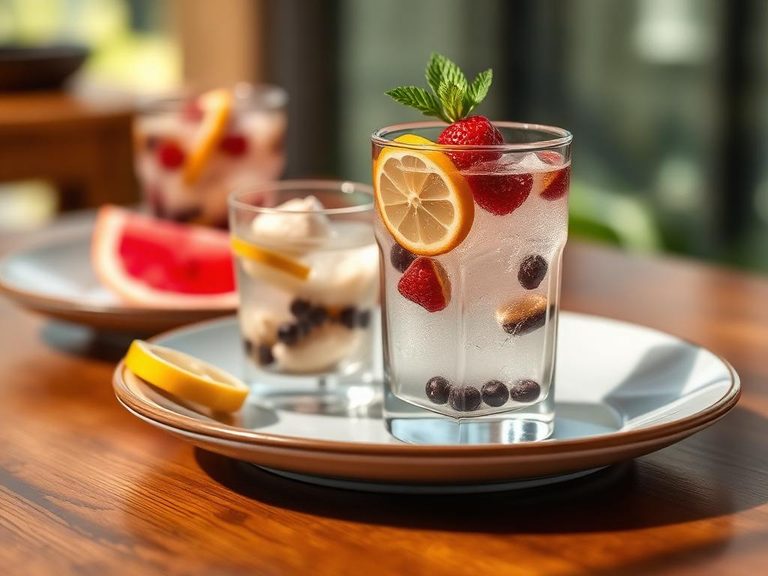

🌍 Where it's eaten
💡 Did you know?
The powdered drink mix format became wildly popular in the mid-20th century, with brands like Kool-Aid and Tang, partly because they were shelf-stable and could be transported easily—Tang was famously used by NASA astronauts on early space missions as a vitamin-fortified, low-weight beverage.
Full nutrition (USDA data · scales with serving)
| Water | 1.3 g |
| Energy | 227 kcal |
| Energy | 951 kj |
| Protein | 0.25 g |
| Total lipid (fat) | 0.16 g |
| Ash | 7.3 g |
| Carbohydrate, by difference | 91.0 g |
| Fiber, total dietary | 2.2 g |
| Total Sugars | 0.00 g |
| Calcium, Ca | 800 mg |
| Iron, Fe | 0.08 mg |
| Magnesium, Mg | 245 mg |
| Phosphorus, P | 493 mg |
| Potassium, K | 2518 mg |
| Sodium, Na | 14.0 mg |
| Zinc, Zn | 0.01 mg |
| Copper, Cu | 0.01 mg |
| Manganese, Mn | 0.01 mg |
| Selenium, Se | 0.00 ug |
| Vitamin C, total ascorbic acid | 2400 mg |
| Thiamin | 0.01 mg |
| Riboflavin | 6.8 mg |
| Niacin | 80.0 mg |
| Pantothenic acid | 0.02 mg |
| Vitamin B-6 | 8.0 mg |
| Folate, total | 5.0 ug |
| Folic acid | 0.00 ug |
| Folate, food | 5.0 ug |
| Folate, DFE | 5.0 ug |
| Choline, total | 0.10 mg |
| Vitamin B-12 | 0.00 ug |
| Vitamin B-12, added | 0.00 ug |
| Vitamin A, RAE | 5997 ug |
| Retinol | 5996 ug |
| Carotene, beta | 2.0 ug |
| Carotene, alpha | 0.00 ug |
| Cryptoxanthin, beta | 10.0 ug |
| Vitamin A, IU | 20000 iu |
| Lycopene | 0.00 ug |
| Lutein + zeaxanthin | 13.0 ug |
| Vitamin E (alpha-tocopherol) | 0.02 mg |
| Vitamin E, added | 0.00 mg |
| Vitamin D (D2 + D3), International Units | 0.00 iu |
| Vitamin D (D2 + D3) | 0.00 ug |
| Vitamin K (phylloquinone) | 0.00 ug |
| Alcohol, ethyl | 0.00 g |
| Caffeine | 0.00 mg |
| Theobromine | 0.00 mg |
Fat & fatty acid profile (per 100g)
| Fatty acids, total saturated | 0.01 g |
| SFA 4:0 | 0.00 g |
| SFA 6:0 | 0.00 g |
| SFA 8:0 | 0.00 g |
| SFA 10:0 | 0.00 g |
| SFA 12:0 | 0.00 g |
| SFA 14:0 | 0.00 g |
| SFA 16:0 | 0.01 g |
| SFA 18:0 | 0.00 g |
| Fatty acids, total monounsaturated | 0.04 g |
| MUFA 16:1 | 0.00 g |
| MUFA 18:1 | 0.04 g |
| MUFA 20:1 | 0.00 g |
| MUFA 22:1 | 0.00 g |
| Fatty acids, total polyunsaturated | 0.03 g |
| PUFA 18:2 | 0.03 g |
| PUFA 18:3 | 0.01 g |
| PUFA 18:4 | 0.00 g |
| PUFA 20:4 | 0.00 g |
| PUFA 20:5 n-3 (EPA) | 0.00 g |
| PUFA 22:5 n-3 (DPA) | 0.00 g |
| PUFA 22:6 n-3 (DHA) | 0.00 g |
| Fatty acids, total trans | 0.00 g |
| Cholesterol | 0.00 mg |
Amino acid profile (per 100g)
Estimated from Beverages, carbonated, tonic water — USDA does not publish this profile for Beverages.
| Tryptophan | 0.00 g |
| Threonine | 0.00 g |
| Isoleucine | 0.00 g |
| Leucine | 0.00 g |
| Lysine | 0.00 g |
| Methionine | 0.00 g |
| Cystine | 0.00 g |
| Phenylalanine | 0.00 g |
| Tyrosine | 0.00 g |
| Valine | 0.00 g |
| Arginine | 0.00 g |
| Histidine | 0.00 g |
| Alanine | 0.00 g |
| Aspartic acid | 0.00 g |
| Glutamic acid | 0.00 g |
| Glycine | 0.00 g |
| Proline | 0.00 g |
| Serine | 0.00 g |
FAQ
Is this drink mix actually low in calories?
Yes, when prepared as directed (typically 1-2 teaspoons per 8 oz of water), it has very few calories (often 5-10 kcal per serving). However, the powder itself is calorie-dense (227 kcal per 100g) because it's concentrated carbohydrates, so using too much powder will increase the calorie count.
Does it contain real fruit?
Most versions do not contain real fruit juice or pulp. The flavor comes from artificial or natural flavorings, and the color from food dyes. The 'fruit-flavored' label refers to the taste profile, not the presence of actual fruit.
Can I use this in baking?
Absolutely! It's a popular ingredient in baking for adding flavor and color to cakes, cookies, and frostings. It can also be used to make flavored syrups or glazes. Just be mindful that it adds carbohydrates and may affect the texture slightly.
Is it safe for children?
It is generally safe for children when consumed in moderation as part of a balanced diet. However, due to the artificial sweeteners and dyes, some parents prefer to limit it. Always follow the recommended serving size and consider it an occasional treat rather than a daily staple.
Nutrient density (calculated · NRF9.3)
Nutrient Rich Foods index: beneficial nutrients (protein, fiber, vitamins, minerals) minus saturated fat, added sugar & sodium, per 100 kcal.
NRF9.3 index — Fulgoni, Keast & Drewnowski, 2009. Computed from USDA nutrients.
Weight-loss friendliness (composite index)
Energy density 2.27 kcal/g · 0% calories from protein · 2.2 g fiber · 0.0 g sugar per 100 g.
Composite of energy density (Rolls et al., 1999), protein & fiber satiety, minus sugar. A calculated heuristic — ranks satiety-per-calorie, not a clinical measure.
Dietary load (calculated from USDA values)
Potential renal acid load. Positive = acid-forming, negative = alkaline-forming.
Sodium-to-potassium ratio: 0.01 (lower is better — aim for ≤ 1)
Sodium:potassium per WHO potassium guidance. Computed from USDA nutrients.