

Beef, stew meat
Common food
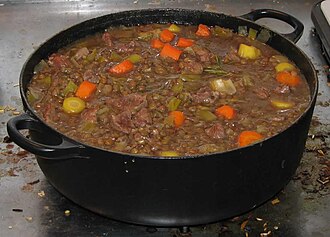
Photo: Wikipedia
Beef stew meat consists of tougher, well-marbled cuts from the shoulder or chuck, prized for their rich, beefy flavor and ability to become melt-in-your-mouth tender with slow, moist cooking. It's a nutritional powerhouse, delivering a substantial 28.4g of high-quality protein per 100g with zero carbohydrates, making it a staple for low-carb and high-protein diets.
Calorie split: 45% protein · 0% carbs · 55% fat
↓ Full nutrition💚 Why it's loved
People love it for its deep, savory flavor that forms the hearty backbone of comfort food classics. Its versatility allows it to be transformed into everything from rustic stews to elegant braises, becoming incredibly tender and flavorful when cooked low and slow.
⚠️ Watch-outs & how to enjoy it better
The primary cut used (chuck) has significant connective tissue, making it tough and chewy if not cooked properly with moist heat for a long duration. For those monitoring saturated fat intake, this cut can be higher in fat; choosing leaner stew meat or trimming visible fat before cooking can help.
Key benefits
- Excellent source of complete protein for muscle maintenance and repair.
- Rich in heme iron, which is highly bioavailable for preventing anemia.
- Provides essential B vitamins, particularly B12, for nerve function and energy metabolism.
- Contains zinc, which supports immune system health.
- Naturally zero in carbohydrates and sugars.
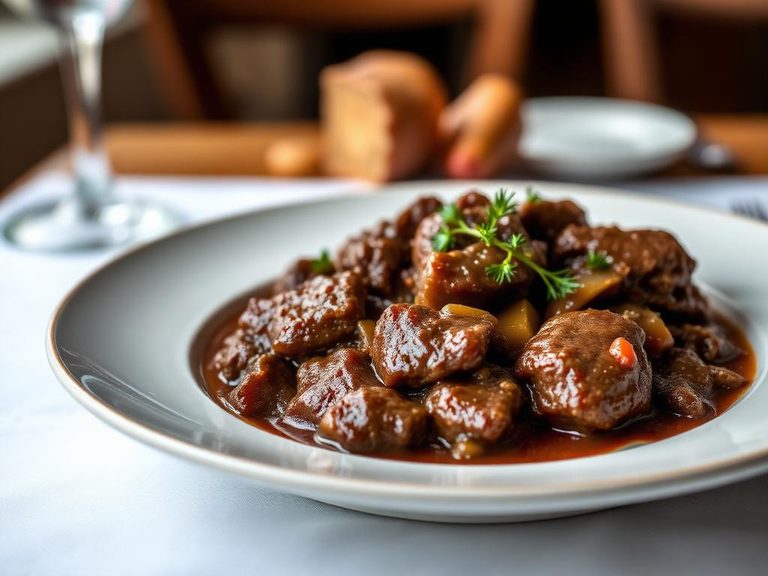
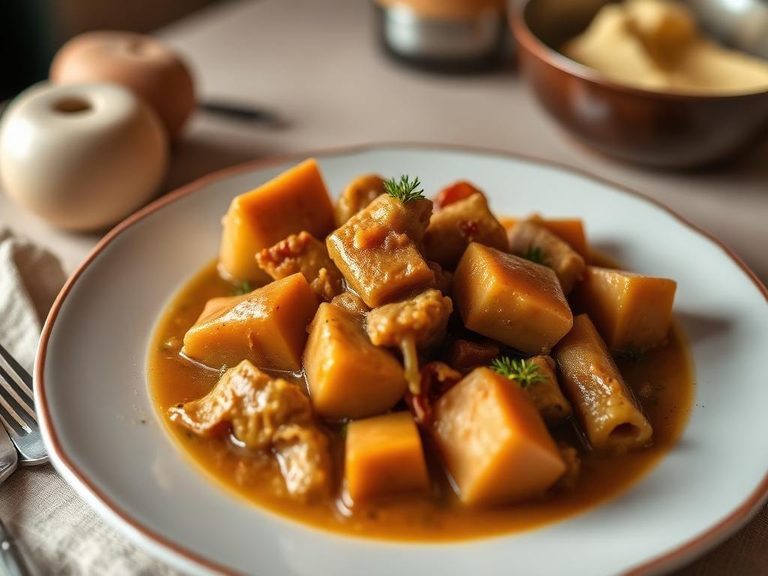
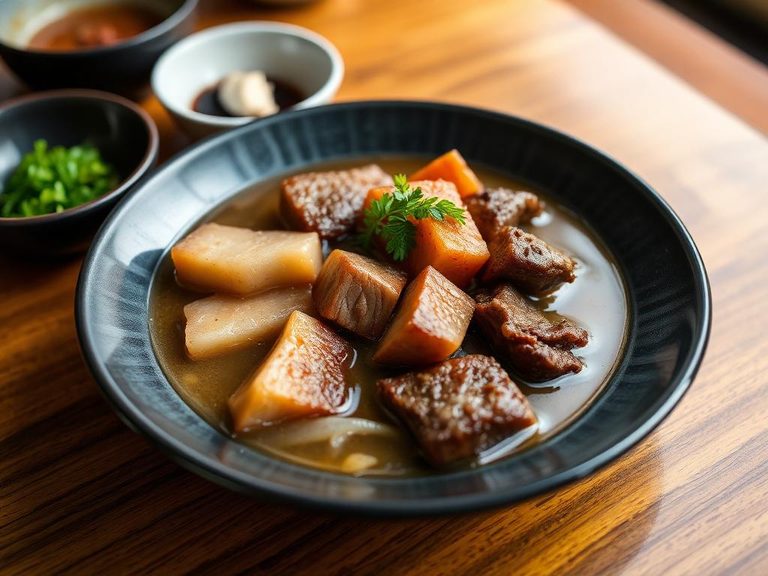
🍽️ Popular dishes

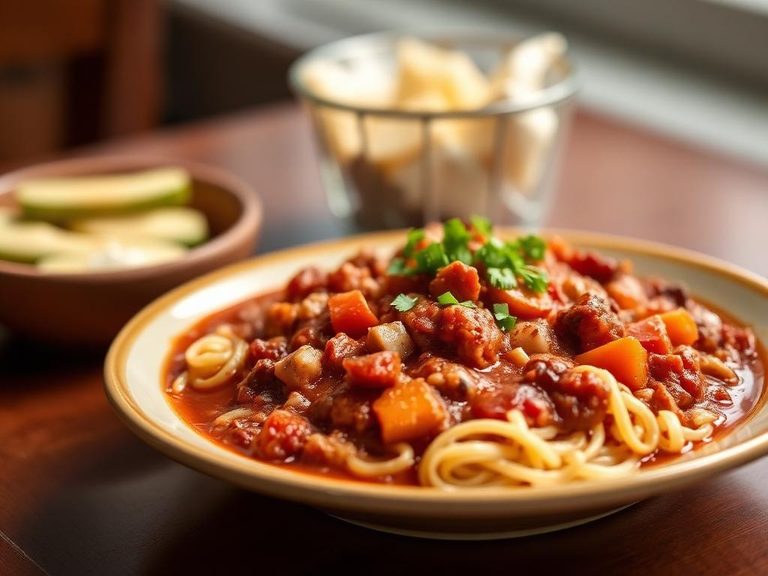
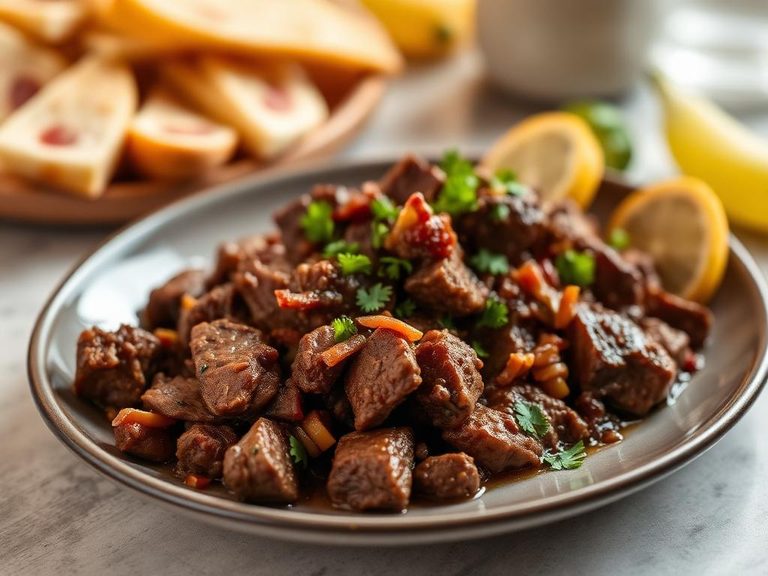
🌍 Where it's eaten
💡 Did you know?
The term 'stew meat' is a culinary designation, not a specific anatomical cut; it's a butcher's blend of trimmings and tougher pieces from various parts of the cow, making it a cost-effective way to use the entire animal.
Full nutrition (USDA data · scales with serving)
| Water | 54.9 g |
| Energy | 251 kcal |
| Protein | 28.4 g |
| Total lipid (fat) | 15.3 g |
| Carbohydrate, by difference | 0.00 g |
| Fiber, total dietary | 0.00 g |
| Total Sugars | 0.00 g |
| Calcium, Ca | 14.0 mg |
| Iron, Fe | 2.9 mg |
| Magnesium, Mg | 20.0 mg |
| Phosphorus, P | 188 mg |
| Potassium, K | 282 mg |
| Sodium, Na | 370 mg |
| Zinc, Zn | 10.2 mg |
| Copper, Cu | 0.09 mg |
| Selenium, Se | 32.9 ug |
| Vitamin C, total ascorbic acid | 0.00 mg |
| Thiamin | 0.07 mg |
| Riboflavin | 0.23 mg |
| Niacin | 3.7 mg |
| Vitamin B-6 | 0.30 mg |
| Folate, total | 7.0 ug |
| Folic acid | 0.00 ug |
| Folate, food | 7.0 ug |
| Folate, DFE | 7.0 ug |
| Choline, total | 89.4 mg |
| Vitamin B-12 | 3.2 ug |
| Vitamin B-12, added | 0.00 ug |
| Vitamin A, RAE | 5.0 ug |
| Retinol | 5.0 ug |
| Carotene, beta | 0.00 ug |
| Carotene, alpha | 0.00 ug |
| Cryptoxanthin, beta | 0.00 ug |
| Lycopene | 0.00 ug |
| Lutein + zeaxanthin | 0.00 ug |
| Vitamin E (alpha-tocopherol) | 0.08 mg |
| Vitamin E, added | 0.00 mg |
| Vitamin D (D2 + D3) | 0.10 ug |
| Vitamin K (phylloquinone) | 1.6 ug |
| Alcohol, ethyl | 0.00 g |
| Caffeine | 0.00 mg |
| Theobromine | 0.00 mg |
Fat & fatty acid profile (per 100g)
| Fatty acids, total saturated | 6.1 g |
| SFA 4:0 | 0.00 g |
| SFA 6:0 | 0.00 g |
| SFA 8:0 | 0.00 g |
| SFA 10:0 | 0.00 g |
| SFA 12:0 | 0.00 g |
| SFA 14:0 | 0.40 g |
| SFA 16:0 | 3.4 g |
| SFA 18:0 | 2.1 g |
| Fatty acids, total monounsaturated | 7.2 g |
| MUFA 16:1 | 0.47 g |
| MUFA 18:1 | 6.5 g |
| MUFA 20:1 | 0.04 g |
| MUFA 22:1 | 0.00 g |
| Fatty acids, total polyunsaturated | 0.68 g |
| PUFA 18:2 | 0.58 g |
| PUFA 18:3 | 0.03 g |
| PUFA 18:4 | 0.00 g |
| PUFA 20:4 | 0.06 g |
| PUFA 20:5 n-3 (EPA) | 0.00 g |
| PUFA 22:5 n-3 (DPA) | 0.00 g |
| PUFA 22:6 n-3 (DHA) | 0.00 g |
| Cholesterol | 101 mg |
Amino acid profile (per 100g)
Estimated from Beef, variety meats and by-products, mechanically separated beef, raw — USDA does not publish this profile for Beef.
| Tryptophan | 0.17 g |
| Threonine | 0.47 g |
| Isoleucine | 0.58 g |
| Leucine | 1.2 g |
| Lysine | 1.2 g |
| Methionine | 0.43 g |
| Cystine | 0.23 g |
| Phenylalanine | 0.64 g |
| Tyrosine | 0.38 g |
| Valine | 0.92 g |
| Arginine | 1.2 g |
| Histidine | 0.44 g |
| Alanine | 1.0 g |
| Aspartic acid | 1.3 g |
| Glutamic acid | 2.1 g |
| Glycine | 1.2 g |
| Proline | 0.92 g |
| Serine | 0.57 g |
FAQ
Why is my stew meat still tough after cooking?
It likely needs more time. The collagen in stew meat requires prolonged, gentle heat (simmering or braising) to break down into gelatin, which creates tenderness and a rich mouthfeel. Cooking at a gentle simmer, not a rapid boil, is key.
What's the best way to brown stew meat for maximum flavor?
Pat the meat very dry with paper towels, season it, and sear it in small batches in a hot, oiled pot without overcrowding. This creates a deep brown crust (the Maillard reaction) that adds immense flavor to the final dish.
Can I use stew meat in a quick-cooking recipe like a stir-fry?
Generally, no. Its tough fibers won't become tender in a short cooking time. For quick-cooking methods, choose tender cuts like sirloin or tenderloin. Stew meat is designed for long, slow, moist-heat cooking.
Nutrient density (calculated · NRF9.3)
Nutrient Rich Foods index: beneficial nutrients (protein, fiber, vitamins, minerals) minus saturated fat, added sugar & sodium, per 100 kcal.
NRF9.3 index — Fulgoni, Keast & Drewnowski, 2009. Computed from USDA nutrients.
Weight-loss friendliness (composite index)
Energy density 2.51 kcal/g · 45% calories from protein · 0.0 g fiber · 0.0 g sugar per 100 g.
Composite of energy density (Rolls et al., 1999), protein & fiber satiety, minus sugar. A calculated heuristic — ranks satiety-per-calorie, not a clinical measure.
Dietary load (calculated from USDA values)
Potential renal acid load. Positive = acid-forming, negative = alkaline-forming.
Sodium-to-potassium ratio: 1.31 (lower is better — aim for ≤ 1)
Sodium:potassium per WHO potassium guidance. Computed from USDA nutrients.