

Beef, variety meats and by-products, mechanically separated beef, raw
Whole food · Beef Products

Photo: Wikipedia
Mechanically separated beef is a paste-like product made by forcing beef bones through a high-pressure sieve to recover remaining meat and tissue. It has a very smooth, uniform texture and a mild, beefy flavor, often used as a cost-effective ingredient in processed foods. Nutritionally, it's a concentrated source of protein and fat, but provides no carbohydrates or fiber.
Calorie split: 22% protein · 0% carbs · 78% fat
↓ Full nutrition💚 Why it's loved
People appreciate it for its ability to bind ingredients and add a consistent, savory beef flavor at a low cost, making it a staple in budget-friendly processed meats. Its smooth texture allows it to be seamlessly incorporated into a variety of formulations.
⚠️ Watch-outs & how to enjoy it better
The high fat content (23.52g per 100g) makes it a calorie-dense choice, which may not suit low-fat diets. The processing method can also result in higher sodium levels in final products, so checking labels is advised. To balance, pair it with fiber-rich vegetables or whole grains in a meal.
Key benefits
- High in protein for muscle maintenance
- Provides essential fats and calories for energy
- Utilizes parts of the animal that might otherwise be wasted
- Cost-effective source of beef flavor and nutrition
- Versatile base for emulsified meat products
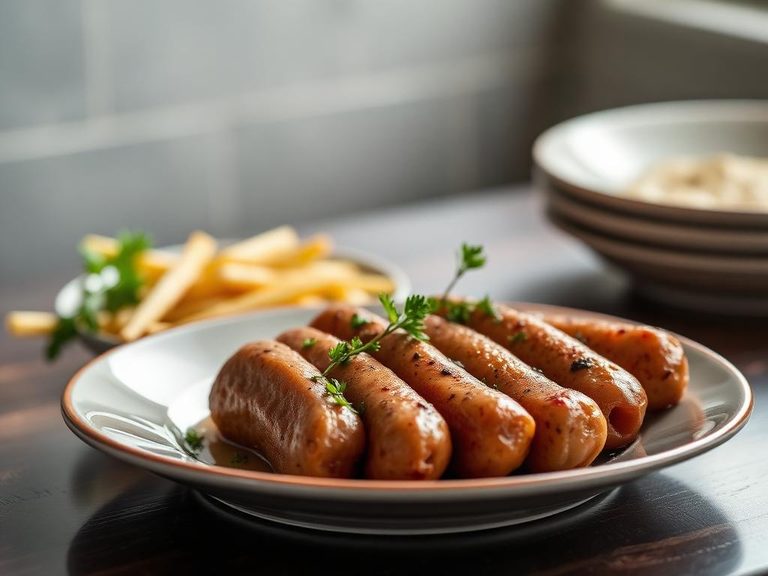
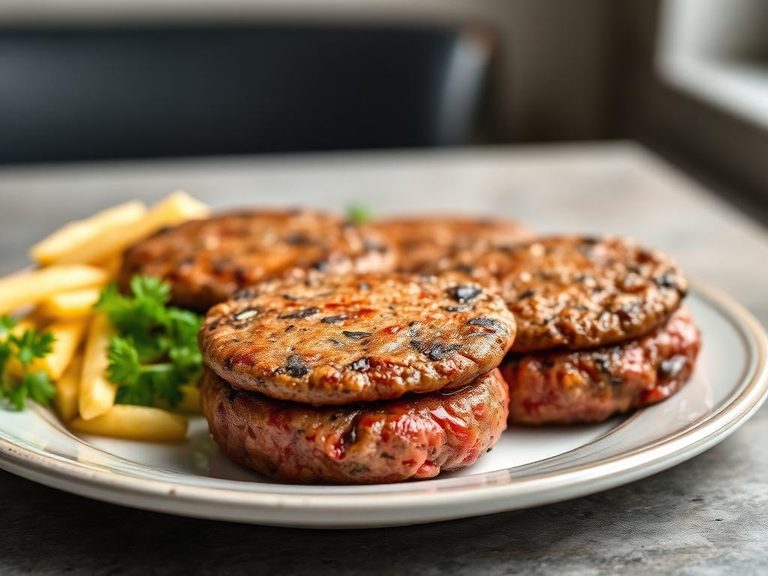
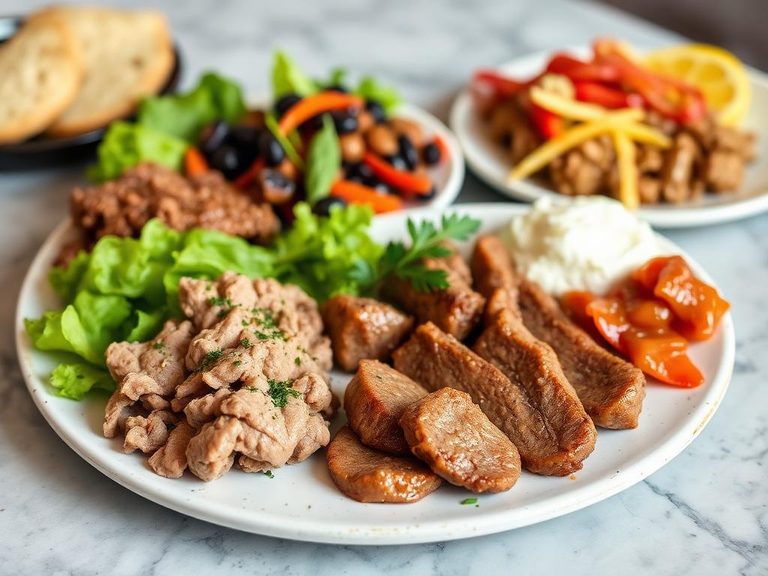
🍽️ Popular dishes



🌍 Where it's eaten
💡 Did you know?
The process for creating mechanically separated meat was developed in the 1960s and became widely used to maximize yield from beef and poultry carcasses.
Full nutrition (USDA data · scales with serving)
| Water | 59.4 g |
| Energy | 276 kcal |
| Energy | 1155 kj |
| Protein | 15.0 g |
| Total lipid (fat) | 23.5 g |
| Ash | 2.1 g |
| Carbohydrate, by difference | 0.00 g |
| Fiber, total dietary | 0.00 g |
| Calcium, Ca | 485 mg |
| Iron, Fe | 5.7 mg |
| Magnesium, Mg | 17.0 mg |
| Phosphorus, P | 324 mg |
| Potassium, K | 277 mg |
| Sodium, Na | 57.0 mg |
| Zinc, Zn | 3.6 mg |
| Copper, Cu | 0.06 mg |
| Manganese, Mn | 0.01 mg |
| Selenium, Se | 20.7 ug |
| Vitamin C, total ascorbic acid | 0.00 mg |
| Thiamin | 0.07 mg |
| Riboflavin | 0.12 mg |
| Niacin | 2.5 mg |
| Pantothenic acid | 0.28 mg |
| Vitamin B-6 | 0.29 mg |
| Folate, total | 5.0 ug |
| Folic acid | 0.00 ug |
| Folate, food | 5.0 ug |
| Folate, DFE | 5.0 ug |
| Vitamin B-12 | 2.6 ug |
| Vitamin A, RAE | 0.00 ug |
| Retinol | 0.00 ug |
| Vitamin A, IU | 0.00 iu |
Fat & fatty acid profile (per 100g)
| Fatty acids, total saturated | 11.8 g |
| SFA 4:0 | 0.00 g |
| SFA 6:0 | 0.00 g |
| SFA 8:0 | 0.00 g |
| SFA 10:0 | 0.00 g |
| SFA 12:0 | 0.04 g |
| SFA 14:0 | 0.64 g |
| SFA 16:0 | 5.7 g |
| SFA 18:0 | 4.9 g |
| Fatty acids, total monounsaturated | 8.4 g |
| MUFA 16:1 | 0.56 g |
| MUFA 18:1 | 7.6 g |
| MUFA 20:1 | 0.07 g |
| MUFA 22:1 | 0.00 g |
| Fatty acids, total polyunsaturated | 0.76 g |
| PUFA 18:2 | 0.59 g |
| PUFA 18:3 | 0.17 g |
| PUFA 18:4 | 0.00 g |
| PUFA 20:4 | 0.00 g |
| PUFA 20:5 n-3 (EPA) | 0.00 g |
| PUFA 22:5 n-3 (DPA) | 0.00 g |
| PUFA 22:6 n-3 (DHA) | 0.00 g |
| Cholesterol | 209 mg |
| Phytosterols | 0.00 mg |
Amino acid profile (per 100g)
| Tryptophan | 0.17 g |
| Threonine | 0.47 g |
| Isoleucine | 0.58 g |
| Leucine | 1.2 g |
| Lysine | 1.2 g |
| Methionine | 0.43 g |
| Cystine | 0.23 g |
| Phenylalanine | 0.64 g |
| Tyrosine | 0.38 g |
| Valine | 0.92 g |
| Arginine | 1.2 g |
| Histidine | 0.44 g |
| Alanine | 1.0 g |
| Aspartic acid | 1.3 g |
| Glutamic acid | 2.1 g |
| Glycine | 1.2 g |
| Proline | 0.92 g |
| Serine | 0.57 g |
FAQ
Is mechanically separated beef safe to eat?
Yes, it is a USDA-regulated product safe for consumption. The high-pressure process is designed to remove bone fragments, and the meat is thoroughly cooked in final products.
How does it differ from ground beef?
Ground beef is made from muscle tissue cut and ground into pieces. Mechanically separated beef is a paste-like emulsion of meat, fat, and connective tissue recovered from bones, giving it a much smoother, uniform texture.
Why is it used in so many processed foods?
It is an efficient and economical way to utilize the entire animal, reduce food waste, and provide a consistent, bindable meat base with a mild flavor for products like hot dogs and sausages.
Nutrient density (calculated · NRF9.3)
Nutrient Rich Foods index: beneficial nutrients (protein, fiber, vitamins, minerals) minus saturated fat, added sugar & sodium, per 100 kcal.
NRF9.3 index — Fulgoni, Keast & Drewnowski, 2009. Computed from USDA nutrients.
Weight-loss friendliness (composite index)
Energy density 2.76 kcal/g · 22% calories from protein · 0.0 g fiber · 0.0 g sugar per 100 g.
Composite of energy density (Rolls et al., 1999), protein & fiber satiety, minus sugar. A calculated heuristic — ranks satiety-per-calorie, not a clinical measure.
Dietary load (calculated from USDA values)
Potential renal acid load. Positive = acid-forming, negative = alkaline-forming.
Sodium-to-potassium ratio: 0.21 (lower is better — aim for ≤ 1)
Sodium:potassium per WHO potassium guidance. Computed from USDA nutrients.