

Sausages

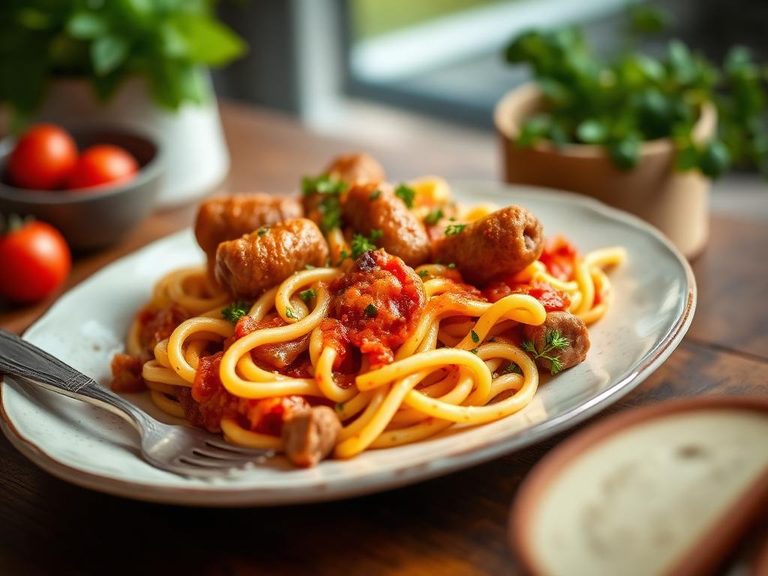
Sausages are a type of ground meat product, typically made from pork, beef, or poultry, mixed with fat, salt, spices, and other flavorings, then stuffed into a casing. They are a staple food with ancient origins, found in countless regional varieties worldwide, from German bratwurst to Chinese lap cheong.
🍳 View the full Sausages recipe →
🍽️ Nutrition at a glance
Sausages are generally high in protein and fat, with minimal to no carbohydrates depending on the variety. They are a significant source of protein, B vitamins (especially B12), and minerals like iron and zinc, with a typical serving containing around 250-300 calories.
Nutrition breakdown
| Calories | 260 kcal |
| Protein | 15 g |
| Carbs | 2 g |
| Fat | 21 g |
| Fiber | 0 g |
| Sugar | 1 g |
| Sodium | 680 mg |
| Vitamin B12 | 1.2 mcg |
| Niacin (B3) | 4.5 mg |
| Iron | 1.2 mg |
| Zinc | 2.5 mg |
| Selenium | 18 mcg |
| Phosphorus | 150 mg |
| Potassium | 200 mg |
| Choline | 55 mg |
Per 1 link (85 g) · estimated, varies by recipe
💡 What's interesting
The art of sausage-making is a global culinary tradition, with over 1,500 distinct varieties in Germany alone. Nutritionally, they are a dense source of complete protein and essential micronutrients, though they are also often high in sodium and saturated fat.
🍽️ Related dishes







AI estimate may be inaccurate · Terms