

Beef, short loin, porterhouse steak, separable lean only, trimmed to 1/8" fat, select, raw
Whole food · Beef Products
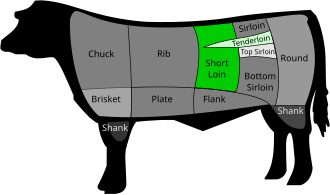
Photo: Wikipedia
This is the lean, central cut from a porterhouse steak, prized for its deep red color and fine, tight grain. When raw, it has a firm, dense texture and a clean, subtly mineral beef flavor that intensifies with cooking. Nutritionally, it's a powerhouse of high-quality protein with very little fat, making it an excellent choice for a lean protein source.
Calorie split: 65% protein · 0% carbs · 35% fat
↓ Full nutrition💚 Why it's loved
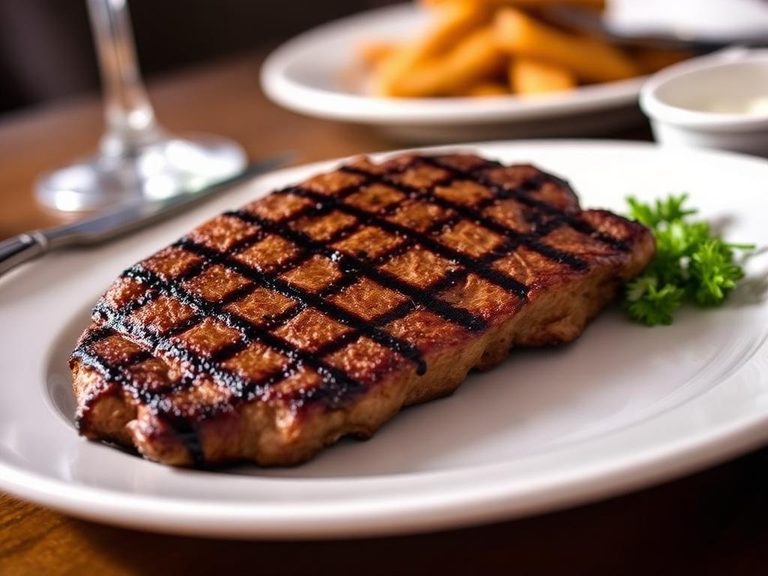
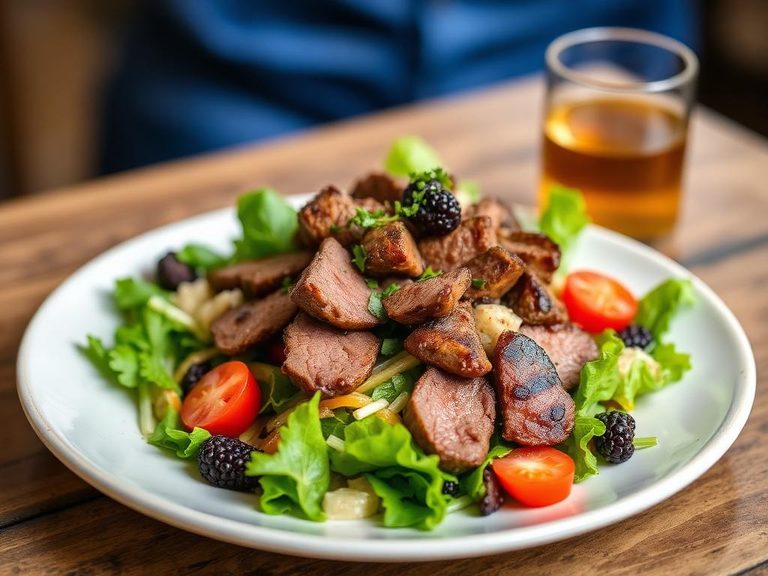
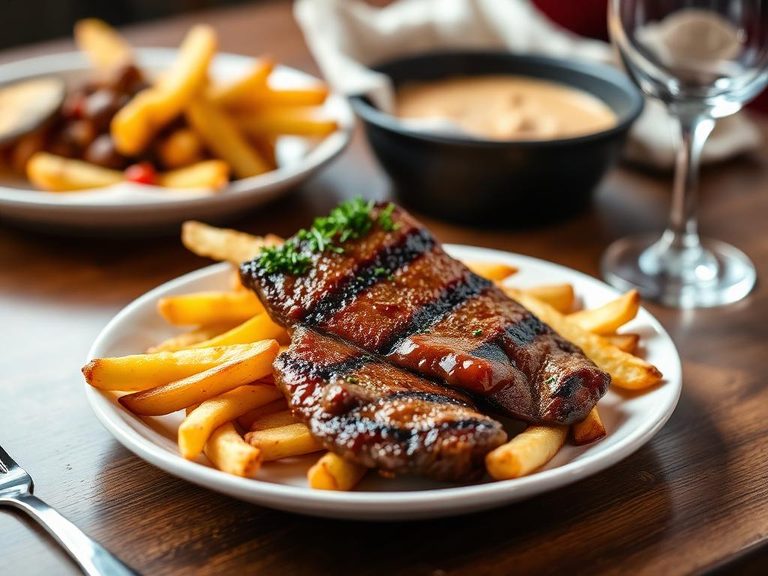
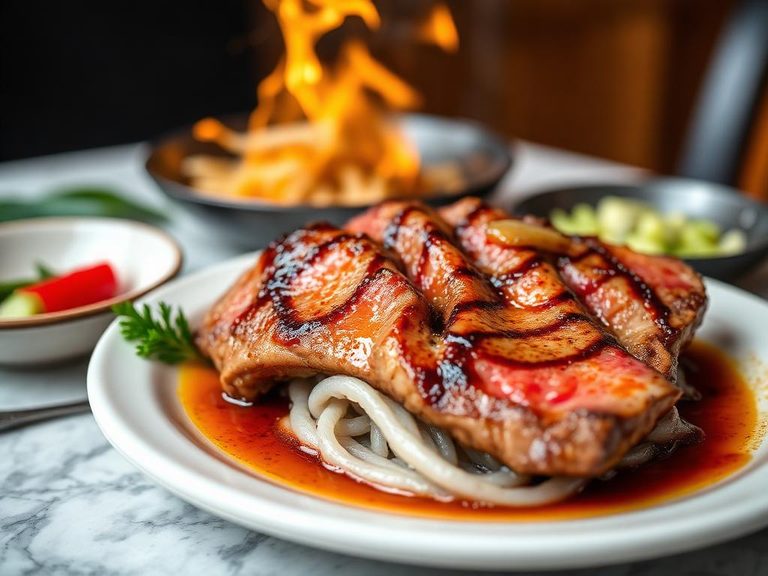
Chefs and home cooks love it for its versatility—it can be sliced thin for a quick sear or left thick for a dramatic, juicy steakhouse presentation. The cut's inherent beefiness and tenderness, when cooked properly, make it a centerpiece-worthy protein that feels both indulgent and wholesome.
⚠️ Watch-outs & how to enjoy it better
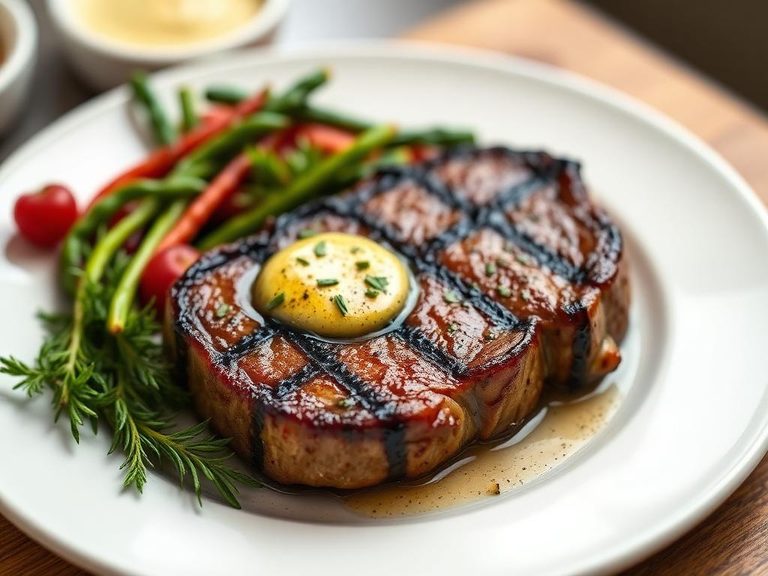
Being a lean cut, it can become tough and dry if overcooked, which is a common pitfall for inexperienced cooks. To counteract this, use a meat thermometer to pull it at 130-135°F (54-57°C) for medium-rare, and let it rest for 5-10 minutes after cooking to allow juices to redistribute. Pairing it with a flavorful sauce or compound butter can also add moisture and richness.
Key benefits
- Exceptionally high in complete protein for muscle repair and satiety.
- Very low in carbohydrates and sugars, suitable for low-carb diets.
- Rich in bioavailable iron and zinc for immune function and energy.
- Contains B vitamins like B12 and niacin for nerve health and metabolism.
🍽️ Popular dishes
🌍 Where it's eaten
💡 Did you know?
The porterhouse steak is legally defined by the USDA as a T-bone steak with a tenderloin section that is at least 1.25 inches wide at its widest point.
Full nutrition (USDA data · scales with serving)
| Water | 71.4 g |
| Energy (Atwater General Factors) | 139 kcal |
| Energy (Atwater Specific Factors) | 145 kcal |
| Energy | 145 kcal |
| Energy | 606 kj |
| Protein | 22.7 g |
| Total lipid (fat) | 5.3 g |
| Total fat (NLEA) | 4.5 g |
| Ash | 1.0 g |
| Carbohydrate, by difference | 0.00 g |
| Calcium, Ca | 19.0 mg |
| Iron, Fe | 2.3 mg |
| Magnesium, Mg | 10.7 mg |
| Phosphorus, P | 200 mg |
| Potassium, K | 266 mg |
| Sodium, Na | 43.0 mg |
| Zinc, Zn | 3.5 mg |
| Copper, Cu | 0.07 mg |
| Manganese, Mn | 0.00 mg |
| Selenium, Se | 21.4 ug |
| Riboflavin | 0.23 mg |
| Niacin | 5.3 mg |
| Vitamin B-6 | 0.75 mg |
| Vitamin B-12 | 2.0 ug |
Fat & fatty acid profile (per 100g)
| Fatty acids, total saturated | 2.1 g |
| SFA 10:0 | 0.01 g |
| SFA 12:0 | 0.01 g |
| SFA 14:0 | 0.14 g |
| SFA 15:0 | 0.03 g |
| SFA 16:0 | 1.2 g |
| SFA 17:0 | 0.06 g |
| SFA 18:0 | 0.64 g |
| SFA 20:0 | 0.00 g |
| SFA 24:0 | 0.00 g |
| Fatty acids, total monounsaturated | 1.9 g |
| MUFA 14:1 c | 0.03 g |
| MUFA 16:1 c | 0.14 g |
| MUFA 17:1 | 0.04 g |
| MUFA 17:1 c | 0.04 g |
| MUFA 18:1 c | 1.7 g |
| MUFA 20:1 | 0.01 g |
| MUFA 20:1 c | 0.01 g |
| Fatty acids, total polyunsaturated | 0.26 g |
| PUFA 18:2 c | 0.19 g |
| PUFA 18:2 n-6 c,c | 0.18 g |
| PUFA 18:2 CLAs | 0.01 g |
| PUFA 18:3 c | 0.01 g |
| PUFA 18:3 n-3 c,c,c (ALA) | 0.01 g |
| PUFA 20:2 c | 0.00 g |
| PUFA 20:2 n-6 c,c | 0.00 g |
| PUFA 20:3 c | 0.01 g |
| PUFA 20:3 n-6 | 0.01 g |
| PUFA 20:4 | 0.03 g |
| PUFA 20:4c | 0.03 g |
| PUFA 20:5c | 0.00 g |
| PUFA 20:5 n-3 (EPA) | 0.00 g |
| PUFA 22:5 c | 0.01 g |
| PUFA 22:5 n-3 (DPA) | 0.01 g |
| PUFA 22:6 c | 0.00 g |
| PUFA 22:6 n-3 (DHA) | 0.00 g |
| Fatty acids, total trans | 0.28 g |
| Fatty acids, total trans-monoenoic | 0.26 g |
| TFA 16:1 t | 0.01 g |
| TFA 18:1 t | 0.24 g |
| Fatty acids, total trans-dienoic | 0.02 g |
| TFA 18:2 t not further defined | 0.02 g |
| Cholesterol | 57.0 mg |
Amino acid profile (per 100g)
Estimated from Beef, variety meats and by-products, mechanically separated beef, raw — USDA does not publish this profile for Beef.
| Tryptophan | 0.17 g |
| Threonine | 0.47 g |
| Isoleucine | 0.58 g |
| Leucine | 1.2 g |
| Lysine | 1.2 g |
| Methionine | 0.43 g |
| Cystine | 0.23 g |
| Phenylalanine | 0.64 g |
| Tyrosine | 0.38 g |
| Valine | 0.92 g |
| Arginine | 1.2 g |
| Histidine | 0.44 g |
| Alanine | 1.0 g |
| Aspartic acid | 1.3 g |
| Glutamic acid | 2.1 g |
| Glycine | 1.2 g |
| Proline | 0.92 g |
| Serine | 0.57 g |
FAQ
What's the difference between a porterhouse and a T-bone steak?
Both come from the short loin and have a T-shaped bone. The key difference is size: a porterhouse must have a larger section of tenderloin (at least 1.25 inches wide), making it a larger, more premium cut.
How should I cook this lean cut to avoid it being dry?
High heat is your friend. Sear it quickly in a very hot cast-iron skillet or on a grill to develop a crust without overcooking the interior. Aim for medium-rare (130-135°F internal temperature) and always let it rest before slicing.
Is this cut suitable for a low-fat diet?
Yes, when trimmed of visible fat, this is one of the leanest steak options available, with only about 5.3g of fat per 100g. It provides substantial protein with minimal fat, fitting well into many dietary plans.
Nutrient density (calculated · NRF9.3)
Nutrient Rich Foods index: beneficial nutrients (protein, fiber, vitamins, minerals) minus saturated fat, added sugar & sodium, per 100 kcal.
NRF9.3 index — Fulgoni, Keast & Drewnowski, 2009. Computed from USDA nutrients.
Weight-loss friendliness (composite index)
Energy density 1.45 kcal/g · 63% calories from protein · 0.0 g fiber · 0.0 g sugar per 100 g.
Composite of energy density (Rolls et al., 1999), protein & fiber satiety, minus sugar. A calculated heuristic — ranks satiety-per-calorie, not a clinical measure.
Dietary load (calculated from USDA values)
Potential renal acid load. Positive = acid-forming, negative = alkaline-forming.
Sodium-to-potassium ratio: 0.16 (lower is better — aim for ≤ 1)
Sodium:potassium per WHO potassium guidance. Computed from USDA nutrients.