

Beef, rib, back ribs, bone-in, separable lean only, trimmed to 0" fat, all grades, cooked, braised
Whole food · Beef Products
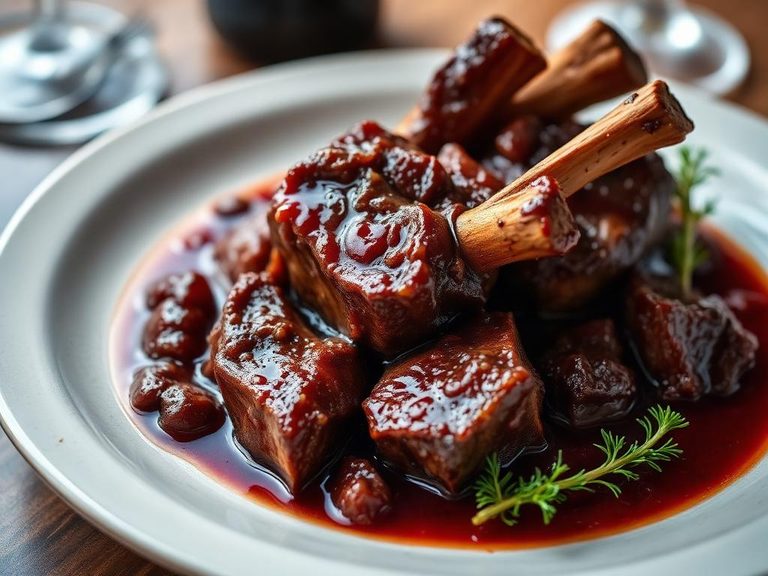
Braised beef back ribs, with the lean meat separated from the bone and fat trimmed, are a deeply savory, fall-apart tender cut. The slow-cooking process breaks down connective tissue, resulting in a rich, beefy flavor and a melt-in-your-mouth texture. Nutritionally, it's a powerhouse of protein with zero carbohydrates, making it a staple for high-protein, low-carb diets.
Calorie split: 38% protein · 0% carbs · 62% fat
↓ Full nutrition💚 Why it's loved
People adore braised back ribs for their profound, beefy savoriness and the satisfying, tender texture that comes from long, slow cooking. It's a comfort food staple in many cultures, often associated with hearty family meals and weekend feasts.
⚠️ Watch-outs & how to enjoy it better
The primary downside is its high fat and calorie density, which can be a concern for those managing weight or heart health. To counteract this, practice strict portion control and pair it with large servings of non-starchy vegetables like steamed broccoli or a fresh salad to add fiber and volume without excess calories.
Key benefits
- Excellent source of complete protein for muscle repair and maintenance.
- Zero carbohydrates, making it ideal for ketogenic and low-carb diets.
- Rich in essential minerals like iron, zinc, and selenium.
- Provides B vitamins, particularly B12, crucial for nerve function and energy.
🍽️ Popular dishes
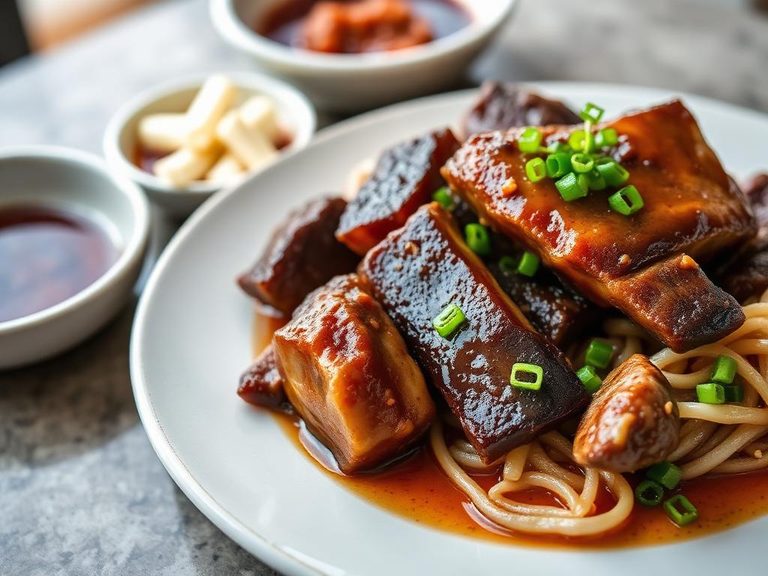
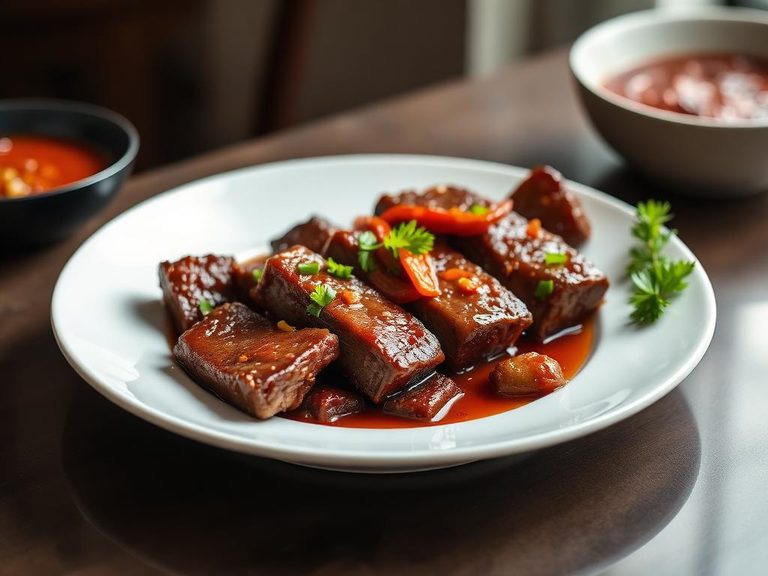
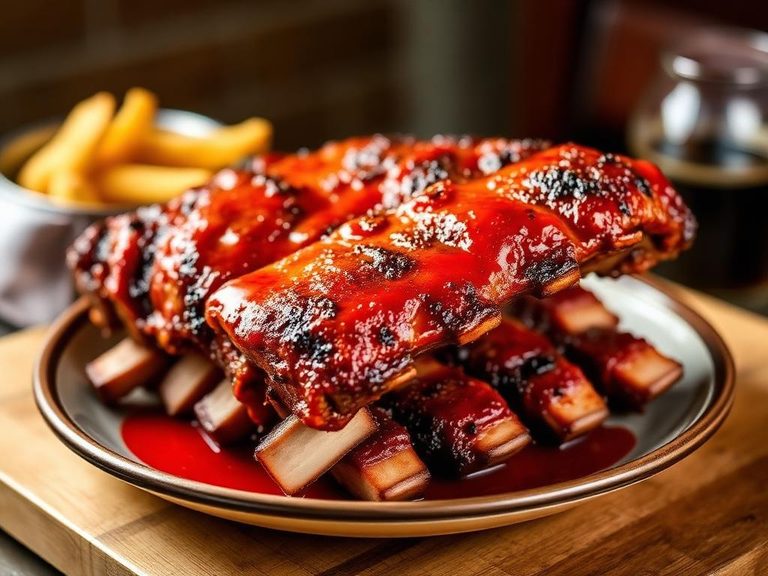
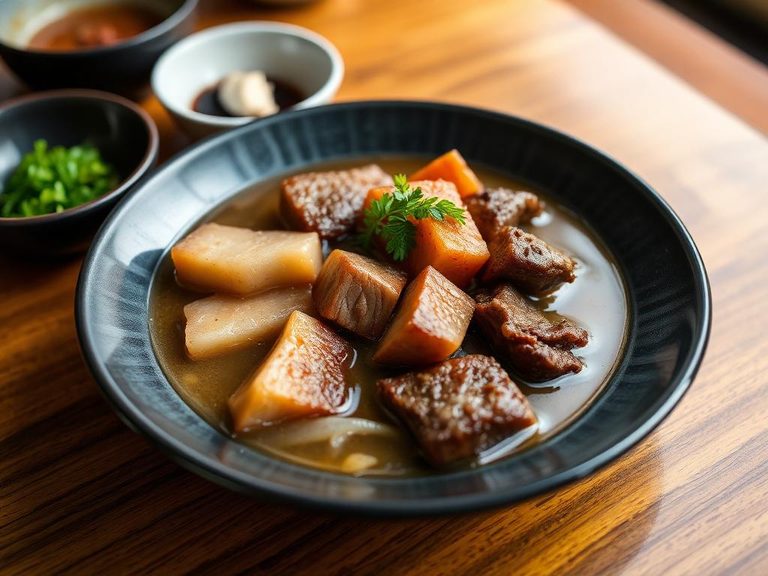
🌍 Where it's eaten
💡 Did you know?
The 'back ribs' come from the rib section of the cow, near the spine, and are different from the larger, more common 'short ribs' which come from the plate or chuck. Their smaller size and leaner meat make them particularly suited for braising.
Full nutrition (USDA data · scales with serving)
| Water | 51.1 g |
| Energy | 299 kcal |
| Energy | 1249 kj |
| Protein | 28.4 g |
| Total lipid (fat) | 20.6 g |
| Ash | 0.64 g |
| Carbohydrate, by difference | 0.00 g |
| Fiber, total dietary | 0.00 g |
| Total Sugars | 0.00 g |
| Calcium, Ca | 22.0 mg |
| Iron, Fe | 2.7 mg |
| Magnesium, Mg | 26.0 mg |
| Phosphorus, P | 187 mg |
| Potassium, K | 284 mg |
| Sodium, Na | 68.0 mg |
| Zinc, Zn | 6.1 mg |
| Copper, Cu | 0.08 mg |
| Selenium, Se | 28.6 ug |
| Vitamin C, total ascorbic acid | 0.00 mg |
| Thiamin | 0.11 mg |
| Riboflavin | 0.35 mg |
| Niacin | 5.9 mg |
| Vitamin B-6 | 0.57 mg |
| Folate, total | 7.0 ug |
| Folic acid | 0.00 ug |
| Folate, food | 7.0 ug |
| Folate, DFE | 7.0 ug |
| Vitamin B-12 | 2.3 ug |
| Vitamin B-12, added | 0.00 ug |
| Vitamin A, RAE | 2.0 ug |
| Retinol | 2.0 ug |
| Carotene, beta | 0.00 ug |
| Carotene, alpha | 0.00 ug |
| Cryptoxanthin, beta | 0.00 ug |
| Vitamin A, IU | 7.0 iu |
| Lycopene | 0.00 ug |
| Lutein + zeaxanthin | 0.00 ug |
| Vitamin E (alpha-tocopherol) | 0.10 mg |
| Vitamin E, added | 0.00 mg |
| Vitamin D (D2 + D3), International Units | 6.0 iu |
| Vitamin D (D2 + D3) | 0.20 ug |
| Vitamin D3 (cholecalciferol) | 0.20 ug |
| Vitamin K (phylloquinone) | 1.6 ug |
| Alcohol, ethyl | 0.00 g |
| Caffeine | 0.00 mg |
| Theobromine | 0.00 mg |
Fat & fatty acid profile (per 100g)
| Fatty acids, total saturated | 8.1 g |
| SFA 4:0 | 0.00 g |
| SFA 6:0 | 0.00 g |
| SFA 8:0 | 0.00 g |
| SFA 10:0 | 0.01 g |
| SFA 12:0 | 0.01 g |
| SFA 14:0 | 0.51 g |
| SFA 16:0 | 4.4 g |
| SFA 18:0 | 2.8 g |
| Fatty acids, total monounsaturated | 9.3 g |
| MUFA 16:1 | 0.59 g |
| MUFA 18:1 | 8.3 g |
| MUFA 20:1 | 0.04 g |
| MUFA 22:1 | 0.00 g |
| Fatty acids, total polyunsaturated | 0.81 g |
| PUFA 18:2 | 0.68 g |
| PUFA 18:3 | 0.04 g |
| PUFA 18:4 | 0.00 g |
| PUFA 20:4 | 0.06 g |
| PUFA 20:5 n-3 (EPA) | 0.00 g |
| PUFA 22:5 n-3 (DPA) | 0.01 g |
| PUFA 22:6 n-3 (DHA) | 0.00 g |
| Cholesterol | 90.0 mg |
Amino acid profile (per 100g)
| Tryptophan | 0.35 g |
| Threonine | 1.5 g |
| Isoleucine | 1.4 g |
| Leucine | 2.7 g |
| Lysine | 3.0 g |
| Methionine | 0.82 g |
| Cystine | 0.31 g |
| Phenylalanine | 1.2 g |
| Tyrosine | 1.2 g |
| Valine | 1.5 g |
| Arginine | 2.1 g |
| Histidine | 1.2 g |
| Alanine | 1.9 g |
| Aspartic acid | 3.0 g |
| Glutamic acid | 5.1 g |
| Glycine | 1.3 g |
| Proline | 1.3 g |
| Serine | 1.3 g |
| Hydroxyproline | 0.14 g |
FAQ
What is the difference between braised and grilled back ribs?
Braising is a slow, moist-heat cooking method that tenderizes the meat, while grilling is a dry-heat method that creates a charred exterior. Braised ribs are typically more tender and fall-off-the-bone, while grilled ribs are chewier with a smoky crust.
How can I reduce the fat content when cooking braised back ribs?
You can trim all visible fat before cooking and, after braising, allow the braising liquid to cool and solidify so you can skim off the fat layer before reheating the ribs in the sauce.
Is braised beef back ribs a good source of iron?
Yes, beef is a rich source of heme iron, which is more easily absorbed by the body than the non-heme iron found in plant foods.
Nutrient density (calculated · NRF9.3)
Nutrient Rich Foods index: beneficial nutrients (protein, fiber, vitamins, minerals) minus saturated fat, added sugar & sodium, per 100 kcal.
NRF9.3 index — Fulgoni, Keast & Drewnowski, 2009. Computed from USDA nutrients.
Weight-loss friendliness (composite index)
Energy density 2.99 kcal/g · 38% calories from protein · 0.0 g fiber · 0.0 g sugar per 100 g.
Composite of energy density (Rolls et al., 1999), protein & fiber satiety, minus sugar. A calculated heuristic — ranks satiety-per-calorie, not a clinical measure.
Dietary load (calculated from USDA values)
Potential renal acid load. Positive = acid-forming, negative = alkaline-forming.
Sodium-to-potassium ratio: 0.24 (lower is better — aim for ≤ 1)
Sodium:potassium per WHO potassium guidance. Computed from USDA nutrients.