

Beef, loin, tenderloin roast, separable lean only, boneless, trimmed to 0" fat, select, cooked, roasted
Whole food · Beef Products
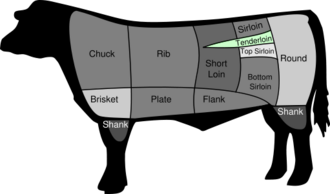
Photo: Wikipedia
Beef tenderloin is the most prized cut from the loin, known for its buttery tenderness and mild, clean beef flavor. When roasted to a perfect medium-rare, it offers a succulent, melt-in-your-mouth texture with a delicate sear on the outside. Nutritionally, it's a powerhouse of lean protein with virtually no carbohydrates or sugar.
Calorie split: 66% protein · 0% carbs · 34% fat
↓ Full nutrition💚 Why it's loved
People adore beef tenderloin for its unmatched tenderness and luxurious, subtle flavor that serves as a perfect canvas for sauces or simple seasoning. It's the centerpiece of celebratory meals, from holiday roasts to elegant dinner parties, symbolizing a special occasion.
⚠️ Watch-outs & how to enjoy it better
Its primary downside is its high cost and low fat content, which can make it dry and disappointing if overcooked. To counteract this, use a meat thermometer to pull it from the oven at 130-135°F (54-57°C) for medium-rare, and consider a quick sear before roasting. Pairing with a rich sauce or compound butter adds moisture and flavor.
Key benefits
- Excellent source of complete, high-quality protein
- Very low in fat, especially saturated fat compared to other cuts
- Naturally zero carbohydrates and sugar
- Rich in essential minerals like iron, zinc, and selenium
- Provides B vitamins, particularly B12 and niacin
🍽️ Popular dishes
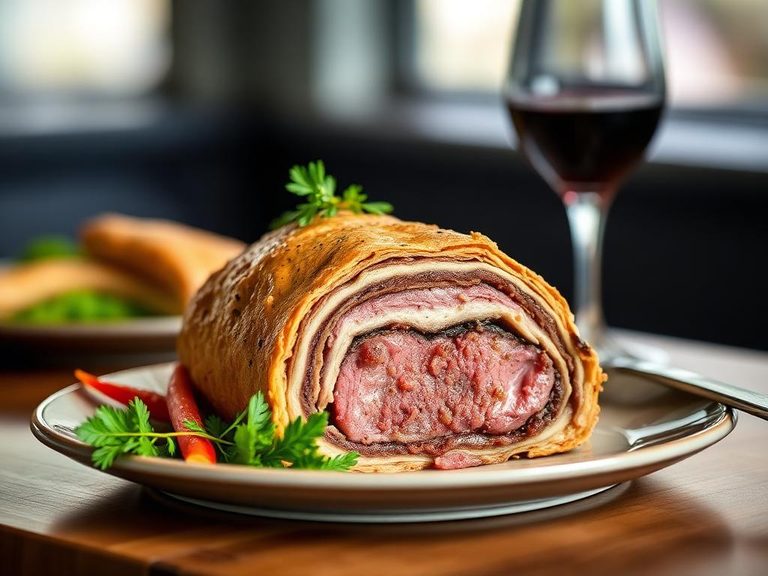
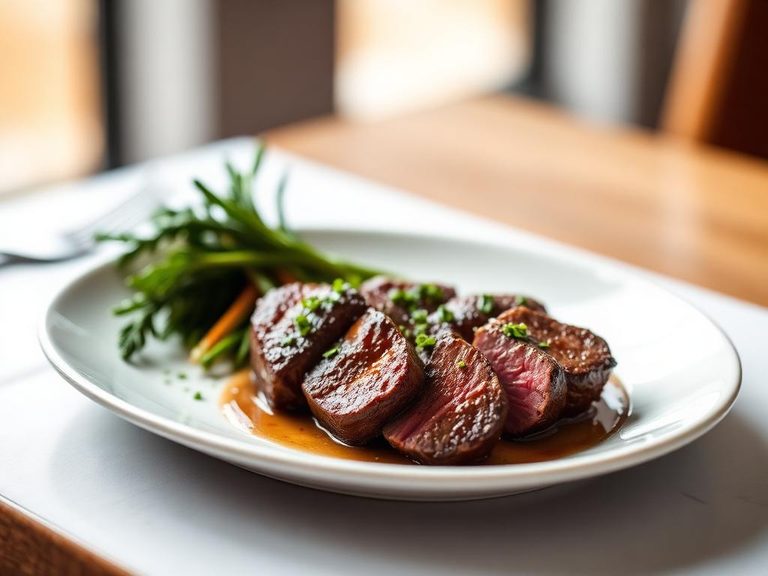
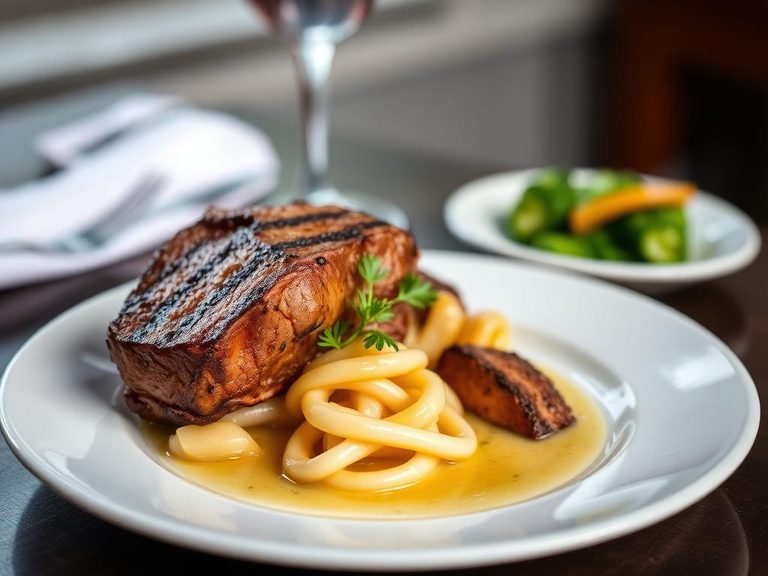
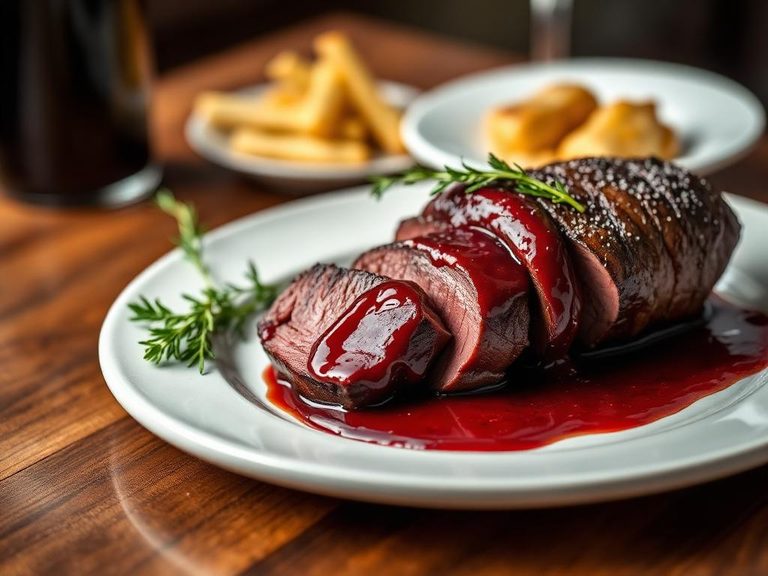
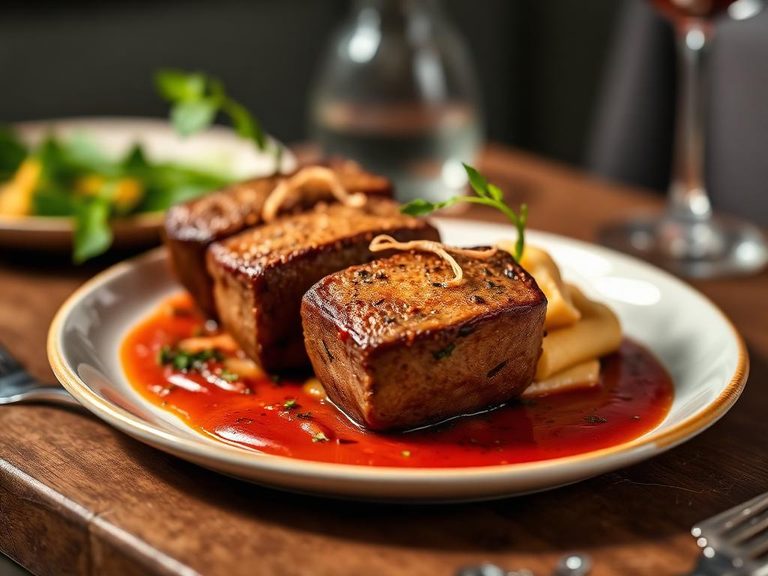
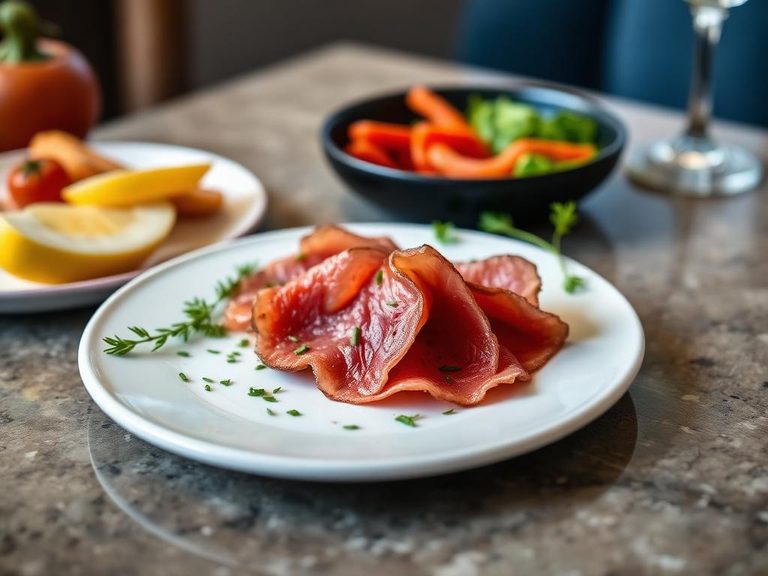
🌍 Where it's eaten
💡 Did you know?
The tenderloin is the least-exercised muscle in the cow, running along the spine, which is why it's so tender but also why a whole tenderloin is relatively small and yields only about 8-12 perfect filet mignon steaks.
Full nutrition (USDA data · scales with serving)
| Water | 65.7 g |
| Energy (Atwater General Factors) | 168 kcal |
| Energy (Atwater Specific Factors) | 176 kcal |
| Energy | 176 kcal |
| Energy | 735 kj |
| Protein | 27.7 g |
| Total lipid (fat) | 6.4 g |
| Total fat (NLEA) | 5.6 g |
| Ash | 1.2 g |
| Carbohydrate, by difference | 0.00 g |
| Calcium, Ca | 13.0 mg |
| Iron, Fe | 3.0 mg |
| Magnesium, Mg | 13.7 mg |
| Phosphorus, P | 259 mg |
| Potassium, K | 352 mg |
| Sodium, Na | 54.0 mg |
| Zinc, Zn | 3.7 mg |
| Copper, Cu | 0.10 mg |
| Manganese, Mn | 0.01 mg |
| Selenium, Se | 25.4 ug |
| Riboflavin | 0.40 mg |
| Niacin | 5.8 mg |
| Vitamin B-6 | 0.67 mg |
| Vitamin B-12 | 4.2 ug |
Fat & fatty acid profile (per 100g)
| Fatty acids, total saturated | 2.5 g |
| SFA 10:0 | 0.01 g |
| SFA 12:0 | 0.01 g |
| SFA 14:0 | 0.15 g |
| SFA 15:0 | 0.03 g |
| SFA 16:0 | 1.3 g |
| SFA 17:0 | 0.07 g |
| SFA 18:0 | 0.85 g |
| SFA 20:0 | 0.01 g |
| SFA 24:0 | 0.01 g |
| Fatty acids, total monounsaturated | 2.3 g |
| MUFA 14:1 c | 0.03 g |
| MUFA 16:1 c | 0.14 g |
| MUFA 17:1 | 0.05 g |
| MUFA 17:1 c | 0.05 g |
| MUFA 18:1 c | 2.0 g |
| MUFA 20:1 | 0.01 g |
| MUFA 20:1 c | 0.01 g |
| Fatty acids, total polyunsaturated | 0.47 g |
| PUFA 18:2 c | 0.36 g |
| PUFA 18:2 n-6 c,c | 0.33 g |
| PUFA 18:2 CLAs | 0.03 g |
| PUFA 18:3 c | 0.01 g |
| PUFA 18:3 n-3 c,c,c (ALA) | 0.01 g |
| PUFA 20:2 c | 0.00 g |
| PUFA 20:2 n-6 c,c | 0.00 g |
| PUFA 20:3 c | 0.02 g |
| PUFA 20:3 n-6 | 0.02 g |
| PUFA 20:4 | 0.06 g |
| PUFA 20:4c | 0.06 g |
| PUFA 20:5c | 0.00 g |
| PUFA 20:5 n-3 (EPA) | 0.00 g |
| PUFA 22:5 c | 0.01 g |
| PUFA 22:5 n-3 (DPA) | 0.01 g |
| PUFA 22:6 c | 0.00 g |
| PUFA 22:6 n-3 (DHA) | 0.00 g |
| Fatty acids, total trans | 0.36 g |
| Fatty acids, total trans-monoenoic | 0.33 g |
| TFA 16:1 t | 0.02 g |
| TFA 18:1 t | 0.30 g |
| Fatty acids, total trans-dienoic | 0.03 g |
| TFA 18:2 t not further defined | 0.03 g |
| Cholesterol | 85.0 mg |
Amino acid profile (per 100g)
Estimated from Beef, variety meats and by-products, mechanically separated beef, raw — USDA does not publish this profile for Beef.
| Tryptophan | 0.17 g |
| Threonine | 0.47 g |
| Isoleucine | 0.58 g |
| Leucine | 1.2 g |
| Lysine | 1.2 g |
| Methionine | 0.43 g |
| Cystine | 0.23 g |
| Phenylalanine | 0.64 g |
| Tyrosine | 0.38 g |
| Valine | 0.92 g |
| Arginine | 1.2 g |
| Histidine | 0.44 g |
| Alanine | 1.0 g |
| Aspartic acid | 1.3 g |
| Glutamic acid | 2.1 g |
| Glycine | 1.2 g |
| Proline | 0.92 g |
| Serine | 0.57 g |
FAQ
What's the best way to cook beef tenderloin to avoid it being dry?
Roast it at a high temperature (425°F/220°C) for a short time, using a meat thermometer to remove it at 130-135°F (54-57°C) for medium-rare. Let it rest for 10-15 minutes before slicing to allow juices to redistribute.
Is beef tenderloin the same as filet mignon?
Yes, filet mignon is the name given to steaks cut from the beef tenderloin. It's the most tender and leanest steak cut available.
How does the nutrition compare to other beef cuts?
Beef tenderloin is significantly leaner than cuts like ribeye or sirloin, with less total fat and calories per ounce. It provides similar protein and mineral content but with a much lower fat profile.
Nutrient density (calculated · NRF9.3)
Nutrient Rich Foods index: beneficial nutrients (protein, fiber, vitamins, minerals) minus saturated fat, added sugar & sodium, per 100 kcal.
NRF9.3 index — Fulgoni, Keast & Drewnowski, 2009. Computed from USDA nutrients.
Weight-loss friendliness (composite index)
Energy density 1.76 kcal/g · 63% calories from protein · 0.0 g fiber · 0.0 g sugar per 100 g.
Composite of energy density (Rolls et al., 1999), protein & fiber satiety, minus sugar. A calculated heuristic — ranks satiety-per-calorie, not a clinical measure.
Dietary load (calculated from USDA values)
Potential renal acid load. Positive = acid-forming, negative = alkaline-forming.
Sodium-to-potassium ratio: 0.15 (lower is better — aim for ≤ 1)
Sodium:potassium per WHO potassium guidance. Computed from USDA nutrients.