

Babyfood, dinner, macaroni and tomato and beef, junior
Whole food · Baby Foods

Photo: Wikipedia
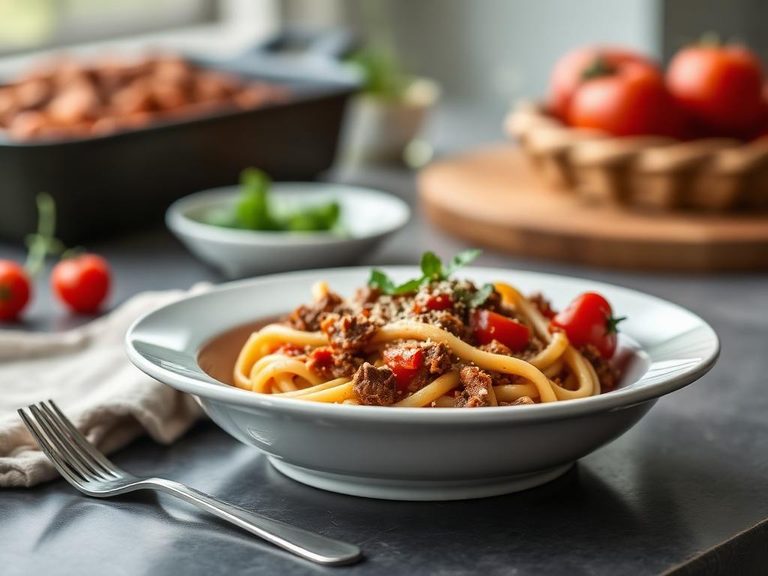
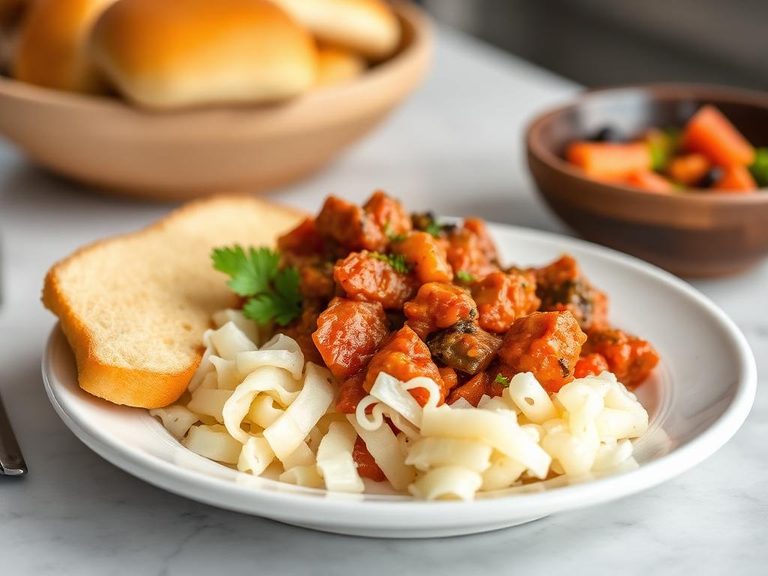
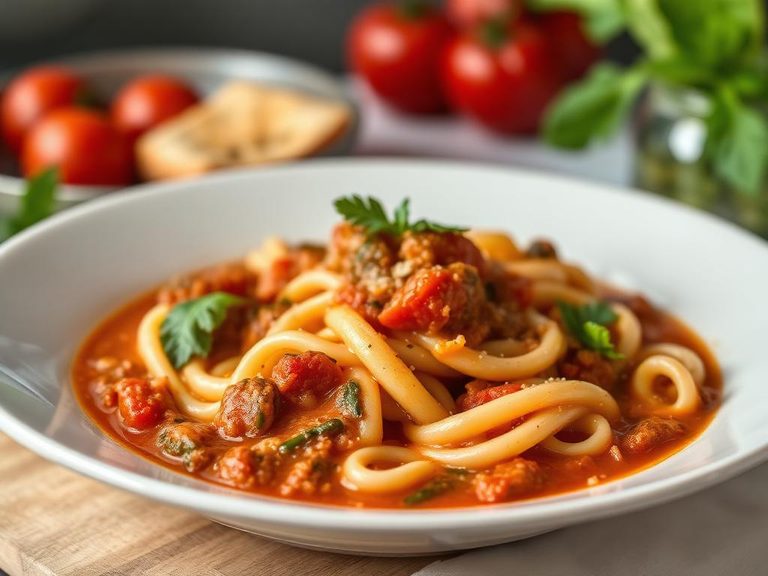
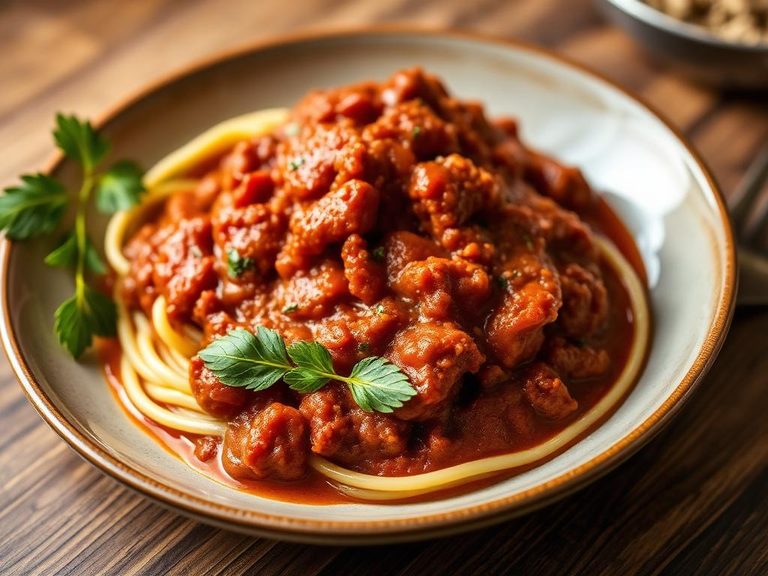
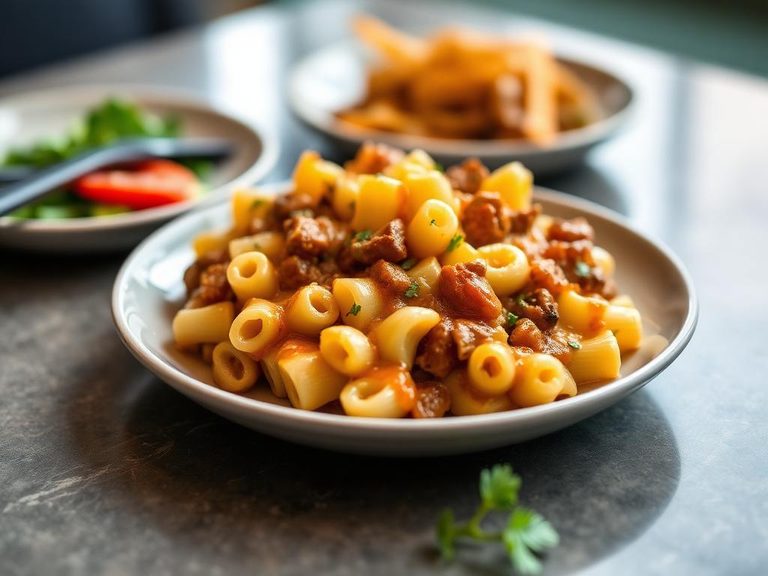
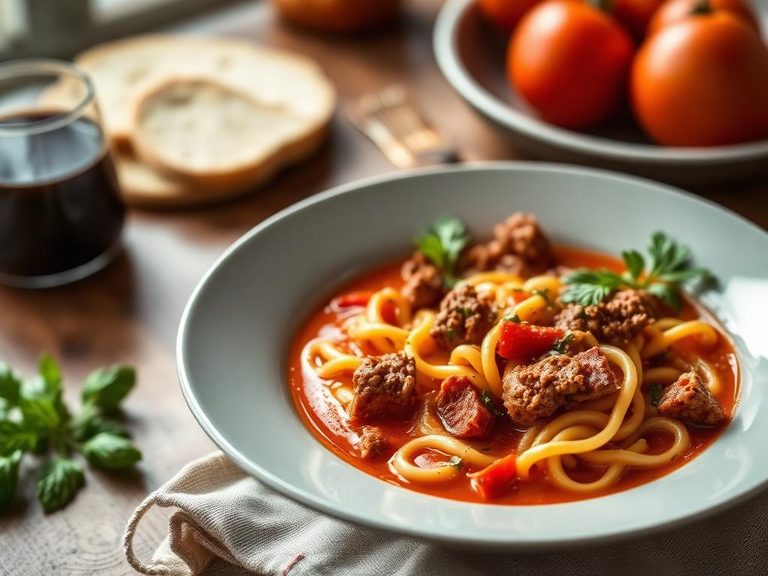
This is a classic junior-stage baby food combining soft, cooked macaroni pasta, tender tomato sauce, and finely shredded beef into a savory, comforting meal. Its texture is smooth yet slightly textured, designed for babies transitioning to more complex bites, with a mild, savory-sweet flavor from the tomatoes and beef. Nutritionally, it's a balanced starter meal, offering a good mix of carbs for energy, protein for growth, and a touch of fiber.
Calorie split: 17% protein · 65% carbs · 17% fat
↓ Full nutrition💚 Why it's loved
Parents appreciate it as a reliable, nutrient-dense meal that introduces savory flavors and common food groups in a safe, palatable way. Babies often enjoy the familiar, comforting taste and the satisfying texture that feels more like 'real food' than purees.
⚠️ Watch-outs & how to enjoy it better
The sodium content, while controlled for babies, can be a consideration for those on strict low-sodium diets. The wheat and beef are common allergens, so introduction should be monitored. To counteract any blood sugar impact from the carbs, it's best served alongside a source of fat or additional protein, like a side of avocado or full-fat yogurt.
Key benefits
- Provides a balanced mix of carbs, protein, and fat for growing toddlers.
- Introduces common allergens like wheat and beef in a controlled, soft form.
- The tomato component adds a source of vitamin C and lycopene.
- Convenient, pre-portioned meal for busy parents.
- Helps develop chewing skills with its soft, particulate texture.
🍽️ Popular dishes
🌍 Where it's eaten
💡 Did you know?
The combination of tomato and beef is a cornerstone of many global cuisines, but its specific pairing in a soft pasta format for babies became a staple in the 20th century with the rise of commercial baby food, pioneered by companies like Gerber.
Full nutrition (USDA data · scales with serving)
| Water | 86.7 g |
| Energy | 59.0 kcal |
| Energy | 247 kj |
| Protein | 2.5 g |
| Total lipid (fat) | 1.1 g |
| Ash | 0.30 g |
| Carbohydrate, by difference | 9.4 g |
| Fiber, total dietary | 1.1 g |
| Total Sugars | 2.4 g |
| Calcium, Ca | 14.0 mg |
| Iron, Fe | 0.36 mg |
| Magnesium, Mg | 7.0 mg |
| Phosphorus, P | 44.0 mg |
| Potassium, K | 72.0 mg |
| Sodium, Na | 35.0 mg |
| Zinc, Zn | 0.36 mg |
| Copper, Cu | 0.04 mg |
| Selenium, Se | 8.4 ug |
| Vitamin C, total ascorbic acid | 1.5 mg |
| Thiamin | 0.05 mg |
| Riboflavin | 0.06 mg |
| Niacin | 0.75 mg |
| Vitamin B-6 | 0.05 mg |
| Folate, total | 9.0 ug |
| Folic acid | 3.0 ug |
| Folate, food | 7.0 ug |
| Folate, DFE | 11.0 ug |
| Choline, total | 10.4 mg |
| Vitamin B-12 | 0.24 ug |
| Vitamin B-12, added | 0.00 ug |
| Vitamin A, RAE | 35.0 ug |
| Retinol | 0.00 ug |
| Carotene, beta | 338 ug |
| Carotene, alpha | 154 ug |
| Cryptoxanthin, beta | 0.00 ug |
| Vitamin A, IU | 691 iu |
| Lycopene | 250 ug |
| Lutein + zeaxanthin | 12.0 ug |
| Vitamin E (alpha-tocopherol) | 0.81 mg |
| Vitamin E, added | 0.00 mg |
| Vitamin D (D2 + D3), International Units | 1.0 iu |
| Vitamin D (D2 + D3) | 0.00 ug |
| Vitamin D3 (cholecalciferol) | 0.00 ug |
| Vitamin K (phylloquinone) | 6.7 ug |
| Alcohol, ethyl | 0.00 g |
| Caffeine | 0.00 mg |
| Theobromine | 0.00 mg |
Fat & fatty acid profile (per 100g)
| Fatty acids, total saturated | 0.41 g |
| SFA 4:0 | 0.00 g |
| SFA 6:0 | 0.00 g |
| SFA 8:0 | 0.00 g |
| SFA 10:0 | 0.00 g |
| SFA 12:0 | 0.00 g |
| SFA 14:0 | 0.03 g |
| SFA 16:0 | 0.24 g |
| SFA 18:0 | 0.12 g |
| Fatty acids, total monounsaturated | 0.45 g |
| MUFA 16:1 | 0.04 g |
| MUFA 18:1 | 0.39 g |
| MUFA 20:1 | 0.00 g |
| MUFA 22:1 | 0.00 g |
| Fatty acids, total polyunsaturated | 0.08 g |
| PUFA 18:2 | 0.07 g |
| PUFA 18:3 | 0.01 g |
| PUFA 18:4 | 0.00 g |
| PUFA 20:4 | 0.00 g |
| PUFA 20:5 n-3 (EPA) | 0.00 g |
| PUFA 22:5 n-3 (DPA) | 0.00 g |
| PUFA 22:6 n-3 (DHA) | 0.00 g |
| Cholesterol | 4.0 mg |
Amino acid profile (per 100g)
| Tryptophan | 0.03 g |
| Threonine | 0.09 g |
| Isoleucine | 0.12 g |
| Leucine | 0.20 g |
| Lysine | 0.15 g |
| Methionine | 0.04 g |
| Cystine | 0.03 g |
| Phenylalanine | 0.11 g |
| Tyrosine | 0.08 g |
| Valine | 0.13 g |
| Arginine | 0.13 g |
| Histidine | 0.06 g |
| Alanine | 0.13 g |
| Aspartic acid | 0.20 g |
| Glutamic acid | 0.62 g |
| Glycine | 0.13 g |
| Proline | 0.20 g |
| Serine | 0.10 g |
FAQ
At what age can I introduce this food?
This is typically for the 'junior' stage, around 10-12 months, when a baby can handle soft, mashed, or finely chopped foods with some texture.
Is it nutritionally complete?
It's a good source of energy and protein but should be part of a varied diet. Pairing it with a fat source (like cheese) and a vegetable side creates a more balanced meal.
How should I serve it?
Serve it warm or at room temperature. You can stir in a teaspoon of olive oil or a sprinkle of grated Parmesan cheese to boost healthy fats and flavor for older toddlers.
Nutrient density (calculated · NRF9.3)
Nutrient Rich Foods index: beneficial nutrients (protein, fiber, vitamins, minerals) minus saturated fat, added sugar & sodium, per 100 kcal.
NRF9.3 index — Fulgoni, Keast & Drewnowski, 2009. Computed from USDA nutrients.
Weight-loss friendliness (composite index)
Energy density 0.59 kcal/g · 17% calories from protein · 1.1 g fiber · 2.4 g sugar per 100 g.
Composite of energy density (Rolls et al., 1999), protein & fiber satiety, minus sugar. A calculated heuristic — ranks satiety-per-calorie, not a clinical measure.
Dietary load (calculated from USDA values)
Potential renal acid load. Positive = acid-forming, negative = alkaline-forming.
Sodium-to-potassium ratio: 0.49 (lower is better — aim for ≤ 1)
Sodium:potassium per WHO potassium guidance. Computed from USDA nutrients.