

Babyfood, dinner, chicken stew, toddler
Whole food · Baby Foods

Photo: Wikipedia
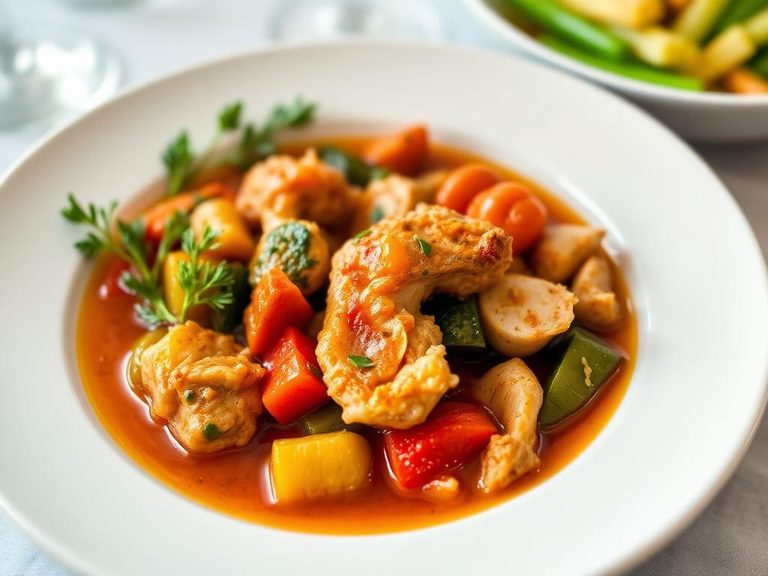
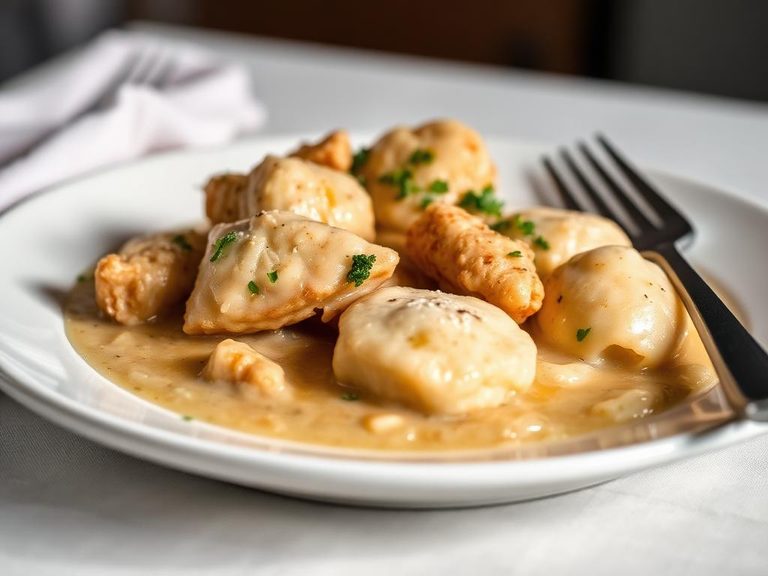
This is a gentle, savory stew of tender chicken and soft vegetables in a light broth, designed for toddlers' developing palates. The texture is typically soft and spoonable, with a mild, comforting chicken flavor. Nutritionally, it offers a balanced mix of protein and carbs in a low-calorie, easily digestible package.
Calorie split: 26% protein · 32% carbs · 42% fat
↓ Full nutrition💚 Why it's loved
Parents love it for its convenience and reliability as a nutritious, balanced meal that toddlers often accept. It's a classic comfort food that introduces savory flavors in a familiar, non-threatening way.
⚠️ Watch-outs & how to enjoy it better
The primary caution is its potential as a common allergen (chicken). For toddlers with specific dietary needs, it may also be low in iron and zinc compared to adult versions. To counteract this, serve it alongside an iron-rich food like a small portion of mashed beans or a fortified cereal, and always introduce new proteins one at a time to monitor for reactions.
Key benefits
- Excellent source of high-quality protein for growth
- Provides energy from complex carbohydrates
- Low in fiber, making it easy on developing digestion
- Contains a moderate amount of healthy fats
- Typically low in added sugars and sodium
🍽️ Popular dishes
🌍 Where it's eaten
💡 Did you know?
The concept of a dedicated 'dinner' jar for babies is largely a 20th-century invention, coinciding with the rise of commercial baby food brands and the shift towards scientific nutrition for infants.
Full nutrition (USDA data · scales with serving)
| Water | 83.3 g |
| Energy | 78.0 kcal |
| Energy | 326 kj |
| Protein | 5.2 g |
| Total lipid (fat) | 3.7 g |
| Ash | 1.4 g |
| Carbohydrate, by difference | 6.4 g |
| Fiber, total dietary | 0.60 g |
| Total Sugars | 1.7 g |
| Calcium, Ca | 36.0 mg |
| Iron, Fe | 0.66 mg |
| Magnesium, Mg | 10.0 mg |
| Phosphorus, P | 51.0 mg |
| Potassium, K | 92.0 mg |
| Sodium, Na | 25.0 mg |
| Zinc, Zn | 0.41 mg |
| Copper, Cu | 0.02 mg |
| Selenium, Se | 5.5 ug |
| Vitamin C, total ascorbic acid | 1.9 mg |
| Thiamin | 0.03 mg |
| Riboflavin | 0.07 mg |
| Niacin | 1.2 mg |
| Vitamin B-6 | 0.05 mg |
| Folate, total | 16.0 ug |
| Folic acid | 15.0 ug |
| Folate, food | 1.0 ug |
| Folate, DFE | 27.0 ug |
| Choline, total | 20.6 mg |
| Vitamin B-12 | 0.14 ug |
| Vitamin B-12, added | 0.00 ug |
| Vitamin A, RAE | 52.0 ug |
| Retinol | 2.0 ug |
| Carotene, beta | 495 ug |
| Carotene, alpha | 214 ug |
| Cryptoxanthin, beta | 0.00 ug |
| Vitamin A, IU | 1010 iu |
| Lycopene | 0.00 ug |
| Lutein + zeaxanthin | 178 ug |
| Vitamin E (alpha-tocopherol) | 0.22 mg |
| Vitamin E, added | 0.00 mg |
| Vitamin D (D2 + D3), International Units | 7.0 iu |
| Vitamin D (D2 + D3) | 0.20 ug |
| Vitamin D3 (cholecalciferol) | 0.20 ug |
| Vitamin K (phylloquinone) | 3.7 ug |
| Alcohol, ethyl | 0.00 g |
| Caffeine | 0.00 mg |
| Theobromine | 0.00 mg |
Fat & fatty acid profile (per 100g)
| Fatty acids, total saturated | 1.1 g |
| SFA 4:0 | 0.00 g |
| SFA 6:0 | 0.00 g |
| SFA 8:0 | 0.00 g |
| SFA 10:0 | 0.01 g |
| SFA 12:0 | 0.01 g |
| SFA 14:0 | 0.05 g |
| SFA 16:0 | 0.74 g |
| SFA 18:0 | 0.22 g |
| Fatty acids, total monounsaturated | 1.7 g |
| MUFA 16:1 | 0.14 g |
| MUFA 18:1 | 1.5 g |
| MUFA 20:1 | 0.01 g |
| MUFA 22:1 | 0.00 g |
| Fatty acids, total polyunsaturated | 0.77 g |
| PUFA 18:2 | 0.73 g |
| PUFA 18:3 | 0.03 g |
| PUFA 18:4 | 0.00 g |
| PUFA 20:4 | 0.02 g |
| PUFA 20:5 n-3 (EPA) | 0.00 g |
| PUFA 22:5 n-3 (DPA) | 0.00 g |
| PUFA 22:6 n-3 (DHA) | 0.00 g |
| Cholesterol | 29.0 mg |
Amino acid profile (per 100g)
| Tryptophan | 0.06 g |
| Threonine | 0.22 g |
| Isoleucine | 0.26 g |
| Leucine | 0.41 g |
| Lysine | 0.41 g |
| Methionine | 0.11 g |
| Cystine | 0.05 g |
| Phenylalanine | 0.21 g |
| Tyrosine | 0.17 g |
| Valine | 0.29 g |
| Arginine | 0.33 g |
| Histidine | 0.13 g |
| Alanine | 0.30 g |
| Aspartic acid | 0.47 g |
| Glutamic acid | 0.90 g |
| Glycine | 0.29 g |
| Proline | 0.35 g |
| Serine | 0.21 g |
FAQ
Is this the same as regular chicken stew?
Not exactly. Toddler versions are typically milder in seasoning, lower in sodium, and may have a smoother or softer texture to suit young children's chewing abilities and digestive systems.
Can I freeze homemade batches?
Yes, it freezes well. Portion it into ice cube trays or small containers for convenient, single servings. Thaw in the refrigerator and reheat thoroughly before serving.
How can I boost the nutrition?
You can stir in finely grated vegetables like carrots or zucchini, a spoonful of pureed lentils for iron, or a sprinkle of nutritional yeast for B vitamins and a cheesy flavor.
Nutrient density (calculated · NRF9.3)
Nutrient Rich Foods index: beneficial nutrients (protein, fiber, vitamins, minerals) minus saturated fat, added sugar & sodium, per 100 kcal.
NRF9.3 index — Fulgoni, Keast & Drewnowski, 2009. Computed from USDA nutrients.
Weight-loss friendliness (composite index)
Energy density 0.78 kcal/g · 27% calories from protein · 0.6 g fiber · 1.7 g sugar per 100 g.
Composite of energy density (Rolls et al., 1999), protein & fiber satiety, minus sugar. A calculated heuristic — ranks satiety-per-calorie, not a clinical measure.
Dietary load (calculated from USDA values)
Potential renal acid load. Positive = acid-forming, negative = alkaline-forming.
Sodium-to-potassium ratio: 0.27 (lower is better — aim for ≤ 1)
Sodium:potassium per WHO potassium guidance. Computed from USDA nutrients.