Pork, cured, ham, boneless, extra lean (approximately 5% fat), roasted
Whole food · Pork Products
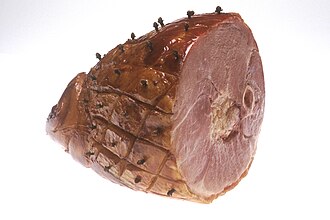
Photo: Wikipedia
This is a lean, boneless cut of ham, cured and roasted to a tender, pink finish with a mild, savory-sweet flavor. With only 5% fat, it offers a dense, protein-rich bite (20.93g per 100g) and a clean, slightly smoky taste that’s less fatty than traditional ham. It’s a versatile, low-calorie protein source at just 145 kcal per 100g, ideal for health-conscious meals.
💚 Why it's loved
People love it for its delicate, salty-sweet flavor and tender, sliceable texture that works in both hot and cold dishes. Its lean profile makes it a guilt-free staple in sandwiches, salads, and breakfasts, cherished in many cultures for its convenience and satisfying taste.
⚠️ Watch-outs & how to enjoy it better
The main downside is its high sodium content from curing, which can be a concern for those monitoring blood pressure. To counteract this, pair it with potassium-rich foods like bananas or spinach, and opt for low-sodium versions when available. Also, its processed nature means it may contain nitrates, so enjoy in moderation and balance with fresh, unprocessed proteins.
Key benefits
- High in protein (20.93g per 100g) for muscle maintenance and satiety.
- Very low in fat (5.53g per 100g), making it a lean protein option.
- Low in carbohydrates (1.5g per 100g), suitable for low-carb diets.
- Provides essential B vitamins like thiamine and niacin for energy metabolism.
- A good source of minerals such as phosphorus and selenium.
🍽️ Popular dishes
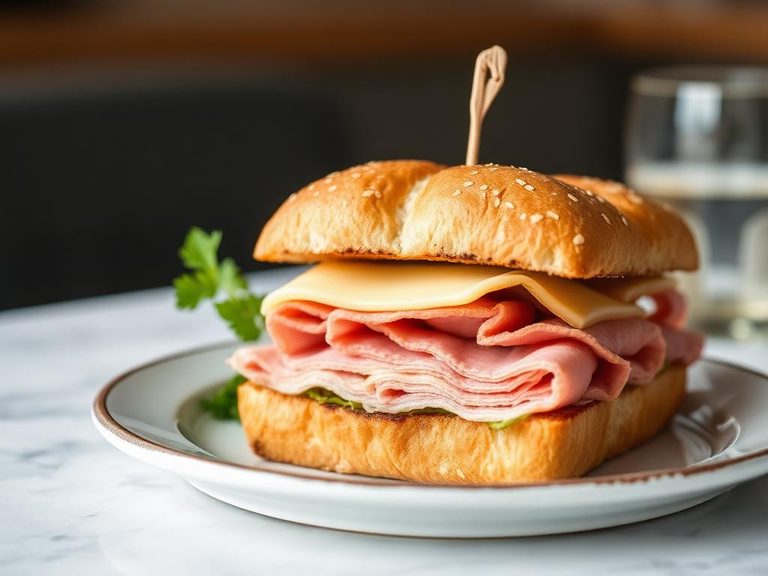
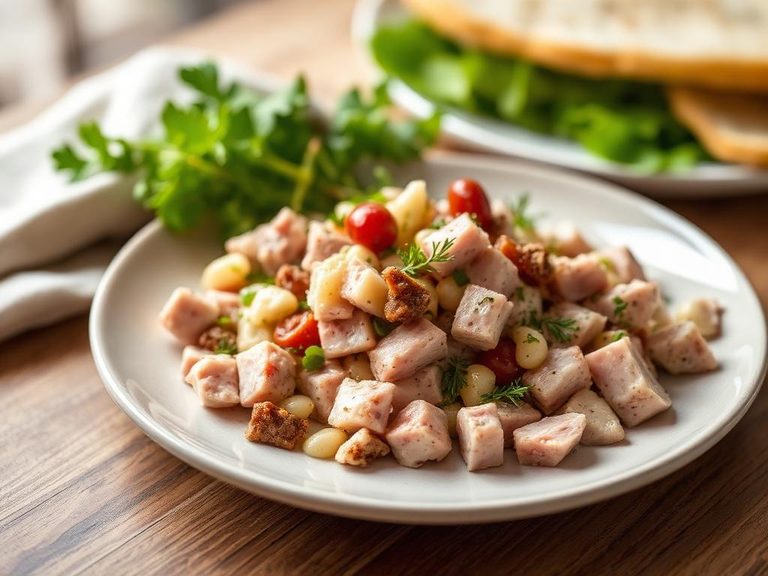
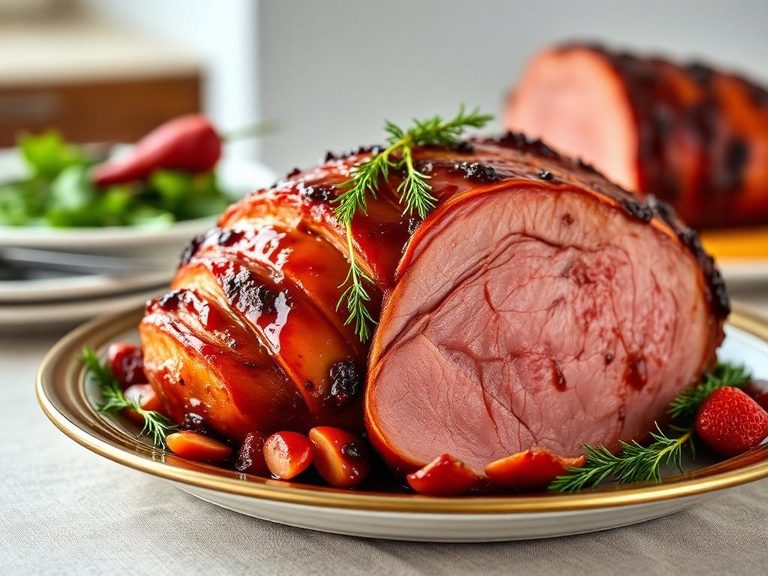
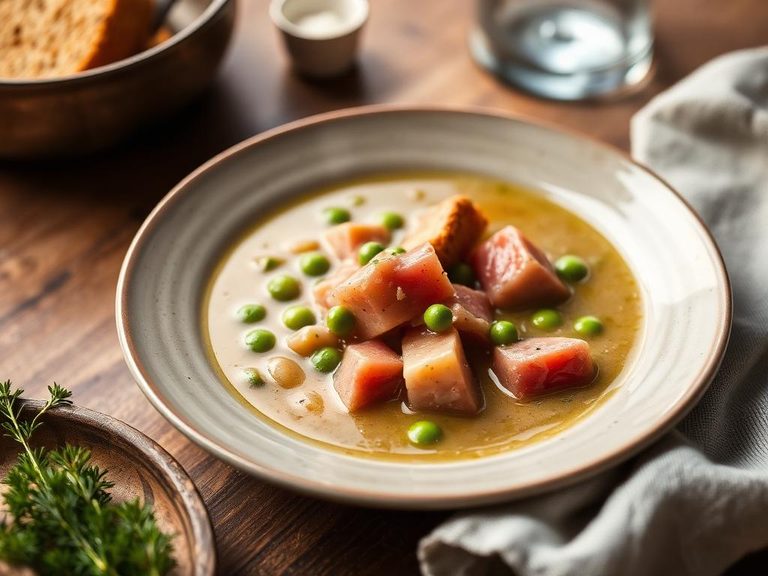
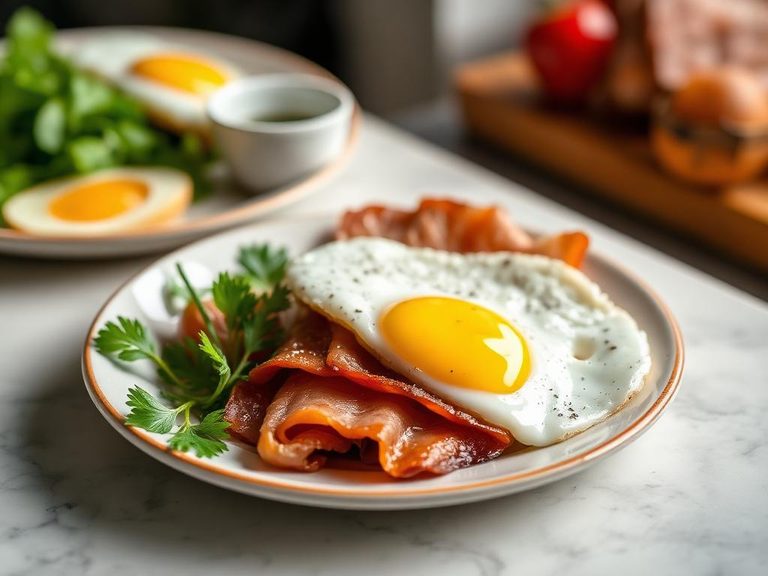
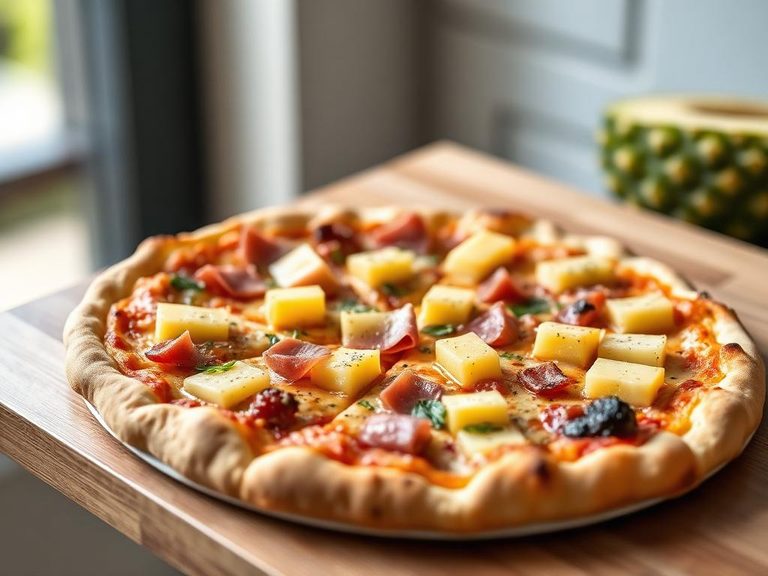
🌍 Where it's eaten
💡 Did you know?
The curing process for ham dates back to ancient times, with evidence of salt-cured pork found in Chinese Neolithic sites over 4,000 years ago, making it one of the oldest preserved meats in human history.
Full nutrition (scales with serving)
| Water | 67.7 g |
| Energy | 145 kcal |
| Energy | 607 kj |
| Protein | 20.9 g |
| Total lipid (fat) | 5.5 g |
| Ash | 4.4 g |
| Carbohydrate, by difference | 1.5 g |
| Fiber, total dietary | 0.00 g |
| Total Sugars | 0.00 g |
| Calcium, Ca | 8.0 mg |
| Iron, Fe | 1.5 mg |
| Magnesium, Mg | 14.0 mg |
| Phosphorus, P | 196 mg |
| Potassium, K | 287 mg |
| Sodium, Na | 1203 mg |
| Zinc, Zn | 2.9 mg |
| Copper, Cu | 0.08 mg |
| Manganese, Mn | 0.05 mg |
| Selenium, Se | 19.5 ug |
| Vitamin C, total ascorbic acid | 0.00 mg |
| Thiamin | 0.75 mg |
| Riboflavin | 0.20 mg |
| Niacin | 4.0 mg |
| Pantothenic acid | 0.40 mg |
| Vitamin B-6 | 0.40 mg |
| Folate, total | 3.0 ug |
| Folic acid | 0.00 ug |
| Folate, food | 3.0 ug |
| Folate, DFE | 3.0 ug |
| Choline, total | 85.1 mg |
| Betaine | 5.7 mg |
| Vitamin B-12 | 0.65 ug |
| Vitamin B-12, added | 0.00 ug |
| Vitamin A, RAE | 0.00 ug |
| Retinol | 0.00 ug |
| Carotene, beta | 0.00 ug |
| Carotene, alpha | 0.00 ug |
| Cryptoxanthin, beta | 0.00 ug |
| Vitamin A, IU | 0.00 iu |
| Lycopene | 0.00 ug |
| Lutein + zeaxanthin | 0.00 ug |
| Vitamin E (alpha-tocopherol) | 0.25 mg |
| Vitamin E, added | 0.00 mg |
| Vitamin D (D2 + D3), International Units | 32.0 iu |
| Vitamin D (D2 + D3) | 0.80 ug |
| Vitamin D3 (cholecalciferol) | 0.80 ug |
| Vitamin K (phylloquinone) | 0.00 ug |
| Vitamin K (Dihydrophylloquinone) | 0.00 ug |
| Alcohol, ethyl | 0.00 g |
| Caffeine | 0.00 mg |
| Theobromine | 0.00 mg |
Fat & fatty acid profile (per 100g)
| Fatty acids, total saturated | 1.8 g |
| SFA 4:0 | 0.00 g |
| SFA 6:0 | 0.00 g |
| SFA 8:0 | 0.00 g |
| SFA 10:0 | 0.02 g |
| SFA 12:0 | 0.02 g |
| SFA 14:0 | 0.09 g |
| SFA 16:0 | 1.1 g |
| SFA 18:0 | 0.57 g |
| Fatty acids, total monounsaturated | 2.6 g |
| MUFA 16:1 | 0.24 g |
| MUFA 18:1 | 2.4 g |
| MUFA 20:1 | 0.00 g |
| MUFA 22:1 | 0.00 g |
| Fatty acids, total polyunsaturated | 0.54 g |
| PUFA 18:2 | 0.48 g |
| PUFA 18:3 | 0.06 g |
| PUFA 18:4 | 0.00 g |
| PUFA 20:4 | 0.00 g |
| PUFA 20:5 n-3 (EPA) | 0.00 g |
| PUFA 22:5 n-3 (DPA) | 0.00 g |
| PUFA 22:6 n-3 (DHA) | 0.00 g |
| Cholesterol | 53.0 mg |
| Phytosterols | 0.00 mg |
Amino acid profile (per 100g)
| Tryptophan | 0.25 g |
| Threonine | 0.93 g |
| Isoleucine | 0.92 g |
| Leucine | 1.7 g |
| Lysine | 1.8 g |
| Methionine | 0.55 g |
| Cystine | 0.32 g |
| Phenylalanine | 0.90 g |
| Tyrosine | 0.69 g |
| Valine | 0.91 g |
| Arginine | 1.4 g |
| Histidine | 0.75 g |
| Alanine | 1.2 g |
| Aspartic acid | 2.0 g |
| Glutamic acid | 3.4 g |
| Glycine | 1.1 g |
| Proline | 0.89 g |
| Serine | 0.86 g |
FAQ
Is this type of ham suitable for a low-sodium diet?
While it is lean, cured ham is typically high in sodium. For a low-sodium diet, look for reduced-sodium varieties and pair it with fresh vegetables to balance intake.
How does the fat content compare to regular ham?
This extra-lean ham has about 5.53g fat per 100g, which is significantly lower than regular ham, which can have 10-20g fat per 100g, making it a better choice for fat-conscious eaters.
Can I eat this if I'm watching my sugar intake?
Yes, with 0g sugar per 100g, it's a good option for low-sugar diets. However, some brands may add sugar during curing, so check labels for added sugars.