

Turkey, neck
Common food

Photo: Wikipedia
Turkey neck is the bony, meaty portion of the bird's neck, prized for its rich, deep flavor and gelatinous texture when slow-cooked. It's a powerhouse of protein with virtually no carbohydrates, making it a staple for low-carb and high-protein diets. The meat, when braised or stewed, becomes tender and succulent, absorbing the flavors of its cooking liquid beautifully.
Calorie split: 58% protein · 0% carbs · 42% fat
↓ Full nutrition💚 Why it's loved
People love turkey necks for their intense, savory flavor that elevates soups, gravies, and stews. They are a beloved, budget-friendly ingredient in many culinary traditions, valued for transforming simple dishes into hearty, comforting meals.
⚠️ Watch-outs & how to enjoy it better
The high bone-to-meat ratio can be frustrating for those seeking a substantial, easy-to-eat portion. They require long, slow cooking to become tender; undercooking results in tough, chewy meat. Tip: Braise, simmer, or pressure cook for at least 1-2 hours to break down connective tissue. Always simmer gently to avoid a cloudy, overly greasy broth.
Key benefits
- Excellent source of lean protein (22g per 100g)
- Zero carbohydrates, suitable for keto and low-carb diets
- Rich in collagen and gelatin, beneficial for joint and gut health
- Provides essential minerals like iron and zinc
- A flavorful, economical cut for adding depth to broths and stews
🍽️ Popular dishes
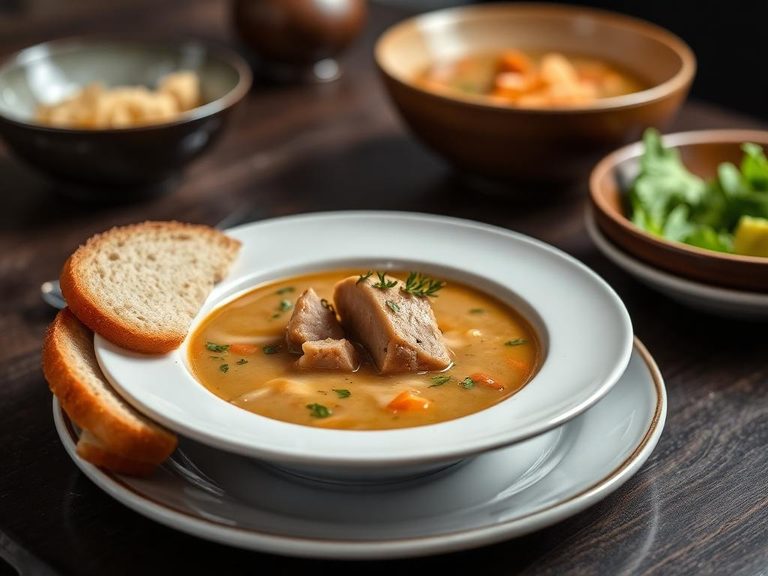
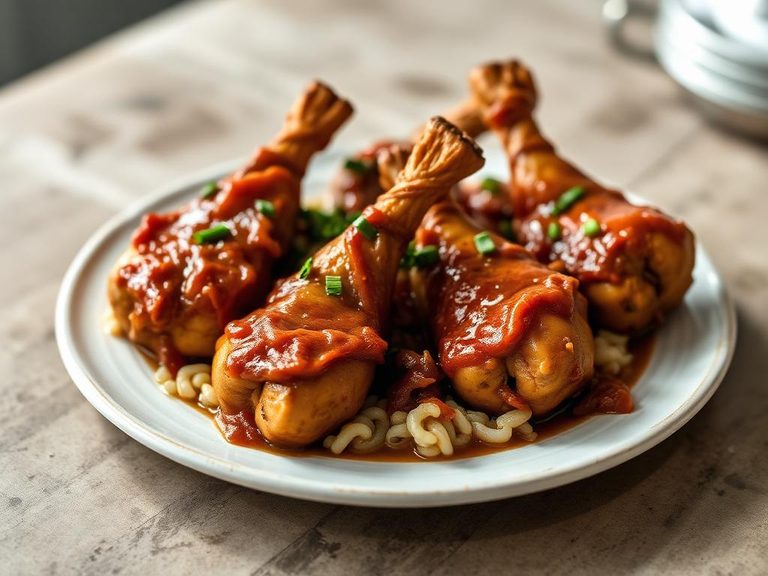
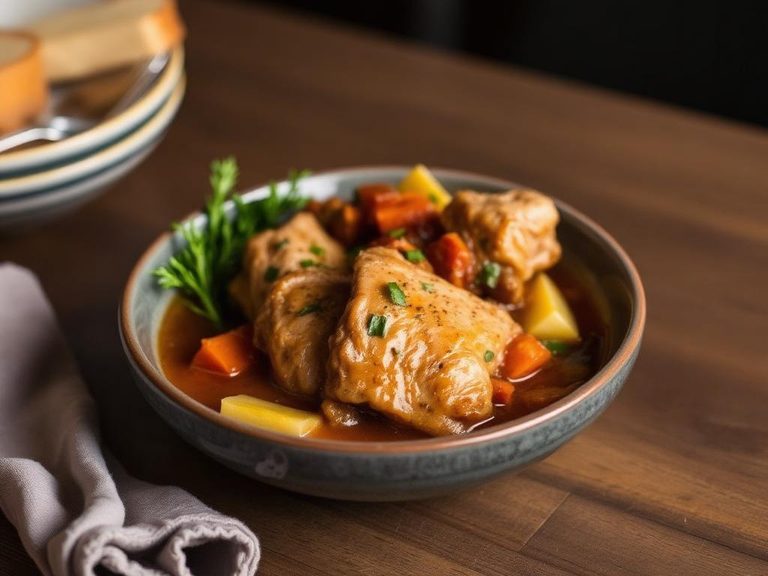
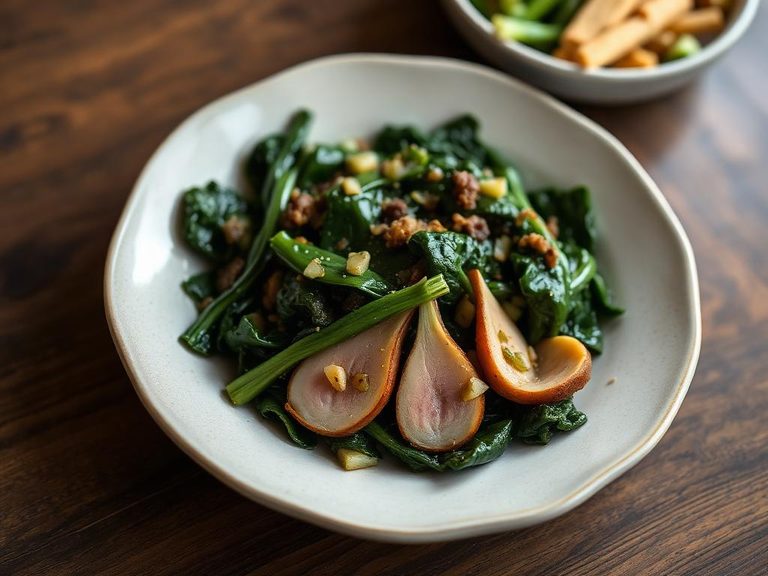
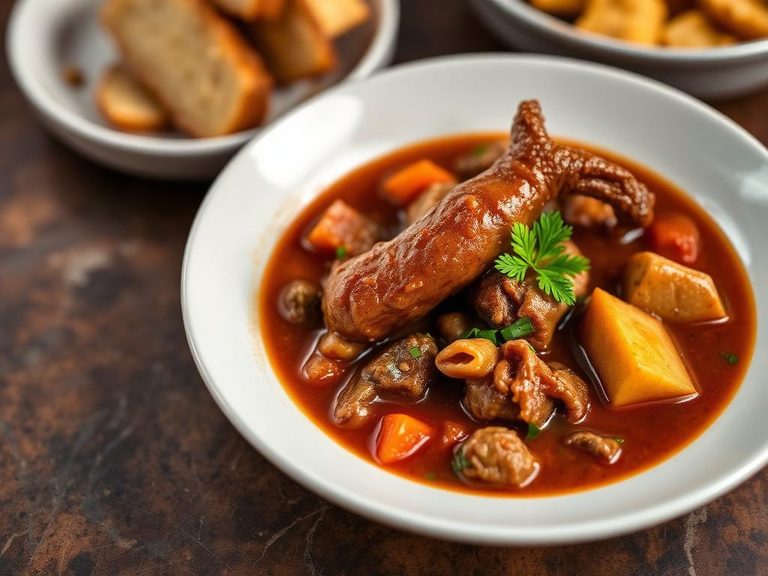
🌍 Where it's eaten
💡 Did you know?
The high collagen content in turkey necks is what gives a well-made turkey stock its signature rich, mouth-coating 'body' when chilled—it literally turns into a savory gelatin.
Full nutrition (USDA data · scales with serving)
| Water | 68.9 g |
| Energy | 161 kcal |
| Protein | 22.3 g |
| Total lipid (fat) | 7.3 g |
| Carbohydrate, by difference | 0.00 g |
| Fiber, total dietary | 0.00 g |
| Total Sugars | 0.00 g |
| Calcium, Ca | 58.0 mg |
| Iron, Fe | 1.2 mg |
| Magnesium, Mg | 18.0 mg |
| Phosphorus, P | 180 mg |
| Potassium, K | 113 mg |
| Sodium, Na | 566 mg |
| Zinc, Zn | 4.0 mg |
| Copper, Cu | 0.16 mg |
| Selenium, Se | 35.9 ug |
| Vitamin C, total ascorbic acid | 0.00 mg |
| Thiamin | 0.05 mg |
| Riboflavin | 0.29 mg |
| Niacin | 5.8 mg |
| Vitamin B-6 | 0.37 mg |
| Folate, total | 7.0 ug |
| Folic acid | 0.00 ug |
| Folate, food | 7.0 ug |
| Folate, DFE | 7.0 ug |
| Choline, total | 77.1 mg |
| Vitamin B-12 | 1.4 ug |
| Vitamin B-12, added | 0.00 ug |
| Vitamin A, RAE | 0.00 ug |
| Retinol | 0.00 ug |
| Carotene, beta | 0.00 ug |
| Carotene, alpha | 0.00 ug |
| Cryptoxanthin, beta | 0.00 ug |
| Lycopene | 0.00 ug |
| Lutein + zeaxanthin | 0.00 ug |
| Vitamin E (alpha-tocopherol) | 0.64 mg |
| Vitamin E, added | 0.00 mg |
| Vitamin D (D2 + D3) | 0.30 ug |
| Vitamin K (phylloquinone) | 0.00 ug |
| Alcohol, ethyl | 0.00 g |
| Caffeine | 0.00 mg |
| Theobromine | 0.00 mg |
Fat & fatty acid profile (per 100g)
| Fatty acids, total saturated | 2.2 g |
| SFA 4:0 | 0.00 g |
| SFA 6:0 | 0.00 g |
| SFA 8:0 | 0.00 g |
| SFA 10:0 | 0.01 g |
| SFA 12:0 | 0.03 g |
| SFA 14:0 | 0.07 g |
| SFA 16:0 | 1.4 g |
| SFA 18:0 | 0.61 g |
| Fatty acids, total monounsaturated | 2.5 g |
| MUFA 16:1 | 0.23 g |
| MUFA 18:1 | 2.2 g |
| MUFA 20:1 | 0.03 g |
| MUFA 22:1 | 0.00 g |
| Fatty acids, total polyunsaturated | 2.0 g |
| PUFA 18:2 | 1.7 g |
| PUFA 18:3 | 0.09 g |
| PUFA 18:4 | 0.00 g |
| PUFA 20:4 | 0.11 g |
| PUFA 20:5 n-3 (EPA) | 0.01 g |
| PUFA 22:5 n-3 (DPA) | 0.01 g |
| PUFA 22:6 n-3 (DHA) | 0.01 g |
| Cholesterol | 127 mg |
Amino acid profile (per 100g)
Estimated from Turkey, mechanically deboned, from turkey frames, raw — USDA does not publish this profile for Turkey.
| Tryptophan | 0.11 g |
| Threonine | 0.64 g |
| Isoleucine | 0.50 g |
| Leucine | 1.1 g |
| Lysine | 1.2 g |
| Methionine | 0.37 g |
| Cystine | 0.10 g |
| Phenylalanine | 0.55 g |
| Tyrosine | 0.47 g |
| Valine | 0.54 g |
| Arginine | 0.87 g |
| Histidine | 0.50 g |
| Alanine | 0.87 g |
| Aspartic acid | 1.4 g |
| Glutamic acid | 2.2 g |
| Glycine | 0.78 g |
| Proline | 0.65 g |
| Serine | 0.62 g |
FAQ
How do I eat around the bones?
After slow cooking until very tender, the meat will easily pull away from the bone. You can eat it directly off the bone, or shred the meat to add back into soups, stews, or salads.
Can I use turkey necks to make bone broth?
Absolutely. They are one of the best cuts for making a rich, flavorful bone broth due to their high collagen and connective tissue content. Simmer for 4-6 hours or use a pressure cooker.
Are turkey necks high in cholesterol or fat?
While they contain some fat (7.3g per 100g), much of it renders out during cooking. They are a good source of lean protein. The fat that remains is primarily in the skin and cooking liquid, which can be skimmed.
Nutrient density (calculated · NRF9.3)
Nutrient Rich Foods index: beneficial nutrients (protein, fiber, vitamins, minerals) minus saturated fat, added sugar & sodium, per 100 kcal.
NRF9.3 index — Fulgoni, Keast & Drewnowski, 2009. Computed from USDA nutrients.
Weight-loss friendliness (composite index)
Energy density 1.61 kcal/g · 55% calories from protein · 0.0 g fiber · 0.0 g sugar per 100 g.
Composite of energy density (Rolls et al., 1999), protein & fiber satiety, minus sugar. A calculated heuristic — ranks satiety-per-calorie, not a clinical measure.
Dietary load (calculated from USDA values)
Potential renal acid load. Positive = acid-forming, negative = alkaline-forming.
Sodium-to-potassium ratio: 5.01 (lower is better — aim for ≤ 1)
Sodium:potassium per WHO potassium guidance. Computed from USDA nutrients.