

Spinach, frozen, cooked, no added fat
Common food
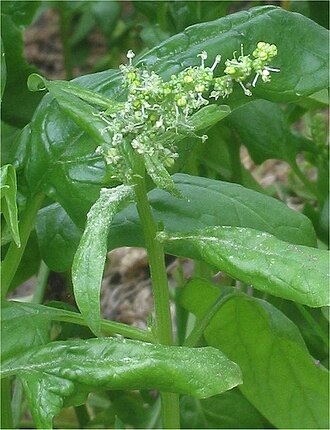
Photo: Wikipedia
Frozen cooked spinach is a compact, nutrient-dense vegetable with a deep, earthy flavor and a soft, slightly fibrous texture. It is remarkably low in calories (34 kcal per 100g) while delivering a solid 4g of protein and nearly 4g of fiber, making it a powerhouse for adding volume and nutrition to meals. Its convenience and concentrated taste make it a staple for quick, healthy cooking.
Calorie split: 37% protein · 45% carbs · 18% fat
↓ Full nutrition💚 Why it's loved
People love frozen cooked spinach for its incredible convenience and deep, savory flavor that intensifies when cooked. It is a versatile ingredient that can be seamlessly added to smoothies, sauces, and casseroles, making it easy to boost the nutritional profile of everyday meals.
⚠️ Watch-outs & how to enjoy it better
The primary concern is the presence of oxalates, which can contribute to kidney stone formation in susceptible individuals. To mitigate this, ensure adequate hydration and consider pairing spinach with calcium-rich foods (like yogurt or cheese) to help bind oxalates. Additionally, the soft texture can be off-putting to some, but it can be improved by sautéing briefly to add a slight crispness.
Key benefits
- Excellent source of dietary fiber (3.7g per 100g) for digestive health.
- High protein-to-calorie ratio, providing 4g of protein for only 34 calories.
- Very low in fat (0.87g per 100g), supporting low-fat dietary goals.
- Rich in micronutrients like iron, vitamin K, and folate (though not listed, inherent to spinach).
- Concentrated flavor and nutrients due to the freezing and cooking process.
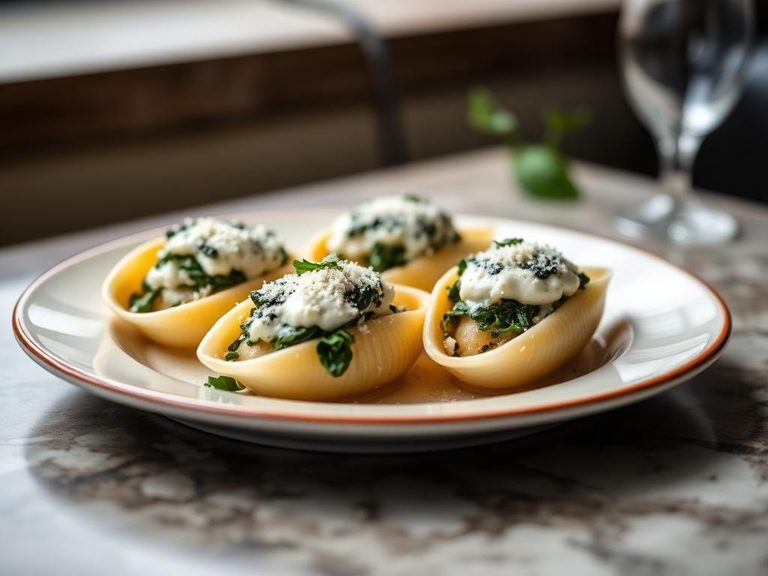
🍽️ Popular dishes
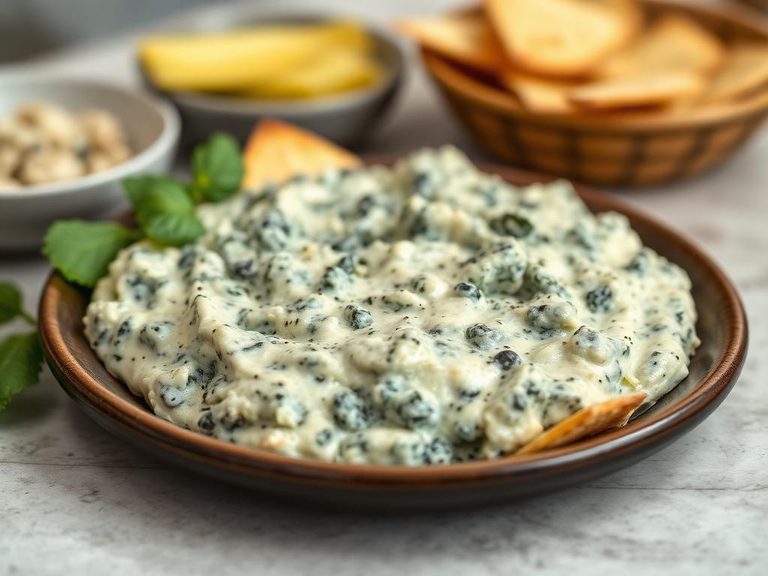
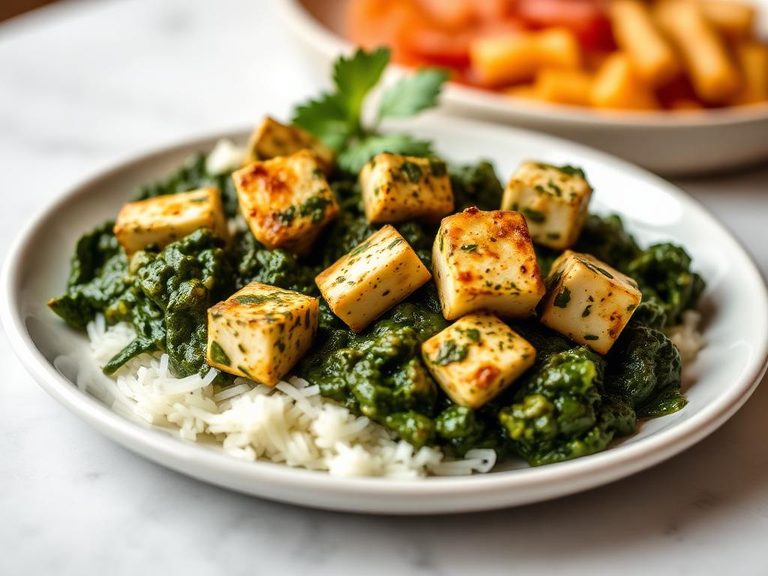


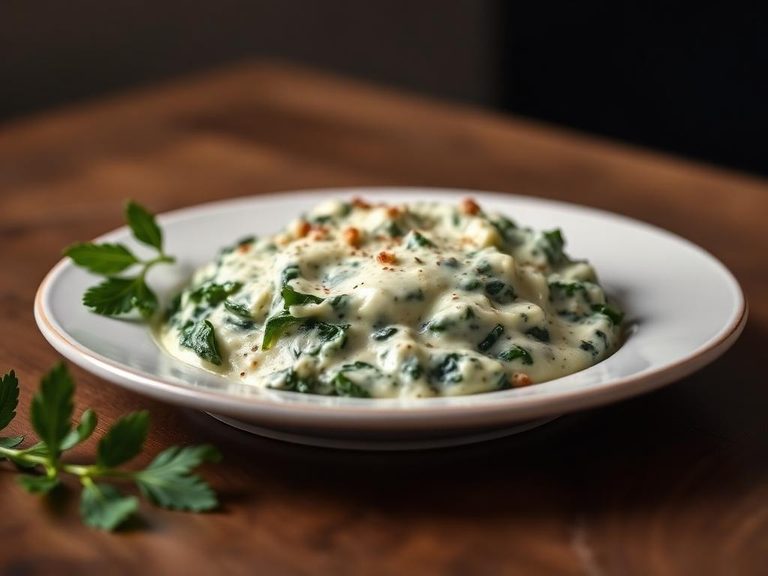
🌍 Where it's eaten
💡 Did you know?
Spinach is one of the few vegetables that actually becomes more nutritious when frozen, as the blanching and freezing process locks in vitamins like vitamin C and folate that would otherwise degrade over time.
Full nutrition (USDA data · scales with serving)
| Water | 88.7 g |
| Energy | 34.0 kcal |
| Protein | 4.0 g |
| Total lipid (fat) | 0.87 g |
| Carbohydrate, by difference | 4.8 g |
| Fiber, total dietary | 3.7 g |
| Total Sugars | 0.51 g |
| Calcium, Ca | 153 mg |
| Iron, Fe | 1.9 mg |
| Magnesium, Mg | 82.0 mg |
| Phosphorus, P | 50.0 mg |
| Potassium, K | 301 mg |
| Sodium, Na | 212 mg |
| Zinc, Zn | 0.49 mg |
| Copper, Cu | 0.16 mg |
| Selenium, Se | 5.5 ug |
| Vitamin C, total ascorbic acid | 2.2 mg |
| Thiamin | 0.08 mg |
| Riboflavin | 0.17 mg |
| Niacin | 0.44 mg |
| Vitamin B-6 | 0.14 mg |
| Folate, total | 121 ug |
| Folic acid | 0.00 ug |
| Folate, food | 121 ug |
| Folate, DFE | 121 ug |
| Choline, total | 24.7 mg |
| Vitamin B-12 | 0.00 ug |
| Vitamin B-12, added | 0.00 ug |
| Vitamin A, RAE | 601 ug |
| Retinol | 0.00 ug |
| Carotene, beta | 7215 ug |
| Carotene, alpha | 0.00 ug |
| Cryptoxanthin, beta | 0.00 ug |
| Lycopene | 0.00 ug |
| Lutein + zeaxanthin | 15643 ug |
| Vitamin E (alpha-tocopherol) | 3.5 mg |
| Vitamin E, added | 0.00 mg |
| Vitamin D (D2 + D3) | 0.00 ug |
| Vitamin K (phylloquinone) | 539 ug |
| Alcohol, ethyl | 0.00 g |
| Caffeine | 0.00 mg |
| Theobromine | 0.00 mg |
Fat & fatty acid profile (per 100g)
| Fatty acids, total saturated | 0.16 g |
| SFA 4:0 | 0.00 g |
| SFA 6:0 | 0.00 g |
| SFA 8:0 | 0.00 g |
| SFA 10:0 | 0.00 g |
| SFA 12:0 | 0.00 g |
| SFA 14:0 | 0.00 g |
| SFA 16:0 | 0.16 g |
| SFA 18:0 | 0.00 g |
| Fatty acids, total monounsaturated | 0.00 g |
| MUFA 16:1 | 0.00 g |
| MUFA 18:1 | 0.00 g |
| MUFA 20:1 | 0.00 g |
| MUFA 22:1 | 0.00 g |
| Fatty acids, total polyunsaturated | 0.37 g |
| PUFA 18:2 | 0.00 g |
| PUFA 18:3 | 0.37 g |
| PUFA 18:4 | 0.00 g |
| PUFA 20:4 | 0.00 g |
| PUFA 20:5 n-3 (EPA) | 0.00 g |
| PUFA 22:5 n-3 (DPA) | 0.00 g |
| PUFA 22:6 n-3 (DHA) | 0.00 g |
| Cholesterol | 0.00 mg |
Amino acid profile (per 100g)
Estimated from Babyfood, vegetables, spinach, creamed, strained — USDA does not publish this profile for Spinach.
| Tryptophan | 0.04 g |
| Threonine | 0.10 g |
| Isoleucine | 0.11 g |
| Leucine | 0.22 g |
| Lysine | 0.15 g |
| Methionine | 0.06 g |
| Cystine | 0.03 g |
| Phenylalanine | 0.10 g |
| Tyrosine | 0.12 g |
| Valine | 0.15 g |
| Arginine | 0.15 g |
| Histidine | 0.06 g |
| Alanine | 0.12 g |
| Aspartic acid | 0.20 g |
| Glutamic acid | 0.42 g |
| Glycine | 0.10 g |
| Proline | 0.21 g |
| Serine | 0.10 g |
FAQ
Is frozen spinach as nutritious as fresh spinach?
Yes, frozen spinach is often more nutritious than fresh spinach that has been stored for several days, as the freezing process preserves vitamins and minerals. It is also more convenient and often more affordable.
How should I store frozen cooked spinach?
Store frozen cooked spinach in a sealed container in the freezer for up to 6 months. Once thawed, it should be consumed within 3-4 days if refrigerated.
Can I eat frozen cooked spinach raw?
No, frozen cooked spinach is already cooked and should be thawed and reheated before consumption. It is not intended to be eaten raw.
Nutrient density (calculated · NRF9.3)
Nutrient Rich Foods index: beneficial nutrients (protein, fiber, vitamins, minerals) minus saturated fat, added sugar & sodium, per 100 kcal.
NRF9.3 index — Fulgoni, Keast & Drewnowski, 2009. Computed from USDA nutrients.
Weight-loss friendliness (composite index)
Energy density 0.34 kcal/g · 47% calories from protein · 3.7 g fiber · 0.5 g sugar per 100 g.
Composite of energy density (Rolls et al., 1999), protein & fiber satiety, minus sugar. A calculated heuristic — ranks satiety-per-calorie, not a clinical measure.
Dietary load (calculated from USDA values)
Potential renal acid load. Positive = acid-forming, negative = alkaline-forming.
Sodium-to-potassium ratio: 0.70 (lower is better — aim for ≤ 1)
Sodium:potassium per WHO potassium guidance. Computed from USDA nutrients.