

Spices, coriander leaf, dried
Whole food · Spices and Herbs

Photo: Wikipedia
Dried coriander leaf, also known as cilantro, is a potent, earthy herb with a concentrated citrusy, slightly floral aroma that transforms into a deep, savory flavor when rehydrated. Its crumbly, flaky texture makes it ideal for blending into spice mixes or sprinkling over finished dishes. Nutritionally, it's a powerhouse, packing over 21g of protein per 100g and a remarkable 10.4g of fiber, making it one of the most nutrient-dense dried herbs available.
Calorie split: 26% protein · 61% carbs · 13% fat
↓ Full nutrition💚 Why it's loved
People love it for its unique, polarizing flavor that can brighten rich curries, salsas, and soups with a fresh, citrusy lift. It's a cultural staple in countless cuisines, from Mexican to Indian, valued for its versatility as both a fresh garnish and a dried spice blend component.
⚠️ Watch-outs & how to enjoy it better
The strong, soapy flavor (linked to the OR6A2 gene) is off-putting to a significant portion of the population. While not a common allergen, its high fiber content can cause digestive discomfort if consumed in large quantities. To counteract this, start with small amounts (½ tsp) and pair it with fatty or starchy foods like yogurt, rice, or avocado to mellow its intensity and aid digestion.
Key benefits
- Exceptionally high in protein for an herb (21.93g per 100g).
- Excellent source of dietary fiber (10.4g per 100g) to support digestion.
- Rich in antioxidants and plant compounds like linalool.
- Provides a significant amount of iron and manganese.
- Low in fat (4.78g per 100g) and naturally free of cholesterol.
🍽️ Popular dishes
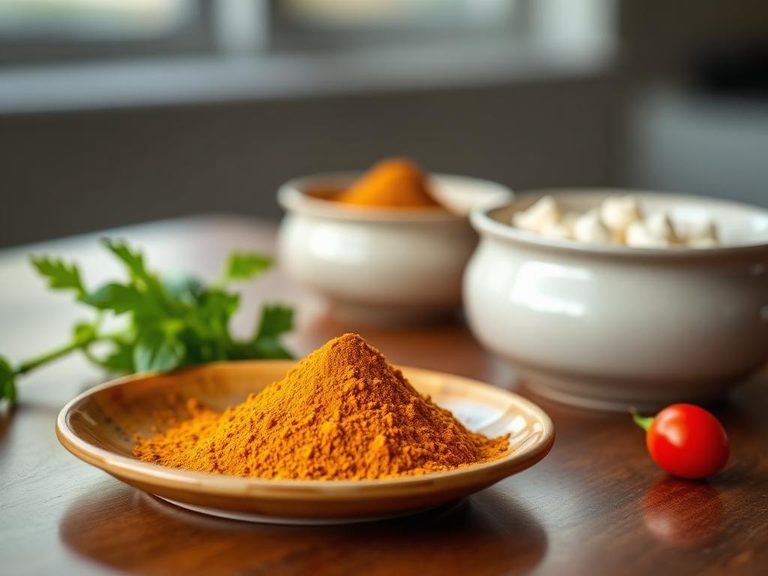
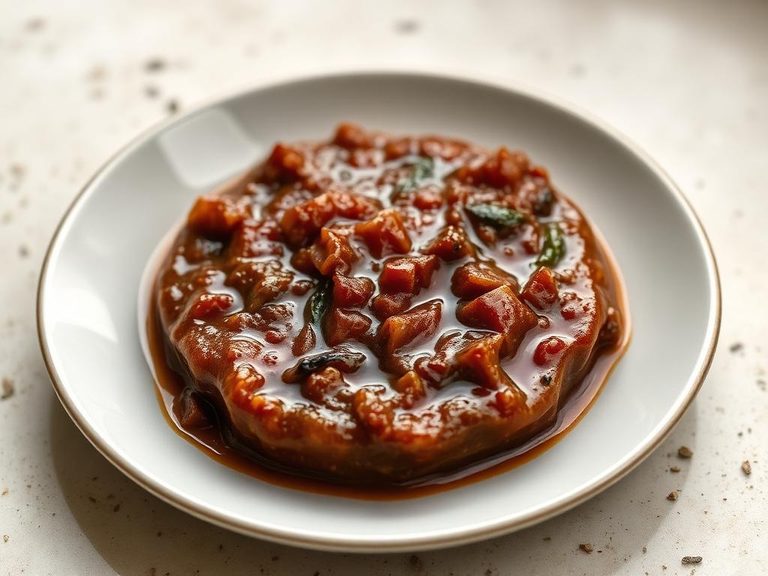
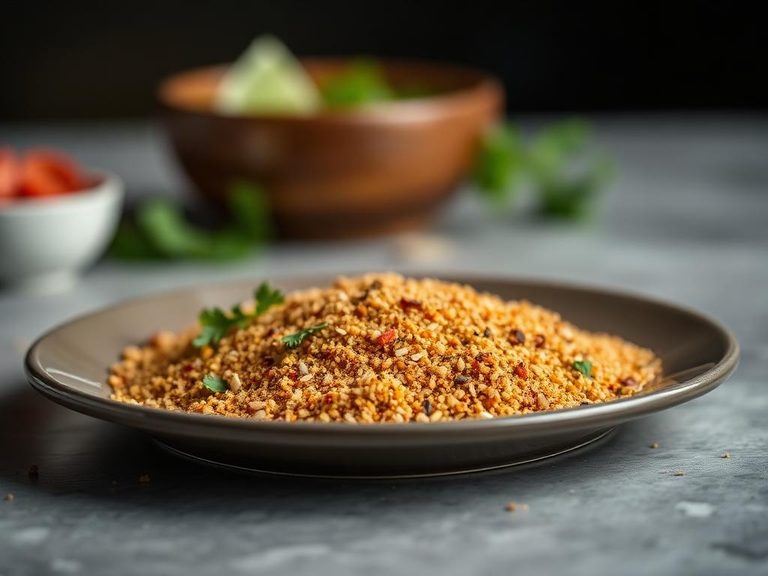
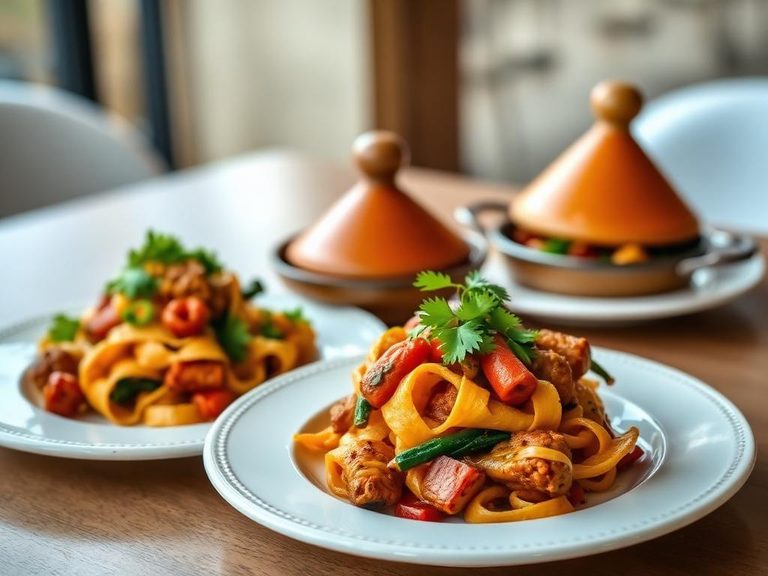
🌍 Where it's eaten
💡 Did you know?
The protein content of dried coriander leaf (21.93g per 100g) is higher than that of many nuts and seeds, including almonds (21.15g) and sunflower seeds (20.78g), making it an unexpectedly dense plant-based protein source.
Full nutrition (USDA data · scales with serving)
| Water | 7.3 g |
| Energy | 279 kcal |
| Energy | 1167 kj |
| Protein | 21.9 g |
| Total lipid (fat) | 4.8 g |
| Ash | 14.1 g |
| Carbohydrate, by difference | 52.1 g |
| Fiber, total dietary | 10.4 g |
| Total Sugars | 7.3 g |
| Calcium, Ca | 1246 mg |
| Iron, Fe | 42.5 mg |
| Magnesium, Mg | 694 mg |
| Phosphorus, P | 481 mg |
| Potassium, K | 4466 mg |
| Sodium, Na | 211 mg |
| Zinc, Zn | 4.7 mg |
| Copper, Cu | 1.8 mg |
| Manganese, Mn | 6.4 mg |
| Selenium, Se | 29.3 ug |
| Vitamin C, total ascorbic acid | 567 mg |
| Thiamin | 1.3 mg |
| Riboflavin | 1.5 mg |
| Niacin | 10.7 mg |
| Vitamin B-6 | 0.61 mg |
| Folate, total | 274 ug |
| Folic acid | 0.00 ug |
| Folate, food | 274 ug |
| Folate, DFE | 274 ug |
| Choline, total | 97.1 mg |
| Vitamin B-12 | 0.00 ug |
| Vitamin B-12, added | 0.00 ug |
| Vitamin A, RAE | 293 ug |
| Retinol | 0.00 ug |
| Carotene, beta | 3407 ug |
| Carotene, alpha | 31.0 ug |
| Cryptoxanthin, beta | 175 ug |
| Vitamin A, IU | 5850 iu |
| Lycopene | 0.00 ug |
| Lutein + zeaxanthin | 2428 ug |
| Vitamin E (alpha-tocopherol) | 1.0 mg |
| Vitamin E, added | 0.00 mg |
| Vitamin D (D2 + D3), International Units | 0.00 iu |
| Vitamin D (D2 + D3) | 0.00 ug |
| Vitamin K (phylloquinone) | 1360 ug |
| Alcohol, ethyl | 0.00 g |
| Caffeine | 0.00 mg |
| Theobromine | 0.00 mg |
Fat & fatty acid profile (per 100g)
| Fatty acids, total saturated | 0.12 g |
| SFA 4:0 | 0.00 g |
| SFA 6:0 | 0.00 g |
| SFA 8:0 | 0.00 g |
| SFA 10:0 | 0.00 g |
| SFA 12:0 | 0.00 g |
| SFA 14:0 | 0.00 g |
| SFA 16:0 | 0.10 g |
| SFA 18:0 | 0.01 g |
| Fatty acids, total monounsaturated | 2.2 g |
| MUFA 16:1 | 0.02 g |
| MUFA 18:1 | 2.2 g |
| MUFA 20:1 | 0.00 g |
| MUFA 22:1 | 0.00 g |
| Fatty acids, total polyunsaturated | 0.33 g |
| PUFA 18:2 | 0.33 g |
| PUFA 18:3 | 0.00 g |
| PUFA 18:4 | 0.00 g |
| PUFA 20:4 | 0.00 g |
| PUFA 20:5 n-3 (EPA) | 0.00 g |
| PUFA 22:5 n-3 (DPA) | 0.00 g |
| PUFA 22:6 n-3 (DHA) | 0.00 g |
| Fatty acids, total trans | 0.00 g |
| Cholesterol | 0.00 mg |
Amino acid profile (per 100g)
Estimated from Spices, garlic powder — USDA does not publish this profile for Spices.
| Tryptophan | 0.12 g |
| Threonine | 0.37 g |
| Isoleucine | 0.41 g |
| Leucine | 0.73 g |
| Lysine | 0.77 g |
| Methionine | 0.11 g |
| Cystine | 0.25 g |
| Phenylalanine | 0.53 g |
| Tyrosine | 0.45 g |
| Valine | 0.67 g |
| Arginine | 3.4 g |
| Histidine | 0.26 g |
| Alanine | 0.48 g |
| Aspartic acid | 1.9 g |
| Glutamic acid | 3.7 g |
| Glycine | 0.53 g |
| Proline | 1.4 g |
| Serine | 0.51 g |
| Hydroxyproline | 0.00 g |
FAQ
How does dried coriander leaf compare to fresh cilantro?
Dried coriander leaf has a more concentrated, earthy, and slightly smoky flavor compared to the bright, citrusy notes of fresh cilantro. It's best used in cooked dishes, spice blends, or as a finishing touch where its flavor can meld, while fresh cilantro is ideal for raw garnishes and salsas.
Is dried coriander leaf the same as ground coriander seeds?
No, they are different. Dried coriander leaf comes from the leaves of the plant (Cilantro), while ground coriander comes from the seeds. The leaf has a more herbaceous, citrusy flavor, while the seed is warmer, nuttier, and more pungent. They are often used together in spice blends for complexity.
How should I store dried coriander leaf to preserve its flavor?
Store it in an airtight container in a cool, dark place, away from heat and light. While it will keep for up to a year, its potency fades over time. For maximum flavor, use within 6 months and consider toasting it lightly in a dry pan before use to revive its essential oils.
Nutrient density (calculated · NRF9.3)
Nutrient Rich Foods index: beneficial nutrients (protein, fiber, vitamins, minerals) minus saturated fat, added sugar & sodium, per 100 kcal.
NRF9.3 index — Fulgoni, Keast & Drewnowski, 2009. Computed from USDA nutrients.
Weight-loss friendliness (composite index)
Energy density 2.79 kcal/g · 31% calories from protein · 10.4 g fiber · 7.3 g sugar per 100 g.
Composite of energy density (Rolls et al., 1999), protein & fiber satiety, minus sugar. A calculated heuristic — ranks satiety-per-calorie, not a clinical measure.
Dietary load (calculated from USDA values)
Potential renal acid load. Positive = acid-forming, negative = alkaline-forming.
Sodium-to-potassium ratio: 0.05 (lower is better — aim for ≤ 1)
Sodium:potassium per WHO potassium guidance. Computed from USDA nutrients.