

Soup, vegetable
Common food
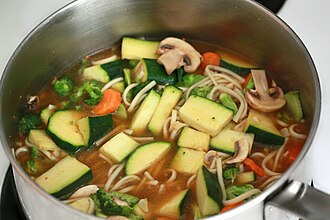
Photo: Wikipedia
A light, savory broth infused with a medley of tender vegetables, offering a clean, refreshing taste with a subtle sweetness from carrots or onions. Its texture is a comforting balance of soft, cooked vegetables suspended in a clear or lightly thickened liquid. With only 27 kcal per 100g, it's an exceptionally low-energy, hydrating base for a meal.
Calorie split: 12% protein · 73% carbs · 15% fat
↓ Full nutrition💚 Why it's loved
People cherish vegetable soup for its comforting warmth and versatility—it's a blank canvas that can be light and brothy or hearty with added grains and legumes. It's deeply embedded in home cooking traditions worldwide as a nourishing, economical way to use seasonal produce.
⚠️ Watch-outs & how to enjoy it better
The primary caution is often high sodium content in canned or restaurant versions, which can affect blood pressure. Some recipes may use a mirepoix base high in natural sugars (carrots, onions), which could be a consideration for strict carbohydrate monitoring. **Tip:** Choose low-sodium versions or make it at home to control salt. Pair with a source of protein (like beans or chicken) and a healthy fat (like a drizzle of olive oil) to increase satiety and balance the meal.
Key benefits
- Low in calories and fat, supporting weight management.
- Provides hydration and electrolytes from the broth.
- Source of dietary fiber from vegetables like carrots and celery.
- Contains vitamins and minerals, such as vitamin A and potassium, from its vegetable components.
- Can be a gentle, easy-to-digest option for recovery or sensitive stomachs.
🍽️ Popular dishes
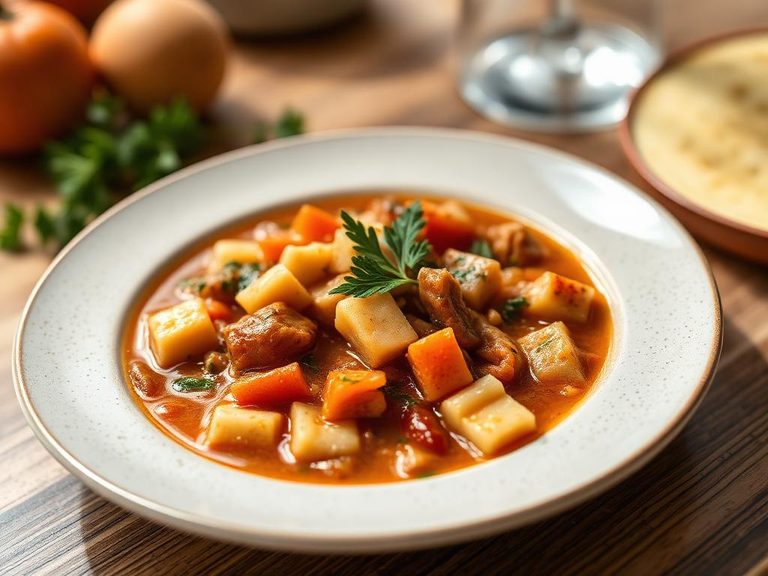
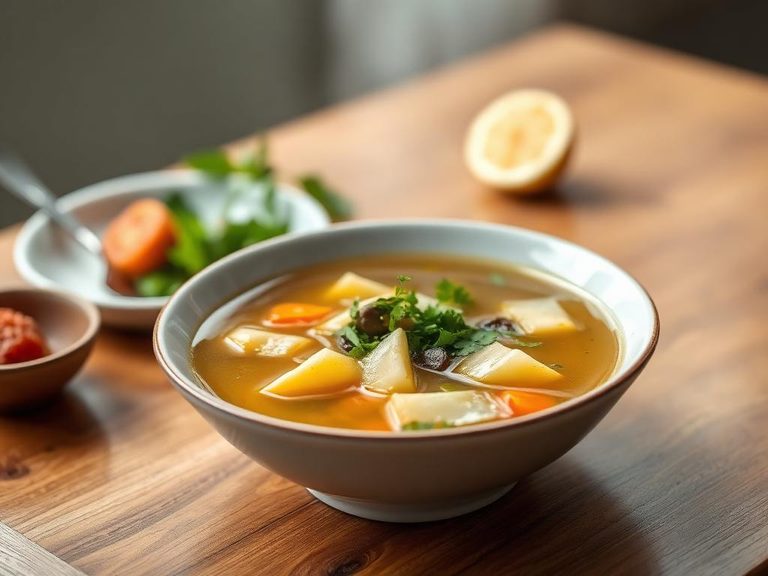
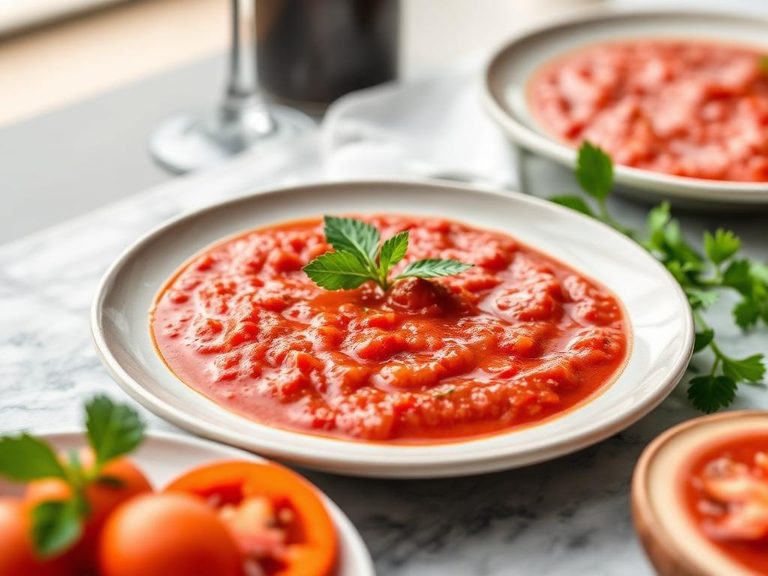
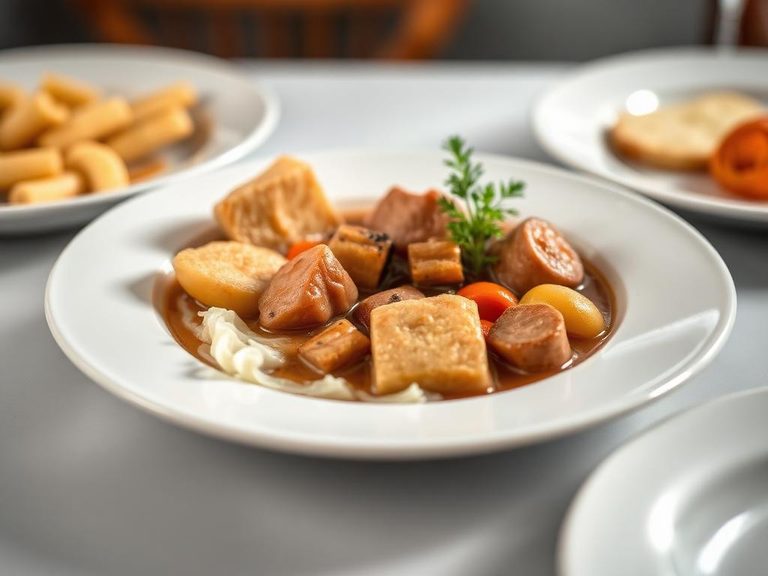
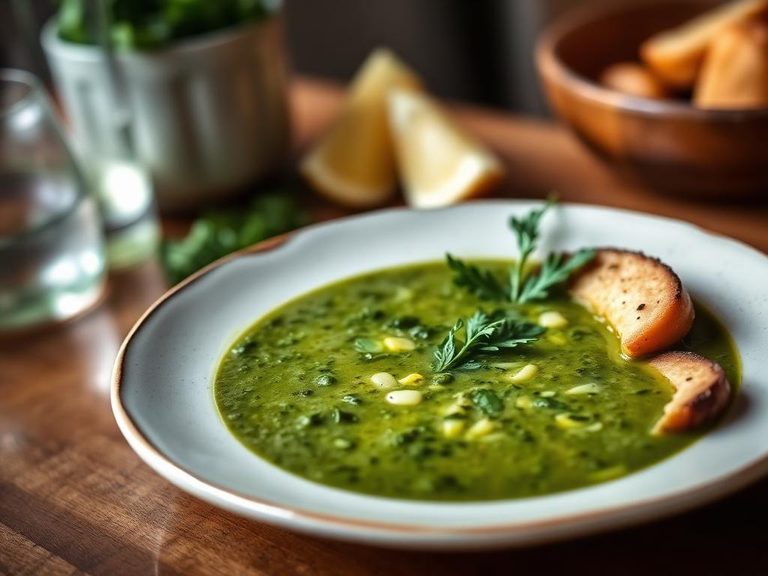
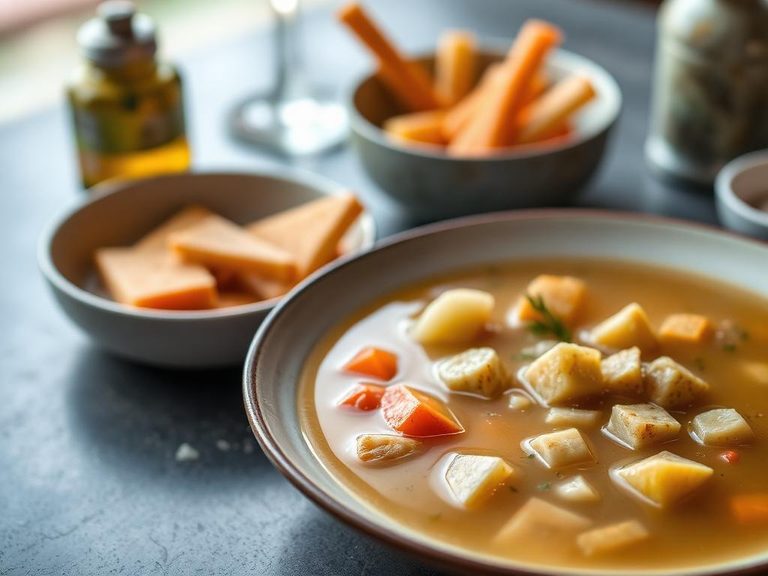
🌍 Where it's eaten
💡 Did you know?
The 'soup course' in formal French dining, called a 'potage,' is traditionally served before the main course to stimulate the appetite, a practice dating back to the 17th century.
Full nutrition (USDA data · scales with serving)
| Water | 92.6 g |
| Energy | 27.0 kcal |
| Protein | 0.84 g |
| Total lipid (fat) | 0.45 g |
| Carbohydrate, by difference | 5.1 g |
| Fiber, total dietary | 1.0 g |
| Total Sugars | 1.3 g |
| Calcium, Ca | 12.0 mg |
| Iron, Fe | 0.20 mg |
| Magnesium, Mg | 11.0 mg |
| Phosphorus, P | 22.0 mg |
| Potassium, K | 154 mg |
| Sodium, Na | 243 mg |
| Zinc, Zn | 0.16 mg |
| Copper, Cu | 0.04 mg |
| Selenium, Se | 0.10 ug |
| Vitamin C, total ascorbic acid | 8.9 mg |
| Thiamin | 0.03 mg |
| Riboflavin | 0.03 mg |
| Niacin | 0.43 mg |
| Vitamin B-6 | 0.06 mg |
| Folate, total | 13.0 ug |
| Folic acid | 0.00 ug |
| Folate, food | 13.0 ug |
| Folate, DFE | 13.0 ug |
| Choline, total | 5.8 mg |
| Vitamin B-12 | 0.00 ug |
| Vitamin B-12, added | 0.00 ug |
| Vitamin A, RAE | 36.0 ug |
| Retinol | 0.00 ug |
| Carotene, beta | 382 ug |
| Carotene, alpha | 100 ug |
| Cryptoxanthin, beta | 5.0 ug |
| Lycopene | 303 ug |
| Lutein + zeaxanthin | 341 ug |
| Vitamin E (alpha-tocopherol) | 0.22 mg |
| Vitamin E, added | 0.00 mg |
| Vitamin D (D2 + D3) | 0.00 ug |
| Vitamin K (phylloquinone) | 17.1 ug |
| Alcohol, ethyl | 0.00 g |
| Caffeine | 0.00 mg |
| Theobromine | 0.00 mg |
Fat & fatty acid profile (per 100g)
| Fatty acids, total saturated | 0.06 g |
| SFA 4:0 | 0.00 g |
| SFA 6:0 | 0.00 g |
| SFA 8:0 | 0.00 g |
| SFA 10:0 | 0.00 g |
| SFA 12:0 | 0.00 g |
| SFA 14:0 | 0.00 g |
| SFA 16:0 | 0.05 g |
| SFA 18:0 | 0.01 g |
| Fatty acids, total monounsaturated | 0.14 g |
| MUFA 16:1 | 0.00 g |
| MUFA 18:1 | 0.14 g |
| MUFA 20:1 | 0.00 g |
| MUFA 22:1 | 0.00 g |
| Fatty acids, total polyunsaturated | 0.16 g |
| PUFA 18:2 | 0.14 g |
| PUFA 18:3 | 0.02 g |
| PUFA 18:4 | 0.00 g |
| PUFA 20:4 | 0.00 g |
| PUFA 20:5 n-3 (EPA) | 0.00 g |
| PUFA 22:5 n-3 (DPA) | 0.00 g |
| PUFA 22:6 n-3 (DHA) | 0.00 g |
| Cholesterol | 0.00 mg |
Amino acid profile (per 100g)
Estimated from Restaurant, Latino, black bean soup — USDA does not publish this profile for Soup.
| Tryptophan | 0.04 g |
| Threonine | 0.17 g |
| Isoleucine | 0.16 g |
| Leucine | 0.32 g |
| Lysine | 0.27 g |
| Methionine | 0.10 g |
| Cystine | 0.04 g |
| Phenylalanine | 0.16 g |
| Tyrosine | 0.13 g |
| Valine | 0.20 g |
| Arginine | 0.35 g |
| Histidine | 0.09 g |
| Alanine | 0.35 g |
| Aspartic acid | 0.38 g |
| Glutamic acid | 0.72 g |
| Glycine | 0.58 g |
| Proline | 0.36 g |
| Serine | 0.20 g |
FAQ
Is vegetable soup a good source of protein?
On its own, it's typically very low in protein (around 0.8g per 100g). To make it a more complete meal, you should add protein-rich ingredients like beans, lentils, tofu, chicken, or beef.
Can I freeze vegetable soup?
Yes, vegetable soup freezes exceptionally well. Allow it to cool completely, then store in airtight containers or freezer bags for up to 3 months. The texture of some vegetables may soften slightly upon thawing.
Why is my vegetable soup cloudy?
Cloudiness can result from starchy vegetables (like potatoes) breaking down, vigorous boiling, or adding dairy. For a clear broth, simmer gently, avoid over-stirring, and consider adding starches or dairy at the end of cooking.
Nutrient density (calculated · NRF9.3)
Nutrient Rich Foods index: beneficial nutrients (protein, fiber, vitamins, minerals) minus saturated fat, added sugar & sodium, per 100 kcal.
NRF9.3 index — Fulgoni, Keast & Drewnowski, 2009. Computed from USDA nutrients.
Weight-loss friendliness (composite index)
Energy density 0.27 kcal/g · 12% calories from protein · 1.0 g fiber · 1.3 g sugar per 100 g.
Composite of energy density (Rolls et al., 1999), protein & fiber satiety, minus sugar. A calculated heuristic — ranks satiety-per-calorie, not a clinical measure.
Dietary load (calculated from USDA values)
Potential renal acid load. Positive = acid-forming, negative = alkaline-forming.
Sodium-to-potassium ratio: 1.58 (lower is better — aim for ≤ 1)
Sodium:potassium per WHO potassium guidance. Computed from USDA nutrients.