

Babyfood, vegetables, mix vegetables junior
Whole food · Baby Foods

Photo: Wikipedia
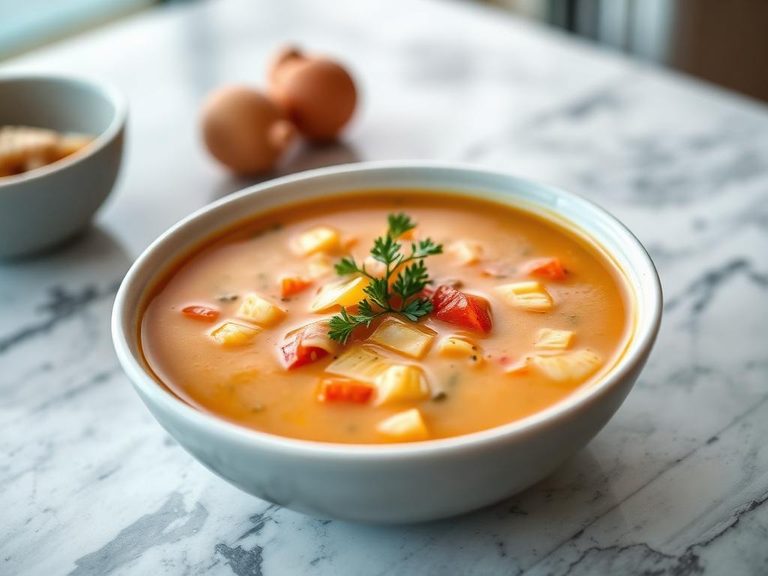
This is a smooth, pureed blend of common garden vegetables like carrots, potatoes, and peas, designed for infants transitioning to solids. It has a mild, naturally sweet flavor and a soft, spoonable texture that's easy for little mouths to manage. Nutritionally, it's a low-calorie, fiber-rich source of vitamins A and C from its vegetable base.
Calorie split: 13% protein · 78% carbs · 9% fat
↓ Full nutrition💚 Why it's loved
Parents appreciate it as a reliable, nutrient-dense staple that helps babies accept a variety of vegetables. Its familiar, mild taste is often a gateway to more adventurous eating later.
⚠️ Watch-outs & how to enjoy it better
The natural sugars in starchy vegetables like potatoes and carrots can cause a mild blood-sugar rise if served alone. To counteract this, always pair it with a protein source like pureed chicken, lentils, or full-fat yogurt to create a more balanced meal.
Key benefits
- Provides gentle, digestible fiber for developing digestive systems.
- Naturally low in fat and contains no added sodium.
- Source of beta-carotene (vitamin A) for eye health and immunity.
- Offers a convenient way to introduce multiple vegetable flavors early.
- Free from common allergens like dairy, nuts, and gluten.
🍽️ Popular dishes
🌍 Where it's eaten
💡 Did you know?
The specific vegetable ratio in commercial 'mixed vegetable' baby foods is often a trade secret, but it's typically dominated by starchy, sweet roots like carrots and sweet potatoes to ensure palatability.
Full nutrition (USDA data · scales with serving)
| Water | 89.4 g |
| Energy | 36.0 kcal |
| Energy | 151 kj |
| Protein | 1.4 g |
| Total lipid (fat) | 0.40 g |
| Ash | 0.60 g |
| Carbohydrate, by difference | 8.2 g |
| Fiber, total dietary | 1.5 g |
| Total Sugars | 1.8 g |
| Calcium, Ca | 11.0 mg |
| Iron, Fe | 0.41 mg |
| Magnesium, Mg | 11.0 mg |
| Phosphorus, P | 25.0 mg |
| Potassium, K | 170 mg |
| Sodium, Na | 36.0 mg |
| Zinc, Zn | 0.27 mg |
| Copper, Cu | 0.04 mg |
| Selenium, Se | 0.70 ug |
| Vitamin C, total ascorbic acid | 2.5 mg |
| Thiamin | 0.03 mg |
| Riboflavin | 0.03 mg |
| Niacin | 0.67 mg |
| Pantothenic acid | 0.26 mg |
| Vitamin B-6 | 0.08 mg |
| Folate, total | 4.0 ug |
| Folic acid | 0.00 ug |
| Folate, food | 4.0 ug |
| Folate, DFE | 4.0 ug |
| Choline, total | 9.7 mg |
| Vitamin B-12 | 0.00 ug |
| Vitamin B-12, added | 0.00 ug |
| Vitamin A, RAE | 210 ug |
| Retinol | 0.00 ug |
| Carotene, beta | 2060 ug |
| Carotene, alpha | 915 ug |
| Cryptoxanthin, beta | 0.00 ug |
| Vitamin A, IU | 4195 iu |
| Lycopene | 0.00 ug |
| Lutein + zeaxanthin | 497 ug |
| Vitamin E (alpha-tocopherol) | 0.52 mg |
| Vitamin E, added | 0.00 mg |
| Vitamin D (D2 + D3), International Units | 0.00 iu |
| Vitamin D (D2 + D3) | 0.00 ug |
| Vitamin K (phylloquinone) | 7.4 ug |
| Alcohol, ethyl | 0.00 g |
| Caffeine | 0.00 mg |
| Theobromine | 0.00 mg |
Fat & fatty acid profile (per 100g)
| Fatty acids, total saturated | 0.08 g |
| SFA 4:0 | 0.00 g |
| SFA 6:0 | 0.00 g |
| SFA 8:0 | 0.00 g |
| SFA 10:0 | 0.00 g |
| SFA 12:0 | 0.00 g |
| SFA 14:0 | 0.00 g |
| SFA 16:0 | 0.06 g |
| SFA 18:0 | 0.01 g |
| Fatty acids, total monounsaturated | 0.03 g |
| MUFA 16:1 | 0.00 g |
| MUFA 18:1 | 0.02 g |
| MUFA 20:1 | 0.00 g |
| MUFA 22:1 | 0.00 g |
| Fatty acids, total polyunsaturated | 0.19 g |
| PUFA 18:2 | 0.15 g |
| PUFA 18:3 | 0.03 g |
| PUFA 18:4 | 0.00 g |
| PUFA 20:4 | 0.00 g |
| PUFA 20:5 n-3 (EPA) | 0.00 g |
| PUFA 22:5 n-3 (DPA) | 0.00 g |
| PUFA 22:6 n-3 (DHA) | 0.00 g |
| Cholesterol | 0.00 mg |
Amino acid profile (per 100g)
| Tryptophan | 0.01 g |
| Threonine | 0.04 g |
| Isoleucine | 0.06 g |
| Leucine | 0.09 g |
| Lysine | 0.05 g |
| Methionine | 0.02 g |
| Cystine | 0.03 g |
| Phenylalanine | 0.06 g |
| Tyrosine | 0.05 g |
| Valine | 0.07 g |
| Arginine | 0.09 g |
| Histidine | 0.03 g |
| Alanine | 0.06 g |
| Aspartic acid | 0.17 g |
| Glutamic acid | 0.37 g |
| Glycine | 0.05 g |
| Proline | 0.11 g |
| Serine | 0.05 g |
FAQ
Is this the same as frozen mixed vegetables?
Can I mix this with my own homemade purees?
Yes, it's a great base. You can stir in your own pureed meat, beans, or a spoonful of avocado or olive oil to boost protein and healthy fats.
Why does it sometimes separate in the jar?
Natural separation occurs because no thickeners or emulsifiers are added. Simply stir it well before serving to recombine the liquid and solids.
Nutrient density (calculated · NRF9.3)
Nutrient Rich Foods index: beneficial nutrients (protein, fiber, vitamins, minerals) minus saturated fat, added sugar & sodium, per 100 kcal.
NRF9.3 index — Fulgoni, Keast & Drewnowski, 2009. Computed from USDA nutrients.
Weight-loss friendliness (composite index)
Energy density 0.36 kcal/g · 16% calories from protein · 1.5 g fiber · 1.8 g sugar per 100 g.
Composite of energy density (Rolls et al., 1999), protein & fiber satiety, minus sugar. A calculated heuristic — ranks satiety-per-calorie, not a clinical measure.
Dietary load (calculated from USDA values)
Potential renal acid load. Positive = acid-forming, negative = alkaline-forming.
Sodium-to-potassium ratio: 0.21 (lower is better — aim for ≤ 1)
Sodium:potassium per WHO potassium guidance. Computed from USDA nutrients.