

Soup, cream of mushroom, canned, prepared with equal volume water
Whole food · Soups, Sauces, and Gravies

Photo: Wikipedia
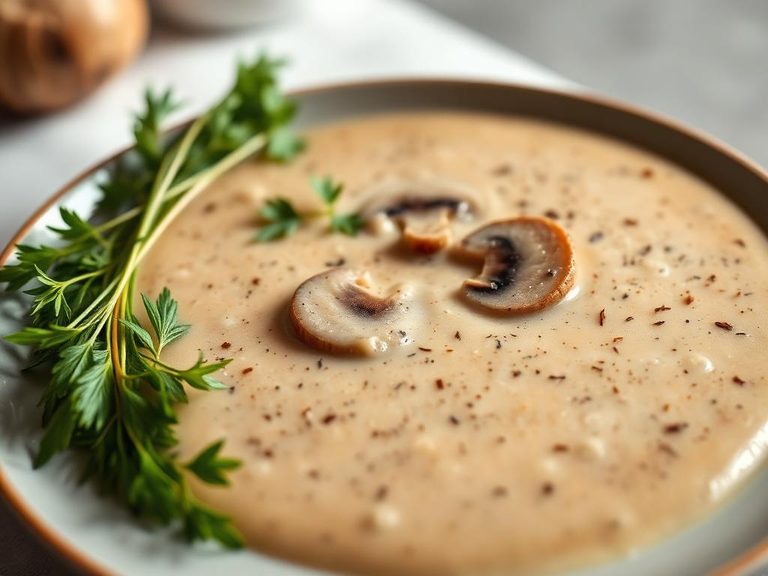
This is a smooth, savory purée of mushrooms blended into a creamy base, typically from a can and reconstituted with water. It offers a rich, earthy flavor with a velvety, comforting texture. Nutritionally, it's a low-calorie option that provides a modest amount of fat for satiety.
Calorie split: 7% protein · 34% carbs · 59% fat
↓ Full nutrition💚 Why it's loved
People love it for its deep, savory umami flavor and the instant comfort of its creamy, smooth texture. It's a versatile pantry staple that can be a quick soup on its own or a flavor-packed sauce base.
⚠️ Watch-outs & how to enjoy it better
Canned versions can be high in sodium, which may concern those monitoring salt intake. The canning process can also diminish some of the fresh mushroom's texture and bright flavor. To counteract, rinse the soup briefly if using it as a sauce base, or pair it with fresh, sautéed mushrooms and herbs to boost flavor and texture.
Key benefits
- Low in calories, suitable for calorie-conscious meals.
- Provides a source of dietary fat for energy and nutrient absorption.
- Contains some dietary fiber from mushrooms.
- Quick and convenient base for various dishes.
- Offers the umami flavor of mushrooms.
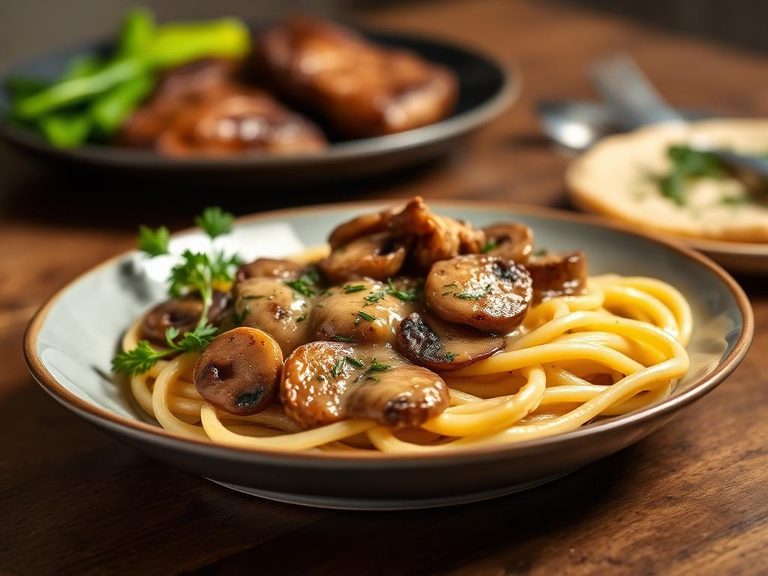
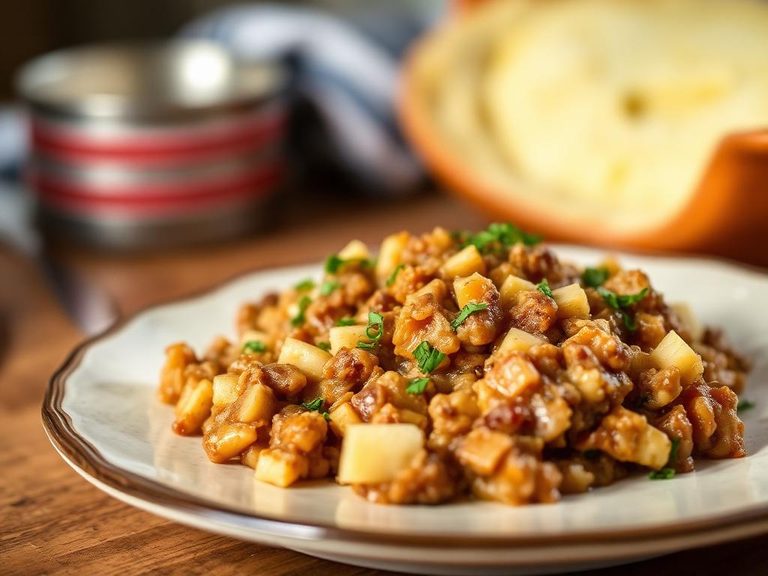
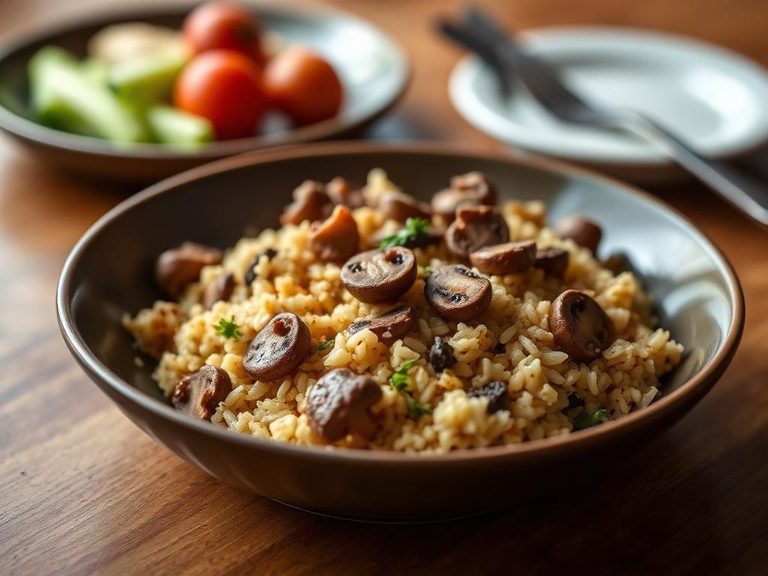
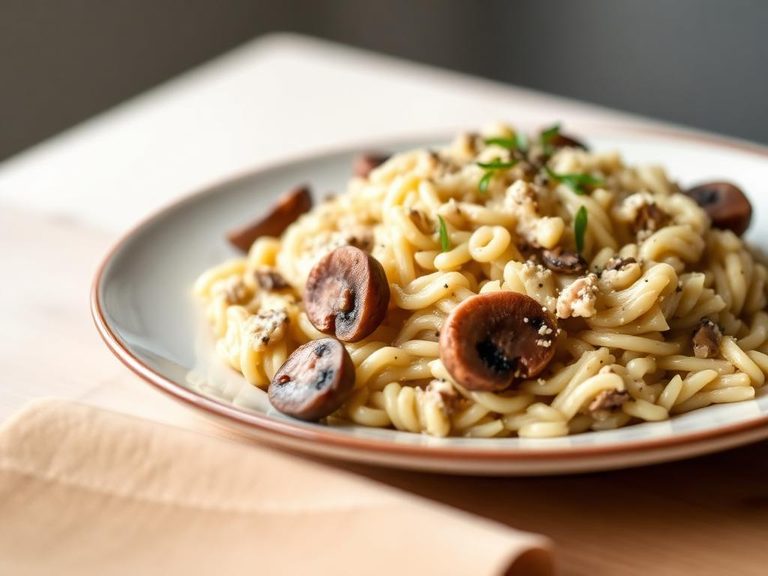
🍽️ Popular dishes
🌍 Where it's eaten
💡 Did you know?
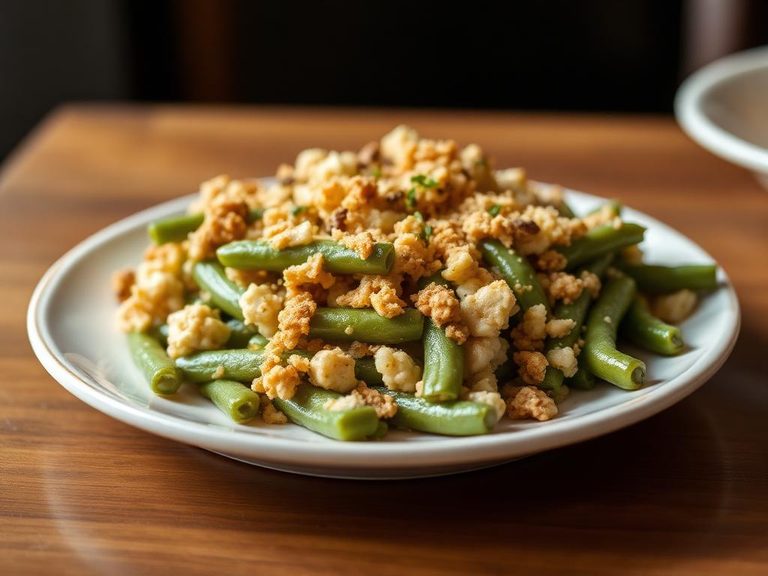
The iconic Green Bean Casserole, a Thanksgiving staple in the U.S., was invented in 1955 by a Campbell Soup Company home economist specifically to promote their cream of mushroom soup.
Full nutrition (USDA data · scales with serving)
| Water | 92.5 g |
| Energy | 39.0 kcal |
| Energy | 162 kj |
| Protein | 0.66 g |
| Total lipid (fat) | 2.6 g |
| Ash | 0.96 g |
| Carbohydrate, by difference | 3.3 g |
| Fiber, total dietary | 0.30 g |
| Total Sugars | 0.20 g |
| Calcium, Ca | 7.0 mg |
| Iron, Fe | 0.09 mg |
| Magnesium, Mg | 2.0 mg |
| Phosphorus, P | 12.0 mg |
| Potassium, K | 31.0 mg |
| Sodium, Na | 340 mg |
| Zinc, Zn | 0.06 mg |
| Copper, Cu | 0.02 mg |
| Manganese, Mn | 0.02 mg |
| Selenium, Se | 1.4 ug |
| Vitamin C, total ascorbic acid | 0.00 mg |
| Thiamin | 0.01 mg |
| Riboflavin | 0.01 mg |
| Niacin | 0.17 mg |
| Pantothenic acid | 0.07 mg |
| Vitamin B-6 | 0.01 mg |
| Folate, total | 1.0 ug |
| Folic acid | 0.00 ug |
| Folate, food | 1.0 ug |
| Folate, DFE | 1.0 ug |
| Choline, total | 4.7 mg |
| Vitamin B-12 | 0.00 ug |
| Vitamin B-12, added | 0.00 ug |
| Vitamin A, RAE | 1.0 ug |
| Retinol | 1.0 ug |
| Carotene, beta | 0.00 ug |
| Carotene, alpha | 0.00 ug |
| Cryptoxanthin, beta | 0.00 ug |
| Vitamin A, IU | 4.0 iu |
| Lycopene | 0.00 ug |
| Lutein + zeaxanthin | 2.0 ug |
| Vitamin E (alpha-tocopherol) | 0.24 mg |
| Vitamin E, added | 0.00 mg |
| Vitamin D (D2 + D3), International Units | 4.0 iu |
| Vitamin D (D2 + D3) | 0.10 ug |
| Vitamin K (phylloquinone) | 9.6 ug |
| Alcohol, ethyl | 0.00 g |
| Caffeine | 0.00 mg |
| Theobromine | 0.00 mg |
Fat & fatty acid profile (per 100g)
| Fatty acids, total saturated | 0.47 g |
| SFA 4:0 | 0.00 g |
| SFA 6:0 | 0.00 g |
| SFA 8:0 | 0.00 g |
| SFA 10:0 | 0.00 g |
| SFA 12:0 | 0.00 g |
| SFA 14:0 | 0.02 g |
| SFA 16:0 | 0.30 g |
| SFA 18:0 | 0.12 g |
| Fatty acids, total monounsaturated | 0.60 g |
| MUFA 16:1 | 0.01 g |
| MUFA 18:1 | 0.57 g |
| MUFA 20:1 | 0.01 g |
| MUFA 22:1 | 0.00 g |
| MUFA 24:1 c | 0.00 g |
| Fatty acids, total polyunsaturated | 1.4 g |
| PUFA 18:2 | 1.3 g |
| PUFA 18:3 | 0.17 g |
| PUFA 18:4 | 0.00 g |
| PUFA 20:4 | 0.00 g |
| PUFA 20:5 n-3 (EPA) | 0.00 g |
| PUFA 22:5 n-3 (DPA) | 0.00 g |
| PUFA 22:6 n-3 (DHA) | 0.00 g |
| Cholesterol | 0.00 mg |
Amino acid profile (per 100g)
Estimated from Soup, bean with pork, canned, condensed — USDA does not publish this profile for Soup.
| Tryptophan | 0.06 g |
| Threonine | 0.24 g |
| Isoleucine | 0.29 g |
| Leucine | 0.48 g |
| Lysine | 0.40 g |
| Methionine | 0.07 g |
| Cystine | 0.07 g |
| Phenylalanine | 0.33 g |
| Tyrosine | 0.18 g |
| Valine | 0.32 g |
| Arginine | 0.31 g |
| Histidine | 0.15 g |
| Alanine | 0.29 g |
| Aspartic acid | 0.66 g |
| Glutamic acid | 1.1 g |
| Glycine | 0.28 g |
| Proline | 0.27 g |
| Serine | 0.29 g |
FAQ
What's the difference between 'cream of mushroom soup' and 'cream of mushroom soup, prepared'?
The canned product is a concentrated soup. 'Prepared' means it has been diluted with an equal volume of water (or sometimes milk), which is the standard way it's used for eating as a soup or as an ingredient in recipes.
Is this a good source of protein?
No, with only about 0.66g of protein per 100g, it is not a significant protein source. It's best used as a flavor component or sauce base, not as the primary protein in a meal.
Can I use this as a sauce without diluting it?
Yes, for a thicker, richer sauce (like for pasta or a casserole), you can use the concentrated soup straight from the can. Simply thin it with a little milk, broth, or water to reach your desired consistency.
Nutrient density (calculated · NRF9.3)
Nutrient Rich Foods index: beneficial nutrients (protein, fiber, vitamins, minerals) minus saturated fat, added sugar & sodium, per 100 kcal.
NRF9.3 index — Fulgoni, Keast & Drewnowski, 2009. Computed from USDA nutrients.
Weight-loss friendliness (composite index)
Energy density 0.39 kcal/g · 7% calories from protein · 0.3 g fiber · 0.2 g sugar per 100 g.
Composite of energy density (Rolls et al., 1999), protein & fiber satiety, minus sugar. A calculated heuristic — ranks satiety-per-calorie, not a clinical measure.
Dietary load (calculated from USDA values)
Potential renal acid load. Positive = acid-forming, negative = alkaline-forming.
Sodium-to-potassium ratio: 10.97 (lower is better — aim for ≤ 1)
Sodium:potassium per WHO potassium guidance. Computed from USDA nutrients.