

Soup, clam chowder, manhattan, canned, prepared with equal volume water
Whole food · Soups, Sauces, and Gravies

Photo: Wikipedia
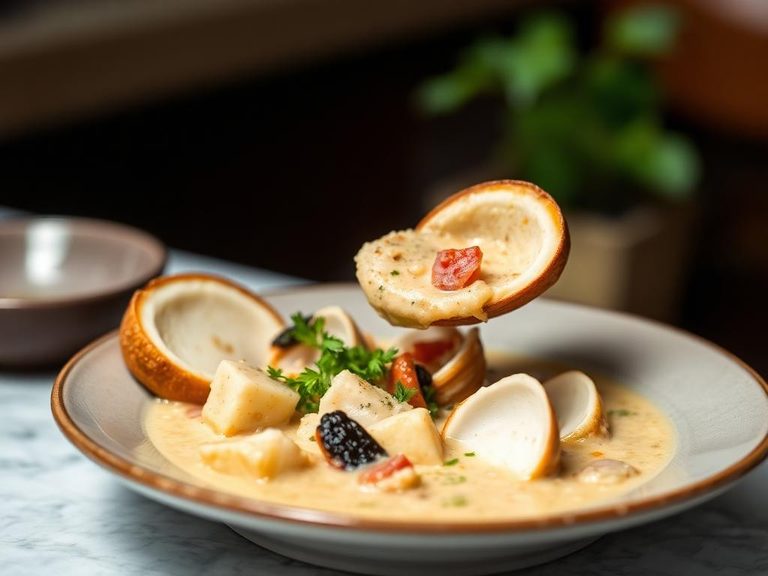
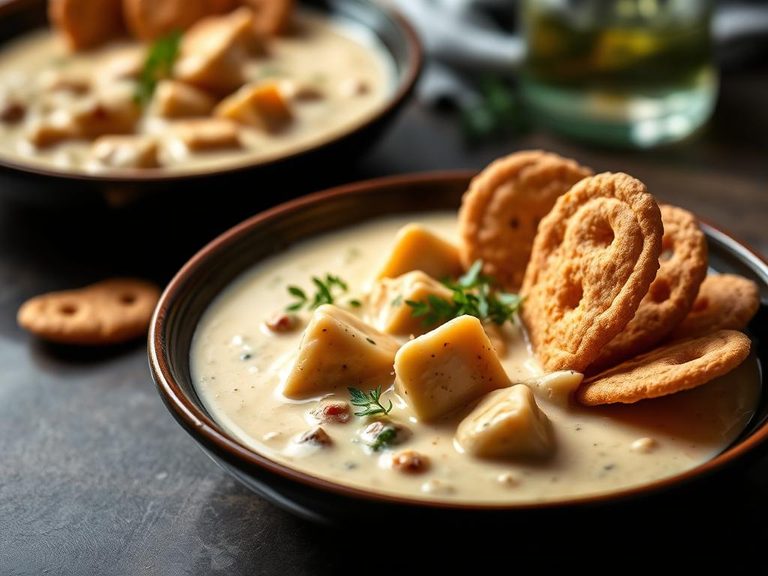
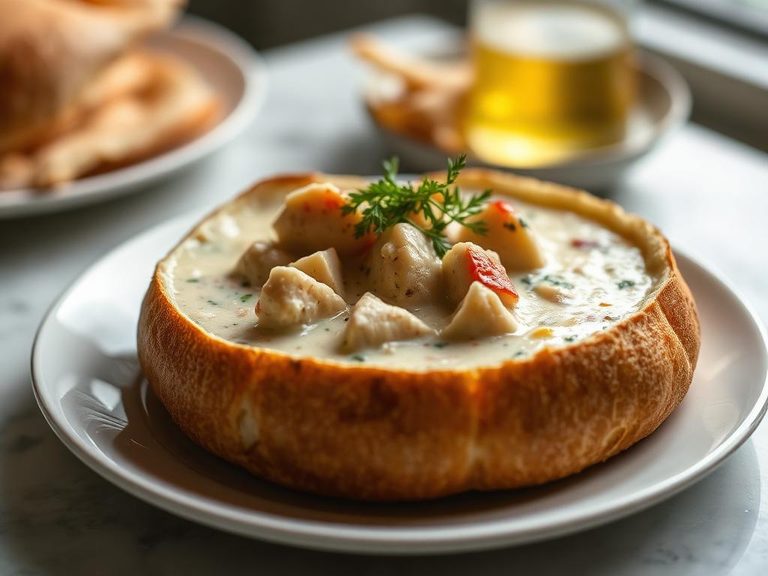
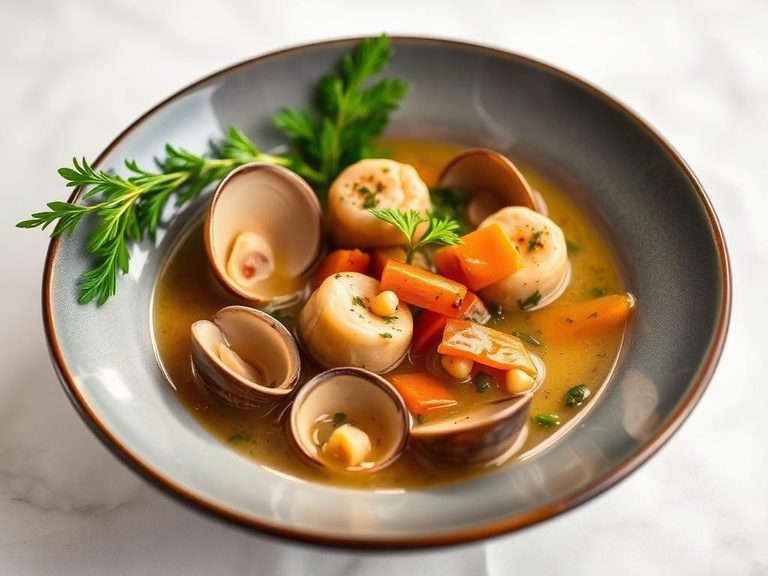
Manhattan clam chowder is a vibrant, tomato-based soup that offers a sharp, tangy contrast to its creamy New England cousin. The broth is typically thin and savory, studded with tender clams, diced potatoes, celery, and carrots. Nutritionally, it is a light, low-calorie option that provides a modest amount of protein and fiber without significant fat.
Calorie split: 11% protein · 63% carbs · 26% fat
↓ Full nutrition💚 Why it's loved
People love its bold, tangy tomato flavor and hearty vegetable texture, which makes it a satisfying yet light meal. It's a classic comfort food with a distinct East Coast American identity, often enjoyed as a starter or a simple lunch.
⚠️ Watch-outs & how to enjoy it better
Canned versions can be high in sodium, which may be a concern for those monitoring blood pressure. To counteract this, look for low-sodium varieties and pair the soup with a side of unsalted whole-grain crackers or a fresh salad to balance the meal. The tomato base may also trigger heartburn in some individuals; eating a smaller portion or pairing it with a starchy side can help mitigate this.
Key benefits
- Low in calories and fat
- Provides a source of lean protein from clams
- Contains dietary fiber from vegetables
- Offers vitamins like vitamin C from the tomato base
- Hydrating and light on the stomach
🍽️ Popular dishes
🌍 Where it's eaten
💡 Did you know?
Manhattan clam chowder's tomato base was likely inspired by Portuguese fishermen who settled in the area, bringing their tomato-based fish stew traditions.
Full nutrition (USDA data · scales with serving)
| Water | 92.3 g |
| Energy | 30.0 kcal |
| Energy | 126 kj |
| Protein | 0.85 g |
| Total lipid (fat) | 0.86 g |
| Ash | 1.3 g |
| Carbohydrate, by difference | 4.8 g |
| Fiber, total dietary | 0.60 g |
| Total Sugars | 1.3 g |
| Calcium, Ca | 11.0 mg |
| Iron, Fe | 0.64 mg |
| Magnesium, Mg | 4.0 mg |
| Phosphorus, P | 16.0 mg |
| Potassium, K | 74.0 mg |
| Sodium, Na | 226 mg |
| Zinc, Zn | 0.36 mg |
| Copper, Cu | 0.05 mg |
| Manganese, Mn | 0.15 mg |
| Selenium, Se | 3.7 ug |
| Vitamin C, total ascorbic acid | 1.6 mg |
| Thiamin | 0.01 mg |
| Riboflavin | 0.02 mg |
| Niacin | 0.32 mg |
| Pantothenic acid | 0.07 mg |
| Vitamin B-6 | 0.04 mg |
| Folate, total | 4.0 ug |
| Folic acid | 0.00 ug |
| Folate, food | 4.0 ug |
| Folate, DFE | 4.0 ug |
| Choline, total | 7.9 mg |
| Vitamin B-12 | 1.6 ug |
| Vitamin B-12, added | 0.00 ug |
| Vitamin A, RAE | 20.0 ug |
| Retinol | 2.0 ug |
| Carotene, beta | 195 ug |
| Carotene, alpha | 42.0 ug |
| Cryptoxanthin, beta | 7.0 ug |
| Vitamin A, IU | 373 iu |
| Lycopene | 3147 ug |
| Lutein + zeaxanthin | 13.0 ug |
| Vitamin E (alpha-tocopherol) | 0.50 mg |
| Vitamin E, added | 0.00 mg |
| Vitamin D (D2 + D3), International Units | 0.00 iu |
| Vitamin D (D2 + D3) | 0.00 ug |
| Vitamin K (phylloquinone) | 2.7 ug |
| Alcohol, ethyl | 0.00 g |
| Caffeine | 0.00 mg |
| Theobromine | 0.00 mg |
Fat & fatty acid profile (per 100g)
| Fatty acids, total saturated | 0.15 g |
| SFA 4:0 | 0.00 g |
| SFA 6:0 | 0.00 g |
| SFA 8:0 | 0.00 g |
| SFA 10:0 | 0.00 g |
| SFA 12:0 | 0.00 g |
| SFA 14:0 | 0.01 g |
| SFA 16:0 | 0.12 g |
| SFA 18:0 | 0.03 g |
| Fatty acids, total monounsaturated | 0.15 g |
| MUFA 16:1 | 0.01 g |
| MUFA 18:1 | 0.14 g |
| MUFA 20:1 | 0.00 g |
| MUFA 22:1 | 0.00 g |
| Fatty acids, total polyunsaturated | 0.50 g |
| PUFA 18:2 | 0.47 g |
| PUFA 18:3 | 0.04 g |
| PUFA 18:4 | 0.00 g |
| PUFA 20:4 | 0.00 g |
| PUFA 20:5 n-3 (EPA) | 0.00 g |
| PUFA 22:5 n-3 (DPA) | 0.00 g |
| PUFA 22:6 n-3 (DHA) | 0.00 g |
| Cholesterol | 1.0 mg |
Amino acid profile (per 100g)
Estimated from Soup, bean with pork, canned, condensed — USDA does not publish this profile for Soup.
| Tryptophan | 0.06 g |
| Threonine | 0.24 g |
| Isoleucine | 0.29 g |
| Leucine | 0.48 g |
| Lysine | 0.40 g |
| Methionine | 0.07 g |
| Cystine | 0.07 g |
| Phenylalanine | 0.33 g |
| Tyrosine | 0.18 g |
| Valine | 0.32 g |
| Arginine | 0.31 g |
| Histidine | 0.15 g |
| Alanine | 0.29 g |
| Aspartic acid | 0.66 g |
| Glutamic acid | 1.1 g |
| Glycine | 0.28 g |
| Proline | 0.27 g |
| Serine | 0.29 g |
FAQ
What is the main difference between Manhattan and New England clam chowder?
The primary difference is the base: Manhattan chowder is tomato-based, giving it a red color and tangy flavor, while New England chowder is cream-based, making it white and rich.
Is Manhattan clam chowder healthy?
It can be a healthy option due to its low calorie and fat content, but canned versions often contain high sodium. Choosing low-sodium varieties and pairing it with nutrient-rich sides can make it a balanced meal.
What are the typical ingredients in Manhattan clam chowder?
Common ingredients include clams, tomatoes, potatoes, celery, onions, carrots, and herbs like thyme and bay leaves. The broth is usually made with clam juice or water.
Nutrient density (calculated · NRF9.3)
Nutrient Rich Foods index: beneficial nutrients (protein, fiber, vitamins, minerals) minus saturated fat, added sugar & sodium, per 100 kcal.
NRF9.3 index — Fulgoni, Keast & Drewnowski, 2009. Computed from USDA nutrients.
Weight-loss friendliness (composite index)
Energy density 0.30 kcal/g · 11% calories from protein · 0.6 g fiber · 1.3 g sugar per 100 g.
Composite of energy density (Rolls et al., 1999), protein & fiber satiety, minus sugar. A calculated heuristic — ranks satiety-per-calorie, not a clinical measure.
Dietary load (calculated from USDA values)
Potential renal acid load. Positive = acid-forming, negative = alkaline-forming.
Sodium-to-potassium ratio: 3.05 (lower is better — aim for ≤ 1)
Sodium:potassium per WHO potassium guidance. Computed from USDA nutrients.