

Soup, chicken broth, canned, prepared with equal volume water
Whole food · Soups, Sauces, and Gravies
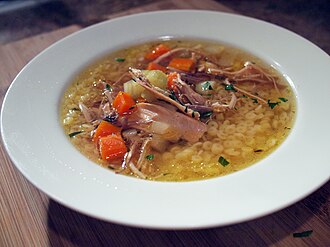
Photo: Wikipedia
This is the foundational, savory liquid gold of the kitchen, reconstituted from a can to a clear, golden broth. Its flavor is a mild, savory chicken essence with a clean, thin texture that coats the mouth lightly. Nutritionally, it's a very low-calorie, virtually fat-free base that provides a small but useful hit of protein.
Calorie split: 55% protein · 10% carbs · 35% fat
↓ Full nutrition💚 Why it's loved
People love it for its comforting, familiar flavor that forms the backbone of countless home-cooked meals. Its simplicity makes it a versatile, ready-to-use canvas for building complex dishes or a soothing, warm drink on its own.
⚠️ Watch-outs & how to enjoy it better
The primary concern is often its high sodium content, which can be problematic for those monitoring blood pressure or fluid retention. To counteract this, look for 'low-sodium' versions or dilute it further with water, and balance your meal by adding fresh vegetables and unseasoned protein. Some may also find it too light in flavor on its own.
Key benefits
- Extremely low-calorie base for soups and stews
- Provides a quick source of hydration and electrolytes
- Adds savory depth without significant fat or carbs
- Versatile starter for countless recipes and sauces
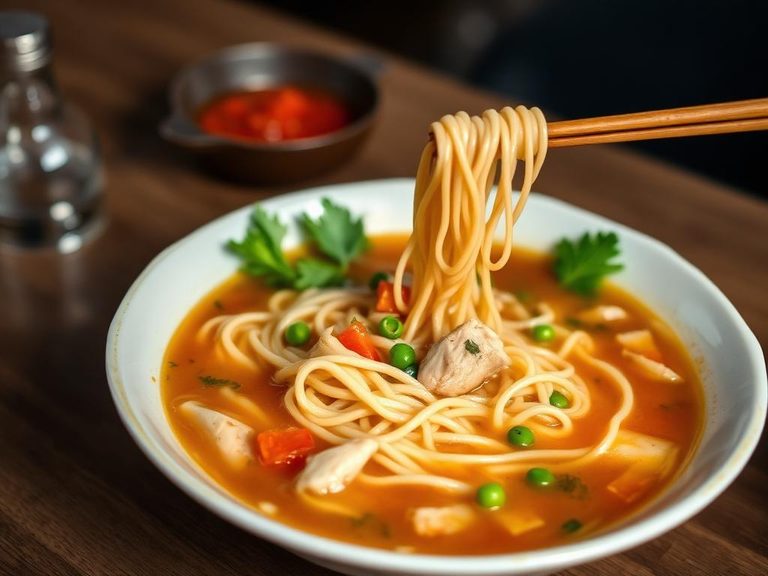
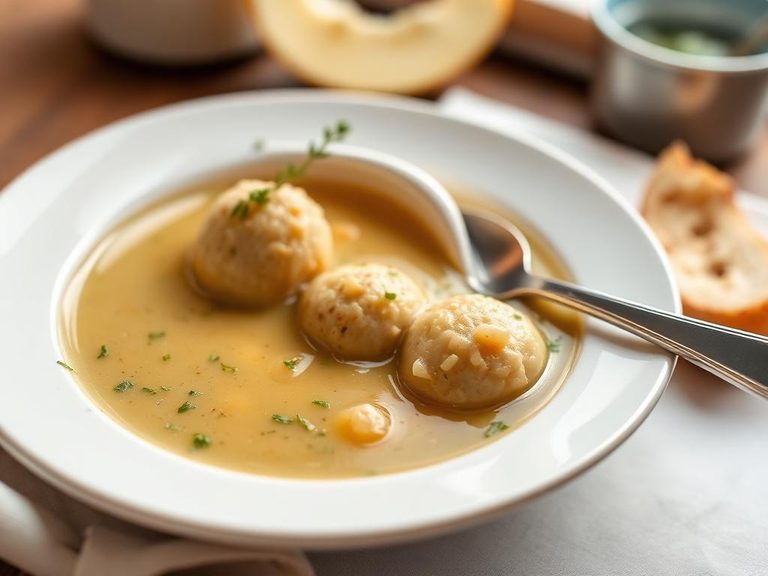
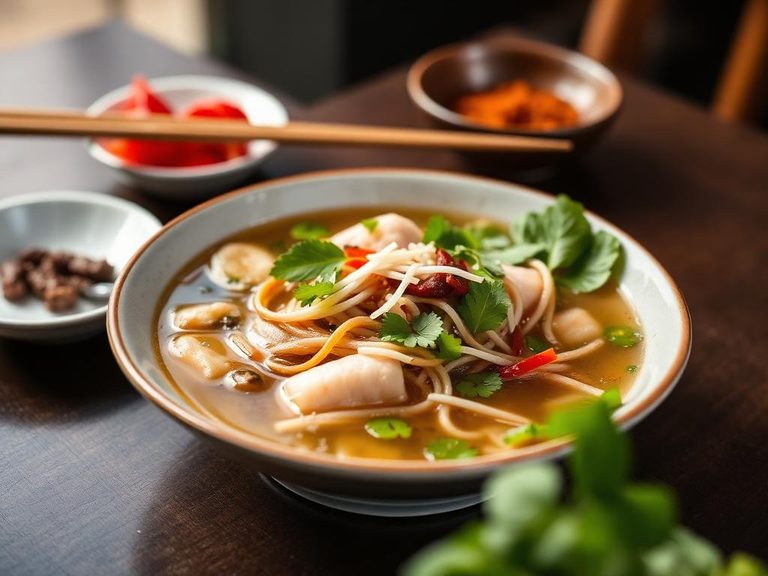
🍽️ Popular dishes
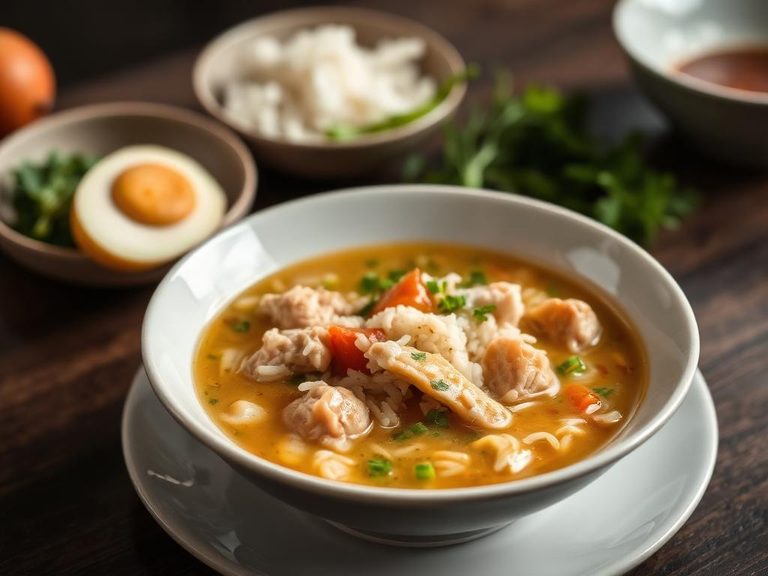

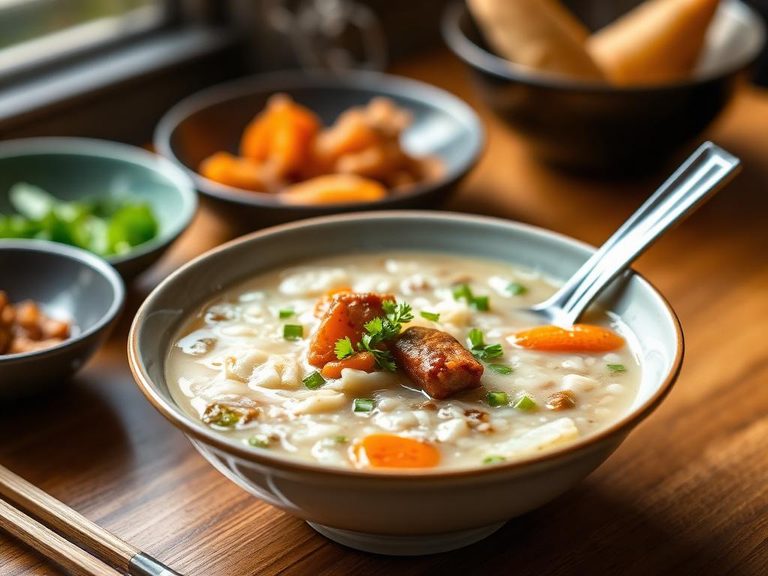
🌍 Where it's eaten
💡 Did you know?
The gelatin that gives good homemade chicken broth a slight jiggle when chilled comes from collagen in bones and joints; commercial canned broth is often designed to remain liquid and clear.
Full nutrition (USDA data · scales with serving)
| Water | 96.0 g |
| Energy | 16.0 kcal |
| Energy | 67.0 kj |
| Protein | 2.0 g |
| Total lipid (fat) | 0.57 g |
| Ash | 1.0 g |
| Carbohydrate, by difference | 0.38 g |
| Fiber, total dietary | 0.00 g |
| Total Sugars | 0.29 g |
| Calcium, Ca | 4.0 mg |
| Iron, Fe | 0.21 mg |
| Magnesium, Mg | 1.0 mg |
| Phosphorus, P | 30.0 mg |
| Potassium, K | 86.0 mg |
| Sodium, Na | 306 mg |
| Zinc, Zn | 0.10 mg |
| Copper, Cu | 0.05 mg |
| Manganese, Mn | 0.10 mg |
| Selenium, Se | 0.00 ug |
| Fluoride, F | 61.0 ug |
| Vitamin C, total ascorbic acid | 0.00 mg |
| Thiamin | 0.00 mg |
| Riboflavin | 0.03 mg |
| Niacin | 1.4 mg |
| Pantothenic acid | 0.02 mg |
| Vitamin B-6 | 0.01 mg |
| Folate, total | 2.0 ug |
| Folic acid | 0.00 ug |
| Folate, food | 2.0 ug |
| Folate, DFE | 2.0 ug |
| Choline, total | 4.7 mg |
| Vitamin B-12 | 0.10 ug |
| Vitamin B-12, added | 0.00 ug |
| Vitamin A, RAE | 0.00 ug |
| Retinol | 0.00 ug |
| Carotene, beta | 0.00 ug |
| Carotene, alpha | 0.00 ug |
| Cryptoxanthin, beta | 0.00 ug |
| Vitamin A, IU | 0.00 iu |
| Lycopene | 0.00 ug |
| Lutein + zeaxanthin | 0.00 ug |
| Vitamin E (alpha-tocopherol) | 0.02 mg |
| Vitamin E, added | 0.00 mg |
| Vitamin D (D2 + D3), International Units | 0.00 iu |
| Vitamin D (D2 + D3) | 0.00 ug |
| Vitamin K (phylloquinone) | 0.00 ug |
| Alcohol, ethyl | 0.00 g |
| Caffeine | 0.00 mg |
| Theobromine | 0.00 mg |
Fat & fatty acid profile (per 100g)
| Fatty acids, total saturated | 0.16 g |
| SFA 4:0 | 0.00 g |
| SFA 6:0 | 0.00 g |
| SFA 8:0 | 0.00 g |
| SFA 10:0 | 0.00 g |
| SFA 12:0 | 0.00 g |
| SFA 14:0 | 0.01 g |
| SFA 16:0 | 0.12 g |
| SFA 18:0 | 0.03 g |
| Fatty acids, total monounsaturated | 0.24 g |
| MUFA 16:1 | 0.03 g |
| MUFA 18:1 | 0.20 g |
| MUFA 20:1 | 0.01 g |
| MUFA 22:1 | 0.00 g |
| Fatty acids, total polyunsaturated | 0.11 g |
| PUFA 18:2 | 0.10 g |
| PUFA 18:3 | 0.01 g |
| PUFA 18:4 | 0.00 g |
| PUFA 20:4 | 0.00 g |
| PUFA 20:5 n-3 (EPA) | 0.00 g |
| PUFA 22:5 n-3 (DPA) | 0.00 g |
| PUFA 22:6 n-3 (DHA) | 0.00 g |
| Cholesterol | 0.00 mg |
Amino acid profile (per 100g)
Estimated from Soup, bean with pork, canned, condensed — USDA does not publish this profile for Soup.
| Tryptophan | 0.06 g |
| Threonine | 0.24 g |
| Isoleucine | 0.29 g |
| Leucine | 0.48 g |
| Lysine | 0.40 g |
| Methionine | 0.07 g |
| Cystine | 0.07 g |
| Phenylalanine | 0.33 g |
| Tyrosine | 0.18 g |
| Valine | 0.32 g |
| Arginine | 0.31 g |
| Histidine | 0.15 g |
| Alanine | 0.29 g |
| Aspartic acid | 0.66 g |
| Glutamic acid | 1.1 g |
| Glycine | 0.28 g |
| Proline | 0.27 g |
| Serine | 0.29 g |
FAQ
Is canned chicken broth the same as stock?
Not exactly. Broth is typically made from meat and is lighter in flavor and body. Stock is made primarily from bones, giving it more gelatin and a richer, more neutral flavor. For most home cooking, they are often used interchangeably.
Why does my canned broth taste so salty?
Salt is a primary preservative and flavor enhancer in canned broths. A single cup can contain 30-40% of the daily recommended sodium. Always check the label for 'low-sodium' or 'no salt added' options if this is a concern.
Can I drink chicken broth straight from the can?
Yes, but it's usually recommended to heat it first for better flavor and food safety. The canning process makes it shelf-stable and safe to consume, but heating enhances its savory notes and makes it more comforting.
Nutrient density (calculated · NRF9.3)
Nutrient Rich Foods index: beneficial nutrients (protein, fiber, vitamins, minerals) minus saturated fat, added sugar & sodium, per 100 kcal.
NRF9.3 index — Fulgoni, Keast & Drewnowski, 2009. Computed from USDA nutrients.
Weight-loss friendliness (composite index)
Energy density 0.16 kcal/g · 51% calories from protein · 0.0 g fiber · 0.3 g sugar per 100 g.
Composite of energy density (Rolls et al., 1999), protein & fiber satiety, minus sugar. A calculated heuristic — ranks satiety-per-calorie, not a clinical measure.
Dietary load (calculated from USDA values)
Potential renal acid load. Positive = acid-forming, negative = alkaline-forming.
Sodium-to-potassium ratio: 3.56 (lower is better — aim for ≤ 1)
Sodium:potassium per WHO potassium guidance. Computed from USDA nutrients.