

Soup, chicken broth, canned, condensed
Whole food · Soups, Sauces, and Gravies
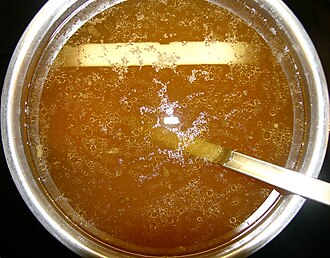
Photo: Wikipedia
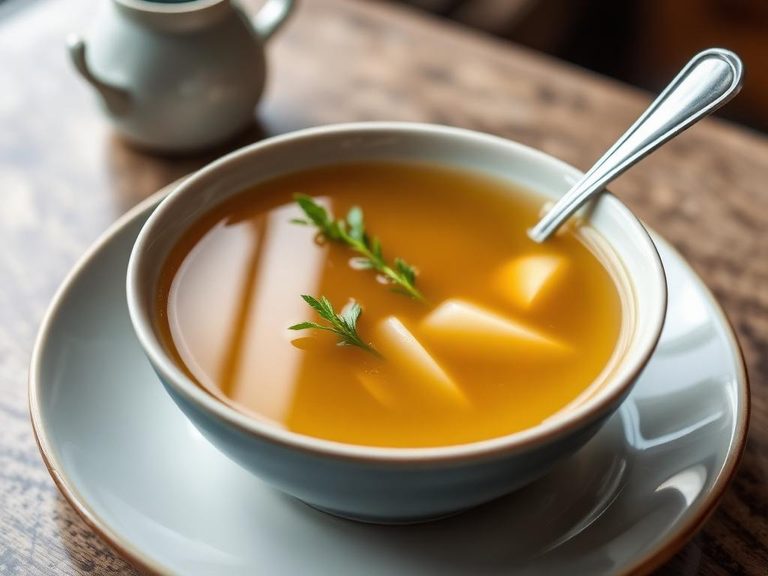
Canned, condensed chicken broth is a savory, umami-rich liquid base made by simmering chicken bones and aromatics, then reduced for shelf stability. When reconstituted with water, it yields a clear, golden broth with a clean, savory flavor and a thin, watery texture. Nutritionally, it's a very low-calorie, low-fat source of protein, primarily valued for its flavor rather than its macronutrient density.
Calorie split: 59% protein · 10% carbs · 31% fat
↓ Full nutrition💚 Why it's loved
People cherish it for its profound ability to transform simple ingredients into a comforting, flavorful meal with minimal effort. It's the foundational 'secret' behind countless soups, sauces, and rice dishes, offering a deep, savory backbone that feels both nourishing and nostalgic.
⚠️ Watch-outs & how to enjoy it better
The primary concern is often its high sodium content, which can be problematic for those monitoring salt intake. To counteract this, look for 'low-sodium' versions, or use it diluted and enhance flavor with herbs, spices, and a splash of acid like lemon juice or vinegar. As an animal product, it is not suitable for vegetarian or vegan diets.
Key benefits
- Excellent low-calorie flavor base for cooking
- Provides a small but complete protein boost
- Convenient shelf-stable pantry staple
- Hydrating and soothing for soups and stews
- Versatile foundation for countless global cuisines
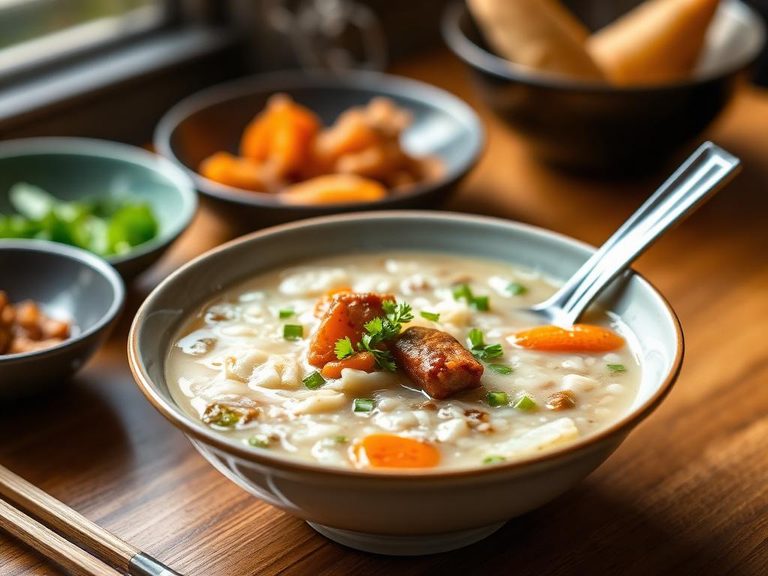
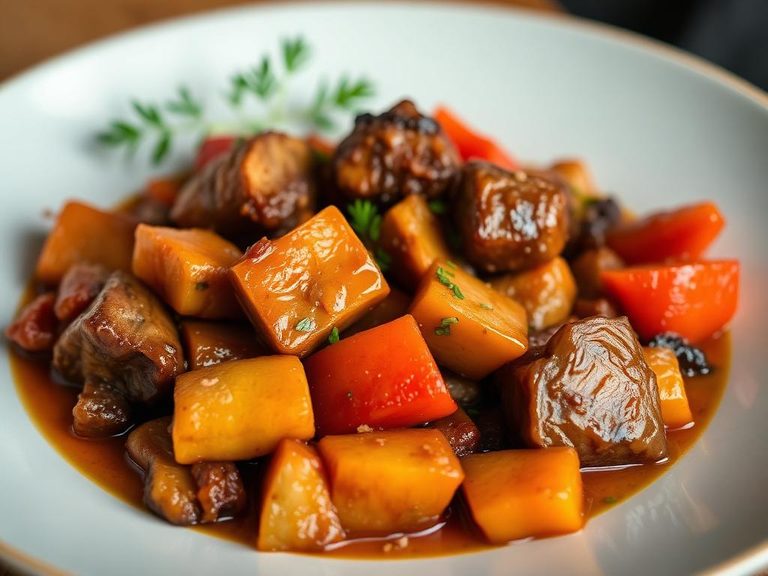
🍽️ Popular dishes
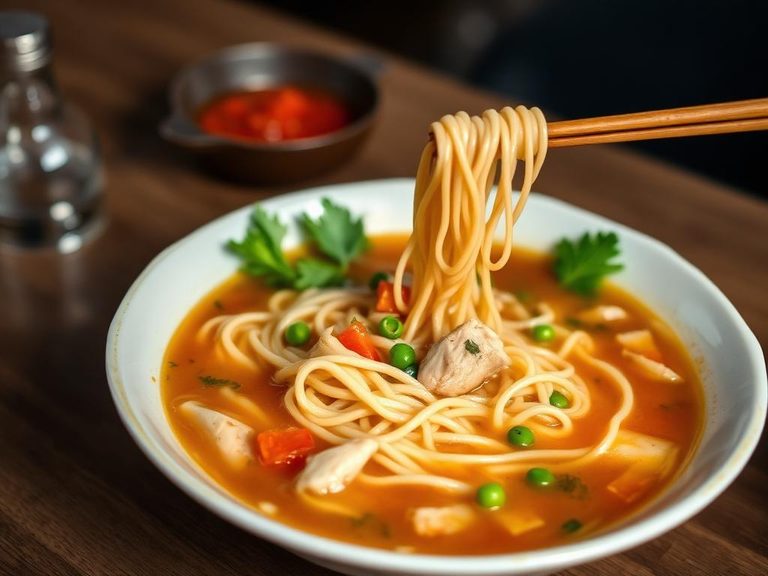
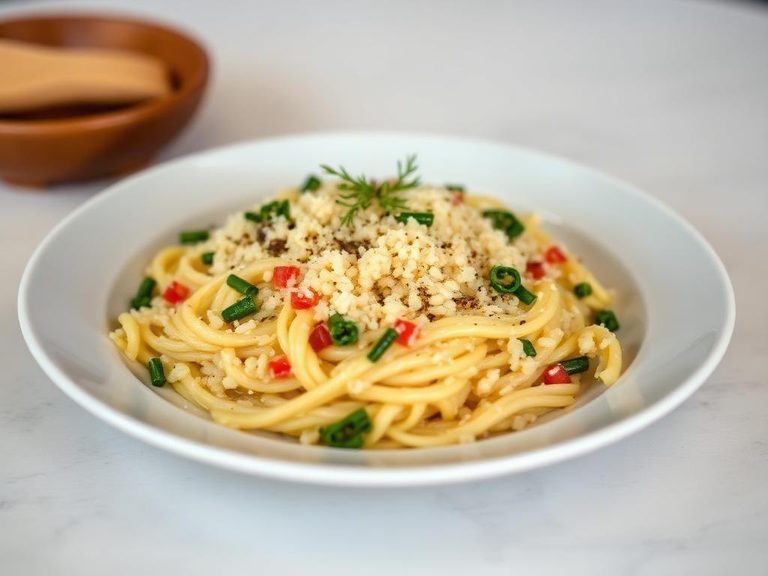
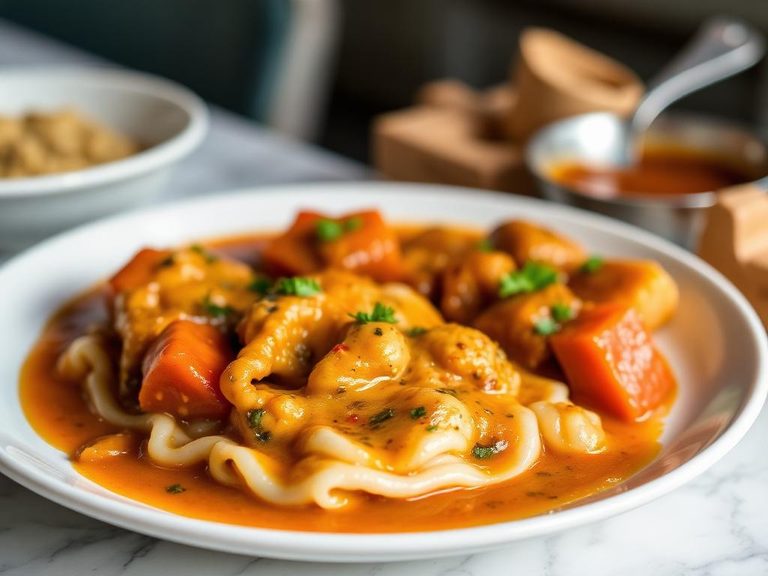
🌍 Where it's eaten
💡 Did you know?
The process of making condensed broth involves reducing the liquid by about 90%, concentrating its flavor so intensely that a single can can be reconstituted into multiple cups of ready-to-use broth.
Full nutrition (USDA data · scales with serving)
| Water | 92.0 g |
| Energy | 31.0 kcal |
| Energy | 130 kj |
| Protein | 4.4 g |
| Total lipid (fat) | 1.0 g |
| Ash | 1.8 g |
| Carbohydrate, by difference | 0.75 g |
| Fiber, total dietary | 0.00 g |
| Total Sugars | 0.35 g |
| Calcium, Ca | 6.0 mg |
| Iron, Fe | 0.41 mg |
| Magnesium, Mg | 2.0 mg |
| Phosphorus, P | 60.0 mg |
| Potassium, K | 170 mg |
| Sodium, Na | 621 mg |
| Zinc, Zn | 0.20 mg |
| Copper, Cu | 0.10 mg |
| Manganese, Mn | 0.20 mg |
| Selenium, Se | 2.3 ug |
| Vitamin C, total ascorbic acid | 0.00 mg |
| Thiamin | 0.01 mg |
| Riboflavin | 0.05 mg |
| Niacin | 2.2 mg |
| Pantothenic acid | 0.04 mg |
| Vitamin B-6 | 0.02 mg |
| Folate, total | 4.0 ug |
| Folic acid | 0.00 ug |
| Folate, food | 4.0 ug |
| Folate, DFE | 4.0 ug |
| Choline, total | 9.4 mg |
| Vitamin B-12 | 0.20 ug |
| Vitamin B-12, added | 0.00 ug |
| Vitamin A, RAE | 0.00 ug |
| Retinol | 0.00 ug |
| Carotene, beta | 0.00 ug |
| Carotene, alpha | 0.00 ug |
| Cryptoxanthin, beta | 0.00 ug |
| Vitamin A, IU | 0.00 iu |
| Lycopene | 0.00 ug |
| Lutein + zeaxanthin | 0.00 ug |
| Vitamin E (alpha-tocopherol) | 0.01 mg |
| Vitamin E, added | 0.00 mg |
| Vitamin D (D2 + D3), International Units | 0.00 iu |
| Vitamin D (D2 + D3) | 0.00 ug |
| Vitamin K (phylloquinone) | 0.00 ug |
| Alcohol, ethyl | 0.00 g |
| Caffeine | 0.00 mg |
| Theobromine | 0.00 mg |
Fat & fatty acid profile (per 100g)
| Fatty acids, total saturated | 0.31 g |
| SFA 4:0 | 0.00 g |
| SFA 6:0 | 0.00 g |
| SFA 8:0 | 0.00 g |
| SFA 10:0 | 0.00 g |
| SFA 12:0 | 0.00 g |
| SFA 14:0 | 0.01 g |
| SFA 16:0 | 0.23 g |
| SFA 18:0 | 0.06 g |
| Fatty acids, total monounsaturated | 0.47 g |
| MUFA 16:1 | 0.06 g |
| MUFA 18:1 | 0.39 g |
| MUFA 20:1 | 0.01 g |
| MUFA 22:1 | 0.00 g |
| Fatty acids, total polyunsaturated | 0.22 g |
| PUFA 18:2 | 0.20 g |
| PUFA 18:3 | 0.01 g |
| PUFA 18:4 | 0.00 g |
| PUFA 20:4 | 0.00 g |
| PUFA 20:5 n-3 (EPA) | 0.00 g |
| PUFA 22:5 n-3 (DPA) | 0.00 g |
| PUFA 22:6 n-3 (DHA) | 0.00 g |
| Cholesterol | 1.0 mg |
Amino acid profile (per 100g)
Estimated from Soup, bean with pork, canned, condensed — USDA does not publish this profile for Soup.
| Tryptophan | 0.06 g |
| Threonine | 0.24 g |
| Isoleucine | 0.29 g |
| Leucine | 0.48 g |
| Lysine | 0.40 g |
| Methionine | 0.07 g |
| Cystine | 0.07 g |
| Phenylalanine | 0.33 g |
| Tyrosine | 0.18 g |
| Valine | 0.32 g |
| Arginine | 0.31 g |
| Histidine | 0.15 g |
| Alanine | 0.29 g |
| Aspartic acid | 0.66 g |
| Glutamic acid | 1.1 g |
| Glycine | 0.28 g |
| Proline | 0.27 g |
| Serine | 0.29 g |
FAQ
What's the difference between condensed and regular broth?
Condensed broth is reduced by simmering to remove most of its water, concentrating its flavor and saving shelf space. You must add water (usually an equal amount) to reconstitute it to the strength of regular, ready-to-use broth.
Can I drink condensed broth straight from the can?
It is not recommended. The flavor will be overwhelmingly salty and intense, and the texture will be too thick. Always dilute it with water as directed on the label for the intended taste and consistency.
How long does opened, undiluted condensed broth last in the fridge?
Once opened and transferred to an airtight container, it should be used within 3-4 days. Freezing it in ice cube trays is a great way to preserve portions for later use in cooking.
Nutrient density (calculated · NRF9.3)
Nutrient Rich Foods index: beneficial nutrients (protein, fiber, vitamins, minerals) minus saturated fat, added sugar & sodium, per 100 kcal.
NRF9.3 index — Fulgoni, Keast & Drewnowski, 2009. Computed from USDA nutrients.
Weight-loss friendliness (composite index)
Energy density 0.31 kcal/g · 57% calories from protein · 0.0 g fiber · 0.3 g sugar per 100 g.
Composite of energy density (Rolls et al., 1999), protein & fiber satiety, minus sugar. A calculated heuristic — ranks satiety-per-calorie, not a clinical measure.
Dietary load (calculated from USDA values)
Potential renal acid load. Positive = acid-forming, negative = alkaline-forming.
Sodium-to-potassium ratio: 3.65 (lower is better — aim for ≤ 1)
Sodium:potassium per WHO potassium guidance. Computed from USDA nutrients.