

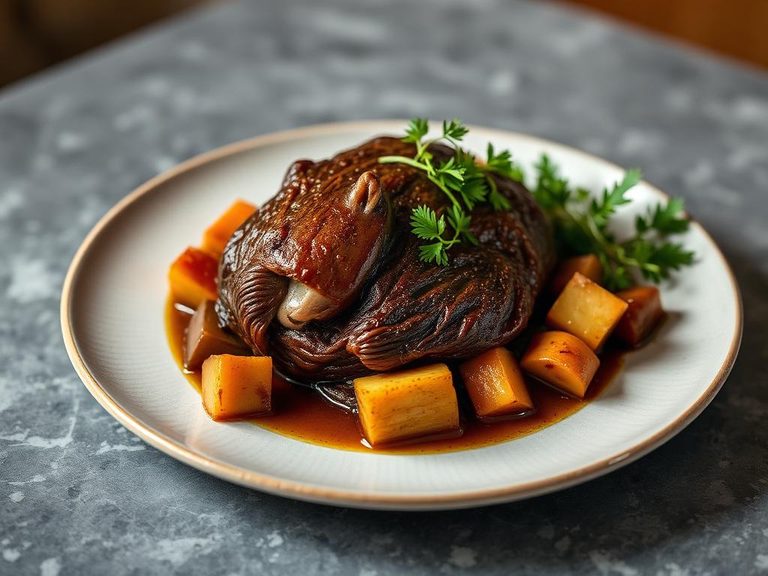
Braised vegetables or meats
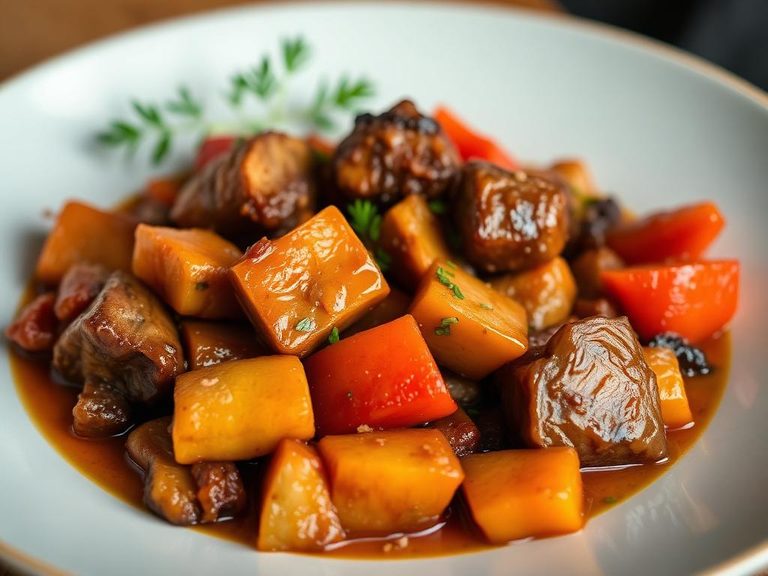
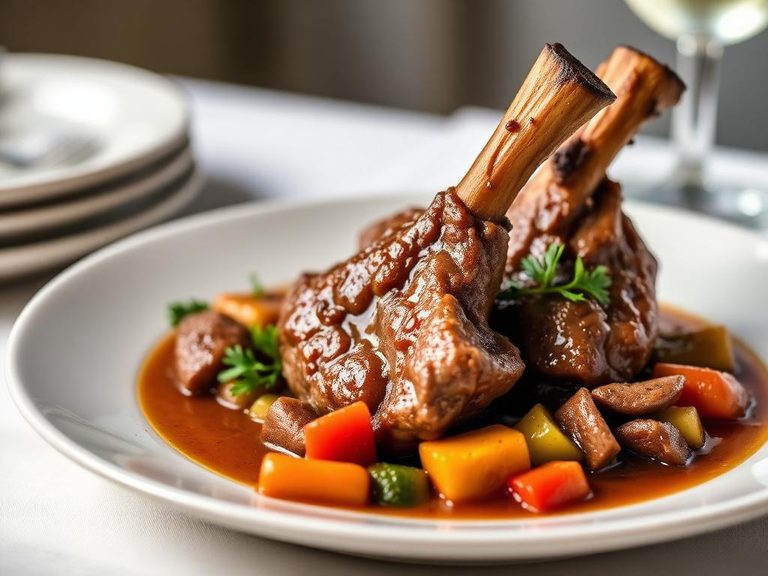
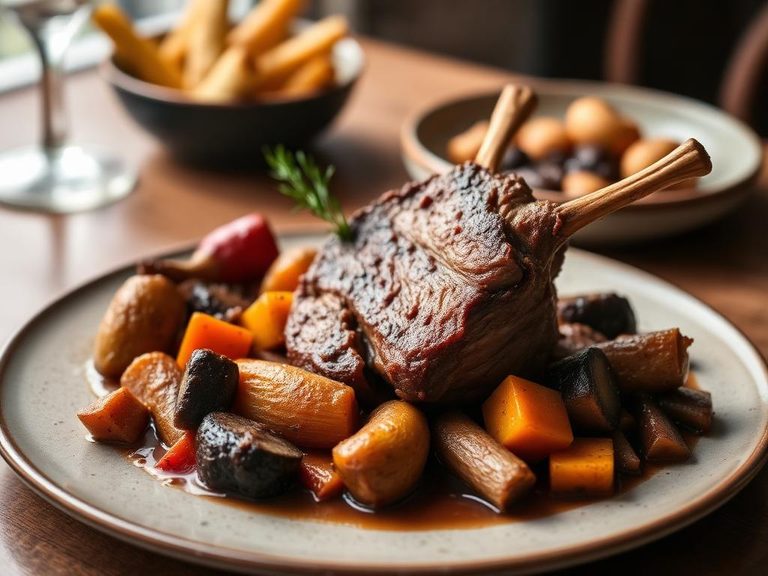
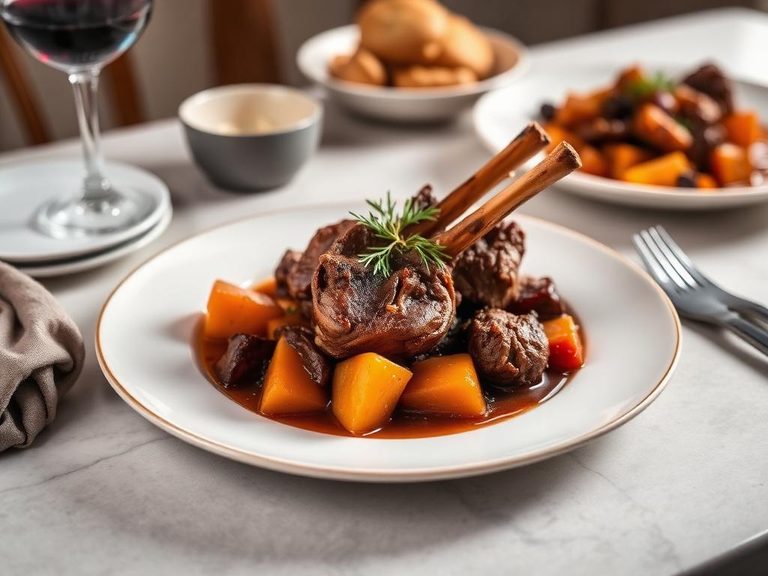
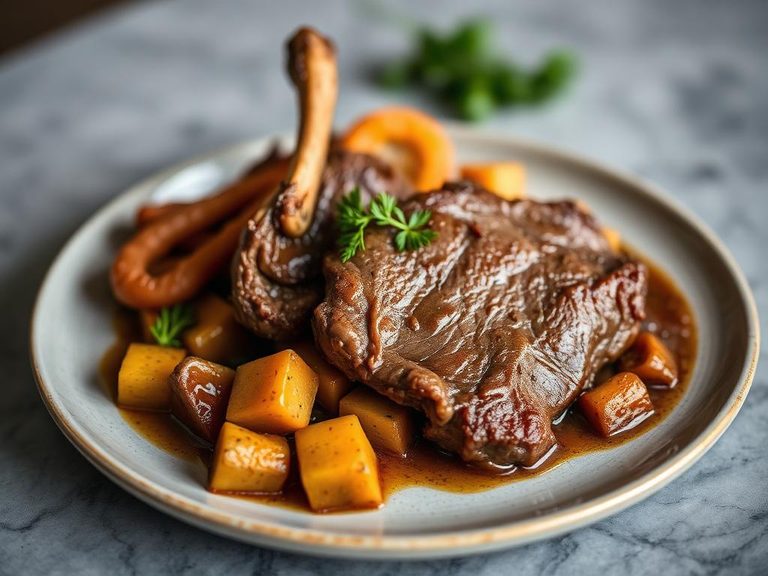
Braising is a slow-cooking technique where ingredients are first seared and then simmered in a flavorful liquid, resulting in tender, deeply flavored dishes. This method is used for both vegetables and meats, often incorporating aromatics like onions, garlic, and herbs, and is a staple in many cuisines, from French and Italian to Chinese and Latin American.
🍳 View the full Braised vegetables or meats recipe →
🍽️ Nutrition at a glance
The nutritional profile varies widely: meat-based braises are typically high in protein and fat, while vegetable versions are rich in fiber and vitamins. A typical serving can range from 250 to 500 calories, depending on the ingredients and cooking liquid used.
Nutrition breakdown
| Calories | 220 kcal |
| Protein | 12 g |
| Carbs | 18 g |
| Fat | 11 g |
| Fiber | 4 g |
| Sugar | 6 g |
| Sodium | 680 mg |
| Potassium | 420 mg |
| Vitamin A | 85 mcg RAE |
| Vitamin C | 15 mg |
| Calcium | 55 mg |
| Iron | 2.2 mg |
| Magnesium | 35 mg |
| Phosphorus | 140 mg |
| Zinc | 2.5 mg |
Per 1 cup (240 g) · estimated, varies by recipe
💡 What's interesting
Braising is a culturally versatile technique that transforms tough cuts of meat and hearty vegetables into melt-in-your-mouth comfort food, showcasing the slow, patient art of cooking. Nutritionally, it helps retain nutrients in vegetables by cooking them in a closed environment, while also making proteins more digestible.
🍽️ Related dishes
AI estimate may be inaccurate · Terms