

Salad dressing, russian dressing
Whole food · Fats and Oils

Photo: Wikipedia
Russian dressing is a rich, creamy, and tangy condiment with a signature pinkish-orange hue, typically made from mayonnaise, ketchup, and a blend of sweet and savory spices. It boasts a thick, smooth texture that clings perfectly to salads and sandwiches, delivering a bold flavor profile that is simultaneously sweet, tangy, and slightly spicy. Nutritionally, it is a high-calorie and high-fat option, providing over 350 kcal and 26g of fat per 100g, making it a very energy-dense addition to any meal.
Calorie split: 1% protein · 35% carbs · 64% fat
↓ Full nutrition💚 Why it's loved
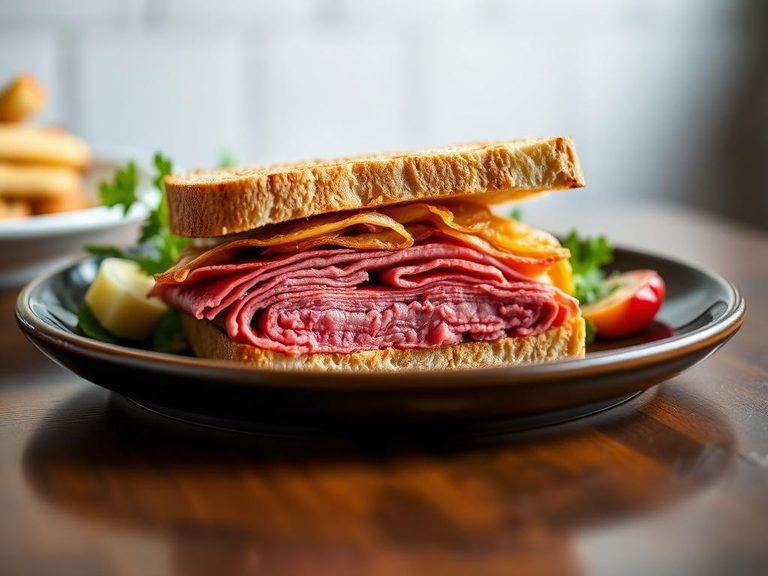
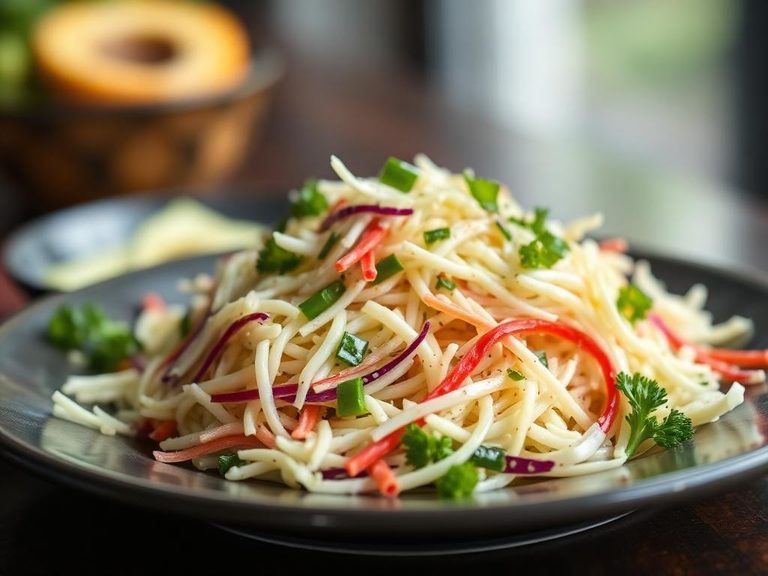
People love Russian dressing for its bold, creamy, and tangy flavor that adds a luxurious richness to simple dishes like Reuben sandwiches and coleslaw. Its versatility and distinct, slightly spicy kick make it a beloved staple in American delis and diners.
⚠️ Watch-outs & how to enjoy it better
Due to its high calorie, fat, and sugar content, it can contribute to blood-sugar spikes and weight gain if consumed in large quantities. To counteract this, practice strict portion control (e.g., using 1-2 tablespoons) and pair it with high-fiber vegetables or lean protein to slow digestion and mitigate blood sugar impact.
Key benefits
- Provides a quick source of energy from its high fat and carbohydrate content.
- Enhances the palatability of vegetables, encouraging consumption of salads.
- Contains small amounts of protein and fiber.
- Offers a complex flavor profile that can elevate simple dishes.
🍽️ Popular dishes
🌍 Where it's eaten
💡 Did you know?
Despite its name, Russian dressing is an American invention, likely originating in New Hampshire in the early 20th century, and its name may have been inspired by the use of Russian-made horseradish.
Full nutrition (USDA data · scales with serving)
| Water | 38.5 g |
| Energy | 355 kcal |
| Energy | 1485 kj |
| Protein | 0.69 g |
| Total lipid (fat) | 26.2 g |
| Ash | 2.7 g |
| Carbohydrate, by difference | 31.9 g |
| Fiber, total dietary | 0.70 g |
| Total Sugars | 17.7 g |
| Calcium, Ca | 13.0 mg |
| Iron, Fe | 0.60 mg |
| Magnesium, Mg | 10.0 mg |
| Phosphorus, P | 20.0 mg |
| Potassium, K | 173 mg |
| Sodium, Na | 1133 mg |
| Zinc, Zn | 0.22 mg |
| Copper, Cu | 0.06 mg |
| Manganese, Mn | 0.06 mg |
| Selenium, Se | 1.6 ug |
| Vitamin C, total ascorbic acid | 6.0 mg |
| Thiamin | 0.03 mg |
| Riboflavin | 0.05 mg |
| Niacin | 0.59 mg |
| Pantothenic acid | 0.40 mg |
| Vitamin B-6 | 0.10 mg |
| Folate, total | 5.0 ug |
| Folic acid | 0.00 ug |
| Folate, food | 5.0 ug |
| Folate, DFE | 5.0 ug |
| Choline, total | 4.6 mg |
| Vitamin B-12 | 0.00 ug |
| Vitamin B-12, added | 0.00 ug |
| Vitamin A, RAE | 29.0 ug |
| Retinol | 0.00 ug |
| Carotene, beta | 320 ug |
| Carotene, alpha | 2.0 ug |
| Cryptoxanthin, beta | 49.0 ug |
| Vitamin A, IU | 577 iu |
| Lycopene | 3576 ug |
| Lutein + zeaxanthin | 173 ug |
| Vitamin E (alpha-tocopherol) | 3.3 mg |
| Vitamin E, added | 0.00 mg |
| Vitamin D (D2 + D3), International Units | 0.00 iu |
| Vitamin D (D2 + D3) | 0.00 ug |
| Vitamin K (phylloquinone) | 53.7 ug |
| Alcohol, ethyl | 0.00 g |
| Caffeine | 0.00 mg |
| Theobromine | 0.00 mg |
Fat & fatty acid profile (per 100g)
| Fatty acids, total saturated | 2.4 g |
| SFA 4:0 | 0.00 g |
| SFA 6:0 | 0.00 g |
| SFA 8:0 | 0.00 g |
| SFA 10:0 | 0.00 g |
| SFA 12:0 | 0.00 g |
| SFA 14:0 | 0.02 g |
| SFA 16:0 | 1.7 g |
| SFA 18:0 | 0.64 g |
| Fatty acids, total monounsaturated | 5.9 g |
| MUFA 16:1 | 0.05 g |
| MUFA 18:1 | 5.8 g |
| MUFA 20:1 | 0.05 g |
| MUFA 22:1 | 0.00 g |
| Fatty acids, total polyunsaturated | 14.8 g |
| PUFA 18:2 | 13.1 g |
| PUFA 18:3 | 1.7 g |
| PUFA 18:4 | 0.00 g |
| PUFA 20:4 | 0.00 g |
| PUFA 20:5 n-3 (EPA) | 0.00 g |
| PUFA 22:5 n-3 (DPA) | 0.00 g |
| PUFA 22:6 n-3 (DHA) | 0.00 g |
| Fatty acids, total trans | 0.17 g |
| Cholesterol | 0.00 mg |
Amino acid profile (per 100g)
Estimated from Salad dressing, sesame seed dressing, regular — USDA does not publish this profile for Salad dressing.
| Tryptophan | 0.05 g |
| Threonine | 0.05 g |
| Isoleucine | 0.05 g |
| Leucine | 0.08 g |
| Lysine | 0.14 g |
| Methionine | 0.03 g |
| Cystine | 0.00 g |
| Phenylalanine | 0.09 g |
| Tyrosine | 0.10 g |
| Valine | 0.07 g |
| Arginine | 0.40 g |
| Histidine | 0.03 g |
| Alanine | 0.00 g |
| Aspartic acid | 0.00 g |
| Glutamic acid | 0.46 g |
| Glycine | 0.00 g |
| Proline | 0.00 g |
| Serine | 0.00 g |
FAQ
What is the difference between Russian and Thousand Island dressing?
Russian dressing is typically spicier and less sweet, often containing horseradish and chili sauce, while Thousand Island is sweeter and chunkier, usually containing pickles, olives, and hard-boiled eggs.
Is Russian dressing gluten-free?
Most commercial brands are gluten-free, but always check the label for hidden gluten in additives or thickeners.
Can I make a healthier version at home?
Yes, you can substitute mayonnaise with Greek yogurt or avocado, and use low-sugar ketchup or tomato paste to reduce calories and sugar.
Nutrient density (calculated · NRF9.3)
Nutrient Rich Foods index: beneficial nutrients (protein, fiber, vitamins, minerals) minus saturated fat, added sugar & sodium, per 100 kcal.
NRF9.3 index — Fulgoni, Keast & Drewnowski, 2009. Computed from USDA nutrients.
Weight-loss friendliness (composite index)
Energy density 3.55 kcal/g · 1% calories from protein · 0.7 g fiber · 17.7 g sugar per 100 g.
Composite of energy density (Rolls et al., 1999), protein & fiber satiety, minus sugar. A calculated heuristic — ranks satiety-per-calorie, not a clinical measure.
Dietary load (calculated from USDA values)
Potential renal acid load. Positive = acid-forming, negative = alkaline-forming.
Sodium-to-potassium ratio: 6.55 (lower is better — aim for ≤ 1)
Sodium:potassium per WHO potassium guidance. Computed from USDA nutrients.