

Radishes, oriental, dried
Whole food · Vegetables and Vegetable Products

Photo: Wikipedia
Dried oriental radish, known as 'daikon radish' in many contexts, is a dehydrated root vegetable with a chewy, dense texture and a concentrated, slightly sweet and earthy flavor. It's a nutritional powerhouse, packing an impressive 23.9 grams of fiber and 37 grams of natural sugars per 100 grams, making it a potent source of quick energy and digestive support.
Calorie split: 11% protein · 87% carbs · 2% fat
↓ Full nutrition💚 Why it's loved
It's beloved for its unique, satisfyingly chewy texture and deep, umami-rich flavor that intensifies soups, stews, and stir-fries. Its long shelf life and versatility in both savory and pickled preparations make it a staple in many Asian pantries.
⚠️ Watch-outs & how to enjoy it better
Its high natural sugar and carbohydrate content can lead to rapid blood sugar spikes if consumed in large quantities alone. Those monitoring blood glucose should pair it with protein or healthy fats and practice portion control. The drying process can also concentrate naturally occurring oxalates, so individuals prone to kidney stones should consume it in moderation.
Key benefits
- Exceptionally high in dietary fiber for digestive health.
- Good source of plant-based protein for a vegetable.
- Concentrated source of natural carbohydrates for energy.
- Low in fat, making it a lean food choice.
- Retains minerals and vitamins through dehydration.
🍽️ Popular dishes
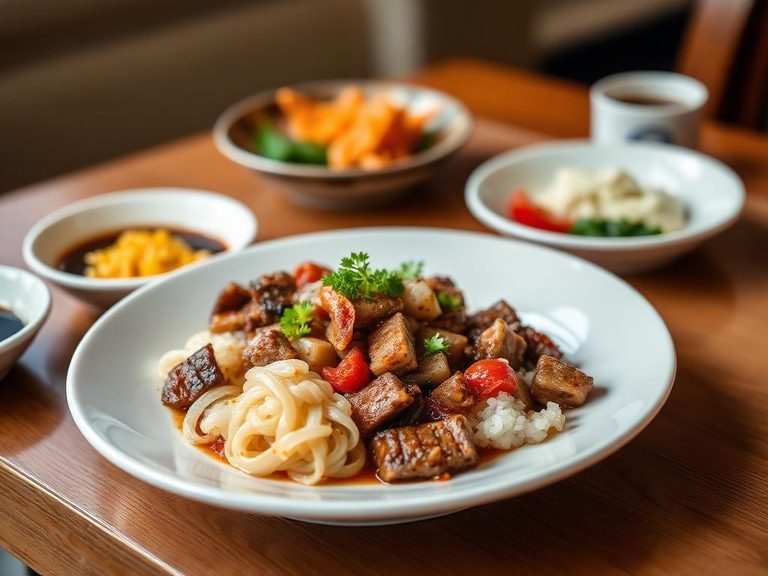
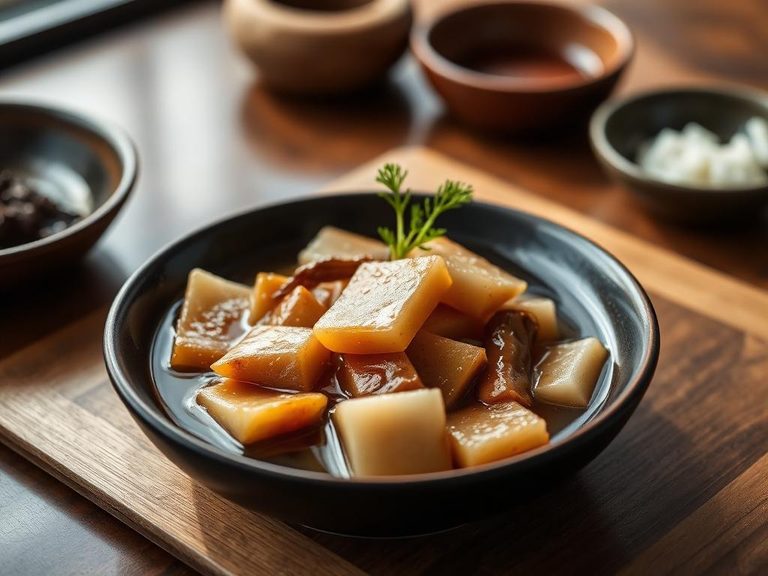
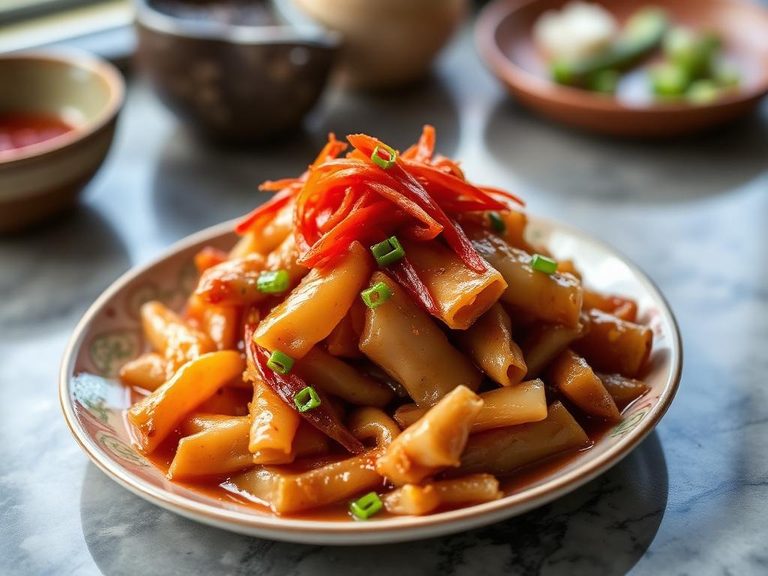
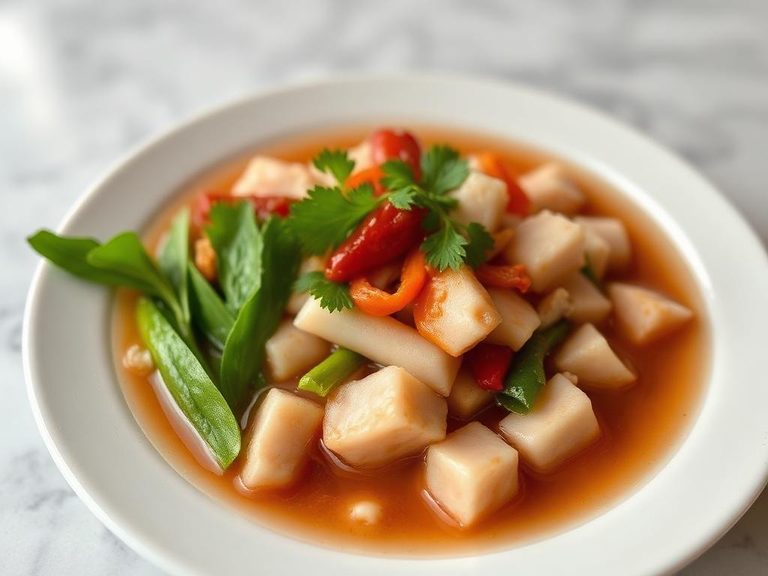
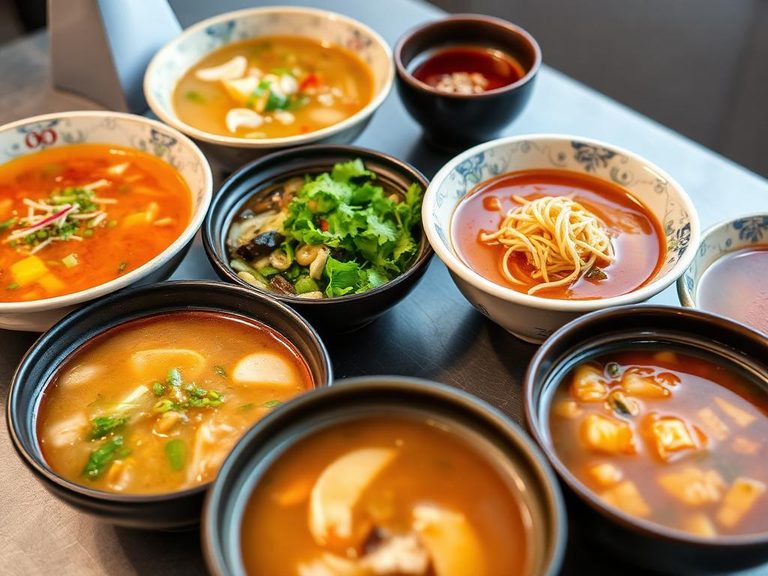
🌍 Where it's eaten
💡 Did you know?
The dehydration process can reduce the radish's volume by over 80%, concentrating its nutrients and flavor so dramatically that a small handful can flavor an entire pot of soup.
Full nutrition (USDA data · scales with serving)
| Water | 19.7 g |
| Energy | 271 kcal |
| Energy | 1134 kj |
| Protein | 7.9 g |
| Total lipid (fat) | 0.72 g |
| Ash | 8.3 g |
| Carbohydrate, by difference | 63.4 g |
| Fiber, total dietary | 23.9 g |
| Total Sugars | 37.3 g |
| Calcium, Ca | 629 mg |
| Iron, Fe | 6.7 mg |
| Magnesium, Mg | 170 mg |
| Phosphorus, P | 204 mg |
| Potassium, K | 3494 mg |
| Sodium, Na | 278 mg |
| Zinc, Zn | 2.1 mg |
| Copper, Cu | 1.6 mg |
| Manganese, Mn | 0.54 mg |
| Selenium, Se | 0.70 ug |
| Vitamin C, total ascorbic acid | 0.00 mg |
| Thiamin | 0.27 mg |
| Riboflavin | 0.68 mg |
| Niacin | 3.4 mg |
| Pantothenic acid | 1.9 mg |
| Vitamin B-6 | 0.62 mg |
| Folate, total | 295 ug |
| Folic acid | 0.00 ug |
| Folate, food | 295 ug |
| Folate, DFE | 295 ug |
| Choline, total | 110 mg |
| Vitamin B-12 | 0.00 ug |
| Vitamin A, RAE | 0.00 ug |
| Retinol | 0.00 ug |
| Carotene, beta | 0.00 ug |
| Carotene, alpha | 0.00 ug |
| Cryptoxanthin, beta | 0.00 ug |
| Vitamin A, IU | 0.00 iu |
| Lycopene | 0.00 ug |
| Lutein + zeaxanthin | 0.00 ug |
| Vitamin E (alpha-tocopherol) | 0.01 mg |
| Vitamin D (D2 + D3), International Units | 0.00 iu |
| Vitamin D (D2 + D3) | 0.00 ug |
| Vitamin K (phylloquinone) | 4.5 ug |
| Alcohol, ethyl | 0.00 g |
| Caffeine | 0.00 mg |
| Theobromine | 0.00 mg |
Fat & fatty acid profile (per 100g)
| Fatty acids, total saturated | 0.22 g |
| SFA 4:0 | 0.00 g |
| SFA 6:0 | 0.00 g |
| SFA 8:0 | 0.00 g |
| SFA 10:0 | 0.00 g |
| SFA 12:0 | 0.00 g |
| SFA 14:0 | 0.00 g |
| SFA 16:0 | 0.19 g |
| SFA 18:0 | 0.03 g |
| Fatty acids, total monounsaturated | 0.12 g |
| MUFA 16:1 | 0.00 g |
| MUFA 18:1 | 0.12 g |
| MUFA 20:1 | 0.00 g |
| MUFA 22:1 | 0.00 g |
| Fatty acids, total polyunsaturated | 0.33 g |
| PUFA 18:2 | 0.12 g |
| PUFA 18:3 | 0.21 g |
| PUFA 18:4 | 0.00 g |
| PUFA 20:4 | 0.00 g |
| PUFA 20:5 n-3 (EPA) | 0.00 g |
| PUFA 22:5 n-3 (DPA) | 0.00 g |
| PUFA 22:6 n-3 (DHA) | 0.00 g |
| Fatty acids, total trans | 0.00 g |
| Cholesterol | 0.00 mg |
Amino acid profile (per 100g)
| Tryptophan | 0.04 g |
| Threonine | 0.33 g |
| Isoleucine | 0.34 g |
| Leucine | 0.41 g |
| Lysine | 0.39 g |
| Methionine | 0.07 g |
| Cystine | 0.06 g |
| Phenylalanine | 0.26 g |
| Tyrosine | 0.15 g |
| Valine | 0.36 g |
| Arginine | 0.46 g |
| Histidine | 0.15 g |
| Alanine | 0.25 g |
| Aspartic acid | 0.54 g |
| Glutamic acid | 1.5 g |
| Glycine | 0.25 g |
| Proline | 0.20 g |
| Serine | 0.24 g |
FAQ
How do I rehydrate dried oriental radish?
Soak it in cold or warm water for 30-60 minutes until it becomes pliable and soft. The soaking liquid can be used as a flavorful stock.
Is it the same as regular dried radish?
It's typically made from large Asian radish varieties like daikon, which have a milder, sweeter profile than common red radishes, making them better suited for drying and long cooking.
Can I eat it straight from the package?
While possible, it's very hard and chewy. It's almost always rehydrated or cooked first to improve texture and digestibility.
Nutrient density (calculated · NRF9.3)
Nutrient Rich Foods index: beneficial nutrients (protein, fiber, vitamins, minerals) minus saturated fat, added sugar & sodium, per 100 kcal.
NRF9.3 index — Fulgoni, Keast & Drewnowski, 2009. Computed from USDA nutrients.
Weight-loss friendliness (composite index)
Energy density 2.71 kcal/g · 12% calories from protein · 23.9 g fiber · 37.3 g sugar per 100 g.
Composite of energy density (Rolls et al., 1999), protein & fiber satiety, minus sugar. A calculated heuristic — ranks satiety-per-calorie, not a clinical measure.
Dietary load (calculated from USDA values)
Potential renal acid load. Positive = acid-forming, negative = alkaline-forming.
Sodium-to-potassium ratio: 0.08 (lower is better — aim for ≤ 1)
Sodium:potassium per WHO potassium guidance. Computed from USDA nutrients.