

Chinese Dong Po Rou
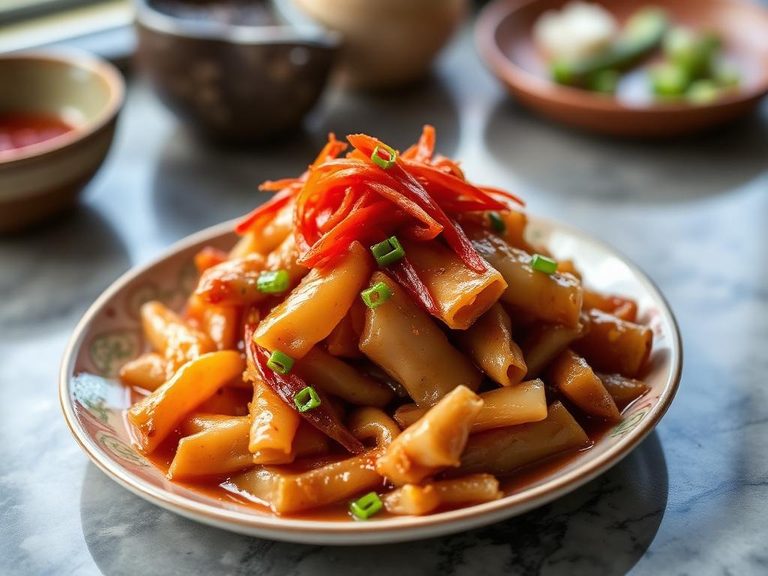
Chinese Dong Po Rou is a classic Hangzhou dish featuring slow-braised pork belly, known for its melt-in-your-mouth texture and rich, savory-sweet flavor. The dish typically consists of thick, square-cut pork belly pieces braised in a mixture of soy sauce, Shaoxing wine, rock sugar, and aromatics like ginger and scallions. It originates from Hangzhou, Zhejiang province, and is named after the Song Dynasty poet Su Dongpo.
🍽️ Nutrition at a glance
Dong Po Rou is high in fat and protein due to the pork belly, with minimal carbohydrates from the braising sauce. It provides significant amounts of B vitamins, iron, and zinc, with a typical serving containing roughly 400-500 calories.
Nutrition breakdown
| Calories | 450 kcal |
| Protein | 22 g |
| Carbs | 8 g |
| Fat | 38 g |
| Fiber | 0.5 g |
| Sugar | 5 g |
| Sodium | 800 mg |
| Vitamin B1 (Thiamine) | 0.4 mg |
| Vitamin B6 | 0.4 mg |
| Vitamin B12 | 0.8 mcg |
| Iron | 2.5 mg |
| Zinc | 3.8 mg |
| Selenium | 25 mcg |
| Phosphorus | 220 mg |
| Potassium | 350 mg |
Per 1 serving (150 g) of pork belly with sauce · estimated, varies by recipe
💡 What's interesting
The dish is culturally significant as it embodies the Hangzhou culinary philosophy of 'one steam, one boil' (一蒸一煮), where the pork is first boiled to remove impurities and then steamed to achieve its signature tenderness. Nutritionally, while high in saturated fat, the slow-cooking process renders much of the fat, making the meat surprisingly tender and easier to digest than fried pork preparations.
🍽️ Related dishes

AI estimate may be inaccurate · Terms