

Puddings, chocolate, dry mix, regular
Whole food · Sweets

Photo: Wikipedia
This is a shelf-stable, powdered blend designed to create a classic chocolate pudding when mixed with milk. It yields a smooth, creamy, and intensely sweet chocolate flavor with a soft, spoonable texture once set. Nutritionally, it is a high-carbohydrate, low-protein food, with nearly 90 grams of carbs and over 42 grams of sugar per 100g of dry mix.
Calorie split: 3% protein · 92% carbs · 5% fat
↓ Full nutrition💚 Why it's loved
People love it for its nostalgic, uncomplicated chocolate sweetness and the comforting, smooth texture it delivers with minimal effort. It's a versatile base that can be enjoyed plain, used as a dip for fruit, or layered in elaborate desserts.
⚠️ Watch-outs & how to enjoy it better
The high sugar content can lead to rapid blood-sugar spikes, and it offers little nutritional value beyond calories. Those monitoring sugar intake or with diabetes should be cautious; pairing a small portion with protein-rich nuts or plain yogurt can help blunt the glycemic response.
Key benefits
- Provides quick energy from simple carbohydrates.
- Convenient and long shelf life for pantry storage.
- Consistent, predictable flavor and texture every time.
- A familiar comfort food for many generations.
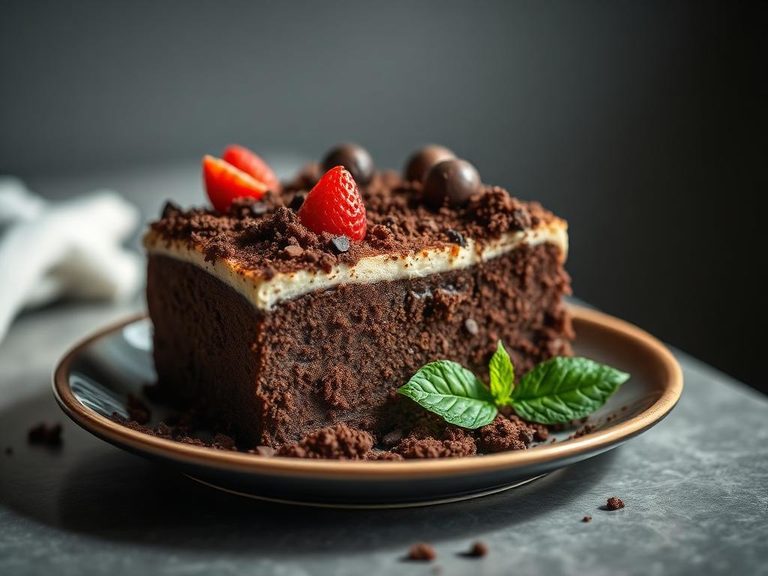
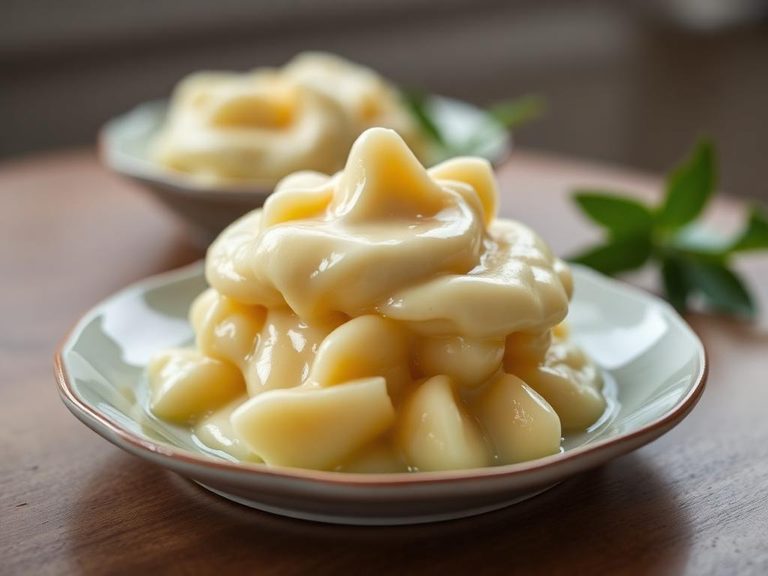
🍽️ Popular dishes



🌍 Where it's eaten
💡 Did you know?
The convenience of dry pudding mix was popularized in the 1950s by companies like Jell-O, which marketed it as a modern, time-saving alternative to traditional cooked puddings.
Full nutrition (USDA data · scales with serving)
| Water | 4.0 g |
| Energy | 362 kcal |
| Energy | 1514 kj |
| Protein | 2.6 g |
| Total lipid (fat) | 2.1 g |
| Ash | 2.0 g |
| Carbohydrate, by difference | 89.3 g |
| Fiber, total dietary | 4.5 g |
| Total Sugars | 42.9 g |
| Calcium, Ca | 53.0 mg |
| Iron, Fe | 1.8 mg |
| Magnesium, Mg | 67.0 mg |
| Phosphorus, P | 88.0 mg |
| Potassium, K | 209 mg |
| Sodium, Na | 479 mg |
| Zinc, Zn | 0.90 mg |
| Copper, Cu | 0.52 mg |
| Manganese, Mn | 0.54 mg |
| Selenium, Se | 3.3 ug |
| Vitamin C, total ascorbic acid | 0.00 mg |
| Thiamin | 0.01 mg |
| Riboflavin | 0.07 mg |
| Niacin | 0.33 mg |
| Pantothenic acid | 0.04 mg |
| Vitamin B-6 | 0.02 mg |
| Folate, total | 4.0 ug |
| Folic acid | 0.00 ug |
| Folate, food | 4.0 ug |
| Folate, DFE | 4.0 ug |
| Choline, total | 1.6 mg |
| Vitamin B-12 | 0.00 ug |
| Vitamin B-12, added | 0.00 ug |
| Vitamin A, RAE | 0.00 ug |
| Retinol | 0.00 ug |
| Carotene, beta | 0.00 ug |
| Carotene, alpha | 0.00 ug |
| Cryptoxanthin, beta | 0.00 ug |
| Vitamin A, IU | 0.00 iu |
| Lycopene | 0.00 ug |
| Lutein + zeaxanthin | 5.0 ug |
| Vitamin E (alpha-tocopherol) | 0.01 mg |
| Vitamin E, added | 0.00 mg |
| Vitamin D (D2 + D3), International Units | 0.00 iu |
| Vitamin D (D2 + D3) | 0.00 ug |
| Vitamin K (phylloquinone) | 0.30 ug |
| Alcohol, ethyl | 0.00 g |
| Caffeine | 11.0 mg |
| Theobromine | 362 mg |
Fat & fatty acid profile (per 100g)
| Fatty acids, total saturated | 1.2 g |
| SFA 4:0 | 0.00 g |
| SFA 6:0 | 0.00 g |
| SFA 8:0 | 0.00 g |
| SFA 10:0 | 0.00 g |
| SFA 12:0 | 0.00 g |
| SFA 14:0 | 0.00 g |
| SFA 16:0 | 0.57 g |
| SFA 18:0 | 0.65 g |
| Fatty acids, total monounsaturated | 0.70 g |
| MUFA 16:1 | 0.00 g |
| MUFA 18:1 | 0.70 g |
| MUFA 20:1 | 0.00 g |
| MUFA 22:1 | 0.00 g |
| Fatty acids, total polyunsaturated | 0.08 g |
| PUFA 18:2 | 0.08 g |
| PUFA 18:3 | 0.00 g |
| PUFA 18:4 | 0.00 g |
| PUFA 20:4 | 0.00 g |
| PUFA 20:5 n-3 (EPA) | 0.00 g |
| PUFA 22:5 n-3 (DPA) | 0.00 g |
| PUFA 22:6 n-3 (DHA) | 0.00 g |
| Cholesterol | 0.00 mg |
Amino acid profile (per 100g)
Estimated from Puddings, rice, dry mix, prepared with 2% milk — USDA does not publish this profile for Puddings.
| Tryptophan | 0.04 g |
| Threonine | 0.13 g |
| Isoleucine | 0.17 g |
| Leucine | 0.27 g |
| Lysine | 0.22 g |
| Methionine | 0.07 g |
| Cystine | 0.03 g |
| Phenylalanine | 0.14 g |
| Tyrosine | 0.14 g |
| Valine | 0.19 g |
| Arginine | 0.10 g |
| Histidine | 0.07 g |
| Alanine | 0.10 g |
| Aspartic acid | 0.21 g |
| Glutamic acid | 0.58 g |
| Glycine | 0.06 g |
| Proline | 0.27 g |
| Serine | 0.15 g |
FAQ
How is it different from instant pudding mix?
This 'regular' or 'cooked' mix requires heating the milk and mix together on the stove or in the microwave to activate the cornstarch for thickening. Instant mixes contain modified starches that set with cold milk.
Can I use a non-dairy milk?
Yes, but results vary. Plant-based milks like almond or oat may yield a thinner set and different flavor. Full-fat coconut milk can add richness but will impart a coconut taste.
Why does my pudding sometimes have a skin on top?
The skin forms from evaporation and protein coagulation as the pudding cools. To prevent it, press plastic wrap directly onto the pudding's surface before refrigerating.
Nutrient density (calculated · NRF9.3)
Nutrient Rich Foods index: beneficial nutrients (protein, fiber, vitamins, minerals) minus saturated fat, added sugar & sodium, per 100 kcal.
NRF9.3 index — Fulgoni, Keast & Drewnowski, 2009. Computed from USDA nutrients.
Weight-loss friendliness (composite index)
Energy density 3.62 kcal/g · 3% calories from protein · 4.5 g fiber · 42.9 g sugar per 100 g.
Composite of energy density (Rolls et al., 1999), protein & fiber satiety, minus sugar. A calculated heuristic — ranks satiety-per-calorie, not a clinical measure.
Dietary load (calculated from USDA values)
Potential renal acid load. Positive = acid-forming, negative = alkaline-forming.
Sodium-to-potassium ratio: 2.29 (lower is better — aim for ≤ 1)
Sodium:potassium per WHO potassium guidance. Computed from USDA nutrients.