

Puddings, chocolate, dry mix, instant
Whole food · Sweets

Photo: Wikipedia
Instant chocolate pudding mix is a shelf-stable powder that transforms into a rich, glossy, and velvety dessert with just the addition of cold milk. It delivers a deep, sweet cocoa flavor and a smooth, spoonable texture that sets firmly in the refrigerator. Nutritionally, it is a high-carbohydrate, energy-dense food, with nearly 88 grams of carbohydrates per 100g of dry mix.
Calorie split: 2% protein · 93% carbs · 5% fat
↓ Full nutrition💚 Why it's loved
People love it for its nostalgic comfort and the sheer convenience of creating a creamy, chocolatey treat in minutes. Its versatility as a standalone dessert or a component in more elaborate dishes makes it a beloved staple.
⚠️ Watch-outs & how to enjoy it better
The mix is very high in added sugars (nearly 68g per 100g), which can cause rapid blood-sugar spikes and offers little satiety. To counteract this, pair a small portion with a source of protein (like nuts or a glass of milk) or fiber (like berries) to slow sugar absorption and enhance fullness.
Key benefits
- Provides a quick, no-cook dessert solution
- Offers a consistent, foolproof texture every time
- Can be a base for creative, layered desserts
- Shelf-stable for long-term pantry storage
- Delivers a concentrated source of quick energy
🍽️ Popular dishes

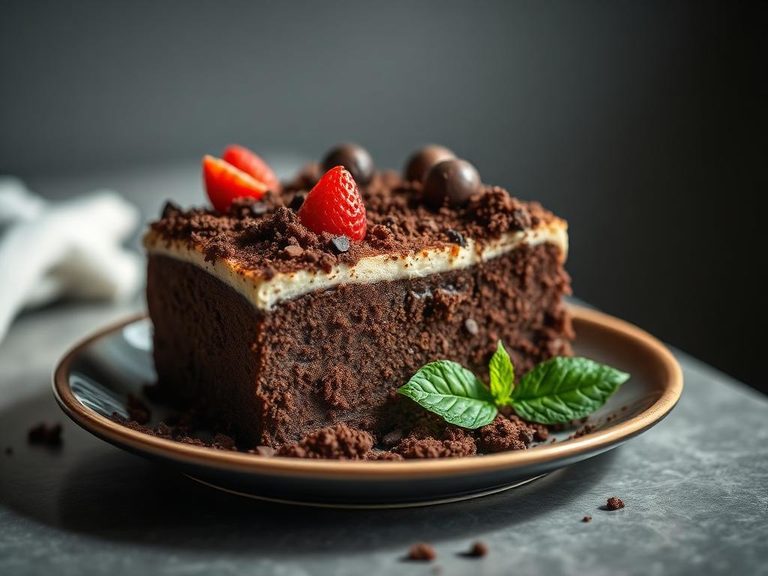
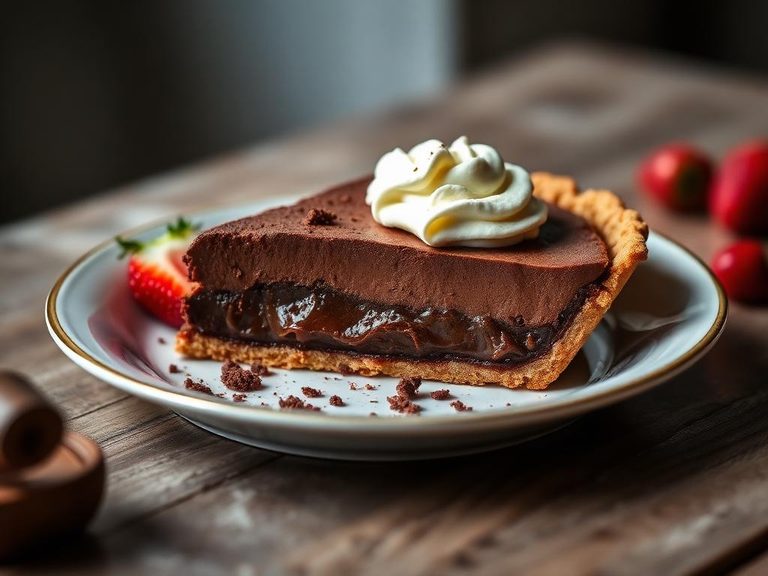
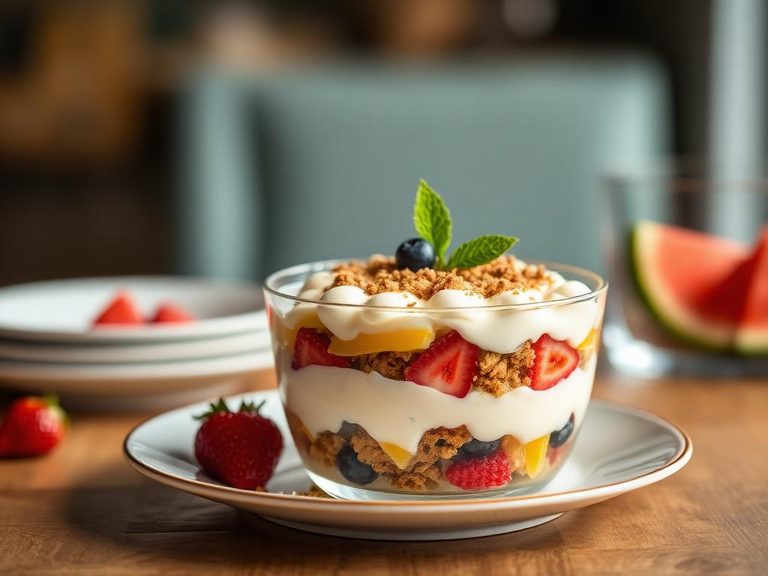

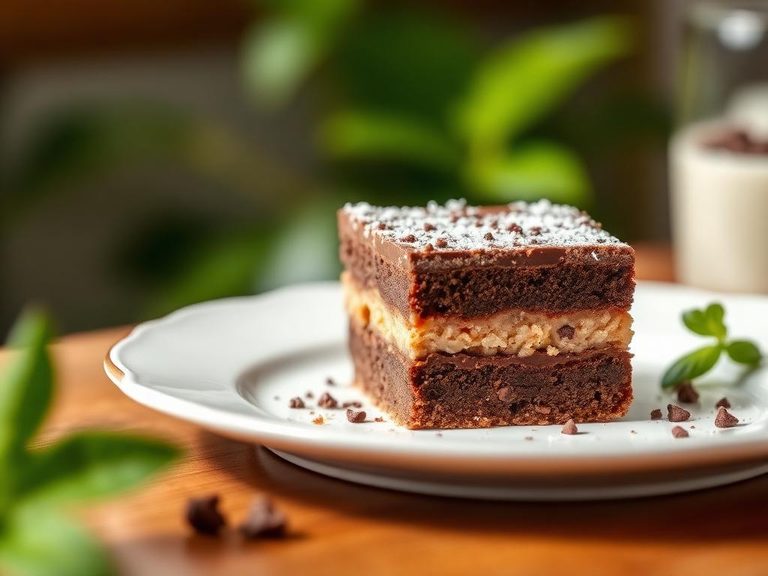
🌍 Where it's eaten
💡 Did you know?
The first commercially prepared, instant pudding mix was introduced by the American company Jell-O in 1953, revolutionizing home dessert-making by eliminating the need to cook egg yolks and cornstarch.
Full nutrition (USDA data · scales with serving)
| Water | 3.2 g |
| Energy | 378 kcal |
| Energy | 1581 kj |
| Protein | 2.3 g |
| Total lipid (fat) | 1.9 g |
| Ash | 4.7 g |
| Carbohydrate, by difference | 87.9 g |
| Fiber, total dietary | 3.6 g |
| Total Sugars | 67.9 g |
| Calcium, Ca | 12.0 mg |
| Iron, Fe | 1.3 mg |
| Magnesium, Mg | 45.0 mg |
| Phosphorus, P | 72.0 mg |
| Potassium, K | 236 mg |
| Sodium, Na | 1771 mg |
| Zinc, Zn | 0.62 mg |
| Copper, Cu | 0.35 mg |
| Manganese, Mn | 0.37 mg |
| Selenium, Se | 2.5 ug |
| Vitamin C, total ascorbic acid | 0.00 mg |
| Thiamin | 0.01 mg |
| Riboflavin | 0.06 mg |
| Niacin | 0.23 mg |
| Pantothenic acid | 0.03 mg |
| Vitamin B-6 | 0.01 mg |
| Folate, total | 3.0 ug |
| Folic acid | 0.00 ug |
| Folate, food | 3.0 ug |
| Folate, DFE | 3.0 ug |
| Choline, total | 3.4 mg |
| Vitamin B-12 | 0.00 ug |
| Vitamin B-12, added | 0.00 ug |
| Vitamin A, RAE | 0.00 ug |
| Retinol | 0.00 ug |
| Carotene, beta | 0.00 ug |
| Carotene, alpha | 0.00 ug |
| Cryptoxanthin, beta | 0.00 ug |
| Vitamin A, IU | 0.00 iu |
| Lycopene | 0.00 ug |
| Lutein + zeaxanthin | 4.0 ug |
| Vitamin E (alpha-tocopherol) | 0.07 mg |
| Vitamin E, added | 0.00 mg |
| Vitamin D (D2 + D3), International Units | 0.00 iu |
| Vitamin D (D2 + D3) | 0.00 ug |
| Vitamin K (phylloquinone) | 1.5 ug |
| Alcohol, ethyl | 0.00 g |
| Caffeine | 7.0 mg |
| Theobromine | 245 mg |
Fat & fatty acid profile (per 100g)
| Fatty acids, total saturated | 0.82 g |
| SFA 4:0 | 0.00 g |
| SFA 6:0 | 0.00 g |
| SFA 8:0 | 0.00 g |
| SFA 10:0 | 0.00 g |
| SFA 12:0 | 0.00 g |
| SFA 14:0 | 0.00 g |
| SFA 16:0 | 0.41 g |
| SFA 18:0 | 0.40 g |
| Fatty acids, total monounsaturated | 0.49 g |
| MUFA 16:1 | 0.00 g |
| MUFA 18:1 | 0.48 g |
| MUFA 20:1 | 0.00 g |
| MUFA 22:1 | 0.00 g |
| Fatty acids, total polyunsaturated | 0.35 g |
| PUFA 18:2 | 0.31 g |
| PUFA 18:3 | 0.03 g |
| PUFA 18:4 | 0.00 g |
| PUFA 20:4 | 0.00 g |
| PUFA 20:5 n-3 (EPA) | 0.00 g |
| PUFA 22:5 n-3 (DPA) | 0.00 g |
| PUFA 22:6 n-3 (DHA) | 0.00 g |
| Cholesterol | 0.00 mg |
Amino acid profile (per 100g)
Estimated from Puddings, rice, dry mix, prepared with 2% milk — USDA does not publish this profile for Puddings.
| Tryptophan | 0.04 g |
| Threonine | 0.13 g |
| Isoleucine | 0.17 g |
| Leucine | 0.27 g |
| Lysine | 0.22 g |
| Methionine | 0.07 g |
| Cystine | 0.03 g |
| Phenylalanine | 0.14 g |
| Tyrosine | 0.14 g |
| Valine | 0.19 g |
| Arginine | 0.10 g |
| Histidine | 0.07 g |
| Alanine | 0.10 g |
| Aspartic acid | 0.21 g |
| Glutamic acid | 0.58 g |
| Glycine | 0.06 g |
| Proline | 0.27 g |
| Serine | 0.15 g |
FAQ
How does instant pudding mix differ from cook-and-serve?
Instant pudding uses modified starches that thicken when whisked with cold milk, requiring no heat. Cook-and-serve pudding relies on traditional starches that must be heated to activate thickening and often contains eggs for a richer, custard-like texture.
Can I use a non-dairy milk like almond or oat milk?
Yes, but the results vary. The pudding may not set as firmly due to lower protein and fat content, and the flavor will change. Using a barista-style or full-fat version of the non-dairy milk can improve texture.
Why is my pudding lumpy?
Lumps often form if the mix isn't fully incorporated before adding milk, or if the milk is added too quickly. To prevent this, whisk the dry mix with a small amount of milk to form a smooth paste first, then gradually whisk in the remaining milk.
Nutrient density (calculated · NRF9.3)
Nutrient Rich Foods index: beneficial nutrients (protein, fiber, vitamins, minerals) minus saturated fat, added sugar & sodium, per 100 kcal.
NRF9.3 index — Fulgoni, Keast & Drewnowski, 2009. Computed from USDA nutrients.
Weight-loss friendliness (composite index)
Energy density 3.78 kcal/g · 2% calories from protein · 3.6 g fiber · 67.9 g sugar per 100 g.
Composite of energy density (Rolls et al., 1999), protein & fiber satiety, minus sugar. A calculated heuristic — ranks satiety-per-calorie, not a clinical measure.
Dietary load (calculated from USDA values)
Potential renal acid load. Positive = acid-forming, negative = alkaline-forming.
Sodium-to-potassium ratio: 7.50 (lower is better — aim for ≤ 1)
Sodium:potassium per WHO potassium guidance. Computed from USDA nutrients.