

Pineapple, frozen, chunks, sweetened
Whole food · Fruits and Fruit Juices

Photo: Wikipedia
Sweetened frozen pineapple chunks are pre-cut, flash-frozen gems of the tropical fruit, preserving their juicy, fibrous texture and bright, tangy-sweet flavor. Nutritionally, they are a concentrated source of quick energy from carbohydrates, primarily natural sugars, with minimal fat or protein. The freezing process locks in the fruit's vibrant color and key nutrients like vitamin C, making them a convenient year-round treat.
Calorie split: 2% protein · 97% carbs · 1% fat
↓ Full nutrition💚 Why it's loved
People adore the burst of tropical sweetness and refreshing, juicy texture it provides straight from the freezer, acting as a healthy alternative to candy or sorbet. Its versatility shines in everything from smoothies and cocktails to grilled desserts and savory salsas, evoking feelings of summer and vacation.
⚠️ Watch-outs & how to enjoy it better
The high sugar content (21.1g per 100g) can cause rapid blood-sugar spikes, making portion control important for those managing diabetes or insulin resistance. To counteract this, pair a serving with a source of protein or healthy fat (like Greek yogurt or nuts) to slow sugar absorption. Additionally, the enzyme bromelain in pineapple can irritate the mouths of some individuals; cooking or using frozen (which denatures some enzyme) can reduce this effect.
Key benefits
- Provides quick energy from natural sugars and carbohydrates
- Good source of vitamin C, an antioxidant that supports immune function
- Contains manganese, essential for bone health and metabolism
- Offers dietary fiber, aiding in digestive health
- Convenient and reduces food waste, available year-round
🍽️ Popular dishes
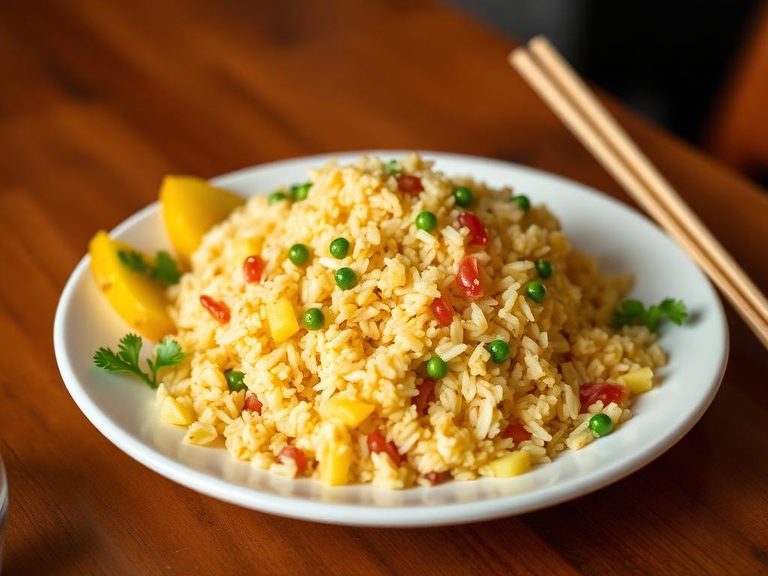
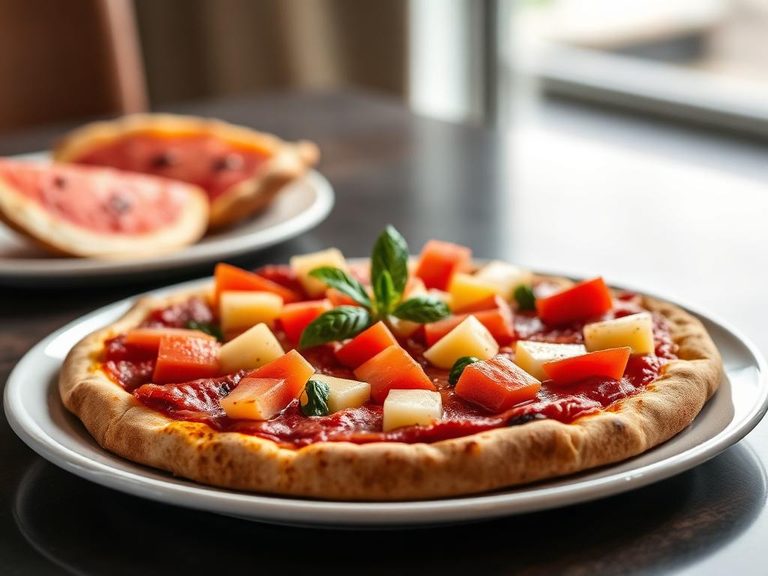
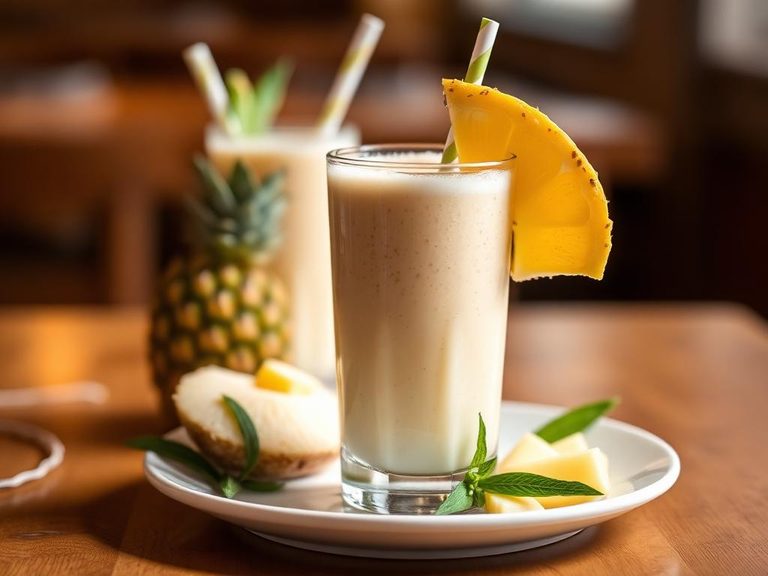
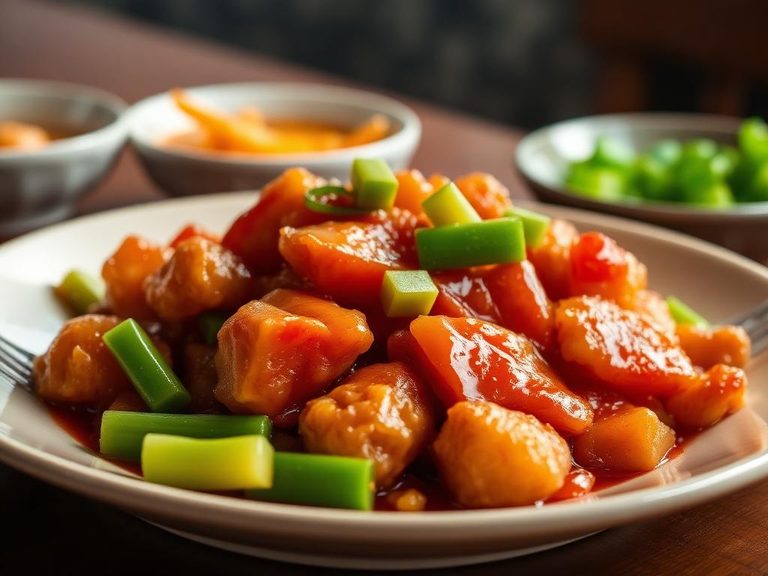
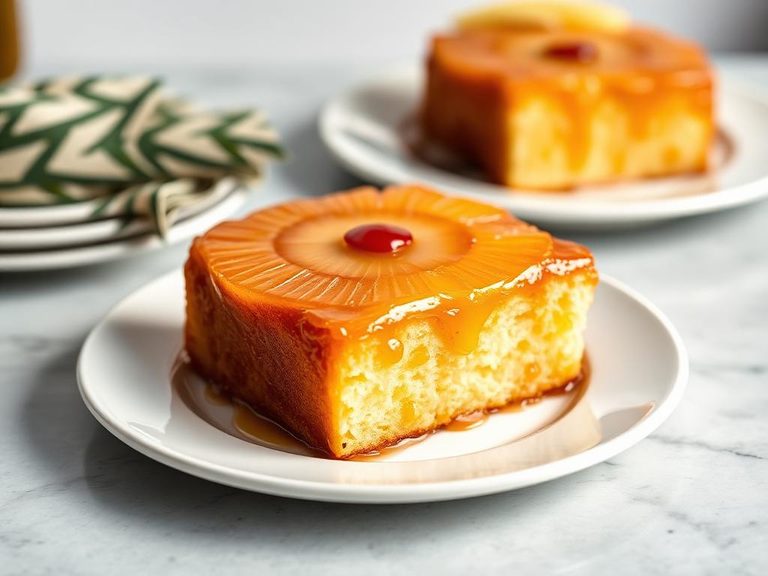
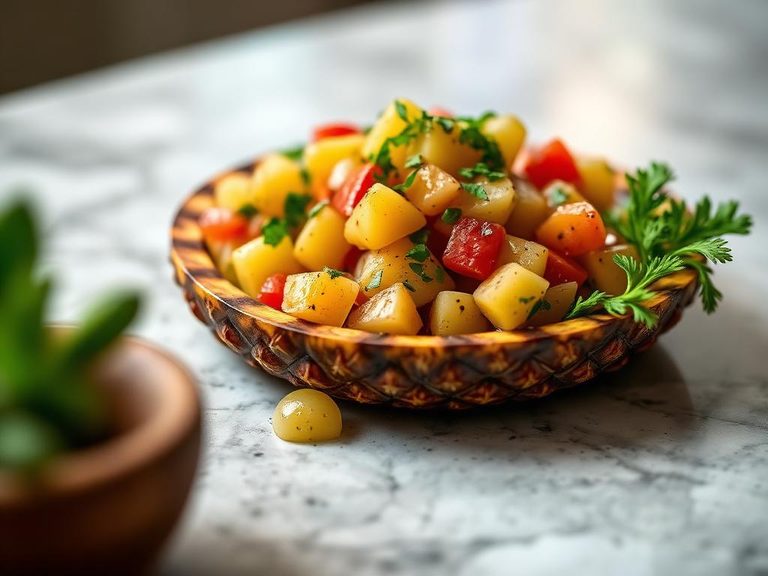
🌍 Where it's eaten
💡 Did you know?
Pineapple is one of the few foods that contains the enzyme bromelain, which can break down proteins and is used as a natural meat tenderizer.
Full nutrition (USDA data · scales with serving)
| Water | 77.1 g |
| Energy | 86.0 kcal |
| Energy | 360 kj |
| Protein | 0.40 g |
| Total lipid (fat) | 0.10 g |
| Ash | 0.20 g |
| Carbohydrate, by difference | 22.2 g |
| Fiber, total dietary | 1.1 g |
| Total Sugars | 21.1 g |
| Calcium, Ca | 9.0 mg |
| Iron, Fe | 0.40 mg |
| Magnesium, Mg | 10.0 mg |
| Phosphorus, P | 4.0 mg |
| Potassium, K | 100 mg |
| Sodium, Na | 2.0 mg |
| Zinc, Zn | 0.11 mg |
| Copper, Cu | 0.10 mg |
| Manganese, Mn | 1.1 mg |
| Selenium, Se | 0.10 ug |
| Vitamin C, total ascorbic acid | 8.0 mg |
| Thiamin | 0.10 mg |
| Riboflavin | 0.03 mg |
| Niacin | 0.30 mg |
| Pantothenic acid | 0.10 mg |
| Vitamin B-6 | 0.07 mg |
| Folate, total | 11.0 ug |
| Folic acid | 0.00 ug |
| Folate, food | 11.0 ug |
| Folate, DFE | 11.0 ug |
| Choline, total | 4.9 mg |
| Vitamin B-12 | 0.00 ug |
| Vitamin B-12, added | 0.00 ug |
| Vitamin A, RAE | 2.0 ug |
| Retinol | 0.00 ug |
| Carotene, beta | 18.0 ug |
| Carotene, alpha | 0.00 ug |
| Cryptoxanthin, beta | 0.00 ug |
| Vitamin A, IU | 30.0 iu |
| Lycopene | 0.00 ug |
| Lutein + zeaxanthin | 0.00 ug |
| Vitamin E (alpha-tocopherol) | 0.02 mg |
| Vitamin E, added | 0.00 mg |
| Vitamin D (D2 + D3), International Units | 0.00 iu |
| Vitamin D (D2 + D3) | 0.00 ug |
| Vitamin K (phylloquinone) | 0.70 ug |
| Alcohol, ethyl | 0.00 g |
| Caffeine | 0.00 mg |
| Theobromine | 0.00 mg |
Fat & fatty acid profile (per 100g)
| Fatty acids, total saturated | 0.01 g |
| SFA 4:0 | 0.00 g |
| SFA 6:0 | 0.00 g |
| SFA 8:0 | 0.00 g |
| SFA 10:0 | 0.00 g |
| SFA 12:0 | 0.00 g |
| SFA 14:0 | 0.00 g |
| SFA 16:0 | 0.00 g |
| SFA 18:0 | 0.00 g |
| Fatty acids, total monounsaturated | 0.01 g |
| MUFA 16:1 | 0.00 g |
| MUFA 18:1 | 0.01 g |
| MUFA 20:1 | 0.00 g |
| MUFA 22:1 | 0.00 g |
| Fatty acids, total polyunsaturated | 0.04 g |
| PUFA 18:2 | 0.02 g |
| PUFA 18:3 | 0.01 g |
| PUFA 18:4 | 0.00 g |
| PUFA 20:4 | 0.00 g |
| PUFA 20:5 n-3 (EPA) | 0.00 g |
| PUFA 22:5 n-3 (DPA) | 0.00 g |
| PUFA 22:6 n-3 (DHA) | 0.00 g |
| Fatty acids, total trans | 0.00 g |
| Cholesterol | 0.00 mg |
Amino acid profile (per 100g)
| Tryptophan | 0.01 g |
| Threonine | 0.01 g |
| Isoleucine | 0.01 g |
| Leucine | 0.02 g |
| Lysine | 0.03 g |
| Methionine | 0.01 g |
| Cystine | 0.00 g |
| Phenylalanine | 0.01 g |
| Tyrosine | 0.01 g |
| Valine | 0.02 g |
| Arginine | 0.02 g |
| Histidine | 0.01 g |
| Alanine | 0.02 g |
| Aspartic acid | 0.06 g |
| Glutamic acid | 0.05 g |
| Glycine | 0.02 g |
| Proline | 0.01 g |
| Serine | 0.03 g |
FAQ
Is frozen pineapple as nutritious as fresh?
Yes, flash-freezing preserves most nutrients, including vitamin C and fiber, often better than fresh pineapple that has traveled long distances. The primary difference is texture, as freezing can make the fruit slightly softer upon thawing.
Can I eat the core of frozen pineapple chunks?
While edible, the core is very tough and fibrous even when frozen. Most people discard it or use it to infuse water or syrups. It does contain a higher concentration of bromelain.
How do I prevent frozen pineapple from becoming mushy in recipes?
For dishes like stir-fries or salads, add frozen chunks at the very end of cooking or use them directly from frozen. For smoothies, using them frozen is ideal for a thick, frosty texture without added ice.
Nutrient density (calculated · NRF9.3)
Nutrient Rich Foods index: beneficial nutrients (protein, fiber, vitamins, minerals) minus saturated fat, added sugar & sodium, per 100 kcal.
NRF9.3 index — Fulgoni, Keast & Drewnowski, 2009. Computed from USDA nutrients.
Weight-loss friendliness (composite index)
Energy density 0.86 kcal/g · 2% calories from protein · 1.1 g fiber · 21.1 g sugar per 100 g.
Composite of energy density (Rolls et al., 1999), protein & fiber satiety, minus sugar. A calculated heuristic — ranks satiety-per-calorie, not a clinical measure.
Dietary load (calculated from USDA values)
Potential renal acid load. Positive = acid-forming, negative = alkaline-forming.
Sodium-to-potassium ratio: 0.02 (lower is better — aim for ≤ 1)
Sodium:potassium per WHO potassium guidance. Computed from USDA nutrients.