

Pie crust, refrigerated, regular, unbaked
Whole food · Baked Products

Photo: Wikipedia
This is a pre-made, unbaked dough sheet, typically sold in a roll, designed for convenience. It offers a classic, buttery, and flaky texture once baked, with a neutral, slightly savory flavor that acts as a perfect canvas. Nutritionally, it's a dense source of energy from fats and refined carbohydrates, with minimal protein or fiber.
Calorie split: 3% protein · 46% carbs · 51% fat
↓ Full nutrition💚 Why it's loved
People adore it for its unmatched convenience, turning ambitious baking projects into achievable weeknight tasks. It's the reliable, flaky backbone of comfort food classics, from apple pie to pot pie, evoking a sense of home and tradition.
⚠️ Watch-outs & how to enjoy it better
It is high in calories, refined carbs, and sodium, with a low nutritional density, which can contribute to blood sugar spikes if not balanced. To counteract this, pair slices with protein-rich fillings like chicken or beans, or use it sparingly as a top crust over a vegetable-heavy filling rather than a full double crust.
Key benefits
- Saves significant preparation time for baking
- Provides a consistent, reliable base for pies and tarts
- Offers a high-calorie, energy-dense foundation for meals
- Its neutral flavor complements both sweet and savory fillings
🍽️ Popular dishes
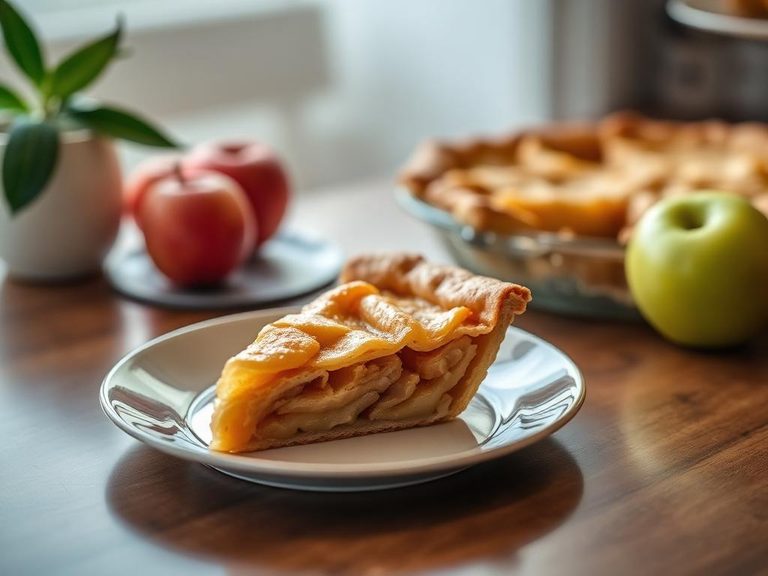
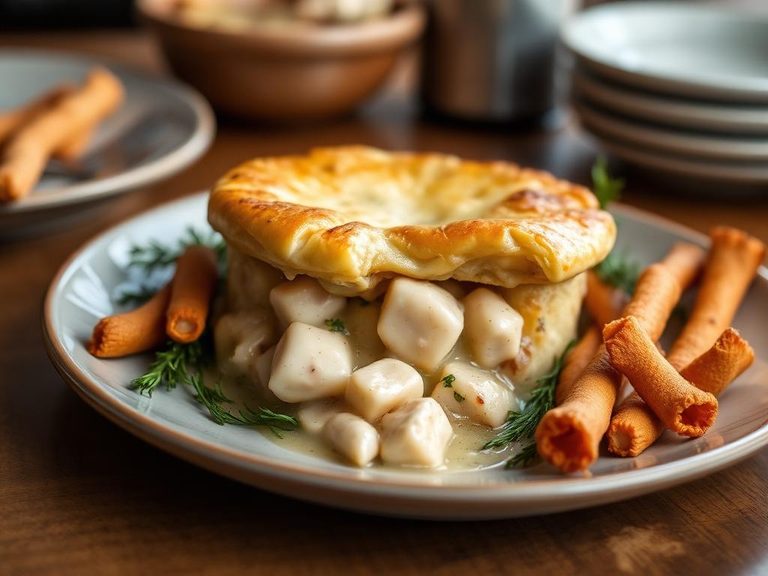
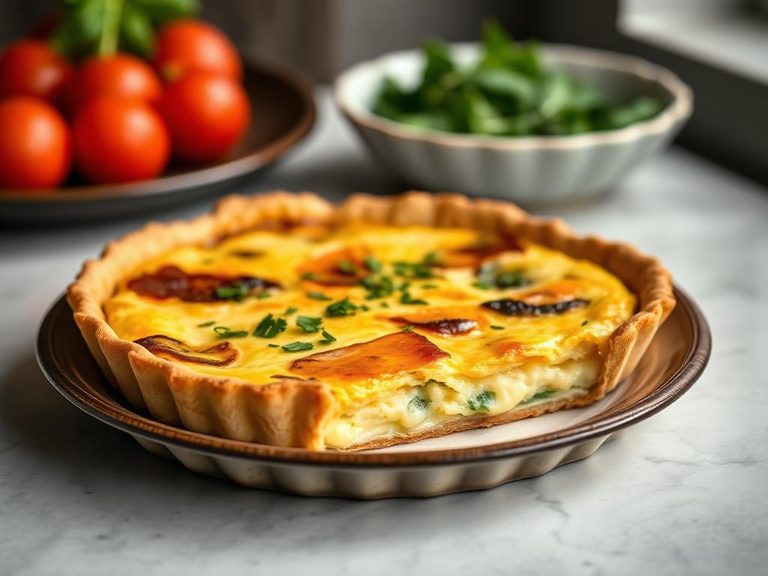


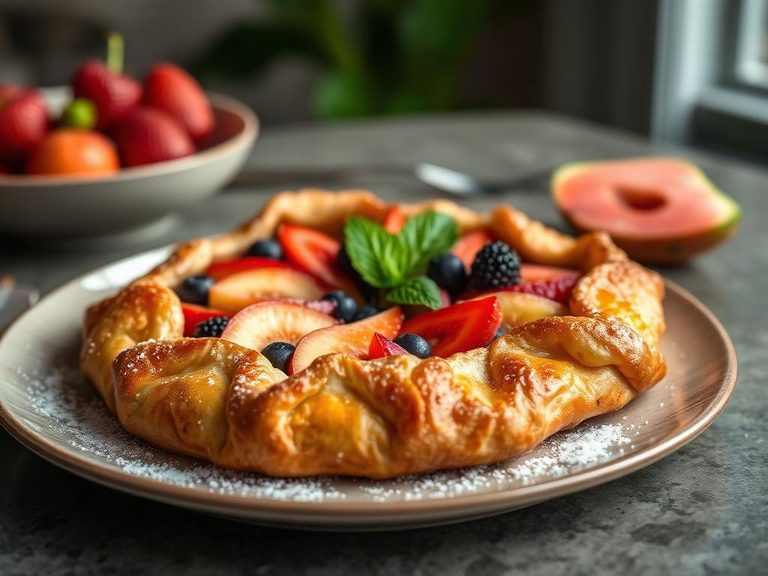
🌍 Where it's eaten
💡 Did you know?
The modern, easy-to-unroll refrigerated pie crust was popularized in the United States in the 1940s, a direct result of post-WWII technology that adapted military packaging for commercial food products.
Full nutrition (USDA data · scales with serving)
| Water | 19.3 g |
| Energy | 445 kcal |
| Energy | 1864 kj |
| Protein | 3.0 g |
| Total lipid (fat) | 25.5 g |
| Ash | 1.2 g |
| Carbohydrate, by difference | 51.1 g |
| Fiber, total dietary | 1.8 g |
| Starch | 44.9 g |
| Calcium, Ca | 10.0 mg |
| Iron, Fe | 1.0 mg |
| Magnesium, Mg | 8.0 mg |
| Phosphorus, P | 45.0 mg |
| Potassium, K | 73.0 mg |
| Sodium, Na | 409 mg |
| Zinc, Zn | 0.20 mg |
| Copper, Cu | 0.04 mg |
| Manganese, Mn | 0.18 mg |
| Selenium, Se | 4.0 ug |
| Thiamin | 0.07 mg |
| Riboflavin | 0.05 mg |
| Niacin | 1.1 mg |
| Pantothenic acid | 0.31 mg |
| Vitamin B-6 | 0.02 mg |
| Folate, total | 25.0 ug |
| Folic acid | 18.0 ug |
| Folate, food | 7.0 ug |
| Folate, DFE | 37.0 ug |
| Vitamin B-12 | 0.00 ug |
| Vitamin E (alpha-tocopherol) | 0.05 mg |
| Tocopherol, beta | 0.01 mg |
| Tocopherol, gamma | 0.14 mg |
| Tocopherol, delta | 0.02 mg |
| Tocotrienol, alpha | 0.01 mg |
| Tocotrienol, beta | 0.00 mg |
| Tocotrienol, gamma | 0.01 mg |
| Tocotrienol, delta | 0.00 mg |
| Vitamin K (phylloquinone) | 0.00 ug |
| Vitamin K (Dihydrophylloquinone) | 0.00 ug |
| Vitamin K (Menaquinone-4) | 4.0 ug |
Fat & fatty acid profile (per 100g)
| Fatty acids, total saturated | 9.6 g |
| SFA 8:0 | 0.00 g |
| SFA 10:0 | 0.00 g |
| SFA 12:0 | 0.00 g |
| SFA 14:0 | 0.34 g |
| SFA 15:0 | 0.00 g |
| SFA 16:0 | 5.7 g |
| SFA 17:0 | 0.10 g |
| SFA 18:0 | 3.4 g |
| SFA 20:0 | 0.06 g |
| SFA 22:0 | 0.00 g |
| Fatty acids, total monounsaturated | 10.2 g |
| MUFA 14:1 | 0.00 g |
| MUFA 15:1 | 0.00 g |
| MUFA 16:1 | 0.53 g |
| MUFA 18:1 | 9.5 g |
| MUFA 20:1 | 0.18 g |
| Fatty acids, total polyunsaturated | 3.3 g |
| PUFA 18:2 | 3.0 g |
| PUFA 18:3 | 0.13 g |
| PUFA 18:3 n-3 c,c,c (ALA) | 0.13 g |
| PUFA 18:3 n-6 c,c,c | 0.00 g |
| PUFA 20:2 n-6 c,c | 0.12 g |
| PUFA 20:3 | 0.00 g |
| PUFA 20:4 | 0.04 g |
Amino acid profile (per 100g)
| Tryptophan | 0.03 g |
| Threonine | 0.05 g |
| Isoleucine | 0.10 g |
| Leucine | 0.18 g |
| Lysine | 0.08 g |
| Methionine | 0.04 g |
| Cystine | 0.04 g |
| Phenylalanine | 0.12 g |
| Tyrosine | 0.05 g |
| Valine | 0.13 g |
| Arginine | 0.09 g |
| Histidine | 0.05 g |
| Alanine | 0.09 g |
| Aspartic acid | 0.14 g |
| Glutamic acid | 0.92 g |
| Glycine | 0.11 g |
| Proline | 0.38 g |
| Serine | 0.13 g |
| Hydroxyproline | 0.00 g |
FAQ
Can I use this crust for a savory pot pie?
Absolutely. Its neutral, slightly salty flavor is ideal for savory applications like pot pies, quiches, or hand pies. Just be mindful of the sodium content if your filling is also salty.
How do I prevent a soggy bottom crust?
Pre-bake (blind bake) the crust for 10-15 minutes with pie weights before adding a wet filling. You can also brush the unbaked crust with a beaten egg white to create a moisture barrier.
Is it the same as puff pastry?
No. Pie crust is a shortcrust pastry, meant to be sturdy and flaky. Puff pastry is laminated with butter to create hundreds of airy, delicate layers and is much lighter and richer.
Nutrient density (calculated · NRF9.3)
Nutrient Rich Foods index: beneficial nutrients (protein, fiber, vitamins, minerals) minus saturated fat, added sugar & sodium, per 100 kcal.
NRF9.3 index — Fulgoni, Keast & Drewnowski, 2009. Computed from USDA nutrients.
Weight-loss friendliness (composite index)
Energy density 4.45 kcal/g · 3% calories from protein · 1.8 g fiber · 0.0 g sugar per 100 g.
Composite of energy density (Rolls et al., 1999), protein & fiber satiety, minus sugar. A calculated heuristic — ranks satiety-per-calorie, not a clinical measure.
Dietary load (calculated from USDA values)
Potential renal acid load. Positive = acid-forming, negative = alkaline-forming.
Sodium-to-potassium ratio: 5.60 (lower is better — aim for ≤ 1)
Sodium:potassium per WHO potassium guidance. Computed from USDA nutrients.