

Pie crust, deep dish, frozen, unbaked, made with enriched flour
Whole food · Baked Products

Photo: Wikipedia
A deep-dish pie crust is a thick, sturdy pastry shell, typically sold frozen and unbaked, designed to hold substantial fillings. Made from enriched flour, it has a tender, flaky texture when baked and a rich, buttery flavor. Nutritionally, it's a dense source of energy, primarily from fats and refined carbohydrates.
Calorie split: 5% protein · 40% carbs · 55% fat
↓ Full nutrition💚 Why it's loved
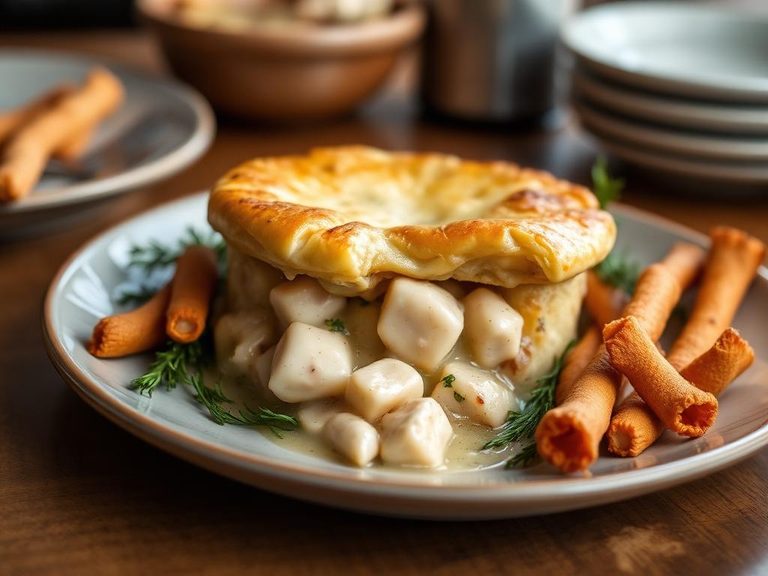
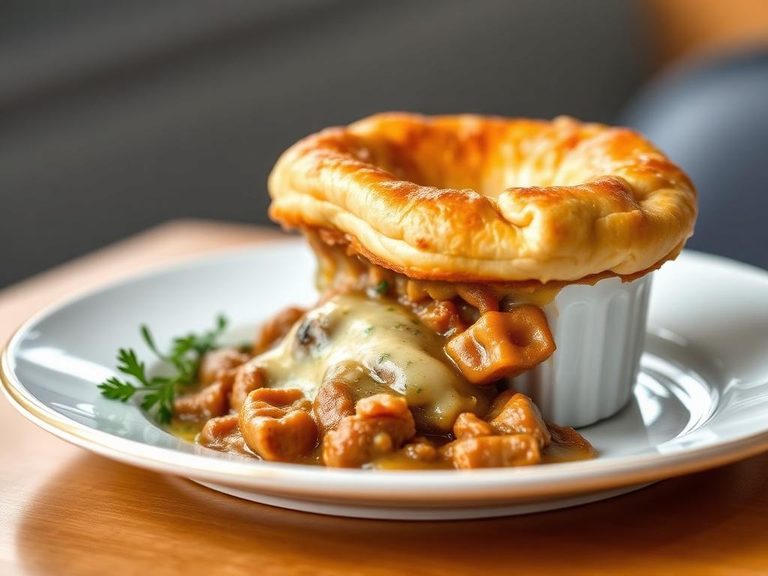
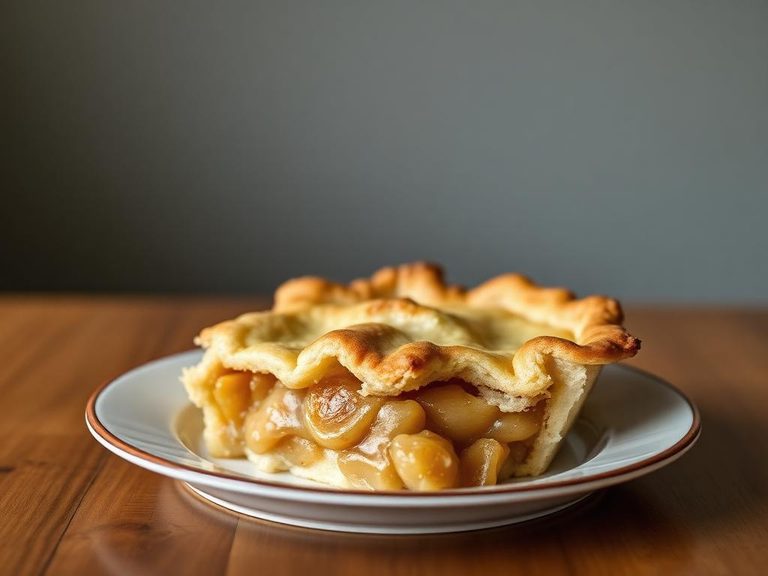
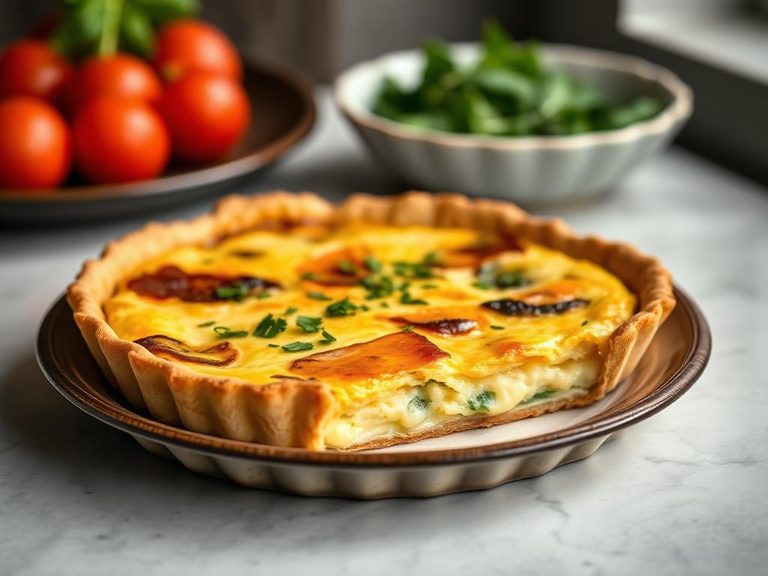
People love it for the reliable, flaky foundation it provides for comfort foods like pot pies and quiches. Its versatility allows it to be the star of both savory dinners and sweet desserts, embodying home-style baking.
⚠️ Watch-outs & how to enjoy it better
This crust is high in calories, refined carbs, and fats, which can contribute to blood-sugar spikes and isn't ideal for those monitoring caloric intake. It often contains common allergens like wheat (gluten) and may have added sodium. To counteract, pair a slice with a protein-rich filling (like chicken or beans) and a large side of non-starchy vegetables to balance the meal and slow digestion.
Key benefits
- Provides a high-calorie, energy-dense base for meals
- Enriched flour adds B vitamins and iron
- Convenient, pre-made foundation for quick baking
- Sturdy structure supports heavy, wet fillings
- Offers a classic, flaky texture when baked properly
🍽️ Popular dishes
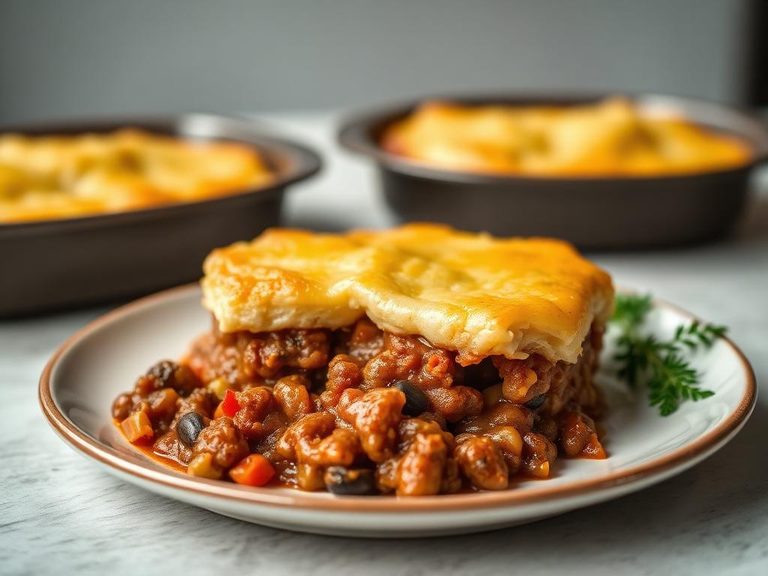

🌍 Where it's eaten
💡 Did you know?
The 'deep dish' style is particularly associated with Chicago, not just for pizza but also for its iconic, thick-crust fruit pies that require a sturdier shell to hold generous fillings.
Full nutrition (USDA data · scales with serving)
| Water | 17.8 g |
| Energy | 468 kcal |
| Energy | 1958 kj |
| Protein | 5.5 g |
| Total lipid (fat) | 28.7 g |
| Ash | 1.2 g |
| Carbohydrate, by difference | 46.8 g |
| Fiber, total dietary | 1.4 g |
| Starch | 41.7 g |
| Calcium, Ca | 20.0 mg |
| Iron, Fe | 2.3 mg |
| Magnesium, Mg | 15.0 mg |
| Phosphorus, P | 68.0 mg |
| Potassium, K | 91.0 mg |
| Sodium, Na | 353 mg |
| Zinc, Zn | 0.46 mg |
| Copper, Cu | 0.08 mg |
| Manganese, Mn | 0.48 mg |
| Selenium, Se | 4.5 ug |
| Thiamin | 0.23 mg |
| Riboflavin | 0.14 mg |
| Niacin | 2.5 mg |
| Pantothenic acid | 0.36 mg |
| Vitamin B-6 | 0.05 mg |
| Folate, total | 77.0 ug |
| Folic acid | 48.0 ug |
| Folate, food | 29.0 ug |
| Folate, DFE | 111 ug |
| Vitamin B-12 | 0.00 ug |
| Vitamin E (alpha-tocopherol) | 1.2 mg |
| Tocopherol, beta | 0.12 mg |
| Tocopherol, gamma | 8.6 mg |
| Tocopherol, delta | 2.5 mg |
| Tocotrienol, alpha | 0.04 mg |
| Tocotrienol, beta | 0.00 mg |
| Tocotrienol, gamma | 0.00 mg |
| Tocotrienol, delta | 0.00 mg |
| Vitamin K (phylloquinone) | 15.0 ug |
| Vitamin K (Dihydrophylloquinone) | 51.7 ug |
| Vitamin K (Menaquinone-4) | 1.2 ug |
Fat & fatty acid profile (per 100g)
| Fatty acids, total saturated | 8.1 g |
| SFA 8:0 | 0.00 g |
| SFA 10:0 | 0.00 g |
| SFA 12:0 | 0.00 g |
| SFA 14:0 | 0.16 g |
| SFA 15:0 | 0.00 g |
| SFA 16:0 | 4.5 g |
| SFA 17:0 | 0.05 g |
| SFA 18:0 | 3.3 g |
| SFA 20:0 | 0.09 g |
| SFA 22:0 | 0.06 g |
| Fatty acids, total monounsaturated | 14.5 g |
| MUFA 14:1 | 0.00 g |
| MUFA 15:1 | 0.00 g |
| MUFA 16:1 | 0.25 g |
| MUFA 17:1 | 0.00 g |
| MUFA 18:1 | 14.1 g |
| MUFA 20:1 | 0.12 g |
| Fatty acids, total polyunsaturated | 3.5 g |
| PUFA 18:2 | 3.3 g |
| PUFA 18:3 | 0.12 g |
| PUFA 18:3 n-3 c,c,c (ALA) | 0.12 g |
| PUFA 18:3 n-6 c,c,c | 0.00 g |
| PUFA 20:2 n-6 c,c | 0.06 g |
| PUFA 20:3 | 0.00 g |
| PUFA 20:4 | 0.01 g |
Amino acid profile (per 100g)
| Tryptophan | 0.05 g |
| Threonine | 0.11 g |
| Isoleucine | 0.20 g |
| Leucine | 0.38 g |
| Lysine | 0.14 g |
| Methionine | 0.08 g |
| Cystine | 0.11 g |
| Phenylalanine | 0.25 g |
| Tyrosine | 0.10 g |
| Valine | 0.25 g |
| Arginine | 0.20 g |
| Histidine | 0.10 g |
| Alanine | 0.17 g |
| Aspartic acid | 0.26 g |
| Glutamic acid | 1.8 g |
| Glycine | 0.21 g |
| Proline | 0.71 g |
| Serine | 0.27 g |
| Hydroxyproline | 0.00 g |
FAQ
How is a deep-dish pie crust different from a regular pie crust?
A deep-dish crust is thicker and taller, designed for pies with deeper, often wetter fillings like pot pies or deep-dish fruit pies. It uses a higher ratio of flour and fat to create a sturdier structure that won't get soggy.
Why is the crust sold unbaked?
Selling it unbaked and frozen preserves the texture and allows the crust to bake to a fresh, flaky finish in your oven. Pre-baking (blind baking) is often required for custard or cream pies to prevent a soggy bottom.
What does 'enriched flour' mean in the ingredients?
Enriched flour is refined wheat flour that has had certain nutrients, like B vitamins (thiamin, riboflavin, niacin) and iron, added back after processing. It improves nutritional value but is still a refined carbohydrate.
Nutrient density (calculated · NRF9.3)
Nutrient Rich Foods index: beneficial nutrients (protein, fiber, vitamins, minerals) minus saturated fat, added sugar & sodium, per 100 kcal.
NRF9.3 index — Fulgoni, Keast & Drewnowski, 2009. Computed from USDA nutrients.
Weight-loss friendliness (composite index)
Energy density 4.68 kcal/g · 5% calories from protein · 1.4 g fiber · 0.0 g sugar per 100 g.
Composite of energy density (Rolls et al., 1999), protein & fiber satiety, minus sugar. A calculated heuristic — ranks satiety-per-calorie, not a clinical measure.
Dietary load (calculated from USDA values)
Potential renal acid load. Positive = acid-forming, negative = alkaline-forming.
Sodium-to-potassium ratio: 3.88 (lower is better — aim for ≤ 1)
Sodium:potassium per WHO potassium guidance. Computed from USDA nutrients.