

Peanut butter, smooth, reduced fat
Whole food · Legumes and Legume Products
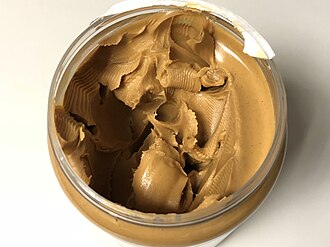
Photo: Wikipedia
Reduced-fat smooth peanut butter is a creamy, spreadable paste made from roasted peanuts, with some oil removed to lower the fat content. It offers a rich, nutty flavor and a velvety texture, while still providing a substantial protein boost (25.9g per 100g). This version is a practical choice for those seeking a balance between taste and a slightly lighter nutritional profile.
Calorie split: 19% protein · 26% carbs · 55% fat
↓ Full nutrition💚 Why it's loved
People love it for its classic, comforting taste and its incredible versatility—it's a staple in everything from sandwiches to sauces. It's deeply embedded in American food culture as a nostalgic, quick, and satisfying protein source for all ages.
⚠️ Watch-outs & how to enjoy it better
The reduced-fat version can sometimes have a slightly less rich mouthfeel and may contain added sugars or stabilizers to compensate for texture. It's a common allergen, and its carbohydrate content (35.65g per 100g) can cause blood-sugar spikes if eaten in large amounts alone. Counteract this by pairing it with fiber (like apple slices) or a fat source (like a small handful of almonds) to slow digestion, and practice portion control by measuring out a tablespoon.
Key benefits
- High in plant-based protein for muscle maintenance and satiety
- Source of dietary fiber to support digestive health
- Contains heart-healthy monounsaturated fats
- Provides essential minerals like magnesium and potassium
- Offers a convenient, calorie-dense energy source
🍽️ Popular dishes
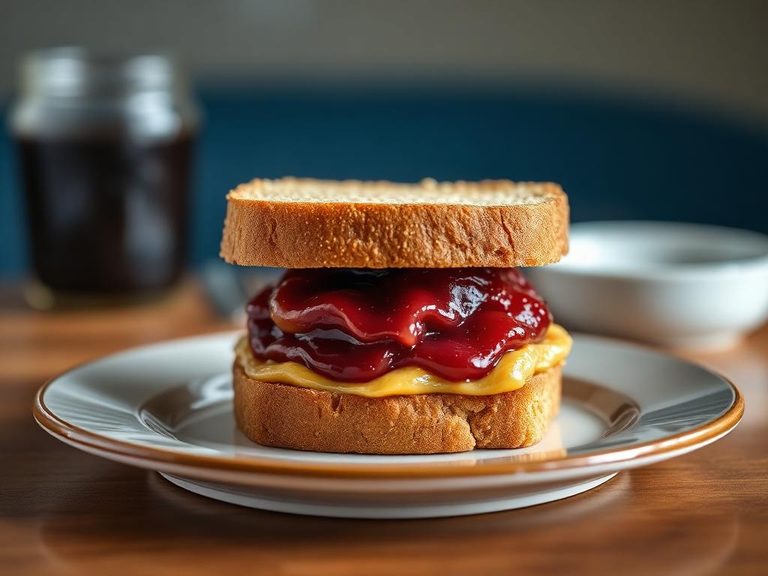
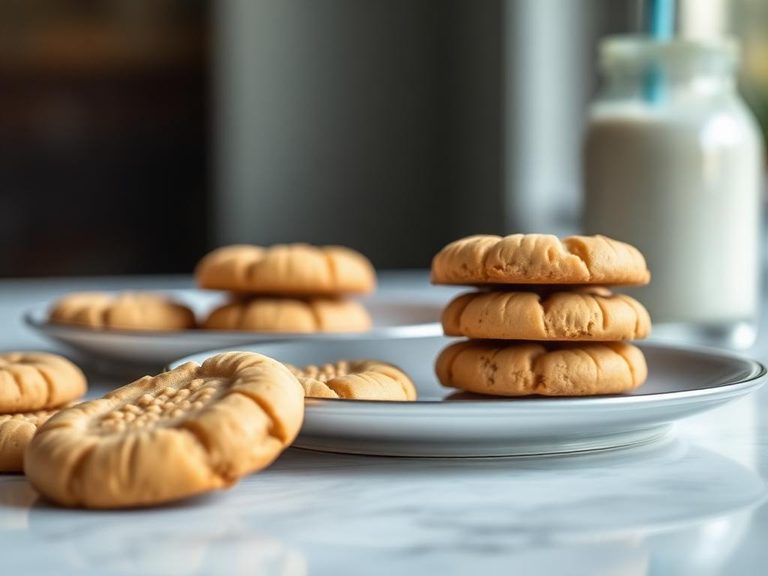
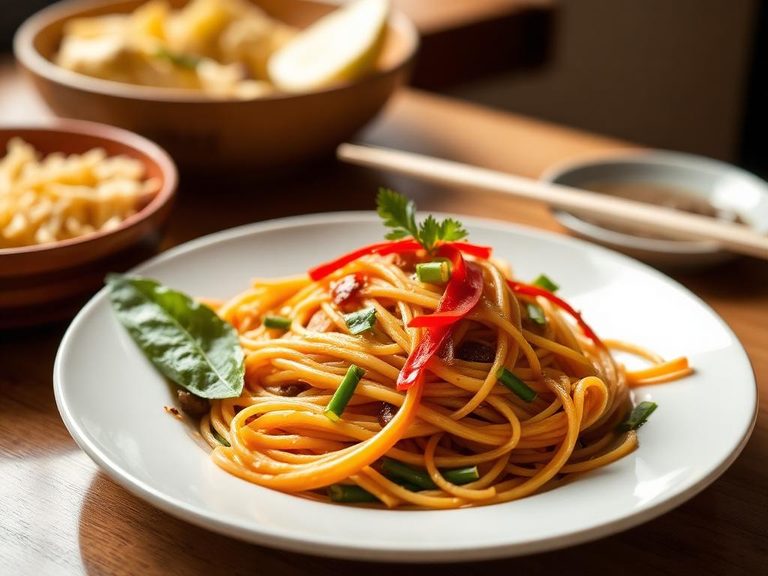
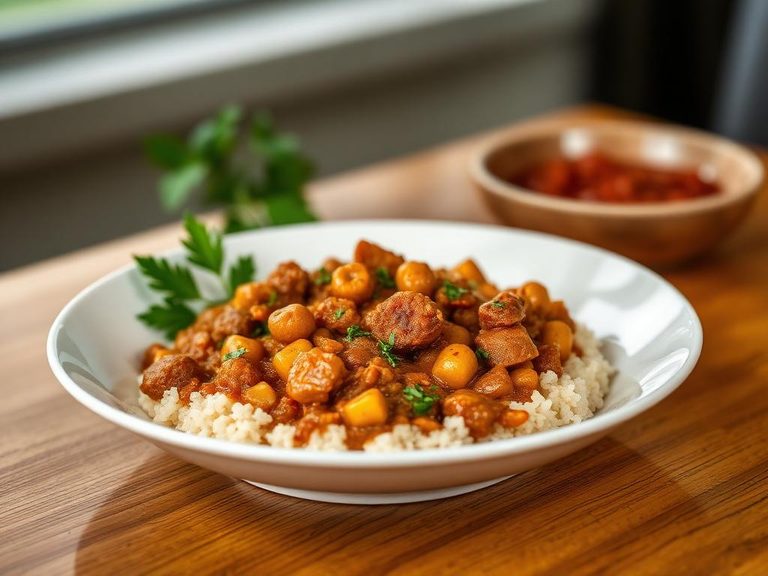
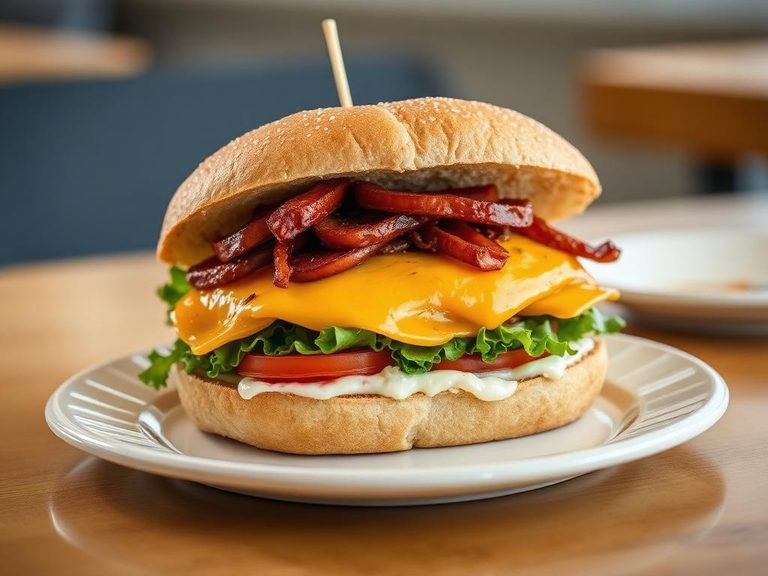
🌍 Where it's eaten
💡 Did you know?
It takes about 540 peanuts to make a single 12-ounce jar of peanut butter.
Full nutrition (USDA data · scales with serving)
| Water | 1.2 g |
| Energy | 520 kcal |
| Energy | 2174 kj |
| Protein | 25.9 g |
| Total lipid (fat) | 34.0 g |
| Ash | 3.3 g |
| Carbohydrate, by difference | 35.6 g |
| Fiber, total dietary | 5.2 g |
| Total Sugars | 9.3 g |
| Calcium, Ca | 35.0 mg |
| Iron, Fe | 1.9 mg |
| Magnesium, Mg | 170 mg |
| Phosphorus, P | 369 mg |
| Potassium, K | 669 mg |
| Sodium, Na | 540 mg |
| Zinc, Zn | 2.8 mg |
| Copper, Cu | 0.58 mg |
| Manganese, Mn | 1.5 mg |
| Selenium, Se | 7.5 ug |
| Vitamin C, total ascorbic acid | 0.00 mg |
| Thiamin | 0.27 mg |
| Riboflavin | 0.06 mg |
| Niacin | 14.6 mg |
| Pantothenic acid | 1.1 mg |
| Vitamin B-6 | 0.31 mg |
| Folate, total | 60.0 ug |
| Folic acid | 0.00 ug |
| Folate, food | 60.0 ug |
| Folate, DFE | 60.0 ug |
| Choline, total | 63.4 mg |
| Vitamin B-12 | 0.00 ug |
| Vitamin B-12, added | 0.00 ug |
| Vitamin A, RAE | 0.00 ug |
| Retinol | 0.00 ug |
| Carotene, beta | 0.00 ug |
| Carotene, alpha | 0.00 ug |
| Cryptoxanthin, beta | 0.00 ug |
| Vitamin A, IU | 0.00 iu |
| Lycopene | 0.00 ug |
| Lutein + zeaxanthin | 0.00 ug |
| Vitamin E (alpha-tocopherol) | 9.0 mg |
| Vitamin E, added | 0.00 mg |
| Vitamin D (D2 + D3), International Units | 0.00 iu |
| Vitamin D (D2 + D3) | 0.00 ug |
| Vitamin K (phylloquinone) | 0.60 ug |
| Alcohol, ethyl | 0.00 g |
| Caffeine | 0.00 mg |
| Theobromine | 0.00 mg |
Fat & fatty acid profile (per 100g)
| Fatty acids, total saturated | 5.8 g |
| SFA 4:0 | 0.00 g |
| SFA 6:0 | 0.00 g |
| SFA 8:0 | 0.00 g |
| SFA 10:0 | 0.00 g |
| SFA 12:0 | 0.01 g |
| SFA 14:0 | 0.14 g |
| SFA 16:0 | 3.8 g |
| SFA 18:0 | 1.8 g |
| Fatty acids, total monounsaturated | 16.2 g |
| MUFA 16:1 | 0.00 g |
| MUFA 18:1 | 15.9 g |
| MUFA 20:1 | 0.29 g |
| MUFA 22:1 | 0.00 g |
| Fatty acids, total polyunsaturated | 9.2 g |
| PUFA 18:2 | 9.1 g |
| PUFA 18:3 | 0.05 g |
| PUFA 18:4 | 0.00 g |
| PUFA 20:4 | 0.00 g |
| PUFA 20:5 n-3 (EPA) | 0.00 g |
| PUFA 22:5 n-3 (DPA) | 0.00 g |
| PUFA 22:6 n-3 (DHA) | 0.00 g |
| Cholesterol | 0.00 mg |
Amino acid profile (per 100g)
Estimated from Peanut Butter, smooth (Includes foods for USDA's Food Distribution Program) — USDA does not publish this profile for Peanut butter.
| Tryptophan | 0.23 g |
| Threonine | 0.52 g |
| Isoleucine | 0.61 g |
| Leucine | 1.5 g |
| Lysine | 0.67 g |
| Methionine | 0.26 g |
| Cystine | 0.23 g |
| Phenylalanine | 1.2 g |
| Tyrosine | 0.82 g |
| Valine | 0.77 g |
| Arginine | 2.7 g |
| Histidine | 0.55 g |
| Alanine | 0.91 g |
| Aspartic acid | 3.0 g |
| Glutamic acid | 5.0 g |
| Glycine | 1.4 g |
| Proline | 1.4 g |
| Serine | 1.5 g |
FAQ
How does reduced-fat peanut butter differ from regular?
Reduced-fat peanut butter has some of the natural peanut oil removed, which lowers the total fat and calorie count per serving. To maintain texture and flavor, manufacturers often add sugar, corn syrup, or hydrogenated oils, so it's important to check the ingredient label.
Is it a good source of protein for vegetarians?
Yes, it's an excellent source of plant-based protein, providing about 25.9g per 100g. It's a key protein source in many vegetarian and vegan diets, especially when paired with whole-grain bread or fruit.
Can it be part of a weight-loss diet?
Yes, in moderation. Its high protein and fiber content can promote fullness and help control appetite. However, it's calorie-dense, so sticking to a measured portion (like 1-2 tablespoons) is crucial.
Nutrient density (calculated · NRF9.3)
Nutrient Rich Foods index: beneficial nutrients (protein, fiber, vitamins, minerals) minus saturated fat, added sugar & sodium, per 100 kcal.
NRF9.3 index — Fulgoni, Keast & Drewnowski, 2009. Computed from USDA nutrients.
Weight-loss friendliness (composite index)
Energy density 5.20 kcal/g · 20% calories from protein · 5.2 g fiber · 9.3 g sugar per 100 g.
Composite of energy density (Rolls et al., 1999), protein & fiber satiety, minus sugar. A calculated heuristic — ranks satiety-per-calorie, not a clinical measure.
Dietary load (calculated from USDA values)
Potential renal acid load. Positive = acid-forming, negative = alkaline-forming.
Sodium-to-potassium ratio: 0.81 (lower is better — aim for ≤ 1)
Sodium:potassium per WHO potassium guidance. Computed from USDA nutrients.