

Peaches, dried, sulfured, stewed, without added sugar
Whole food · Fruits and Fruit Juices

Photo: Wikipedia
These are sun-dried peach halves, preserved with a sulfur treatment to maintain their vibrant golden-orange hue, then gently stewed in water. The result is a tender, plump texture with a concentrated, honeyed sweetness and a subtle floral note, offering a significant fiber boost for its calorie count.
Calorie split: 5% protein · 92% carbs · 3% fat
↓ Full nutrition💚 Why it's loved
People adore it for its intense, jammy peach flavor that's more complex than fresh fruit, and its soft, chewy texture that makes it a versatile ingredient in both sweet and savory dishes.
⚠️ Watch-outs & how to enjoy it better
The stewing process concentrates natural sugars, so a large portion can cause a blood-sugar spike; pairing with nuts or yogurt adds protein/fat to slow absorption. The sulfuring process, while safe for most, can trigger reactions in sensitive individuals with asthma; look for unsulfured varieties if this is a concern.
Key benefits
- Excellent source of dietary fiber (2.7g per 100g) for digestive health.
- Provides potassium, which supports normal blood pressure and muscle function.
- Naturally fat-free and low in calories, making it a light sweet treat.
- Contains antioxidants like beta-carotene, which the body converts to vitamin A.
🍽️ Popular dishes
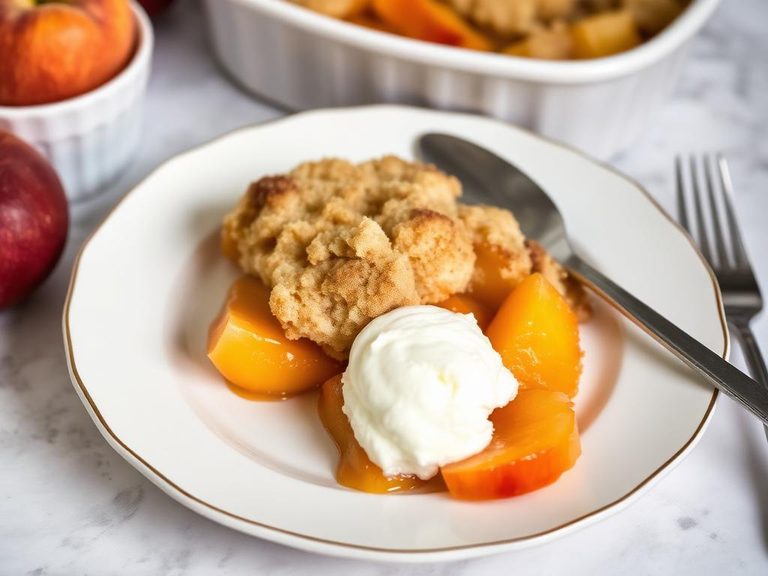
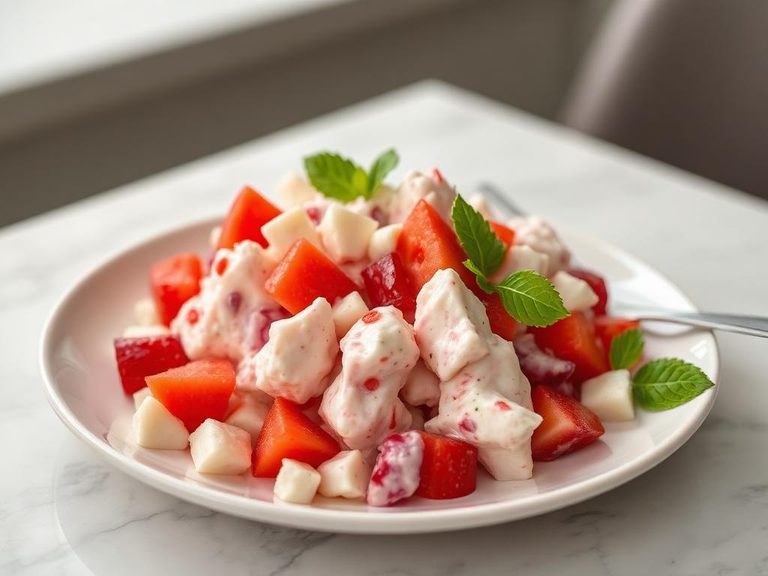
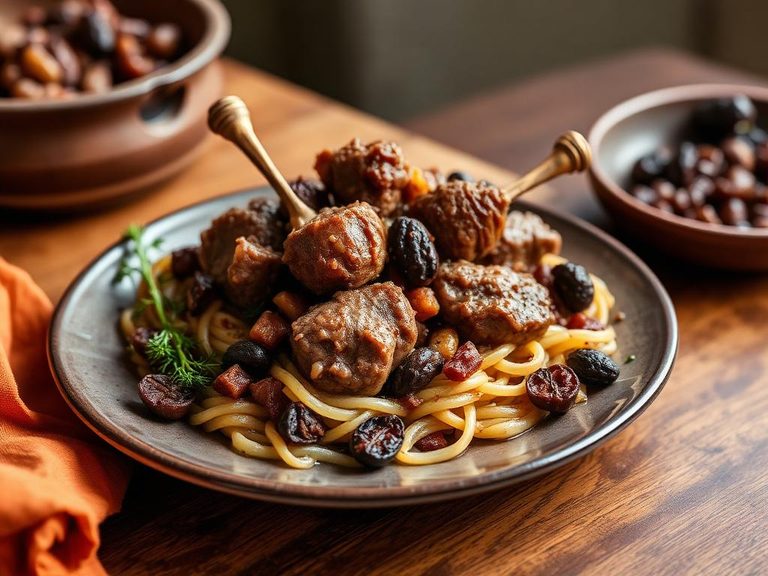
🌍 Where it's eaten
💡 Did you know?
The sulfur dioxide used in preservation doesn't just maintain color; it also inhibits the growth of certain bacteria and yeasts, extending shelf life dramatically compared to unsulfured dried fruit.
Full nutrition (USDA data · scales with serving)
| Water | 78.1 g |
| Energy | 77.0 kcal |
| Energy | 322 kj |
| Protein | 1.2 g |
| Total lipid (fat) | 0.25 g |
| Ash | 0.80 g |
| Carbohydrate, by difference | 19.7 g |
| Fiber, total dietary | 2.7 g |
| Total Sugars | 17.0 g |
| Calcium, Ca | 9.0 mg |
| Iron, Fe | 1.3 mg |
| Magnesium, Mg | 13.0 mg |
| Phosphorus, P | 38.0 mg |
| Potassium, K | 320 mg |
| Sodium, Na | 2.0 mg |
| Zinc, Zn | 0.18 mg |
| Copper, Cu | 0.12 mg |
| Manganese, Mn | 0.10 mg |
| Selenium, Se | 0.20 ug |
| Vitamin C, total ascorbic acid | 3.7 mg |
| Thiamin | 0.01 mg |
| Riboflavin | 0.02 mg |
| Niacin | 1.5 mg |
| Pantothenic acid | 0.18 mg |
| Vitamin B-6 | 0.04 mg |
| Folate, total | 0.00 ug |
| Folic acid | 0.00 ug |
| Folate, food | 0.00 ug |
| Folate, DFE | 0.00 ug |
| Choline, total | 4.1 mg |
| Vitamin B-12 | 0.00 ug |
| Vitamin B-12, added | 0.00 ug |
| Vitamin A, RAE | 10.0 ug |
| Retinol | 0.00 ug |
| Carotene, beta | 98.0 ug |
| Carotene, alpha | 0.00 ug |
| Cryptoxanthin, beta | 40.0 ug |
| Vitamin A, IU | 197 iu |
| Lycopene | 0.00 ug |
| Lutein + zeaxanthin | 180 ug |
| Vitamin E (alpha-tocopherol) | 0.06 mg |
| Vitamin E, added | 0.00 mg |
| Vitamin D (D2 + D3), International Units | 0.00 iu |
| Vitamin D (D2 + D3) | 0.00 ug |
| Vitamin K (phylloquinone) | 5.0 ug |
| Alcohol, ethyl | 0.00 g |
| Caffeine | 0.00 mg |
| Theobromine | 0.00 mg |
Fat & fatty acid profile (per 100g)
| Fatty acids, total saturated | 0.03 g |
| SFA 4:0 | 0.00 g |
| SFA 6:0 | 0.00 g |
| SFA 8:0 | 0.00 g |
| SFA 10:0 | 0.00 g |
| SFA 12:0 | 0.00 g |
| SFA 14:0 | 0.00 g |
| SFA 16:0 | 0.02 g |
| SFA 18:0 | 0.00 g |
| Fatty acids, total monounsaturated | 0.09 g |
| MUFA 16:1 | 0.00 g |
| MUFA 18:1 | 0.09 g |
| MUFA 20:1 | 0.00 g |
| MUFA 22:1 | 0.00 g |
| Fatty acids, total polyunsaturated | 0.12 g |
| PUFA 18:2 | 0.12 g |
| PUFA 18:3 | 0.00 g |
| PUFA 18:4 | 0.00 g |
| PUFA 20:4 | 0.00 g |
| PUFA 20:5 n-3 (EPA) | 0.00 g |
| PUFA 22:5 n-3 (DPA) | 0.00 g |
| PUFA 22:6 n-3 (DHA) | 0.00 g |
| Cholesterol | 0.00 mg |
Amino acid profile (per 100g)
| Tryptophan | 0.00 g |
| Threonine | 0.04 g |
| Isoleucine | 0.03 g |
| Leucine | 0.07 g |
| Lysine | 0.04 g |
| Methionine | 0.03 g |
| Cystine | 0.01 g |
| Phenylalanine | 0.04 g |
| Tyrosine | 0.03 g |
| Valine | 0.06 g |
| Arginine | 0.03 g |
| Histidine | 0.02 g |
| Alanine | 0.07 g |
| Aspartic acid | 0.19 g |
| Glutamic acid | 0.18 g |
| Glycine | 0.04 g |
| Proline | 0.05 g |
| Serine | 0.05 g |
FAQ
Why are they often orange instead of brown?
The sulfuring process prevents enzymatic browning, preserving the fruit's natural carotenoid pigments for a more appealing color.
Can I use them in savory cooking?
Absolutely. They add a sweet-tart depth to tagines, stews, and chutneys, pairing well with meats like lamb, pork, and poultry.
How do they differ from regular dried peaches?
Stewed dried peaches are rehydrated, making them plumper and softer with a more uniform, tender texture than chewy, sun-dried ones.
Nutrient density (calculated · NRF9.3)
Nutrient Rich Foods index: beneficial nutrients (protein, fiber, vitamins, minerals) minus saturated fat, added sugar & sodium, per 100 kcal.
NRF9.3 index — Fulgoni, Keast & Drewnowski, 2009. Computed from USDA nutrients.
Weight-loss friendliness (composite index)
Energy density 0.77 kcal/g · 6% calories from protein · 2.7 g fiber · 17.0 g sugar per 100 g.
Composite of energy density (Rolls et al., 1999), protein & fiber satiety, minus sugar. A calculated heuristic — ranks satiety-per-calorie, not a clinical measure.
Dietary load (calculated from USDA values)
Potential renal acid load. Positive = acid-forming, negative = alkaline-forming.
Sodium-to-potassium ratio: 0.01 (lower is better — aim for ≤ 1)
Sodium:potassium per WHO potassium guidance. Computed from USDA nutrients.