

Okra, cooked, boiled, drained, with salt
Whole food · Vegetables and Vegetable Products

Photo: Wikipedia
Boiled okra is a tender, slightly earthy vegetable with a distinctive, subtly grassy flavor and a soft, yielding texture when cooked properly. At just 22 kcal per 100g, it's a low-calorie source of fiber (2.5g) and carbohydrates (4.51g), making it a light yet satisfying addition to meals. Its mild taste allows it to absorb surrounding flavors, while its characteristic mucilaginous quality can be a textural highlight or a point of contention.
Calorie split: 27% protein · 66% carbs · 7% fat
↓ Full nutrition💚 Why it's loved
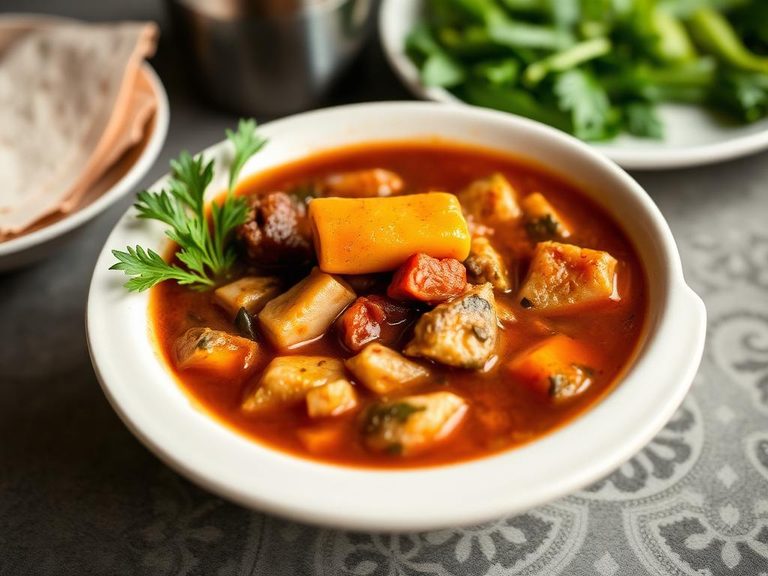
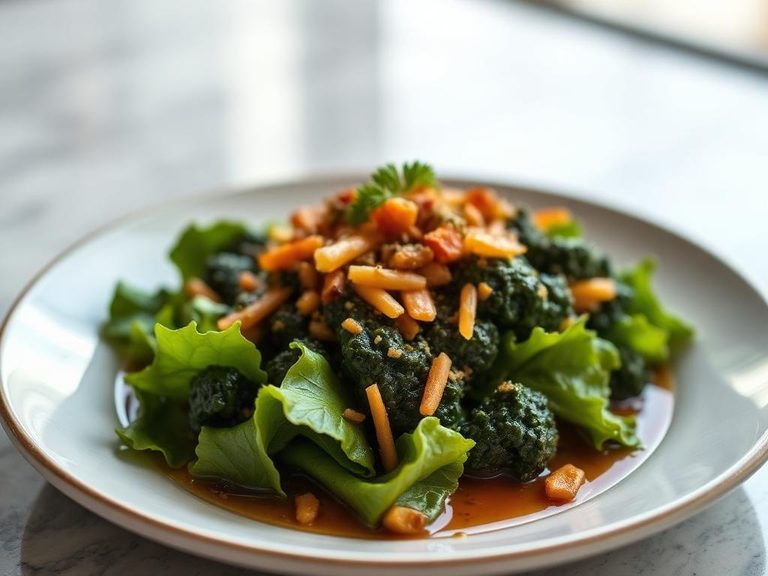
People love boiled okra for its ability to act as a natural thickener in stews and gumbos, adding a silky body to dishes. Its mild, versatile flavor and cultural significance in Southern, African, and Middle Eastern cuisines make it a beloved comfort food.
⚠️ Watch-outs & how to enjoy it better
The slimy texture from its mucilage can be off-putting to some, and boiling can exacerbate this. To counteract, cook it quickly in acidic liquids (like tomatoes or lemon juice) or roast it instead. Additionally, okra is high in oxalates, which may concern those with kidney stones; pairing it with calcium-rich foods or choosing a different cooking method can help mitigate this.
Key benefits
- Very low in calories, ideal for weight management
- Good source of dietary fiber (2.5g per 100g) for digestive health
- Contains vitamin C and folate, supporting immune function
- Provides a small amount of plant-based protein (1.87g per 100g)
- Rich in antioxidants like polyphenols and flavonoids
🍽️ Popular dishes




🌍 Where it's eaten
💡 Did you know?
Okra's scientific name, Abelmoschus esculentus, means 'edible mallow,' and its mucilage was historically used as a blood plasma substitute in emergencies during World War II.
Full nutrition (USDA data · scales with serving)
| Water | 92.6 g |
| Energy | 22.0 kcal |
| Energy | 94.0 kj |
| Protein | 1.9 g |
| Total lipid (fat) | 0.21 g |
| Ash | 0.84 g |
| Carbohydrate, by difference | 4.5 g |
| Fiber, total dietary | 2.5 g |
| Total Sugars | 2.4 g |
| Calcium, Ca | 77.0 mg |
| Iron, Fe | 0.28 mg |
| Magnesium, Mg | 36.0 mg |
| Phosphorus, P | 32.0 mg |
| Potassium, K | 135 mg |
| Sodium, Na | 241 mg |
| Zinc, Zn | 0.43 mg |
| Copper, Cu | 0.09 mg |
| Manganese, Mn | 0.29 mg |
| Selenium, Se | 0.40 ug |
| Vitamin C, total ascorbic acid | 16.3 mg |
| Thiamin | 0.13 mg |
| Riboflavin | 0.06 mg |
| Niacin | 0.87 mg |
| Pantothenic acid | 0.21 mg |
| Vitamin B-6 | 0.19 mg |
| Folate, total | 46.0 ug |
| Folic acid | 0.00 ug |
| Folate, food | 46.0 ug |
| Folate, DFE | 46.0 ug |
| Choline, total | 9.3 mg |
| Vitamin B-12 | 0.00 ug |
| Vitamin B-12, added | 0.00 ug |
| Vitamin A, RAE | 14.0 ug |
| Retinol | 0.00 ug |
| Carotene, beta | 170 ug |
| Carotene, alpha | 0.00 ug |
| Cryptoxanthin, beta | 0.00 ug |
| Vitamin A, IU | 283 iu |
| Lycopene | 0.00 ug |
| Lutein + zeaxanthin | 390 ug |
| Vitamin E (alpha-tocopherol) | 0.27 mg |
| Vitamin E, added | 0.00 mg |
| Tocopherol, beta | 0.00 mg |
| Tocopherol, gamma | 0.16 mg |
| Tocopherol, delta | 0.00 mg |
| Tocotrienol, alpha | 0.00 mg |
| Tocotrienol, beta | 0.00 mg |
| Tocotrienol, gamma | 0.00 mg |
| Tocotrienol, delta | 0.00 mg |
| Vitamin D (D2 + D3), International Units | 0.00 iu |
| Vitamin D (D2 + D3) | 0.00 ug |
| Vitamin K (phylloquinone) | 40.0 ug |
| Caffeine | 0.00 mg |
| Theobromine | 0.00 mg |
Fat & fatty acid profile (per 100g)
| Fatty acids, total saturated | 0.04 g |
| SFA 14:0 | 0.00 g |
| SFA 16:0 | 0.04 g |
| SFA 18:0 | 0.00 g |
| Fatty acids, total monounsaturated | 0.03 g |
| MUFA 16:1 | 0.00 g |
| MUFA 18:1 | 0.03 g |
| Fatty acids, total polyunsaturated | 0.05 g |
| PUFA 18:2 | 0.04 g |
| PUFA 18:3 | 0.00 g |
| PUFA 20:4 | 0.00 g |
| Fatty acids, total trans | 0.00 g |
| Cholesterol | 0.00 mg |
Amino acid profile (per 100g)
| Tryptophan | 0.02 g |
| Threonine | 0.06 g |
| Isoleucine | 0.07 g |
| Leucine | 0.10 g |
| Lysine | 0.07 g |
| Methionine | 0.02 g |
| Cystine | 0.02 g |
| Phenylalanine | 0.06 g |
| Tyrosine | 0.08 g |
| Valine | 0.09 g |
| Arginine | 0.08 g |
| Histidine | 0.03 g |
| Alanine | 0.07 g |
| Aspartic acid | 0.14 g |
| Glutamic acid | 0.25 g |
| Glycine | 0.04 g |
| Proline | 0.04 g |
| Serine | 0.04 g |
FAQ
Why is boiled okra slimy?
The sliminess comes from a natural mucilage (a soluble fiber) released when okra is cooked, especially in moist or slow-cooking methods. To reduce it, cook okra quickly at high heat, add acidic ingredients like tomatoes or vinegar, or dry it thoroughly before cooking.
Is boiled okra good for blood sugar?
Okra contains soluble fiber that can help slow sugar absorption, but its carbohydrate content (4.51g per 100g) should be considered. Pairing it with protein or fat can help stabilize blood sugar levels.
Can I eat boiled okra on a low-oxalate diet?
Okra is high in oxalates, so it may not be suitable for a strict low-oxalate diet. If you're concerned, consider boiling it in plenty of water and discarding the water to reduce oxalate content, or choose other low-oxalate vegetables.
Nutrient density (calculated · NRF9.3)
Nutrient Rich Foods index: beneficial nutrients (protein, fiber, vitamins, minerals) minus saturated fat, added sugar & sodium, per 100 kcal.
NRF9.3 index — Fulgoni, Keast & Drewnowski, 2009. Computed from USDA nutrients.
Weight-loss friendliness (composite index)
Energy density 0.22 kcal/g · 34% calories from protein · 2.5 g fiber · 2.4 g sugar per 100 g.
Composite of energy density (Rolls et al., 1999), protein & fiber satiety, minus sugar. A calculated heuristic — ranks satiety-per-calorie, not a clinical measure.
Dietary load (calculated from USDA values)
Potential renal acid load. Positive = acid-forming, negative = alkaline-forming.
Sodium-to-potassium ratio: 1.79 (lower is better — aim for ≤ 1)
Sodium:potassium per WHO potassium guidance. Computed from USDA nutrients.