

Mushrooms, shiitake, cooked, with salt
Whole food · Vegetables and Vegetable Products

Photo: Wikipedia
Shiitake mushrooms, when cooked with salt, transform into savory, umami-rich morsels with a satisfyingly meaty, slightly chewy texture and a deep, earthy flavor. Their nutritional profile is notable for being very low in calories and fat while providing a good source of dietary fiber and B vitamins. The cooking process concentrates their natural flavors, making them a potent seasoning or substantial ingredient.
Calorie split: 9% protein · 88% carbs · 3% fat
↓ Full nutrition💚 Why it's loved
People adore shiitake for their deep, savory umami flavor that can elevate simple dishes to gourmet status, acting as a natural flavor enhancer. Their versatility allows them to be stir-fried, braised, grilled, or used in soups, seamlessly absorbing sauces and seasonings.
⚠️ Watch-outs & how to enjoy it better
The added salt in this preparation can be a concern for those monitoring sodium intake, potentially contributing to fluid retention or elevated blood pressure. To counteract this, rinse cooked shiitakes briefly or use them in dishes with other low-sodium ingredients. Some individuals may also experience digestive discomfort from the high fiber content; starting with smaller portions and ensuring adequate water intake can help.
Key benefits
- Excellent source of dietary fiber for digestive health
- Rich in B vitamins like riboflavin and niacin for energy metabolism
- Contains antioxidants such as selenium and ergothioneine
- Very low in calories and fat, suitable for weight management
- Provides plant-based protein and essential minerals like copper
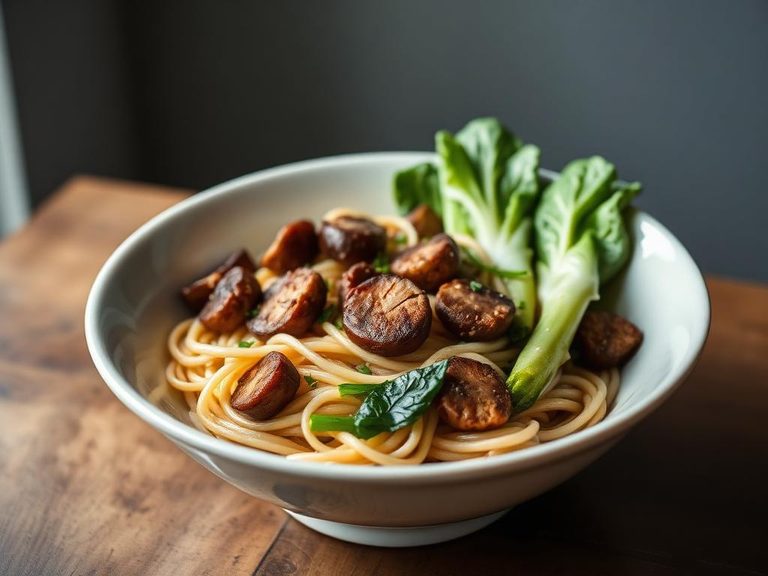
🍽️ Popular dishes
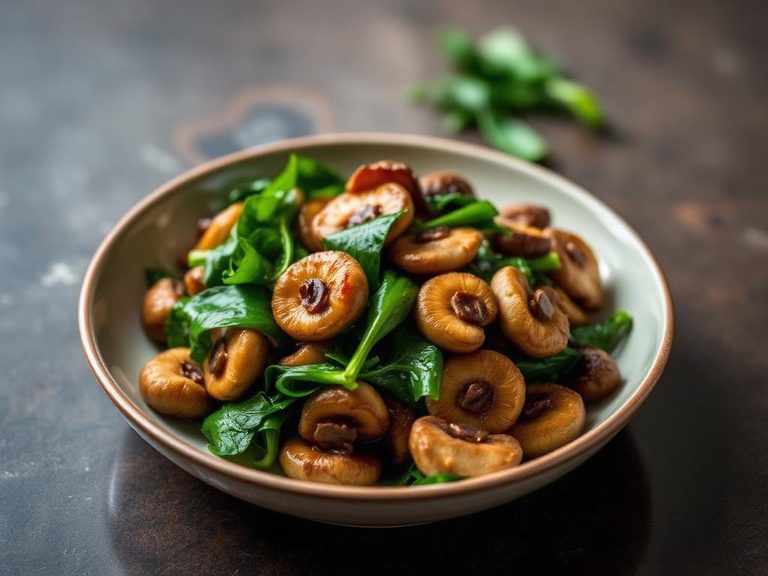
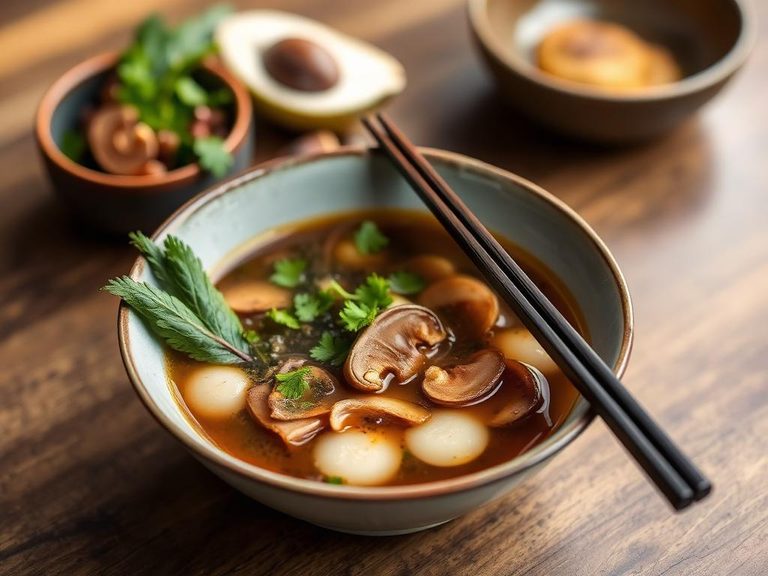
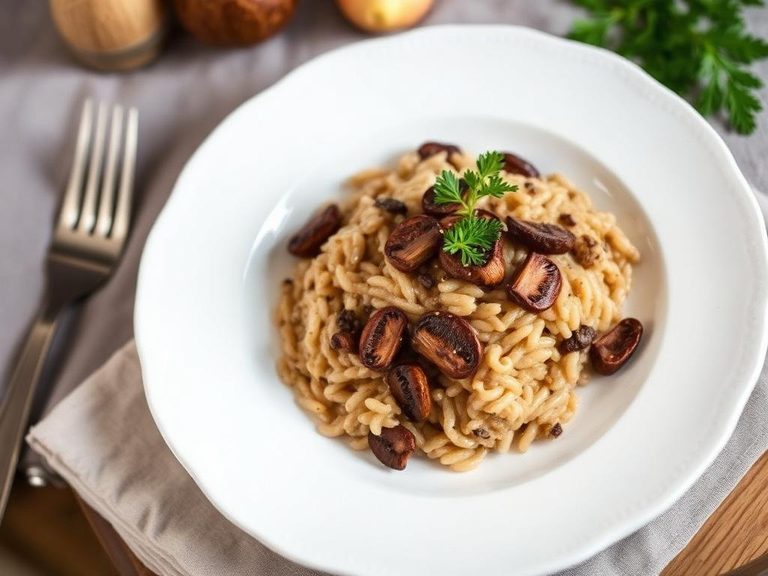
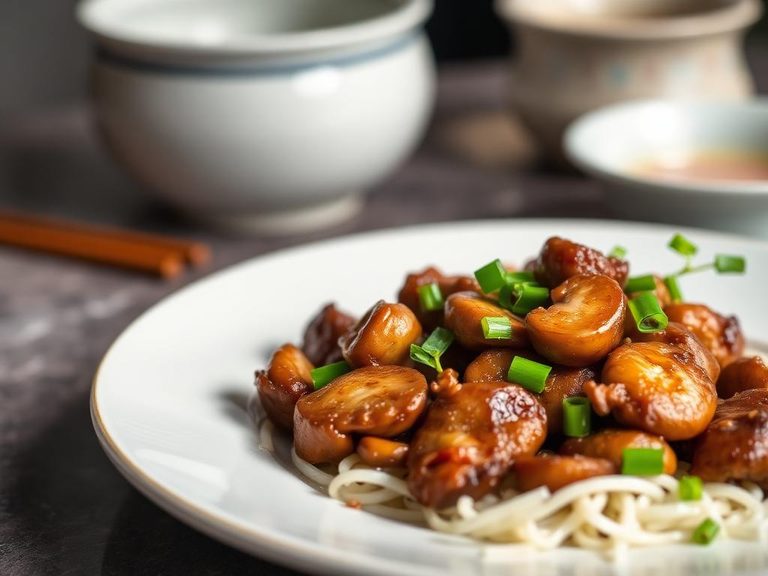
🌍 Where it's eaten
💡 Did you know?
Shiitake mushrooms were historically cultivated on logs in Japan as early as the 12th century, and the word 'shiitake' itself is Japanese, combining 'shii' (a type of evergreen tree) and 'take' (mushroom).
Full nutrition (USDA data · scales with serving)
| Water | 83.5 g |
| Energy | 56.0 kcal |
| Energy | 234 kj |
| Protein | 1.6 g |
| Total lipid (fat) | 0.22 g |
| Ash | 0.35 g |
| Carbohydrate, by difference | 14.4 g |
| Fiber, total dietary | 2.1 g |
| Total Sugars | 3.8 g |
| Calcium, Ca | 3.0 mg |
| Iron, Fe | 0.44 mg |
| Magnesium, Mg | 14.0 mg |
| Phosphorus, P | 29.0 mg |
| Potassium, K | 117 mg |
| Sodium, Na | 240 mg |
| Zinc, Zn | 1.3 mg |
| Copper, Cu | 0.90 mg |
| Manganese, Mn | 0.20 mg |
| Selenium, Se | 24.8 ug |
| Vitamin C, total ascorbic acid | 0.30 mg |
| Thiamin | 0.04 mg |
| Riboflavin | 0.17 mg |
| Niacin | 1.5 mg |
| Pantothenic acid | 3.6 mg |
| Vitamin B-6 | 0.16 mg |
| Folate, total | 21.0 ug |
| Folic acid | 0.00 ug |
| Folate, food | 21.0 ug |
| Folate, DFE | 21.0 ug |
| Choline, total | 80.0 mg |
| Vitamin B-12 | 0.00 ug |
| Vitamin B-12, added | 0.00 ug |
| Vitamin A, RAE | 0.00 ug |
| Retinol | 0.00 ug |
| Carotene, beta | 0.00 ug |
| Carotene, alpha | 0.00 ug |
| Cryptoxanthin, beta | 0.00 ug |
| Vitamin A, IU | 0.00 iu |
| Lycopene | 0.00 ug |
| Lutein + zeaxanthin | 0.00 ug |
| Vitamin E (alpha-tocopherol) | 0.00 mg |
| Vitamin E, added | 0.00 mg |
| Vitamin D (D2 + D3), International Units | 28.0 iu |
| Vitamin D (D2 + D3) | 0.70 ug |
| Vitamin D2 (ergocalciferol) | 0.70 ug |
| Vitamin D3 (cholecalciferol) | 0.00 ug |
| Vitamin K (phylloquinone) | 0.00 ug |
| Alcohol, ethyl | 0.00 g |
| Caffeine | 0.00 mg |
| Theobromine | 0.00 mg |
Fat & fatty acid profile (per 100g)
| Fatty acids, total saturated | 0.05 g |
| SFA 10:0 | 0.00 g |
| SFA 12:0 | 0.00 g |
| SFA 14:0 | 0.00 g |
| SFA 16:0 | 0.03 g |
| SFA 18:0 | 0.01 g |
| Fatty acids, total monounsaturated | 0.07 g |
| MUFA 16:1 | 0.02 g |
| MUFA 18:1 | 0.03 g |
| MUFA 22:1 | 0.02 g |
| Fatty acids, total polyunsaturated | 0.03 g |
| PUFA 18:2 | 0.03 g |
| PUFA 18:3 | 0.00 g |
| Fatty acids, total trans | 0.00 g |
| Cholesterol | 0.00 mg |
| Stigmasterol | 0.00 mg |
| Campesterol | 4.0 mg |
| Beta-sitosterol | 0.00 mg |
Amino acid profile (per 100g)
| Tryptophan | 0.00 g |
| Threonine | 0.07 g |
| Isoleucine | 0.06 g |
| Leucine | 0.09 g |
| Lysine | 0.05 g |
| Methionine | 0.03 g |
| Cystine | 0.03 g |
| Phenylalanine | 0.07 g |
| Tyrosine | 0.04 g |
| Valine | 0.07 g |
| Arginine | 0.09 g |
| Histidine | 0.02 g |
| Alanine | 0.08 g |
| Aspartic acid | 0.10 g |
| Glutamic acid | 0.35 g |
| Glycine | 0.06 g |
| Proline | 0.06 g |
| Serine | 0.07 g |
FAQ
Are the tough stems of shiitake mushrooms edible?
The stems are very woody and unpleasant to eat, even after cooking. It's best to remove and discard them before slicing the caps, or simmer them in broths for flavor and then strain them out.
How should I store cooked, salted shiitake mushrooms?
Allow them to cool completely, then store in an airtight container in the refrigerator for up to 3-4 days. For longer storage, freeze them on a baking sheet first to prevent clumping, then transfer to a freezer bag.
Can I use the soaking liquid from dried shiitakes in cooking?
Absolutely. The soaking liquid is a potent, flavorful broth often called 'shiitake dashi.' Strain it through a fine sieve or coffee filter to remove any grit, then use it as a base for soups, stews, or sauces to add intense umami depth.
Nutrient density (calculated · NRF9.3)
Nutrient Rich Foods index: beneficial nutrients (protein, fiber, vitamins, minerals) minus saturated fat, added sugar & sodium, per 100 kcal.
NRF9.3 index — Fulgoni, Keast & Drewnowski, 2009. Computed from USDA nutrients.
Weight-loss friendliness (composite index)
Energy density 0.56 kcal/g · 11% calories from protein · 2.1 g fiber · 3.8 g sugar per 100 g.
Composite of energy density (Rolls et al., 1999), protein & fiber satiety, minus sugar. A calculated heuristic — ranks satiety-per-calorie, not a clinical measure.
Dietary load (calculated from USDA values)
Potential renal acid load. Positive = acid-forming, negative = alkaline-forming.
Sodium-to-potassium ratio: 2.05 (lower is better — aim for ≤ 1)
Sodium:potassium per WHO potassium guidance. Computed from USDA nutrients.