

Mixed vegetable juice
Common food

Photo: Wikipedia
A vibrant, low-calorie blend of pressed vegetables like carrot, tomato, celery, and spinach, mixed vegetable juice offers a crisp, earthy, and slightly tangy flavor profile with a smooth, watery texture. It delivers a concentrated dose of vitamins and minerals from multiple sources in a single, easy-to-consume serving. Despite its light body, it provides a notable amount of dietary fiber and natural sugars, making it a quick, nutrient-dense option for hydration and micronutrient intake.
Calorie split: 10% protein · 85% carbs · 5% fat
↓ Full nutrition💚 Why it's loved
People love it for its refreshing, crisp taste that feels like a concentrated burst of garden-fresh vegetables, making it a quick way to consume multiple nutrients without cooking. Its versatility shines in both savory cocktails and healthy morning routines, often embraced in wellness cultures from Japan to the Mediterranean.
⚠️ Watch-outs & how to enjoy it better
Some may experience blood-sugar spikes due to the natural sugars, especially if consumed in large quantities or on an empty stomach. To counteract this, pair it with a source of protein or healthy fat like nuts or cheese, and opt for smaller portions. Additionally, those with sensitivities to oxalates (found in spinach or beets) should moderate intake and consider choosing juices with lower-oxalate vegetables like cucumber or celery.
Key benefits
- Excellent source of vitamins A and C from carrots and tomatoes
- Low in calories and fat, supporting weight management goals
- Provides dietary fiber to aid digestion and promote satiety
- Hydrating due to high water content and electrolytes
- Contains antioxidants like lycopene and beta-carotene
🍽️ Popular dishes

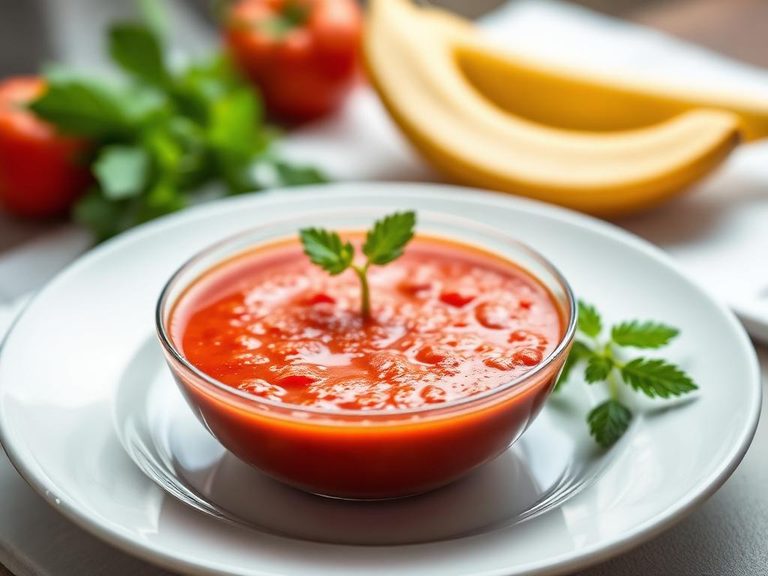
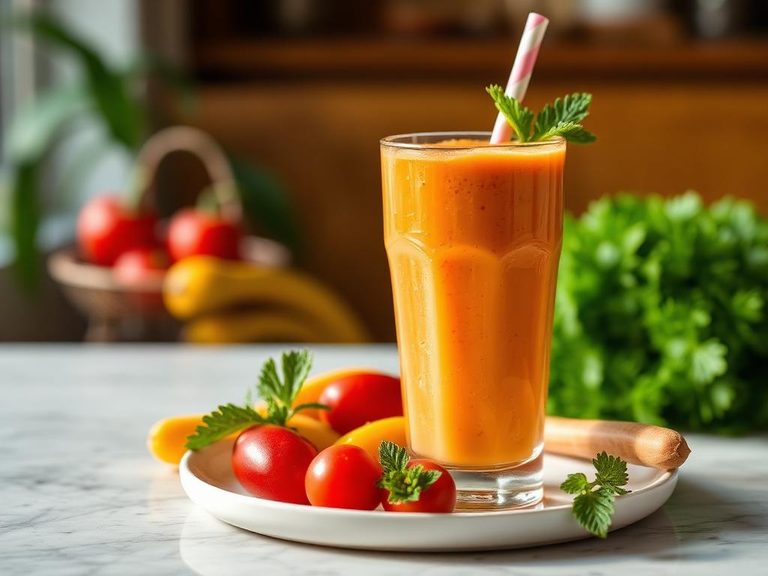


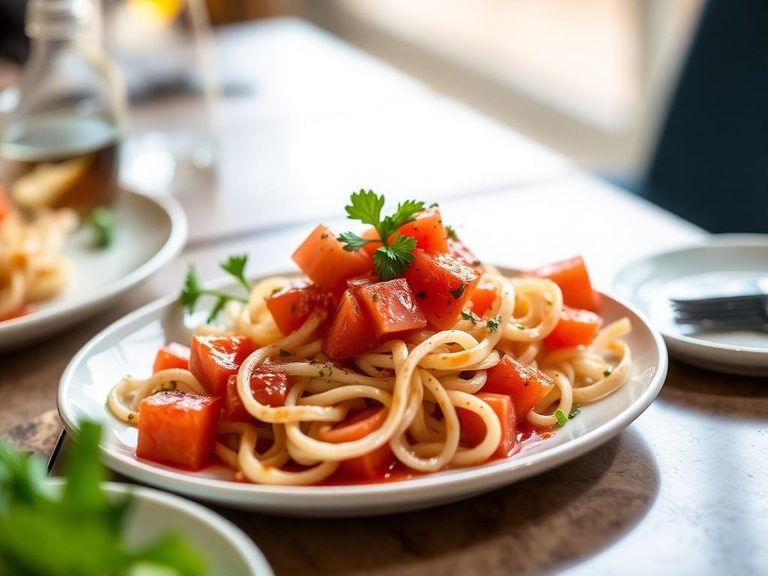
🌍 Where it's eaten
💡 Did you know?
The practice of juicing vegetables for health gained massive popularity in the 1970s with the 'hippie' movement, but the concept dates back to ancient times when Egyptians and Greeks used vegetable juices for medicinal purposes.
Full nutrition (USDA data · scales with serving)
| Water | 92.0 g |
| Energy | 28.0 kcal |
| Protein | 0.72 g |
| Total lipid (fat) | 0.16 g |
| Carbohydrate, by difference | 6.3 g |
| Fiber, total dietary | 1.2 g |
| Total Sugars | 2.6 g |
| Calcium, Ca | 35.0 mg |
| Iron, Fe | 0.23 mg |
| Magnesium, Mg | 12.0 mg |
| Phosphorus, P | 32.0 mg |
| Potassium, K | 278 mg |
| Sodium, Na | 82.0 mg |
| Zinc, Zn | 0.14 mg |
| Copper, Cu | 0.02 mg |
| Selenium, Se | 0.30 ug |
| Vitamin C, total ascorbic acid | 5.8 mg |
| Thiamin | 0.06 mg |
| Riboflavin | 0.06 mg |
| Niacin | 0.35 mg |
| Vitamin B-6 | 0.13 mg |
| Folate, total | 20.0 ug |
| Folic acid | 0.00 ug |
| Folate, food | 20.0 ug |
| Folate, DFE | 20.0 ug |
| Choline, total | 8.0 mg |
| Vitamin B-12 | 0.00 ug |
| Vitamin B-12, added | 0.00 ug |
| Vitamin A, RAE | 489 ug |
| Retinol | 0.00 ug |
| Carotene, beta | 4786 ug |
| Carotene, alpha | 2171 ug |
| Cryptoxanthin, beta | 0.00 ug |
| Lycopene | 1.0 ug |
| Lutein + zeaxanthin | 308 ug |
| Vitamin E (alpha-tocopherol) | 0.72 mg |
| Vitamin E, added | 0.00 mg |
| Vitamin D (D2 + D3) | 0.00 ug |
| Vitamin K (phylloquinone) | 22.4 ug |
| Alcohol, ethyl | 0.00 g |
| Caffeine | 0.00 mg |
| Theobromine | 0.00 mg |
Fat & fatty acid profile (per 100g)
| Fatty acids, total saturated | 0.03 g |
| SFA 4:0 | 0.00 g |
| SFA 6:0 | 0.00 g |
| SFA 8:0 | 0.00 g |
| SFA 10:0 | 0.00 g |
| SFA 12:0 | 0.00 g |
| SFA 14:0 | 0.00 g |
| SFA 16:0 | 0.03 g |
| SFA 18:0 | 0.00 g |
| Fatty acids, total monounsaturated | 0.02 g |
| MUFA 16:1 | 0.00 g |
| MUFA 18:1 | 0.02 g |
| MUFA 20:1 | 0.00 g |
| MUFA 22:1 | 0.00 g |
| Fatty acids, total polyunsaturated | 0.07 g |
| PUFA 18:2 | 0.07 g |
| PUFA 18:3 | 0.00 g |
| PUFA 18:4 | 0.00 g |
| PUFA 20:4 | 0.00 g |
| PUFA 20:5 n-3 (EPA) | 0.00 g |
| PUFA 22:5 n-3 (DPA) | 0.00 g |
| PUFA 22:6 n-3 (DHA) | 0.00 g |
| Cholesterol | 0.00 mg |
Amino acid profile (per 100g)
Estimated from Vegetables, mixed, canned, solids and liquids — USDA does not publish this profile for Mixed vegetable juice.
| Tryptophan | 0.01 g |
| Threonine | 0.06 g |
| Isoleucine | 0.07 g |
| Leucine | 0.10 g |
| Lysine | 0.09 g |
| Methionine | 0.02 g |
| Cystine | 0.01 g |
| Phenylalanine | 0.06 g |
| Tyrosine | 0.04 g |
| Valine | 0.07 g |
| Arginine | 0.10 g |
| Histidine | 0.04 g |
| Alanine | 0.06 g |
| Aspartic acid | 0.15 g |
| Glutamic acid | 0.19 g |
| Glycine | 0.05 g |
| Proline | 0.04 g |
| Serine | 0.07 g |
FAQ
Is mixed vegetable juice good for weight loss?
Yes, it's low in calories and high in fiber, which can help with satiety and reduce overall calorie intake when used as part of a balanced diet.
Can I drink mixed vegetable juice daily?
In moderation, yes. It's a great way to increase vegetable intake, but be mindful of natural sugars and consider pairing it with protein or fat to balance blood sugar levels.
Does mixed vegetable juice contain added sugars?
Pure mixed vegetable juice typically has no added sugars, but some commercial brands may add sweeteners. Always check the label for 'added sugars' or 'sweeteners' in the ingredients list.
Nutrient density (calculated · NRF9.3)
Nutrient Rich Foods index: beneficial nutrients (protein, fiber, vitamins, minerals) minus saturated fat, added sugar & sodium, per 100 kcal.
NRF9.3 index — Fulgoni, Keast & Drewnowski, 2009. Computed from USDA nutrients.
Weight-loss friendliness (composite index)
Energy density 0.28 kcal/g · 10% calories from protein · 1.2 g fiber · 2.6 g sugar per 100 g.
Composite of energy density (Rolls et al., 1999), protein & fiber satiety, minus sugar. A calculated heuristic — ranks satiety-per-calorie, not a clinical measure.
Dietary load (calculated from USDA values)
Potential renal acid load. Positive = acid-forming, negative = alkaline-forming.
Sodium-to-potassium ratio: 0.29 (lower is better — aim for ≤ 1)
Sodium:potassium per WHO potassium guidance. Computed from USDA nutrients.