

Vegetable juice smoothie
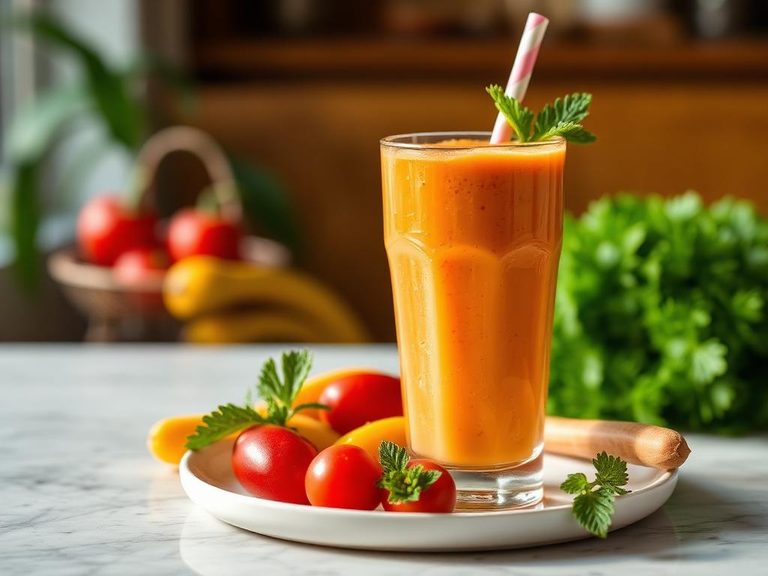
A vegetable juice smoothie is a blended beverage made from raw vegetables, often combined with fruits, herbs, or a liquid base like water or plant-based milk for a smooth texture. Common ingredients include leafy greens like spinach or kale, cucumbers, celery, carrots, and beets, reflecting its origins in global health food movements, particularly popular in Western wellness culture. It's celebrated for being a quick, convenient way to consume a concentrated serving of vegetables.
🍽️ Nutrition at a glance
This drink is typically low in fat and protein but can be moderate to high in natural carbohydrates from the vegetables and any added fruits. It's an excellent source of vitamins (like A, C, and K), minerals (such as potassium and magnesium), and dietary fiber, with a rough calorie ballpark of 80-150 calories per 16-ounce serving, depending on the specific ingredients used.
Nutrition breakdown
| Calories | 92 kcal |
| Protein | 2.5 g |
| Carbs | 20 g |
| Fat | 0.5 g |
| Fiber | 4 g |
| Sugar | 12 g |
| Sodium | 45 mg |
| Vitamin A | 450 mcg RAE |
| Vitamin C | 45 mg |
| Vitamin K | 85 mcg |
| Potassium | 480 mg |
| Folate | 110 mcg DFE |
| Manganese | 0.5 mg |
| Vitamin B6 | 0.3 mg |
| Magnesium | 30 mg |
Per 1 cup (240 g) · estimated, varies by recipe
💡 What's interesting
Culturally, it represents a modern, fast-paced approach to nutrition, often associated with detox or wellness trends. Nutritionally, its uniqueness lies in preserving heat-sensitive nutrients and enzymes from raw vegetables, offering a more concentrated nutrient profile compared to whole vegetables, though it lacks the full satiety benefits of chewing fiber-rich foods.
🍽️ Related dishes

AI estimate may be inaccurate · Terms